
European Union officials face charges of evasion and cover up after concealing basic information about their negotiations with tobacco companies over a pair of pending "trade" deals, including the Transatlantic Trade and Investment Partnership (TTIP), in response to a freedom of information request from a corporate watchdog organization.
The Brussels-based group Corporate Europe Observatory (CEO) demanded in March 2015 that the European Commission grant full access to information and documents regarding meetings with representatives of the tobacco industry, citing the EU's freedom of information law and requirements under the World Health Organization's Framework Convention on Tobacco Control.
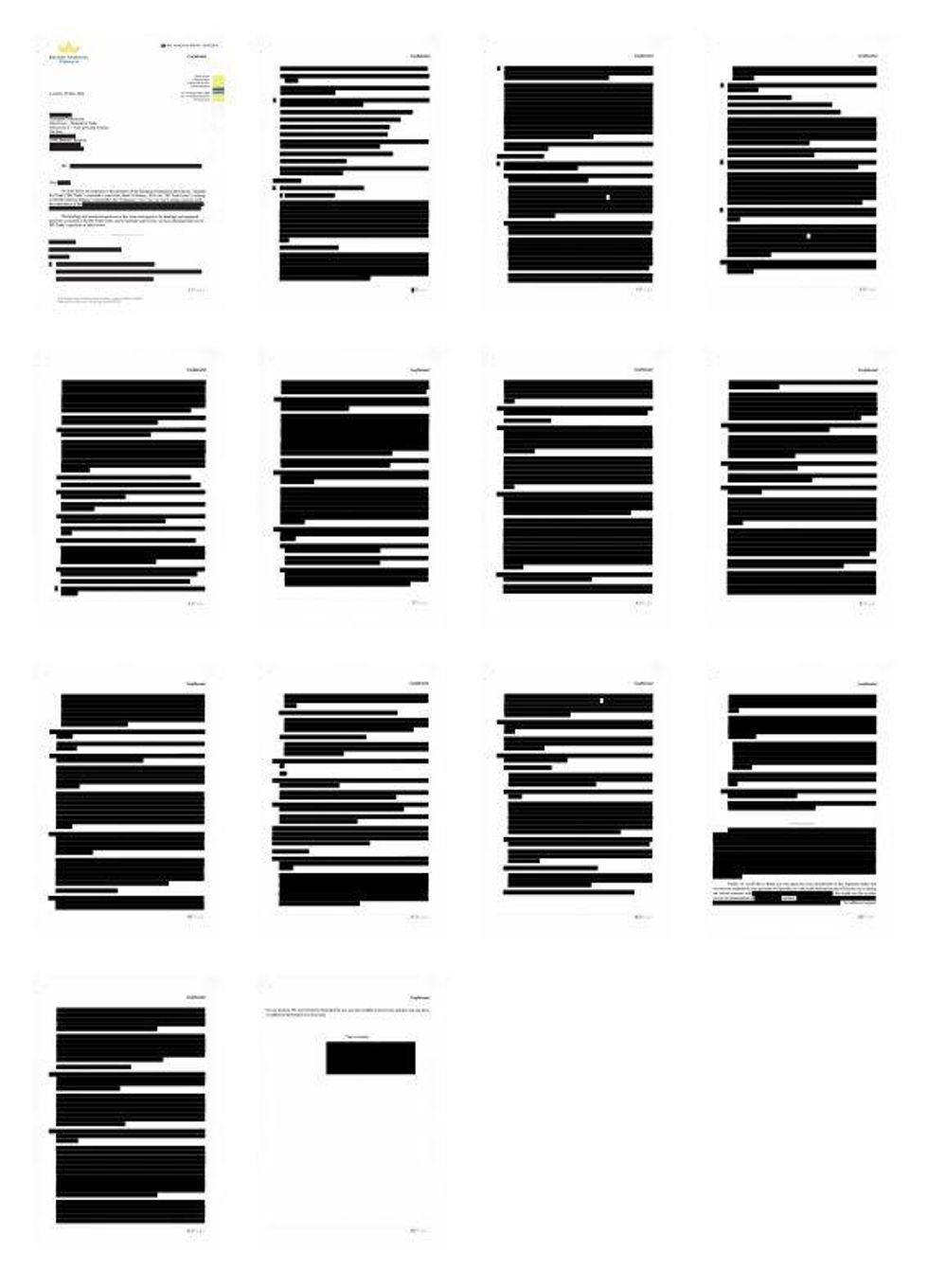
Catherine Day, secretary-general of the European Commission, responded on Tuesday by releasing documents that are so heavily redacted they contain no information about the content, individuals, or trade agreements in question: the TTIP and a separate EU/Japan "free trade" deal currently under negotiation.
In fact, the only indication that either the TTIP or EU/Japan deal are at the heart of the discussions is a single sentence of the cover letter attached to the redacted documents in which Day states: "Documents 3, 4 and 5 contain elements that relate to the Commission's negotiating positions with regard to tobacco in the ongoing bilateral negotiations for a free trade agreement with the USA and Japan."
Olivier Hoedeman, research and campaign coordinator for CEO who was involved in filing the request, told Common Dreams over the phone from Brussels: "We were astonished to see how excessive the blacking out of text was with the documents. This goes much further than anything we've seen before. We've done quite a few freedom of information requests, and we've seen parts redacted, but this is excessive."
"You can say it is a cover up, because we believe they are violating the freedom of information law by removing all the contents," Hoedeman continued, adding that his organization plans to file complaints about the redactions to the European Ombudsman.
Public health advocates and corporate watchdogs say what little information the documents do reveal is alarming.
The documents confirm numerous correspondences between the European Commission and tobacco giants including British American Tobacco and Philip Morris. According to Hoedeman, the companies' efforts to gain influence in the talks are cause for concern: "Some companies are already now using [secret corporate tribunals, known as the investor-to-state dispute settlement system] under other trade agreements to challenge tobacco control laws. There are lawsuits on the private tribunals against governments of Australia and Uruguay. So it's a very real scenario."
This past track record is especially concerning given the broad scope of the TTIP--slated to be the largest "trade" deal in history, as the U.S. and EU together account for nearly half of the world's GDP. Yet the mammoth accord is being negotiated in near-complete secrecy.
EU officials are not alone in opposing public disclosure of information about the negotiations. The U.S. government has repeatedly resisted revealing the contents of the TTIP, Trans-Pacific Partnership, and the Trade in Services Agreement, despite demands from civil society groups and social movements around the world for transparency.
European Union officials face charges of evasion and cover up after concealing basic information about their negotiations with tobacco companies over a pair of pending "trade" deals, including the Transatlantic Trade and Investment Partnership (TTIP), in response to a freedom of information request from a corporate watchdog organization.
The Brussels-based group Corporate Europe Observatory (CEO) demanded in March 2015 that the European Commission grant full access to information and documents regarding meetings with representatives of the tobacco industry, citing the EU's freedom of information law and requirements under the World Health Organization's Framework Convention on Tobacco Control.
Catherine Day, secretary-general of the European Commission, responded on Tuesday by releasing documents that are so heavily redacted they contain no information about the content, individuals, or trade agreements in question: the TTIP and a separate EU/Japan "free trade" deal currently under negotiation.
In fact, the only indication that either the TTIP or EU/Japan deal are at the heart of the discussions is a single sentence of the cover letter attached to the redacted documents in which Day states: "Documents 3, 4 and 5 contain elements that relate to the Commission's negotiating positions with regard to tobacco in the ongoing bilateral negotiations for a free trade agreement with the USA and Japan."
Olivier Hoedeman, research and campaign coordinator for CEO who was involved in filing the request, told Common Dreams over the phone from Brussels: "We were astonished to see how excessive the blacking out of text was with the documents. This goes much further than anything we've seen before. We've done quite a few freedom of information requests, and we've seen parts redacted, but this is excessive."
"You can say it is a cover up, because we believe they are violating the freedom of information law by removing all the contents," Hoedeman continued, adding that his organization plans to file complaints about the redactions to the European Ombudsman.
Public health advocates and corporate watchdogs say what little information the documents do reveal is alarming.
The documents confirm numerous correspondences between the European Commission and tobacco giants including British American Tobacco and Philip Morris. According to Hoedeman, the companies' efforts to gain influence in the talks are cause for concern: "Some companies are already now using [secret corporate tribunals, known as the investor-to-state dispute settlement system] under other trade agreements to challenge tobacco control laws. There are lawsuits on the private tribunals against governments of Australia and Uruguay. So it's a very real scenario."
This past track record is especially concerning given the broad scope of the TTIP--slated to be the largest "trade" deal in history, as the U.S. and EU together account for nearly half of the world's GDP. Yet the mammoth accord is being negotiated in near-complete secrecy.
EU officials are not alone in opposing public disclosure of information about the negotiations. The U.S. government has repeatedly resisted revealing the contents of the TTIP, Trans-Pacific Partnership, and the Trade in Services Agreement, despite demands from civil society groups and social movements around the world for transparency.
European Union officials face charges of evasion and cover up after concealing basic information about their negotiations with tobacco companies over a pair of pending "trade" deals, including the Transatlantic Trade and Investment Partnership (TTIP), in response to a freedom of information request from a corporate watchdog organization.
The Brussels-based group Corporate Europe Observatory (CEO) demanded in March 2015 that the European Commission grant full access to information and documents regarding meetings with representatives of the tobacco industry, citing the EU's freedom of information law and requirements under the World Health Organization's Framework Convention on Tobacco Control.
Catherine Day, secretary-general of the European Commission, responded on Tuesday by releasing documents that are so heavily redacted they contain no information about the content, individuals, or trade agreements in question: the TTIP and a separate EU/Japan "free trade" deal currently under negotiation.
In fact, the only indication that either the TTIP or EU/Japan deal are at the heart of the discussions is a single sentence of the cover letter attached to the redacted documents in which Day states: "Documents 3, 4 and 5 contain elements that relate to the Commission's negotiating positions with regard to tobacco in the ongoing bilateral negotiations for a free trade agreement with the USA and Japan."
Olivier Hoedeman, research and campaign coordinator for CEO who was involved in filing the request, told Common Dreams over the phone from Brussels: "We were astonished to see how excessive the blacking out of text was with the documents. This goes much further than anything we've seen before. We've done quite a few freedom of information requests, and we've seen parts redacted, but this is excessive."
"You can say it is a cover up, because we believe they are violating the freedom of information law by removing all the contents," Hoedeman continued, adding that his organization plans to file complaints about the redactions to the European Ombudsman.
Public health advocates and corporate watchdogs say what little information the documents do reveal is alarming.
The documents confirm numerous correspondences between the European Commission and tobacco giants including British American Tobacco and Philip Morris. According to Hoedeman, the companies' efforts to gain influence in the talks are cause for concern: "Some companies are already now using [secret corporate tribunals, known as the investor-to-state dispute settlement system] under other trade agreements to challenge tobacco control laws. There are lawsuits on the private tribunals against governments of Australia and Uruguay. So it's a very real scenario."
This past track record is especially concerning given the broad scope of the TTIP--slated to be the largest "trade" deal in history, as the U.S. and EU together account for nearly half of the world's GDP. Yet the mammoth accord is being negotiated in near-complete secrecy.
EU officials are not alone in opposing public disclosure of information about the negotiations. The U.S. government has repeatedly resisted revealing the contents of the TTIP, Trans-Pacific Partnership, and the Trade in Services Agreement, despite demands from civil society groups and social movements around the world for transparency.