SUBSCRIBE TO OUR FREE NEWSLETTER
Daily news & progressive opinion—funded by the people, not the corporations—delivered straight to your inbox.
5
#000000
#FFFFFF
To donate by check, phone, or other method, see our More Ways to Give page.
Daily news & progressive opinion—funded by the people, not the corporations—delivered straight to your inbox.
More than 25 farmworker, environmental, and food safety organizations sent an open letter on Tuesday to the U.S. Department of Agriculture demanding that the agency investigate reports that its scientists are facing retaliation and suppression of their research on controversial neonicotinoid insecticides that pose a danger to pollinator and human health.
"It is imperative that the USDA maintains scientific integrity and does not allow for harassment, censorship or suppression of findings that counter the interests of industry," states the letter, whose signatories include Farmworker Justice, Food & Water Watch, and Center for Biological Diversity.
The letter follows a petition filed in March by the advocacy organization Public Employees for Environmental Responsibility (PEER) charging that "USDA scientists whose work carries with it policy implications that negatively reflect upon USDA corporate stakeholder interest s routinely suffer retaliation and harassment."
PEER executive director Jeff Ruch told Common Dreams that the petition was drafted "based on the experiences of 10 USDA scientists" who allegedly faced retaliation and punishment for research on neonicotinoid insecticides and glyphosate, which is included in Monsanto's Roundup Herbicide, as well as related topics, including genetically modified crops.
According to the petition, consequences included suspension without pay, threats of irreparable damage to careers, and "[d]emotion from supervisory status and a reprimand after the scientist provided testimony before Congress that did not reflect agency preferences."
"Each one of these actions delivers a powerful message to all colleagues," said Ruch, who argued that retaliation against researchers stems from the coziness of the agency with the industry. "The USDA never met a biotechnology it didn't embrace," he said.
Tuesday's letter specifically sounds the alarm on the immediate implications for pollinator and human health.
" Bees, butterflies, birds and other critical pollinators are in great peril and populations are dwindling worldwide," the letter states. "A growing body of scientific evidence has implicated neonicotinoids as a leading driver of bee declines and glyphosate as a leading driver of the destruction of milkweed, the sole food source for monarch butterflies."
"Recently, the World Health Organization's research arm, the International Agency for Cancer Research (IARC), updated its cancer determination for glyphosate, categorizing it as 'probably carcinogenic to humans' (Group 2A) after reviewing scientific research from 17 of the world's top oncology experts from 11 countries," the letter continues.
Yet the administration of U.S. President Barack Obama has not taken meaningful measures to cut the use of dangerous pesticides, the missive charges.
The letter calls for the USDA to conduct "a thorough investigation into this matter" and enter its findings into the public record. Meanwhile, PEER is pushing for the agency to adopt specific policies to protect scientists from retaliation.
Critics warn that allegations of USDA suppression of scientists have broad human rights implications.
"If we cannot trust the scientific integrity of our scientists to protect bees, how can farmworkers be assured that their health and safety are not in jeopardy from a scientific community that is beholden to the interests of corporations and not to the protection of their own health and safety?" asked Jeannie Economos of the Farmworker Association of Florida in a press statement. "The issue goes beyond only protecting bees, but to protecting the public health, especially the most vulnerable, as well."
Dear Common Dreams reader, It’s been nearly 30 years since I co-founded Common Dreams with my late wife, Lina Newhouser. We had the radical notion that journalism should serve the public good, not corporate profits. It was clear to us from the outset what it would take to build such a project. No paid advertisements. No corporate sponsors. No millionaire publisher telling us what to think or do. Many people said we wouldn't last a year, but we proved those doubters wrong. Together with a tremendous team of journalists and dedicated staff, we built an independent media outlet free from the constraints of profits and corporate control. Our mission has always been simple: To inform. To inspire. To ignite change for the common good. Building Common Dreams was not easy. Our survival was never guaranteed. When you take on the most powerful forces—Wall Street greed, fossil fuel industry destruction, Big Tech lobbyists, and uber-rich oligarchs who have spent billions upon billions rigging the economy and democracy in their favor—the only bulwark you have is supporters who believe in your work. But here’s the urgent message from me today. It's never been this bad out there. And it's never been this hard to keep us going. At the very moment Common Dreams is most needed, the threats we face are intensifying. We need your support now more than ever. We don't accept corporate advertising and never will. We don't have a paywall because we don't think people should be blocked from critical news based on their ability to pay. Everything we do is funded by the donations of readers like you. When everyone does the little they can afford, we are strong. But if that support retreats or dries up, so do we. Will you donate now to make sure Common Dreams not only survives but thrives? —Craig Brown, Co-founder |
More than 25 farmworker, environmental, and food safety organizations sent an open letter on Tuesday to the U.S. Department of Agriculture demanding that the agency investigate reports that its scientists are facing retaliation and suppression of their research on controversial neonicotinoid insecticides that pose a danger to pollinator and human health.
"It is imperative that the USDA maintains scientific integrity and does not allow for harassment, censorship or suppression of findings that counter the interests of industry," states the letter, whose signatories include Farmworker Justice, Food & Water Watch, and Center for Biological Diversity.
The letter follows a petition filed in March by the advocacy organization Public Employees for Environmental Responsibility (PEER) charging that "USDA scientists whose work carries with it policy implications that negatively reflect upon USDA corporate stakeholder interest s routinely suffer retaliation and harassment."
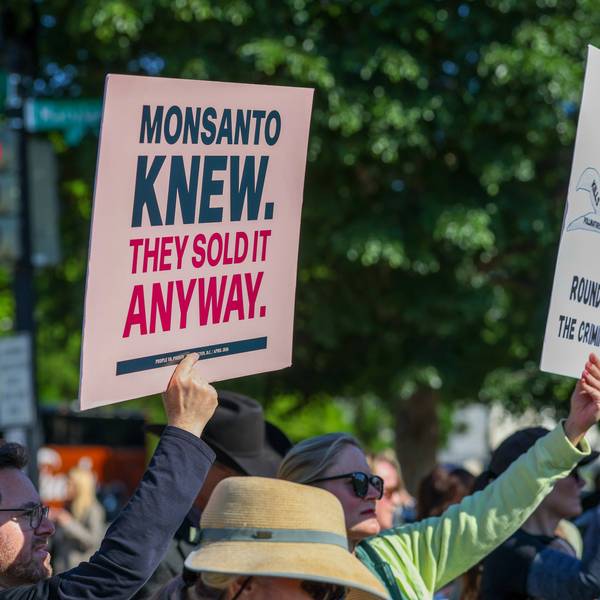
PEER executive director Jeff Ruch told Common Dreams that the petition was drafted "based on the experiences of 10 USDA scientists" who allegedly faced retaliation and punishment for research on neonicotinoid insecticides and glyphosate, which is included in Monsanto's Roundup Herbicide, as well as related topics, including genetically modified crops.
According to the petition, consequences included suspension without pay, threats of irreparable damage to careers, and "[d]emotion from supervisory status and a reprimand after the scientist provided testimony before Congress that did not reflect agency preferences."
"Each one of these actions delivers a powerful message to all colleagues," said Ruch, who argued that retaliation against researchers stems from the coziness of the agency with the industry. "The USDA never met a biotechnology it didn't embrace," he said.
Tuesday's letter specifically sounds the alarm on the immediate implications for pollinator and human health.
" Bees, butterflies, birds and other critical pollinators are in great peril and populations are dwindling worldwide," the letter states. "A growing body of scientific evidence has implicated neonicotinoids as a leading driver of bee declines and glyphosate as a leading driver of the destruction of milkweed, the sole food source for monarch butterflies."
"Recently, the World Health Organization's research arm, the International Agency for Cancer Research (IARC), updated its cancer determination for glyphosate, categorizing it as 'probably carcinogenic to humans' (Group 2A) after reviewing scientific research from 17 of the world's top oncology experts from 11 countries," the letter continues.
Yet the administration of U.S. President Barack Obama has not taken meaningful measures to cut the use of dangerous pesticides, the missive charges.
The letter calls for the USDA to conduct "a thorough investigation into this matter" and enter its findings into the public record. Meanwhile, PEER is pushing for the agency to adopt specific policies to protect scientists from retaliation.
Critics warn that allegations of USDA suppression of scientists have broad human rights implications.
"If we cannot trust the scientific integrity of our scientists to protect bees, how can farmworkers be assured that their health and safety are not in jeopardy from a scientific community that is beholden to the interests of corporations and not to the protection of their own health and safety?" asked Jeannie Economos of the Farmworker Association of Florida in a press statement. "The issue goes beyond only protecting bees, but to protecting the public health, especially the most vulnerable, as well."
More than 25 farmworker, environmental, and food safety organizations sent an open letter on Tuesday to the U.S. Department of Agriculture demanding that the agency investigate reports that its scientists are facing retaliation and suppression of their research on controversial neonicotinoid insecticides that pose a danger to pollinator and human health.
"It is imperative that the USDA maintains scientific integrity and does not allow for harassment, censorship or suppression of findings that counter the interests of industry," states the letter, whose signatories include Farmworker Justice, Food & Water Watch, and Center for Biological Diversity.
The letter follows a petition filed in March by the advocacy organization Public Employees for Environmental Responsibility (PEER) charging that "USDA scientists whose work carries with it policy implications that negatively reflect upon USDA corporate stakeholder interest s routinely suffer retaliation and harassment."
PEER executive director Jeff Ruch told Common Dreams that the petition was drafted "based on the experiences of 10 USDA scientists" who allegedly faced retaliation and punishment for research on neonicotinoid insecticides and glyphosate, which is included in Monsanto's Roundup Herbicide, as well as related topics, including genetically modified crops.
According to the petition, consequences included suspension without pay, threats of irreparable damage to careers, and "[d]emotion from supervisory status and a reprimand after the scientist provided testimony before Congress that did not reflect agency preferences."
"Each one of these actions delivers a powerful message to all colleagues," said Ruch, who argued that retaliation against researchers stems from the coziness of the agency with the industry. "The USDA never met a biotechnology it didn't embrace," he said.
Tuesday's letter specifically sounds the alarm on the immediate implications for pollinator and human health.
" Bees, butterflies, birds and other critical pollinators are in great peril and populations are dwindling worldwide," the letter states. "A growing body of scientific evidence has implicated neonicotinoids as a leading driver of bee declines and glyphosate as a leading driver of the destruction of milkweed, the sole food source for monarch butterflies."
"Recently, the World Health Organization's research arm, the International Agency for Cancer Research (IARC), updated its cancer determination for glyphosate, categorizing it as 'probably carcinogenic to humans' (Group 2A) after reviewing scientific research from 17 of the world's top oncology experts from 11 countries," the letter continues.
Yet the administration of U.S. President Barack Obama has not taken meaningful measures to cut the use of dangerous pesticides, the missive charges.
The letter calls for the USDA to conduct "a thorough investigation into this matter" and enter its findings into the public record. Meanwhile, PEER is pushing for the agency to adopt specific policies to protect scientists from retaliation.
Critics warn that allegations of USDA suppression of scientists have broad human rights implications.
"If we cannot trust the scientific integrity of our scientists to protect bees, how can farmworkers be assured that their health and safety are not in jeopardy from a scientific community that is beholden to the interests of corporations and not to the protection of their own health and safety?" asked Jeannie Economos of the Farmworker Association of Florida in a press statement. "The issue goes beyond only protecting bees, but to protecting the public health, especially the most vulnerable, as well."