SUBSCRIBE TO OUR FREE NEWSLETTER
Daily news & progressive opinion—funded by the people, not the corporations—delivered straight to your inbox.
5
#000000
#FFFFFF
To donate by check, phone, or other method, see our More Ways to Give page.


Daily news & progressive opinion—funded by the people, not the corporations—delivered straight to your inbox.
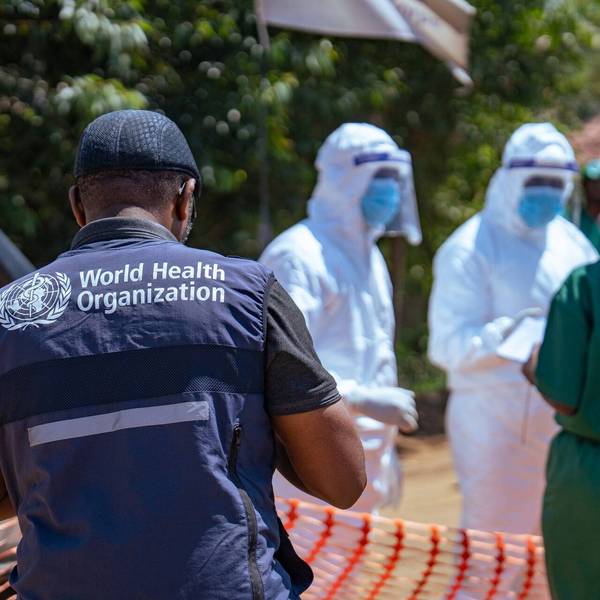
As Liberia's chief medical officer placed herself under quarantine on Saturday, the World Health Organization (WHO) estimated that the Ebola death toll in West Africa had surpassed 3,000--though it warned for the second time in as many months that the statistics "vastly underestimate" the true scale of the epidemic.
Bernice Dahn, a deputy health minister who has represented Liberia at several regional conferences, voluntarily placed herself into a 21-day incubation period after her assistant died of the disease. Dahn told the Associated Press that she did not have any Ebola symptoms but wanted to ensure that she was not infected.
According to the WHO, the 21-day quarantine is the maximum period for Ebola, which has spread rapidly throughout West Africa in recent months and hit Liberia particularly hard.
The epidemic has been compounded by a shortage of health workers and facilities and an insufficient response from the international community. At least 200 health workers have died in Liberia, Guinea, and Sierra Leone, three of the countries where the disease has hit particularly hard. Sierra Leone declared their own crisis a "state of emergency." Their government imposed a three-day lockdown on residents earlier this month and last week quarantined over one million residents in the country's eastern region.
Additional WHO figures released Friday say 150 people died in Liberia in just two days.
"The Ebola epidemic ravaging parts of West Africa is the most severe acute public health emergency seen in modern times," WHO said in a statement. "Never before in recorded history has a biosafety level four pathogen infected so many people so quickly, over such a broad geographical area, for so long."
"The current situation is so dire that, in several areas that include capital cities, many of these common diseases and health conditions are barely being managed at all," WHO said.
At a UN meeting of world leaders in New York on Thursday, President Barack Obama stressed the urgency of a coordinated international effort to address the crisis.
"If unchecked, this epidemic could kill hundreds of thousands of people in the coming months," Obama said. "Ebola is a horrific disease... If ever there were a public health emergency deserving a strong and coordinated international response, this is it."
The President's contribution to fighting the disease was military-based, as he announced last week that the U.S. would send 3,000 troops to West Africa to "support" doctors and scientists in containing and finding new treatments for the outbreak. It remains unclear what the role of the military will be in the public health crisis.
On Thursday, Joanne Liu, president of MSF, planned to appear at the UN conference to tell delegates that "the promised surge has not yet delivered," according to her prepared remarks, the Washington Post reported.
The Centers for Disease Control and Prevention (CDC) recently released new estimates that Ebola may infect 1.4 million people in Liberia and Sierra Leone by the end of January.
"The cost of delay will be devastating," CDC said.

Dear Common Dreams reader, It’s been nearly 30 years since I co-founded Common Dreams with my late wife, Lina Newhouser. We had the radical notion that journalism should serve the public good, not corporate profits. It was clear to us from the outset what it would take to build such a project. No paid advertisements. No corporate sponsors. No millionaire publisher telling us what to think or do. Many people said we wouldn't last a year, but we proved those doubters wrong. Together with a tremendous team of journalists and dedicated staff, we built an independent media outlet free from the constraints of profits and corporate control. Our mission has always been simple: To inform. To inspire. To ignite change for the common good. Building Common Dreams was not easy. Our survival was never guaranteed. When you take on the most powerful forces—Wall Street greed, fossil fuel industry destruction, Big Tech lobbyists, and uber-rich oligarchs who have spent billions upon billions rigging the economy and democracy in their favor—the only bulwark you have is supporters who believe in your work. But here’s the urgent message from me today. It's never been this bad out there. And it's never been this hard to keep us going. At the very moment Common Dreams is most needed, the threats we face are intensifying. We need your support now more than ever. We don't accept corporate advertising and never will. We don't have a paywall because we don't think people should be blocked from critical news based on their ability to pay. Everything we do is funded by the donations of readers like you. When everyone does the little they can afford, we are strong. But if that support retreats or dries up, so do we. Will you donate now to make sure Common Dreams not only survives but thrives? —Craig Brown, Co-founder |
As Liberia's chief medical officer placed herself under quarantine on Saturday, the World Health Organization (WHO) estimated that the Ebola death toll in West Africa had surpassed 3,000--though it warned for the second time in as many months that the statistics "vastly underestimate" the true scale of the epidemic.
Bernice Dahn, a deputy health minister who has represented Liberia at several regional conferences, voluntarily placed herself into a 21-day incubation period after her assistant died of the disease. Dahn told the Associated Press that she did not have any Ebola symptoms but wanted to ensure that she was not infected.
According to the WHO, the 21-day quarantine is the maximum period for Ebola, which has spread rapidly throughout West Africa in recent months and hit Liberia particularly hard.
The epidemic has been compounded by a shortage of health workers and facilities and an insufficient response from the international community. At least 200 health workers have died in Liberia, Guinea, and Sierra Leone, three of the countries where the disease has hit particularly hard. Sierra Leone declared their own crisis a "state of emergency." Their government imposed a three-day lockdown on residents earlier this month and last week quarantined over one million residents in the country's eastern region.
Additional WHO figures released Friday say 150 people died in Liberia in just two days.
"The Ebola epidemic ravaging parts of West Africa is the most severe acute public health emergency seen in modern times," WHO said in a statement. "Never before in recorded history has a biosafety level four pathogen infected so many people so quickly, over such a broad geographical area, for so long."
"The current situation is so dire that, in several areas that include capital cities, many of these common diseases and health conditions are barely being managed at all," WHO said.
At a UN meeting of world leaders in New York on Thursday, President Barack Obama stressed the urgency of a coordinated international effort to address the crisis.
"If unchecked, this epidemic could kill hundreds of thousands of people in the coming months," Obama said. "Ebola is a horrific disease... If ever there were a public health emergency deserving a strong and coordinated international response, this is it."
The President's contribution to fighting the disease was military-based, as he announced last week that the U.S. would send 3,000 troops to West Africa to "support" doctors and scientists in containing and finding new treatments for the outbreak. It remains unclear what the role of the military will be in the public health crisis.
On Thursday, Joanne Liu, president of MSF, planned to appear at the UN conference to tell delegates that "the promised surge has not yet delivered," according to her prepared remarks, the Washington Post reported.
The Centers for Disease Control and Prevention (CDC) recently released new estimates that Ebola may infect 1.4 million people in Liberia and Sierra Leone by the end of January.
"The cost of delay will be devastating," CDC said.
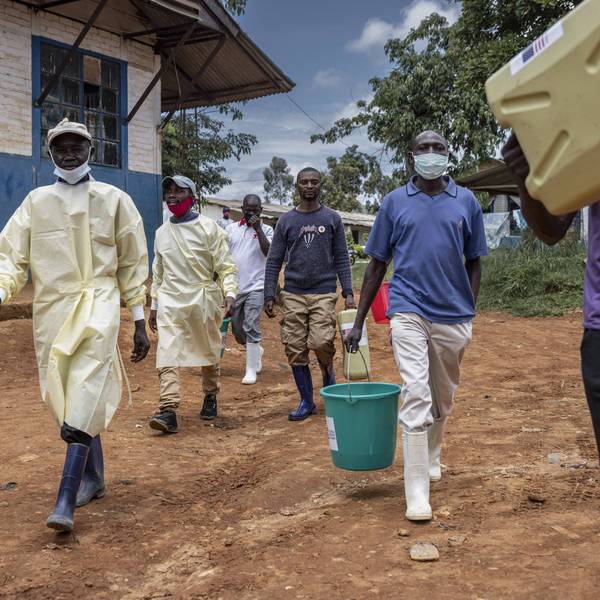
As Liberia's chief medical officer placed herself under quarantine on Saturday, the World Health Organization (WHO) estimated that the Ebola death toll in West Africa had surpassed 3,000--though it warned for the second time in as many months that the statistics "vastly underestimate" the true scale of the epidemic.
Bernice Dahn, a deputy health minister who has represented Liberia at several regional conferences, voluntarily placed herself into a 21-day incubation period after her assistant died of the disease. Dahn told the Associated Press that she did not have any Ebola symptoms but wanted to ensure that she was not infected.
According to the WHO, the 21-day quarantine is the maximum period for Ebola, which has spread rapidly throughout West Africa in recent months and hit Liberia particularly hard.
The epidemic has been compounded by a shortage of health workers and facilities and an insufficient response from the international community. At least 200 health workers have died in Liberia, Guinea, and Sierra Leone, three of the countries where the disease has hit particularly hard. Sierra Leone declared their own crisis a "state of emergency." Their government imposed a three-day lockdown on residents earlier this month and last week quarantined over one million residents in the country's eastern region.
Additional WHO figures released Friday say 150 people died in Liberia in just two days.
"The Ebola epidemic ravaging parts of West Africa is the most severe acute public health emergency seen in modern times," WHO said in a statement. "Never before in recorded history has a biosafety level four pathogen infected so many people so quickly, over such a broad geographical area, for so long."
"The current situation is so dire that, in several areas that include capital cities, many of these common diseases and health conditions are barely being managed at all," WHO said.
At a UN meeting of world leaders in New York on Thursday, President Barack Obama stressed the urgency of a coordinated international effort to address the crisis.
"If unchecked, this epidemic could kill hundreds of thousands of people in the coming months," Obama said. "Ebola is a horrific disease... If ever there were a public health emergency deserving a strong and coordinated international response, this is it."
The President's contribution to fighting the disease was military-based, as he announced last week that the U.S. would send 3,000 troops to West Africa to "support" doctors and scientists in containing and finding new treatments for the outbreak. It remains unclear what the role of the military will be in the public health crisis.
On Thursday, Joanne Liu, president of MSF, planned to appear at the UN conference to tell delegates that "the promised surge has not yet delivered," according to her prepared remarks, the Washington Post reported.
The Centers for Disease Control and Prevention (CDC) recently released new estimates that Ebola may infect 1.4 million people in Liberia and Sierra Leone by the end of January.
"The cost of delay will be devastating," CDC said.