SUBSCRIBE TO OUR FREE NEWSLETTER
Daily news & progressive opinion—funded by the people, not the corporations—delivered straight to your inbox.
5
#000000
#FFFFFF
To donate by check, phone, or other method, see our More Ways to Give page.


Daily news & progressive opinion—funded by the people, not the corporations—delivered straight to your inbox.
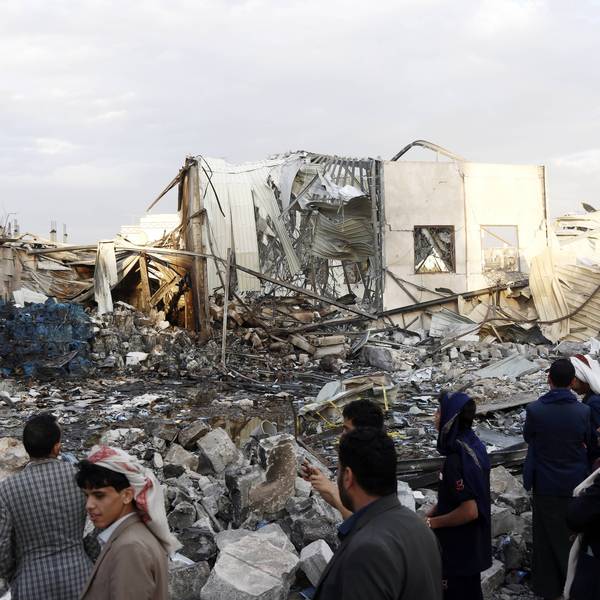
The United States carried out new air strikes in Iraq on Saturday night to accompany what the Pentagon said was a "humanitarian assistance operation" to help Shia Turkmen under a nearly two-month siege by Islamic militants.
According to a statement released by Pentagon Press Secretary Rear Adm. Kirby, "These military operations were conducted under authorization from the Commander-in-Chief to facilitate the delivery of humanitarian assistance and to prevent an ISIL attack on the civilians of Amirli. The operations will be limited in their scope and duration as necessary to address this emerging humanitarian crisis and protect the civilians trapped in Amirli."
According to earlier reporting by Ahmad Mohammed at Niqash.org:
Amerli, which is home to mostly Shiite Muslims of Turkmen ethnicity, has been under siege by forces from the extremist group known as the Islamic State, or IS, since mid-June.
Since the extremists took control of most of the area around the town, forcing other Shiite Muslim Turkmen into Amerli, it has been extremely difficult to get any goods or people in or out. The extremists have also disconnected water and power to the town.
In addition to the U.S. forces, British, Australian and French forces participated in the humanitarian aid drop.
Following President Obama's authorization on August 8 for airstrikes in Iraq as a response to humanitarian crisis, Middle East policy analyst Phyllis Bennis warned that "the U.S. history of linking airdrops of food and water with bombing raids is not a good one." In an op-ed in the Washington Post, Bennis added:
When, in November 2001, the U.S. bombed Afghanistan, desperate Afghans fled to the mountains to escape. They faced the cold with nothing, and the U.S. insisted on responding to their needs with an air drop -- against the advice of experienced humanitarian organizations advocating old-fashioned, if less telegenic, truck and donkey convoys. [...]
Dropping food and water isn't always the same as dropping bombs - but when it's the U.S. Air Force, with cargo planes full of food and water accompanied by fighter jets and bombers, it's way too easy for one to segue right into the other.
Though the Pentagon's statement assured military operations "limited in their scope and duration," in an op-ed in the New York Times this weekend, Secretary of State John Kerry wrote that "[w]hat's needed to confront [the Islamic State's] nihilistic vision and genocidal agenda is a global coalition using political, humanitarian, economic, law enforcement and intelligence tools to support military force." He added: "Airstrikes alone won't defeat this enemy. A much fuller response is demanded from the world."
The U.S. has conducted at least 115 airstrikes on Iraq since Aug. 8.

Dear Common Dreams reader, It’s been nearly 30 years since I co-founded Common Dreams with my late wife, Lina Newhouser. We had the radical notion that journalism should serve the public good, not corporate profits. It was clear to us from the outset what it would take to build such a project. No paid advertisements. No corporate sponsors. No millionaire publisher telling us what to think or do. Many people said we wouldn't last a year, but we proved those doubters wrong. Together with a tremendous team of journalists and dedicated staff, we built an independent media outlet free from the constraints of profits and corporate control. Our mission has always been simple: To inform. To inspire. To ignite change for the common good. Building Common Dreams was not easy. Our survival was never guaranteed. When you take on the most powerful forces—Wall Street greed, fossil fuel industry destruction, Big Tech lobbyists, and uber-rich oligarchs who have spent billions upon billions rigging the economy and democracy in their favor—the only bulwark you have is supporters who believe in your work. But here’s the urgent message from me today. It's never been this bad out there. And it's never been this hard to keep us going. At the very moment Common Dreams is most needed, the threats we face are intensifying. We need your support now more than ever. We don't accept corporate advertising and never will. We don't have a paywall because we don't think people should be blocked from critical news based on their ability to pay. Everything we do is funded by the donations of readers like you. When everyone does the little they can afford, we are strong. But if that support retreats or dries up, so do we. Will you donate now to make sure Common Dreams not only survives but thrives? —Craig Brown, Co-founder |
The United States carried out new air strikes in Iraq on Saturday night to accompany what the Pentagon said was a "humanitarian assistance operation" to help Shia Turkmen under a nearly two-month siege by Islamic militants.
According to a statement released by Pentagon Press Secretary Rear Adm. Kirby, "These military operations were conducted under authorization from the Commander-in-Chief to facilitate the delivery of humanitarian assistance and to prevent an ISIL attack on the civilians of Amirli. The operations will be limited in their scope and duration as necessary to address this emerging humanitarian crisis and protect the civilians trapped in Amirli."
According to earlier reporting by Ahmad Mohammed at Niqash.org:
Amerli, which is home to mostly Shiite Muslims of Turkmen ethnicity, has been under siege by forces from the extremist group known as the Islamic State, or IS, since mid-June.
Since the extremists took control of most of the area around the town, forcing other Shiite Muslim Turkmen into Amerli, it has been extremely difficult to get any goods or people in or out. The extremists have also disconnected water and power to the town.
In addition to the U.S. forces, British, Australian and French forces participated in the humanitarian aid drop.
Following President Obama's authorization on August 8 for airstrikes in Iraq as a response to humanitarian crisis, Middle East policy analyst Phyllis Bennis warned that "the U.S. history of linking airdrops of food and water with bombing raids is not a good one." In an op-ed in the Washington Post, Bennis added:
When, in November 2001, the U.S. bombed Afghanistan, desperate Afghans fled to the mountains to escape. They faced the cold with nothing, and the U.S. insisted on responding to their needs with an air drop -- against the advice of experienced humanitarian organizations advocating old-fashioned, if less telegenic, truck and donkey convoys. [...]
Dropping food and water isn't always the same as dropping bombs - but when it's the U.S. Air Force, with cargo planes full of food and water accompanied by fighter jets and bombers, it's way too easy for one to segue right into the other.
Though the Pentagon's statement assured military operations "limited in their scope and duration," in an op-ed in the New York Times this weekend, Secretary of State John Kerry wrote that "[w]hat's needed to confront [the Islamic State's] nihilistic vision and genocidal agenda is a global coalition using political, humanitarian, economic, law enforcement and intelligence tools to support military force." He added: "Airstrikes alone won't defeat this enemy. A much fuller response is demanded from the world."
The U.S. has conducted at least 115 airstrikes on Iraq since Aug. 8.
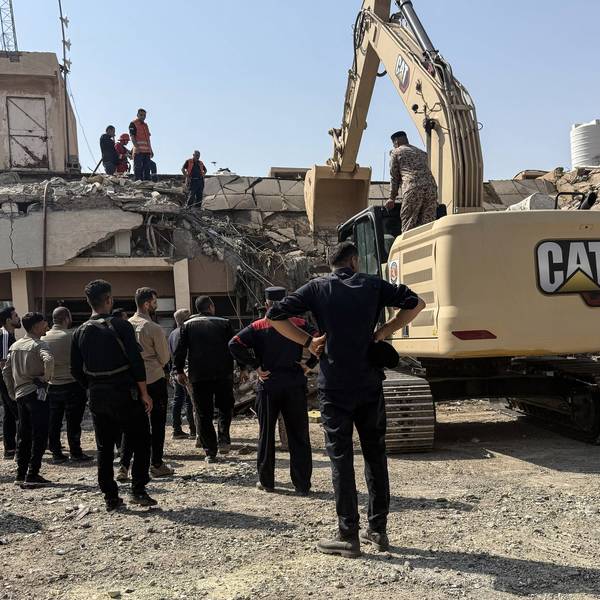
The United States carried out new air strikes in Iraq on Saturday night to accompany what the Pentagon said was a "humanitarian assistance operation" to help Shia Turkmen under a nearly two-month siege by Islamic militants.
According to a statement released by Pentagon Press Secretary Rear Adm. Kirby, "These military operations were conducted under authorization from the Commander-in-Chief to facilitate the delivery of humanitarian assistance and to prevent an ISIL attack on the civilians of Amirli. The operations will be limited in their scope and duration as necessary to address this emerging humanitarian crisis and protect the civilians trapped in Amirli."
According to earlier reporting by Ahmad Mohammed at Niqash.org:
Amerli, which is home to mostly Shiite Muslims of Turkmen ethnicity, has been under siege by forces from the extremist group known as the Islamic State, or IS, since mid-June.
Since the extremists took control of most of the area around the town, forcing other Shiite Muslim Turkmen into Amerli, it has been extremely difficult to get any goods or people in or out. The extremists have also disconnected water and power to the town.
In addition to the U.S. forces, British, Australian and French forces participated in the humanitarian aid drop.
Following President Obama's authorization on August 8 for airstrikes in Iraq as a response to humanitarian crisis, Middle East policy analyst Phyllis Bennis warned that "the U.S. history of linking airdrops of food and water with bombing raids is not a good one." In an op-ed in the Washington Post, Bennis added:
When, in November 2001, the U.S. bombed Afghanistan, desperate Afghans fled to the mountains to escape. They faced the cold with nothing, and the U.S. insisted on responding to their needs with an air drop -- against the advice of experienced humanitarian organizations advocating old-fashioned, if less telegenic, truck and donkey convoys. [...]
Dropping food and water isn't always the same as dropping bombs - but when it's the U.S. Air Force, with cargo planes full of food and water accompanied by fighter jets and bombers, it's way too easy for one to segue right into the other.
Though the Pentagon's statement assured military operations "limited in their scope and duration," in an op-ed in the New York Times this weekend, Secretary of State John Kerry wrote that "[w]hat's needed to confront [the Islamic State's] nihilistic vision and genocidal agenda is a global coalition using political, humanitarian, economic, law enforcement and intelligence tools to support military force." He added: "Airstrikes alone won't defeat this enemy. A much fuller response is demanded from the world."
The U.S. has conducted at least 115 airstrikes on Iraq since Aug. 8.