SUBSCRIBE TO OUR FREE NEWSLETTER
Daily news & progressive opinion—funded by the people, not the corporations—delivered straight to your inbox.
5
#000000
#FFFFFF
To donate by check, phone, or other method, see our More Ways to Give page.
Daily news & progressive opinion—funded by the people, not the corporations—delivered straight to your inbox.
The indefinite ceasefire between representatives from Israel and Palestine announced Tuesday brought an immediate relief from the Israeli military operation dubbed Operation Protective Edge. However, it raised many questions regarding the future for the Gaza Strip following the 50-day assault that left roughly 2,200 people, over 95 percent Palestinians, dead.
"Unless long-term solutions are found to ensure economic growth and sustainable development in Gaza, frequent military escalations will only continue, increasing insecurity for Israelis and Palestinians alike," said international aid organization Oxfam in a report published Wednesday.
The report, Cease Failure: Rethinking seven years of failed policies in Gaza (pdf), lists a number of recommendations that, according to Oxfam, must be immediately implemented to ensure a just and lasting peace. Among those actions, the group says that Israel must "permanently lift its restrictions on Palestinian development and allow freedom of movement," including the re-establishment of permanent and open connections through the Erez and Rafah crossings.
Oxfam warns that this moment may be the "last opportunity to implement lasting solutions."
The terms of the current ceasefire, brokered by Egypt, are similar to those following the 2012 conflict, which many believe was a missed opportunity to implement more lasting, structural changes.
Israel has agreed to ease some of the restrictions on border crossings ("something it does intermittently anyway," the Associated Press notes), and increase access for Gaza fisherman in the Mediterranean to 12 nautical miles by the end of the year. Hamas' other demands--which include opening an airport and seaport, prisoner releases, salaries for civil servants and the opening of the Rafah crossing to Egypt--are to be discussed in a month's time, as is Israel's demand for Gaza to become a demilitarized zone.
Regarding those long-term issues, AP notes that "little is likely to be resolved anytime soon."
In a blog post published on Wednesday, Middle East historian Juan Cole notes: "If the Palestinian side really does get the things it is asking for [...] then the struggle will have been a big win for them."
Following the ceasefire announcement, there were reports of celebrations across Gaza. However, as Gaza writer Omar Ghraieb told Ali Abunimah, co-founder of the Electronic Intifada, "I do not feel in a rejoicing mood, only glad that no more people and children will die."
"So many people got injured, houses got bombed, towers got leveled and life got deformed," Ghraieb continued. "I would rather just watch closely what awaits Gaza."
The latest attack on Gaza has resulted in a total of 2,127 Palestinian lives lost, 85 percent of which were civilians including 504 children. On Tuesday, the Telegraph published a list compiled the Al-Mezan Center for Human Rights of the names and ages of each of the children killed in the Israeli military operation.
More than 17,200 homes have been completely destroyed or severely damaged in the Strip, leaving roughly 100,000 people homeless as a result of the fighting.
According to the Oxfam report,
vital civilian infrastructure has been badly damaged, including 33 health facilities 13 and 230 schools, 14 as well as water pipelines, sewage treatment facilities and water desalination plants. The destruction of Gaza's only power plant has further exacerbated the pre-existing energy crisis. Total damage to basic infrastructure in Gaza has been estimated by the Palestinian Deputy Prime Minister at $6bn .
The report adds that the "devastating impact of more than seven years of the Israeli government's blockade of Gaza" has made both the population and infrastructure all the more vulnerable.
On Wednesday, the United Nations confirmed that they were able to deliver food to Gaza through the Rafa crossing for the first time since 2007.
In the short-term, groups such as Oxfam are calling for Israel to permit the flow of humanitarian aid and rebuilding materials into the Gaza strip not "contingent upon political developments or demands."
But, advocates say, lasting peace will require a much more dramatic structural and psychological shift in the Middle East.
"A ceasefire is not enough. Rebuilding Gaza is not enough. Even ending the siege would not be enough," Abunimah wrote Tuesday. "We have to say never again. Never again must Israel be allowed to massacre Palestinians as it has in Gaza in 2006, 2008-2009, 2012 and 2014 - the years since it decided to turn Gaza into a giant open-air prison."
Echoing that sentiment, Cole writes: "Until Israelis come to terms with the Catastrophe (Nakba) that they have inflicted on generations of Palestinians, who have been left more or less homeless and in a kind of vast concentration camp, they cannot really make peace."
Dear Common Dreams reader, It’s been nearly 30 years since I co-founded Common Dreams with my late wife, Lina Newhouser. We had the radical notion that journalism should serve the public good, not corporate profits. It was clear to us from the outset what it would take to build such a project. No paid advertisements. No corporate sponsors. No millionaire publisher telling us what to think or do. Many people said we wouldn't last a year, but we proved those doubters wrong. Together with a tremendous team of journalists and dedicated staff, we built an independent media outlet free from the constraints of profits and corporate control. Our mission has always been simple: To inform. To inspire. To ignite change for the common good. Building Common Dreams was not easy. Our survival was never guaranteed. When you take on the most powerful forces—Wall Street greed, fossil fuel industry destruction, Big Tech lobbyists, and uber-rich oligarchs who have spent billions upon billions rigging the economy and democracy in their favor—the only bulwark you have is supporters who believe in your work. But here’s the urgent message from me today. It's never been this bad out there. And it's never been this hard to keep us going. At the very moment Common Dreams is most needed, the threats we face are intensifying. We need your support now more than ever. We don't accept corporate advertising and never will. We don't have a paywall because we don't think people should be blocked from critical news based on their ability to pay. Everything we do is funded by the donations of readers like you. When everyone does the little they can afford, we are strong. But if that support retreats or dries up, so do we. Will you donate now to make sure Common Dreams not only survives but thrives? —Craig Brown, Co-founder |
The indefinite ceasefire between representatives from Israel and Palestine announced Tuesday brought an immediate relief from the Israeli military operation dubbed Operation Protective Edge. However, it raised many questions regarding the future for the Gaza Strip following the 50-day assault that left roughly 2,200 people, over 95 percent Palestinians, dead.
"Unless long-term solutions are found to ensure economic growth and sustainable development in Gaza, frequent military escalations will only continue, increasing insecurity for Israelis and Palestinians alike," said international aid organization Oxfam in a report published Wednesday.
The report, Cease Failure: Rethinking seven years of failed policies in Gaza (pdf), lists a number of recommendations that, according to Oxfam, must be immediately implemented to ensure a just and lasting peace. Among those actions, the group says that Israel must "permanently lift its restrictions on Palestinian development and allow freedom of movement," including the re-establishment of permanent and open connections through the Erez and Rafah crossings.
Oxfam warns that this moment may be the "last opportunity to implement lasting solutions."
The terms of the current ceasefire, brokered by Egypt, are similar to those following the 2012 conflict, which many believe was a missed opportunity to implement more lasting, structural changes.
Israel has agreed to ease some of the restrictions on border crossings ("something it does intermittently anyway," the Associated Press notes), and increase access for Gaza fisherman in the Mediterranean to 12 nautical miles by the end of the year. Hamas' other demands--which include opening an airport and seaport, prisoner releases, salaries for civil servants and the opening of the Rafah crossing to Egypt--are to be discussed in a month's time, as is Israel's demand for Gaza to become a demilitarized zone.
Regarding those long-term issues, AP notes that "little is likely to be resolved anytime soon."
In a blog post published on Wednesday, Middle East historian Juan Cole notes: "If the Palestinian side really does get the things it is asking for [...] then the struggle will have been a big win for them."
Following the ceasefire announcement, there were reports of celebrations across Gaza. However, as Gaza writer Omar Ghraieb told Ali Abunimah, co-founder of the Electronic Intifada, "I do not feel in a rejoicing mood, only glad that no more people and children will die."
"So many people got injured, houses got bombed, towers got leveled and life got deformed," Ghraieb continued. "I would rather just watch closely what awaits Gaza."
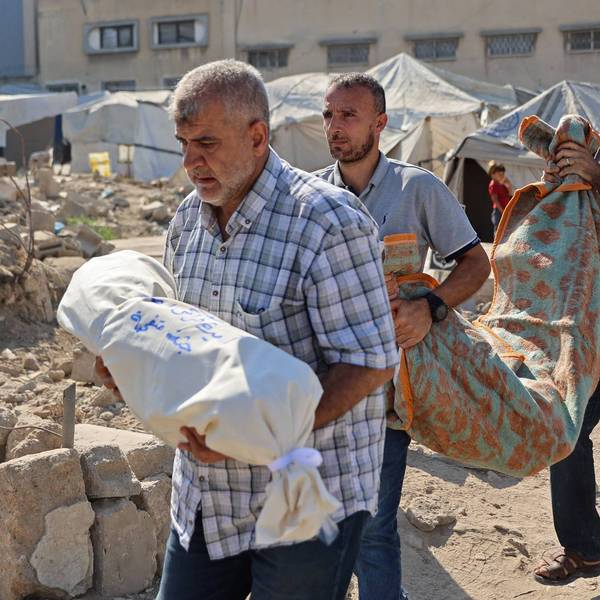
The latest attack on Gaza has resulted in a total of 2,127 Palestinian lives lost, 85 percent of which were civilians including 504 children. On Tuesday, the Telegraph published a list compiled the Al-Mezan Center for Human Rights of the names and ages of each of the children killed in the Israeli military operation.
More than 17,200 homes have been completely destroyed or severely damaged in the Strip, leaving roughly 100,000 people homeless as a result of the fighting.
According to the Oxfam report,
vital civilian infrastructure has been badly damaged, including 33 health facilities 13 and 230 schools, 14 as well as water pipelines, sewage treatment facilities and water desalination plants. The destruction of Gaza's only power plant has further exacerbated the pre-existing energy crisis. Total damage to basic infrastructure in Gaza has been estimated by the Palestinian Deputy Prime Minister at $6bn .
The report adds that the "devastating impact of more than seven years of the Israeli government's blockade of Gaza" has made both the population and infrastructure all the more vulnerable.
On Wednesday, the United Nations confirmed that they were able to deliver food to Gaza through the Rafa crossing for the first time since 2007.
In the short-term, groups such as Oxfam are calling for Israel to permit the flow of humanitarian aid and rebuilding materials into the Gaza strip not "contingent upon political developments or demands."
But, advocates say, lasting peace will require a much more dramatic structural and psychological shift in the Middle East.
"A ceasefire is not enough. Rebuilding Gaza is not enough. Even ending the siege would not be enough," Abunimah wrote Tuesday. "We have to say never again. Never again must Israel be allowed to massacre Palestinians as it has in Gaza in 2006, 2008-2009, 2012 and 2014 - the years since it decided to turn Gaza into a giant open-air prison."
Echoing that sentiment, Cole writes: "Until Israelis come to terms with the Catastrophe (Nakba) that they have inflicted on generations of Palestinians, who have been left more or less homeless and in a kind of vast concentration camp, they cannot really make peace."
The indefinite ceasefire between representatives from Israel and Palestine announced Tuesday brought an immediate relief from the Israeli military operation dubbed Operation Protective Edge. However, it raised many questions regarding the future for the Gaza Strip following the 50-day assault that left roughly 2,200 people, over 95 percent Palestinians, dead.
"Unless long-term solutions are found to ensure economic growth and sustainable development in Gaza, frequent military escalations will only continue, increasing insecurity for Israelis and Palestinians alike," said international aid organization Oxfam in a report published Wednesday.
The report, Cease Failure: Rethinking seven years of failed policies in Gaza (pdf), lists a number of recommendations that, according to Oxfam, must be immediately implemented to ensure a just and lasting peace. Among those actions, the group says that Israel must "permanently lift its restrictions on Palestinian development and allow freedom of movement," including the re-establishment of permanent and open connections through the Erez and Rafah crossings.
Oxfam warns that this moment may be the "last opportunity to implement lasting solutions."
The terms of the current ceasefire, brokered by Egypt, are similar to those following the 2012 conflict, which many believe was a missed opportunity to implement more lasting, structural changes.
Israel has agreed to ease some of the restrictions on border crossings ("something it does intermittently anyway," the Associated Press notes), and increase access for Gaza fisherman in the Mediterranean to 12 nautical miles by the end of the year. Hamas' other demands--which include opening an airport and seaport, prisoner releases, salaries for civil servants and the opening of the Rafah crossing to Egypt--are to be discussed in a month's time, as is Israel's demand for Gaza to become a demilitarized zone.
Regarding those long-term issues, AP notes that "little is likely to be resolved anytime soon."
In a blog post published on Wednesday, Middle East historian Juan Cole notes: "If the Palestinian side really does get the things it is asking for [...] then the struggle will have been a big win for them."
Following the ceasefire announcement, there were reports of celebrations across Gaza. However, as Gaza writer Omar Ghraieb told Ali Abunimah, co-founder of the Electronic Intifada, "I do not feel in a rejoicing mood, only glad that no more people and children will die."
"So many people got injured, houses got bombed, towers got leveled and life got deformed," Ghraieb continued. "I would rather just watch closely what awaits Gaza."
The latest attack on Gaza has resulted in a total of 2,127 Palestinian lives lost, 85 percent of which were civilians including 504 children. On Tuesday, the Telegraph published a list compiled the Al-Mezan Center for Human Rights of the names and ages of each of the children killed in the Israeli military operation.
More than 17,200 homes have been completely destroyed or severely damaged in the Strip, leaving roughly 100,000 people homeless as a result of the fighting.
According to the Oxfam report,
vital civilian infrastructure has been badly damaged, including 33 health facilities 13 and 230 schools, 14 as well as water pipelines, sewage treatment facilities and water desalination plants. The destruction of Gaza's only power plant has further exacerbated the pre-existing energy crisis. Total damage to basic infrastructure in Gaza has been estimated by the Palestinian Deputy Prime Minister at $6bn .
The report adds that the "devastating impact of more than seven years of the Israeli government's blockade of Gaza" has made both the population and infrastructure all the more vulnerable.
On Wednesday, the United Nations confirmed that they were able to deliver food to Gaza through the Rafa crossing for the first time since 2007.
In the short-term, groups such as Oxfam are calling for Israel to permit the flow of humanitarian aid and rebuilding materials into the Gaza strip not "contingent upon political developments or demands."
But, advocates say, lasting peace will require a much more dramatic structural and psychological shift in the Middle East.
"A ceasefire is not enough. Rebuilding Gaza is not enough. Even ending the siege would not be enough," Abunimah wrote Tuesday. "We have to say never again. Never again must Israel be allowed to massacre Palestinians as it has in Gaza in 2006, 2008-2009, 2012 and 2014 - the years since it decided to turn Gaza into a giant open-air prison."
Echoing that sentiment, Cole writes: "Until Israelis come to terms with the Catastrophe (Nakba) that they have inflicted on generations of Palestinians, who have been left more or less homeless and in a kind of vast concentration camp, they cannot really make peace."