
"Since the detonation and creation of first atomic bomb in New Mexico, we the people who live in close proximity of storage and creation of these weapons have been in a state of fear," said Kathy Wanpovi Sanchez, Environmental Health and Justice Program Manager for Tewa Women United, an indigenous organization based in northen New Mexico.
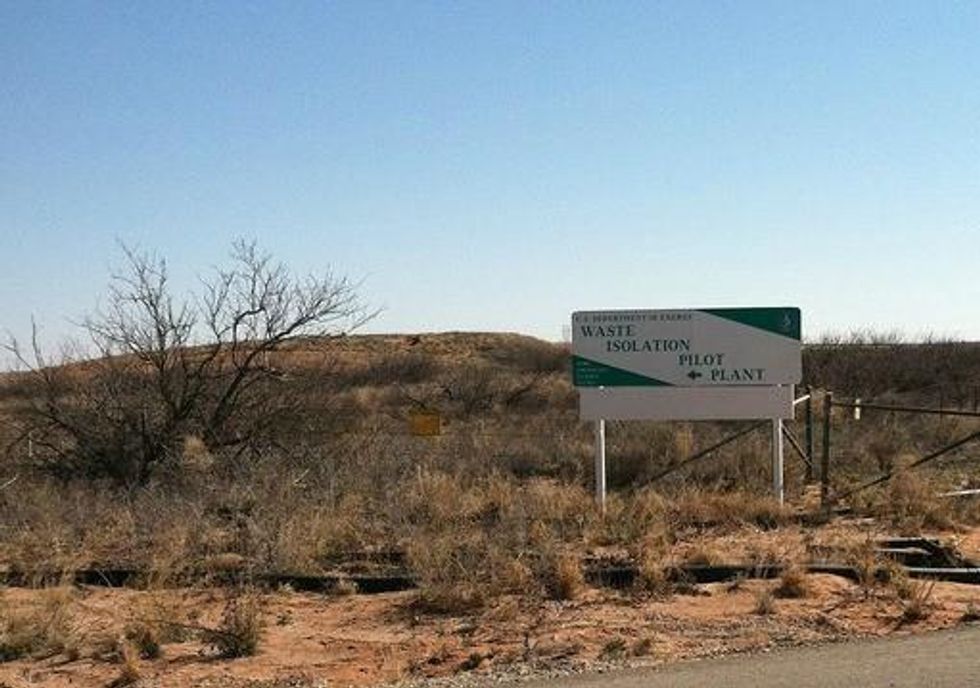
Over the weekend, abnormally high levels of radioactive particles were found underground at the Waste Isolation Pilot Plant (WIPP) near Carlsbad in southeastern New Mexico, where radioactive waste, including from nuclear weapons production, is dumped deep beneath the earth's surface and stored in salt formations.
"I believe it's safe to say we've never seen a level like we are seeing. We just don't know if it's a real event, but it looks like one," said Department of Energy spokesman Roger Nelson.
WIPP stores waste that releases alpha and beta radiation, which are highly cancerous when ingested, explained Arnie Gundersen, former nuclear industry executive turned whistleblower, in an interview with Common Dreams. DOE officials say radiation has not been detected in surface samples, and no workers have been exposed. They say they do not yet know the source of the suspected underground leak.
Gundersen says the technology behind WIPP is untested -- hence the word "pilot" in the facility's title. "As a society, we believe that if you stick things in the earth, they are safe," he said. "But with radioactivity, it's not dead. It can come back to haunt you if there is a leak afterwards. This is alive."
Don Hancock, Director of the Nuclear Waste Program at the Southwest Research and Information Center, says the concerns about the site extend beyond the method of nuclear waste storage. "We have always thought the site is a bad site primarily because it is centrally located in one of the largest and most active oil and gas production areas in the United States. This does not seem to be an appropriate place to put waste."
The incident comes just over a week after an underground truck fire forced an evacuation of the facility.
Nuclear experts are not convinced that the situation is safe. "This kind of incident is not supposed to happen," said Hancock. "Just like the fire on the underground, there were these two incidents within a 12-day period. That is worrisome and that is a significant situation."
Storage is not the only issue facing local residents. Nuclear waste transported from across the country, and across the state from the Los Alamos National Laboratory in the north, where nuclear weapons are developed, passes through "Native American reservations, major highways, and near school systems," as it makes its way to WIPP, says Sanchez.
"Our pain and death due to cancer have been ignored. We are sick and tired of all this madness. And all this transportation and waste storage is for the benefit of a nuclear war weapons arsenal. Why?" asked Sanchez. "The U.S. government disregards and takes advantage of indigenous people. This is an unequal share of the burden we are carrying."
She added, "This is highly toxic poisoning that can be eliminated by stopping the desire to be a nuclear power over the world."
_____________________
"Since the detonation and creation of first atomic bomb in New Mexico, we the people who live in close proximity of storage and creation of these weapons have been in a state of fear," said Kathy Wanpovi Sanchez, Environmental Health and Justice Program Manager for Tewa Women United, an indigenous organization based in northen New Mexico.
Over the weekend, abnormally high levels of radioactive particles were found underground at the Waste Isolation Pilot Plant (WIPP) near Carlsbad in southeastern New Mexico, where radioactive waste, including from nuclear weapons production, is dumped deep beneath the earth's surface and stored in salt formations.
"I believe it's safe to say we've never seen a level like we are seeing. We just don't know if it's a real event, but it looks like one," said Department of Energy spokesman Roger Nelson.
WIPP stores waste that releases alpha and beta radiation, which are highly cancerous when ingested, explained Arnie Gundersen, former nuclear industry executive turned whistleblower, in an interview with Common Dreams. DOE officials say radiation has not been detected in surface samples, and no workers have been exposed. They say they do not yet know the source of the suspected underground leak.
Gundersen says the technology behind WIPP is untested -- hence the word "pilot" in the facility's title. "As a society, we believe that if you stick things in the earth, they are safe," he said. "But with radioactivity, it's not dead. It can come back to haunt you if there is a leak afterwards. This is alive."
Don Hancock, Director of the Nuclear Waste Program at the Southwest Research and Information Center, says the concerns about the site extend beyond the method of nuclear waste storage. "We have always thought the site is a bad site primarily because it is centrally located in one of the largest and most active oil and gas production areas in the United States. This does not seem to be an appropriate place to put waste."
The incident comes just over a week after an underground truck fire forced an evacuation of the facility.
Nuclear experts are not convinced that the situation is safe. "This kind of incident is not supposed to happen," said Hancock. "Just like the fire on the underground, there were these two incidents within a 12-day period. That is worrisome and that is a significant situation."
Storage is not the only issue facing local residents. Nuclear waste transported from across the country, and across the state from the Los Alamos National Laboratory in the north, where nuclear weapons are developed, passes through "Native American reservations, major highways, and near school systems," as it makes its way to WIPP, says Sanchez.
"Our pain and death due to cancer have been ignored. We are sick and tired of all this madness. And all this transportation and waste storage is for the benefit of a nuclear war weapons arsenal. Why?" asked Sanchez. "The U.S. government disregards and takes advantage of indigenous people. This is an unequal share of the burden we are carrying."
She added, "This is highly toxic poisoning that can be eliminated by stopping the desire to be a nuclear power over the world."
_____________________
"Since the detonation and creation of first atomic bomb in New Mexico, we the people who live in close proximity of storage and creation of these weapons have been in a state of fear," said Kathy Wanpovi Sanchez, Environmental Health and Justice Program Manager for Tewa Women United, an indigenous organization based in northen New Mexico.
Over the weekend, abnormally high levels of radioactive particles were found underground at the Waste Isolation Pilot Plant (WIPP) near Carlsbad in southeastern New Mexico, where radioactive waste, including from nuclear weapons production, is dumped deep beneath the earth's surface and stored in salt formations.
"I believe it's safe to say we've never seen a level like we are seeing. We just don't know if it's a real event, but it looks like one," said Department of Energy spokesman Roger Nelson.
WIPP stores waste that releases alpha and beta radiation, which are highly cancerous when ingested, explained Arnie Gundersen, former nuclear industry executive turned whistleblower, in an interview with Common Dreams. DOE officials say radiation has not been detected in surface samples, and no workers have been exposed. They say they do not yet know the source of the suspected underground leak.
Gundersen says the technology behind WIPP is untested -- hence the word "pilot" in the facility's title. "As a society, we believe that if you stick things in the earth, they are safe," he said. "But with radioactivity, it's not dead. It can come back to haunt you if there is a leak afterwards. This is alive."
Don Hancock, Director of the Nuclear Waste Program at the Southwest Research and Information Center, says the concerns about the site extend beyond the method of nuclear waste storage. "We have always thought the site is a bad site primarily because it is centrally located in one of the largest and most active oil and gas production areas in the United States. This does not seem to be an appropriate place to put waste."
The incident comes just over a week after an underground truck fire forced an evacuation of the facility.
Nuclear experts are not convinced that the situation is safe. "This kind of incident is not supposed to happen," said Hancock. "Just like the fire on the underground, there were these two incidents within a 12-day period. That is worrisome and that is a significant situation."
Storage is not the only issue facing local residents. Nuclear waste transported from across the country, and across the state from the Los Alamos National Laboratory in the north, where nuclear weapons are developed, passes through "Native American reservations, major highways, and near school systems," as it makes its way to WIPP, says Sanchez.
"Our pain and death due to cancer have been ignored. We are sick and tired of all this madness. And all this transportation and waste storage is for the benefit of a nuclear war weapons arsenal. Why?" asked Sanchez. "The U.S. government disregards and takes advantage of indigenous people. This is an unequal share of the burden we are carrying."
She added, "This is highly toxic poisoning that can be eliminated by stopping the desire to be a nuclear power over the world."
_____________________