SUBSCRIBE TO OUR FREE NEWSLETTER
Daily news & progressive opinion—funded by the people, not the corporations—delivered straight to your inbox.
5
#000000
#FFFFFF
To donate by check, phone, or other method, see our More Ways to Give page.
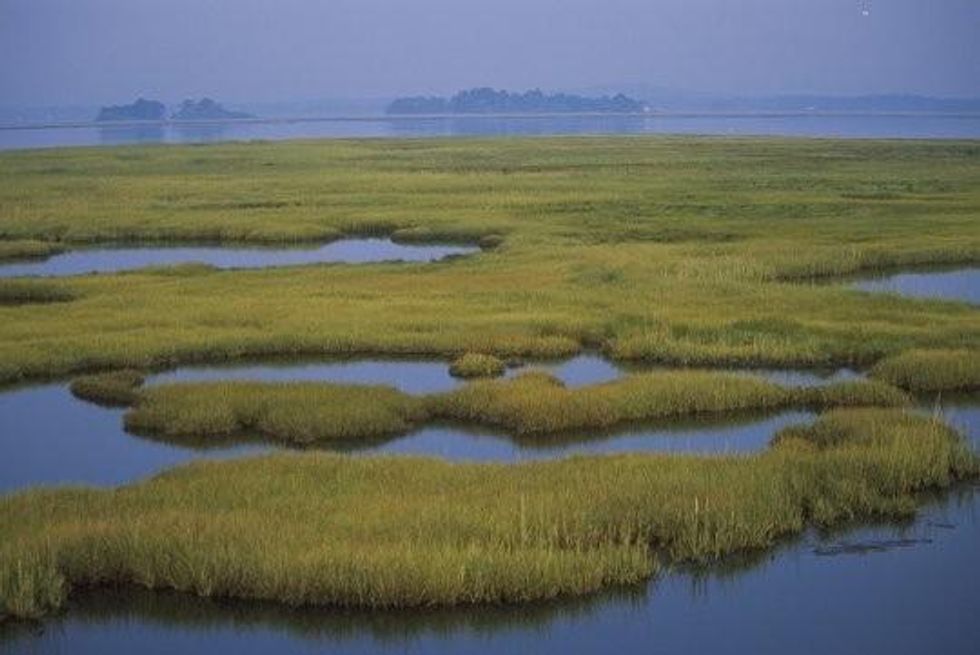
In the study published Sunday in the journal Nature Climate Change, the team of Stanford scientists writes:
"Today, 16 percent of the US coastline comprises 'high hazard' areas harboring 1.3 million people, (including) 250,000 elderly (and) 30,000 families below the poverty line, and $300 billion (230 billion euros) in residential property value."
"At present habitats protect 67 percent of the coastline."
"Habitat loss would double the extent of coastline highly exposed... and the number of poor families, elderly people and total property highly exposed to hazards would also double."
Explaining how the habitats offer protection, The National Geographic writes:
Coastal habitats including marshes, dunes, seagrass beds, mangrove and other coastal forests, kelp forests, oyster beds, and coral reefs help keep waves and storm surge from flooding and eroding coastal property. Coral reefs, for example, can reduce the energy of waves that hit shore by 85 percent.
"If we lose these defenses, we will either have to have massive investments in engineered defenses or risk greater damage to millions of people and billions in property," said lead author and Stanford scientist Katie Arkema.
USA Today adds this from Peter Kareiva, chief scientist at The Nature Conservancy and one of the study's co-authors:
"We have the Human Genome. What about the Earth Genome?" he asks, saying habitats could reduce the need for costlier solutions and offer other benefits such as recreation, fish nurseries, water filtration and erosion control. "It costs a ton of money to build a sea wall, and a sea wall does one thing only. Habitats do many."
"With other studies a disaster comes along, say a tsunami, and afterward people collect information and say, 'Here where they left the mangroves intact, people didn't seem to suffer as much.' That's good science but it's after the fact," added Kareiva.
"This study takes us in a direction of saying let's be proactive," he said. "Let's not wait for a storm to happen. Where does natural habitat offer some natural risk reduction before the storm happens?"
Edward Barbier, a natural-resource economist at the University of Wyoming in Laramie who published a study earlier this year on the protection Louisiana marshes provided, said, "This is ground-breaking work to show the extent to which habitats may protect property and people along the coastlines of the entire United States under different climate-change scenarios -- no one's done that before."
________________________