SUBSCRIBE TO OUR FREE NEWSLETTER
Daily news & progressive opinion—funded by the people, not the corporations—delivered straight to your inbox.
5
#000000
#FFFFFF
To donate by check, phone, or other method, see our More Ways to Give page.
Daily news & progressive opinion—funded by the people, not the corporations—delivered straight to your inbox.

Given the growing sense of shame and disaffection in the ranks of the GOP, Trump should expect a full Senate trial in his second impeachment, in sharp contrast to the perfunctory acquittal he received in his first impeachment. (Photo: Library of Congress)
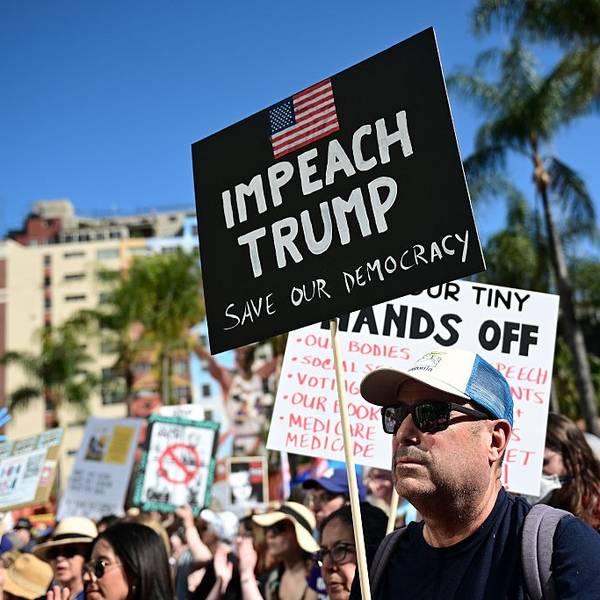
While there are not many days left in his presidency, Donald Trump remains an unparalleled menace to democracy. He must be removed from power and brought to justice as soon as possible. Each day we delay, we run the risk of catastrophe.
With news that Articles of Impeachment will be introduced into the U.S. House of Representatives, a vibrant discussion abounds on whether this is the appropriate method of censure and removal. On Friday, Senate Majority Leader (for now) Mitch McConnell circulated a memo to colleagues outlining the process an impeachment might follow.
There is also talk of removing Trump from office by means of the Twenty-Fifth Amendment. But while the debate has been healthy and spirited, it has for the most part been poorly framed because it presents a false "either or" dichotomy.
Donald Trump remains an unparalleled menace to democracy. He must be removed from power and brought to justice as soon as possible. Each day we delay, we run the risk of catastrophe.
As a matter of strategy, tactics and law, the Twenty-Fifth Amendment and impeachment can and should be pursued simultaneously. The remedies they offer are complementary, not in conflict.
The real question is not whether Congress should invoke either the amendment or pursue impeachment. The question is whether Congress has the will to take action quickly and decisively.
Ratified in 1967 in the aftermath of uncertainty following the assassination of President John F. Kennedy, the Twenty-Fifth Amendment offers the quickest route to accountability.
The amendment sets forth a process and a detailed time-line for declaring a sitting President incapable of performing his duties, and transferring executive authority to the Vice President. To initiate the transfer, the Vice President and a majority of the members of the Cabinet need only sign a declaration asserting that the President is "unable to discharge the powers and duties of his office." Thereafter, "the Vice President shall immediately assume" those powers.
The amendment also permits the President to resume office by signing a counter-declaration alleging his capacity to serve. But within four days of receiving the counter-declaration, the Vice President and a majority of the Cabinet can keep the President out of power by signing another declaration of their own. After that, the issue of the President's fitness is committed to the Congress, which must make a final decision by a two-thirds majority vote within twenty-one days.
Vice President Mike Pence reportedly hasn't closed the door on invoking the amendment, but clearly, he must be pushed both by Democrats and the public at large to change his mind before Trump unleashes another MAGA mob to wreak havoc in Washington, D.C., or elsewhere, prior to the Inauguration of Joe Biden on January 20.
Should Pence do so--and remember that he had his "come to Jesus moment" when, on the morning of January 7, he certified Biden's Electoral College victory--Trump would be unable to restore himself to power within the amendment's time-line.
But whether or not Pence can be made to heed the call of history, Democrats should launch a second, "high speed" impeachment proceeding against Trump. A new impeachment resolution has already been drafted for this purpose, charging Trump with "incitement of insurrection" for sparking the failed violent coup attempt staged at the U.S. Capitol on January 6.
Even if the process cannot be completed before Inauguration Day, a second impeachment is a necessity.
Even if the process cannot be completed before Inauguration Day, a second impeachment is a necessity. Its principal goal would be to disqualify Trump from ever holding federal office again. It would also take from him the many perks (financial and otherwise) that are given to "former Presidents" under the 1958 Former Presidents Act. He would, however, continue to have Secret Service protection under a 2012 amendment to that act.
Normally, when we think of impeachment, we envision the removal of an official from office. But under Article I, Section 3 of the U.S. Constitution, judgments in cases of impeachment extend not only to removal, but also to future disqualification.
As I have written elsewhere, there is no legal bar to trying Trump in the Senate on a new article of impeachment after January 20. In 1876, the Senate conducted an impeachment trial of Secretary of War William Belknap even though he had resigned before the House voted to impeach him for financial corruption.
While Richard Nixon was able to escape impeachment via resignation, the current House and Senate, now controlled by the Democrats, would not be bound by the Nixon example. Both chambers would be free instead to follow the Belknap precedent in the case of impeaching a former President, as several leading constitutional scholars have indicated in interviews with the Washington Post in 2019. Impeachable offenses, moreover, are not subject to the President's pardon power.
Given the growing sense of shame and disaffection in the ranks of the GOP, Trump should expect a full Senate trial in his second impeachment, in sharp contrast to the perfunctory acquittal he received in his first impeachment.
Witnesses would be called. Evidence would be presented. The whole world would watch as Trump and the fascism he has promoted are put on display.
No federal official in American history has ever been impeached twice. But Trump has always prided himself as being a norm-buster, and no American President has ever deserved harsher treatment.
No federal official in American history has ever been impeached twice.
A second impeachment would be a fitting conclusion to Trump's defilement of the presidency. Better still, if we maintain our vigilance and continue to press for accountability, a second impeachment could also be a prelude to future federal and state criminal prosecutions of Trump and his principal enablers.
We haven't a moment to lose.
Dear Common Dreams reader, It’s been nearly 30 years since I co-founded Common Dreams with my late wife, Lina Newhouser. We had the radical notion that journalism should serve the public good, not corporate profits. It was clear to us from the outset what it would take to build such a project. No paid advertisements. No corporate sponsors. No millionaire publisher telling us what to think or do. Many people said we wouldn't last a year, but we proved those doubters wrong. Together with a tremendous team of journalists and dedicated staff, we built an independent media outlet free from the constraints of profits and corporate control. Our mission has always been simple: To inform. To inspire. To ignite change for the common good. Building Common Dreams was not easy. Our survival was never guaranteed. When you take on the most powerful forces—Wall Street greed, fossil fuel industry destruction, Big Tech lobbyists, and uber-rich oligarchs who have spent billions upon billions rigging the economy and democracy in their favor—the only bulwark you have is supporters who believe in your work. But here’s the urgent message from me today. It's never been this bad out there. And it's never been this hard to keep us going. At the very moment Common Dreams is most needed, the threats we face are intensifying. We need your support now more than ever. We don't accept corporate advertising and never will. We don't have a paywall because we don't think people should be blocked from critical news based on their ability to pay. Everything we do is funded by the donations of readers like you. When everyone does the little they can afford, we are strong. But if that support retreats or dries up, so do we. Will you donate now to make sure Common Dreams not only survives but thrives? —Craig Brown, Co-founder |
While there are not many days left in his presidency, Donald Trump remains an unparalleled menace to democracy. He must be removed from power and brought to justice as soon as possible. Each day we delay, we run the risk of catastrophe.
With news that Articles of Impeachment will be introduced into the U.S. House of Representatives, a vibrant discussion abounds on whether this is the appropriate method of censure and removal. On Friday, Senate Majority Leader (for now) Mitch McConnell circulated a memo to colleagues outlining the process an impeachment might follow.
There is also talk of removing Trump from office by means of the Twenty-Fifth Amendment. But while the debate has been healthy and spirited, it has for the most part been poorly framed because it presents a false "either or" dichotomy.
Donald Trump remains an unparalleled menace to democracy. He must be removed from power and brought to justice as soon as possible. Each day we delay, we run the risk of catastrophe.
As a matter of strategy, tactics and law, the Twenty-Fifth Amendment and impeachment can and should be pursued simultaneously. The remedies they offer are complementary, not in conflict.
The real question is not whether Congress should invoke either the amendment or pursue impeachment. The question is whether Congress has the will to take action quickly and decisively.
Ratified in 1967 in the aftermath of uncertainty following the assassination of President John F. Kennedy, the Twenty-Fifth Amendment offers the quickest route to accountability.
The amendment sets forth a process and a detailed time-line for declaring a sitting President incapable of performing his duties, and transferring executive authority to the Vice President. To initiate the transfer, the Vice President and a majority of the members of the Cabinet need only sign a declaration asserting that the President is "unable to discharge the powers and duties of his office." Thereafter, "the Vice President shall immediately assume" those powers.
The amendment also permits the President to resume office by signing a counter-declaration alleging his capacity to serve. But within four days of receiving the counter-declaration, the Vice President and a majority of the Cabinet can keep the President out of power by signing another declaration of their own. After that, the issue of the President's fitness is committed to the Congress, which must make a final decision by a two-thirds majority vote within twenty-one days.
Vice President Mike Pence reportedly hasn't closed the door on invoking the amendment, but clearly, he must be pushed both by Democrats and the public at large to change his mind before Trump unleashes another MAGA mob to wreak havoc in Washington, D.C., or elsewhere, prior to the Inauguration of Joe Biden on January 20.
Should Pence do so--and remember that he had his "come to Jesus moment" when, on the morning of January 7, he certified Biden's Electoral College victory--Trump would be unable to restore himself to power within the amendment's time-line.
But whether or not Pence can be made to heed the call of history, Democrats should launch a second, "high speed" impeachment proceeding against Trump. A new impeachment resolution has already been drafted for this purpose, charging Trump with "incitement of insurrection" for sparking the failed violent coup attempt staged at the U.S. Capitol on January 6.
Even if the process cannot be completed before Inauguration Day, a second impeachment is a necessity.
Even if the process cannot be completed before Inauguration Day, a second impeachment is a necessity. Its principal goal would be to disqualify Trump from ever holding federal office again. It would also take from him the many perks (financial and otherwise) that are given to "former Presidents" under the 1958 Former Presidents Act. He would, however, continue to have Secret Service protection under a 2012 amendment to that act.
Normally, when we think of impeachment, we envision the removal of an official from office. But under Article I, Section 3 of the U.S. Constitution, judgments in cases of impeachment extend not only to removal, but also to future disqualification.
As I have written elsewhere, there is no legal bar to trying Trump in the Senate on a new article of impeachment after January 20. In 1876, the Senate conducted an impeachment trial of Secretary of War William Belknap even though he had resigned before the House voted to impeach him for financial corruption.
While Richard Nixon was able to escape impeachment via resignation, the current House and Senate, now controlled by the Democrats, would not be bound by the Nixon example. Both chambers would be free instead to follow the Belknap precedent in the case of impeaching a former President, as several leading constitutional scholars have indicated in interviews with the Washington Post in 2019. Impeachable offenses, moreover, are not subject to the President's pardon power.
Given the growing sense of shame and disaffection in the ranks of the GOP, Trump should expect a full Senate trial in his second impeachment, in sharp contrast to the perfunctory acquittal he received in his first impeachment.
Witnesses would be called. Evidence would be presented. The whole world would watch as Trump and the fascism he has promoted are put on display.
No federal official in American history has ever been impeached twice. But Trump has always prided himself as being a norm-buster, and no American President has ever deserved harsher treatment.
No federal official in American history has ever been impeached twice.
A second impeachment would be a fitting conclusion to Trump's defilement of the presidency. Better still, if we maintain our vigilance and continue to press for accountability, a second impeachment could also be a prelude to future federal and state criminal prosecutions of Trump and his principal enablers.
We haven't a moment to lose.
While there are not many days left in his presidency, Donald Trump remains an unparalleled menace to democracy. He must be removed from power and brought to justice as soon as possible. Each day we delay, we run the risk of catastrophe.
With news that Articles of Impeachment will be introduced into the U.S. House of Representatives, a vibrant discussion abounds on whether this is the appropriate method of censure and removal. On Friday, Senate Majority Leader (for now) Mitch McConnell circulated a memo to colleagues outlining the process an impeachment might follow.
There is also talk of removing Trump from office by means of the Twenty-Fifth Amendment. But while the debate has been healthy and spirited, it has for the most part been poorly framed because it presents a false "either or" dichotomy.
Donald Trump remains an unparalleled menace to democracy. He must be removed from power and brought to justice as soon as possible. Each day we delay, we run the risk of catastrophe.
As a matter of strategy, tactics and law, the Twenty-Fifth Amendment and impeachment can and should be pursued simultaneously. The remedies they offer are complementary, not in conflict.
The real question is not whether Congress should invoke either the amendment or pursue impeachment. The question is whether Congress has the will to take action quickly and decisively.
Ratified in 1967 in the aftermath of uncertainty following the assassination of President John F. Kennedy, the Twenty-Fifth Amendment offers the quickest route to accountability.
The amendment sets forth a process and a detailed time-line for declaring a sitting President incapable of performing his duties, and transferring executive authority to the Vice President. To initiate the transfer, the Vice President and a majority of the members of the Cabinet need only sign a declaration asserting that the President is "unable to discharge the powers and duties of his office." Thereafter, "the Vice President shall immediately assume" those powers.
The amendment also permits the President to resume office by signing a counter-declaration alleging his capacity to serve. But within four days of receiving the counter-declaration, the Vice President and a majority of the Cabinet can keep the President out of power by signing another declaration of their own. After that, the issue of the President's fitness is committed to the Congress, which must make a final decision by a two-thirds majority vote within twenty-one days.
Vice President Mike Pence reportedly hasn't closed the door on invoking the amendment, but clearly, he must be pushed both by Democrats and the public at large to change his mind before Trump unleashes another MAGA mob to wreak havoc in Washington, D.C., or elsewhere, prior to the Inauguration of Joe Biden on January 20.
Should Pence do so--and remember that he had his "come to Jesus moment" when, on the morning of January 7, he certified Biden's Electoral College victory--Trump would be unable to restore himself to power within the amendment's time-line.
But whether or not Pence can be made to heed the call of history, Democrats should launch a second, "high speed" impeachment proceeding against Trump. A new impeachment resolution has already been drafted for this purpose, charging Trump with "incitement of insurrection" for sparking the failed violent coup attempt staged at the U.S. Capitol on January 6.
Even if the process cannot be completed before Inauguration Day, a second impeachment is a necessity.
Even if the process cannot be completed before Inauguration Day, a second impeachment is a necessity. Its principal goal would be to disqualify Trump from ever holding federal office again. It would also take from him the many perks (financial and otherwise) that are given to "former Presidents" under the 1958 Former Presidents Act. He would, however, continue to have Secret Service protection under a 2012 amendment to that act.
Normally, when we think of impeachment, we envision the removal of an official from office. But under Article I, Section 3 of the U.S. Constitution, judgments in cases of impeachment extend not only to removal, but also to future disqualification.
As I have written elsewhere, there is no legal bar to trying Trump in the Senate on a new article of impeachment after January 20. In 1876, the Senate conducted an impeachment trial of Secretary of War William Belknap even though he had resigned before the House voted to impeach him for financial corruption.
While Richard Nixon was able to escape impeachment via resignation, the current House and Senate, now controlled by the Democrats, would not be bound by the Nixon example. Both chambers would be free instead to follow the Belknap precedent in the case of impeaching a former President, as several leading constitutional scholars have indicated in interviews with the Washington Post in 2019. Impeachable offenses, moreover, are not subject to the President's pardon power.
Given the growing sense of shame and disaffection in the ranks of the GOP, Trump should expect a full Senate trial in his second impeachment, in sharp contrast to the perfunctory acquittal he received in his first impeachment.
Witnesses would be called. Evidence would be presented. The whole world would watch as Trump and the fascism he has promoted are put on display.
No federal official in American history has ever been impeached twice. But Trump has always prided himself as being a norm-buster, and no American President has ever deserved harsher treatment.
No federal official in American history has ever been impeached twice.
A second impeachment would be a fitting conclusion to Trump's defilement of the presidency. Better still, if we maintain our vigilance and continue to press for accountability, a second impeachment could also be a prelude to future federal and state criminal prosecutions of Trump and his principal enablers.
We haven't a moment to lose.