

SUBSCRIBE TO OUR FREE NEWSLETTER
Daily news & progressive opinion—funded by the people, not the corporations—delivered straight to your inbox.
5
#000000
#FFFFFF
To donate by check, phone, or other method, see our More Ways to Give page.
Daily news & progressive opinion—funded by the people, not the corporations—delivered straight to your inbox.
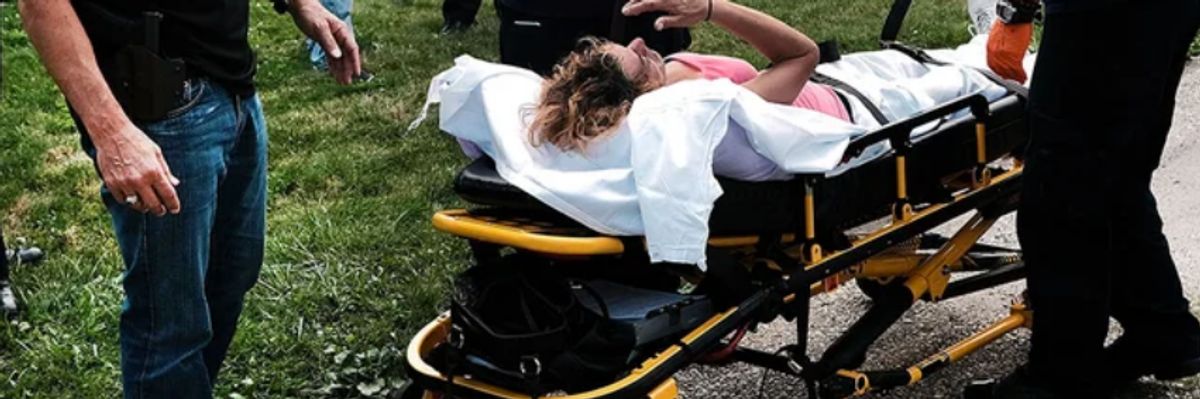
The Biden-Harris administration can begin healing our nation by moving decisively on this issue and beginning to repair the harm caused by 50 years of this failed war. (Photo: Heroin overdose/Getty Images)
Next year will mark 50 years since President Richard Nixon declared drugs "public enemy number one," launching a new war on drugs that has pumped hundreds of billions of dollars into law enforcement, led to the incarceration of millions of people -- disproportionately Black -- and has done nothing to prevent drug overdoses. In spite of the widespread, growing opposition to this failed war, made clear yet again on Election Day, punitive policies and responses to drug use and possession persist. As President-elect Joe Biden and Vice President-elect Kamala Harris prepare to take office, it is abundantly clear that they have a mandate from the electorate to tackle this issue.
While tens of billions of dollars are spent each year to prosecute this war, more than 70,000 people still die of drug overdoses.
Today there are more than 1.35 million arrests per year for drug possession, with 500,000 arrests for marijuana alone. By comparison, there are less than 500,000 arrests per year for violent crimes. Every 25 seconds a person is arrested for possessing drugs for personal use, and on average, a Black person is 3.73 times more likely to be arrested for marijuana possession than a white person, even though Black and white people use marijuana at similar rates. At least 130,000 people are behind bars in the U.S. for drug possession, some 45,000 of them in state prisons and 88,000 in jails, most of the latter in pretrial detention.
While tens of billions of dollars are spent each year to prosecute this war, more than 70,000 people still die of drug overdoses. Deaths from heroin overdose in the United States rose 500 percent from 2001 to 2014. Overall deaths from drug overdoses remain higher than the peak yearly death totals ever recorded for car accidents or guns.
The war on drugs has failed, and Americans on the right and left are ready for it to end. These views were on display at the ballot box this month, when voters across the county approved every ballot measure on scaling back the war on drugs. From Arizona, Oregon, and Montana to South Dakota, New Jersey, and Washington D.C., Americans turned out in droves to say that it's time to stop criminalizing drug use.
The effort in Oregon, led by the Drug Policy Alliance and supported by the ACLU, was the most groundbreaking. This ballot measure decriminalized the possession of drugs for personal use, replacing it with a maximum fine of $100 and funding drug addiction treatment and recovery programs with the savings and tax revenue from marijuana. Measure 110 will prevent more than 3,000 arrests per year for possession of drugs such as heroin, cocaine and methamphetamines. Oregon is now the first state in the nation to decriminalize all drugs, laying the foundation for reorienting and grounding the government's response to drugs in public health rather than criminal law.
Other states also showed that drug law reform is a winning issue on both sides of the aisle. Arizona, Montana, New Jersey, and South Dakota all legalized marijuana, joining 11 other states and Washington D.C. South Dakota, where Trump received 62 percent of the vote, showed that legalizing marijuana is a bipartisan issue, as did Montana, which elected Republicans to every major office in the state, while also voting to legalize marijuana.
The war on drugs is inextricable from the struggle for racial justice in the United States. President Nixon launched the war in an effort to win more white voters in the South. He knew that by linking drug use to civil rights protests and Black communities he could appeal to the white vote opposed to racial integration. John Ehrlichman, a prominent official in the Nixon White House, said in 1994: "We knew we couldn't make it illegal to be either against the war or Black, but by getting the public to associate the hippies with marijuana and Blacks with heroin, and then criminalizing both heavily, we could disrupt those communities."
With resounding victories in red and blue states on marijuana, President-elect Biden and Vice President-elect Harris have a clear decree from voters. The Biden-Harris administration will have numerous options to act. Sen. Harris is the primary sponsor of the Marijuana Opportunity Reinvestment and Expungement (MORE) Act (H.R. 3884, S. 2227), federal legislation that would decriminalize marijuana, remove it from the list of scheduled substances, expunge many past convictions and arrests, and support racial justice efforts. The House of Representatives is scheduled to vote on the MORE Act next month. The Biden-Harris transition team should provide their support.
Beyond legislation, the Biden-Harris administration can act by using the president's clemency power to commute the sentences of people in federal prison for marijuana offenses and other drug-related offenses, and pardon people who are living with past criminal convictions for marijuana and other drug-related offenses and are facing thousands of collateral consequences. They do not need congressional approval for these actions, which could help thousands of people.
Today, policymakers and the public alike are increasingly adopting approaches that treat substance use as a public health issue rather than a criminal justice one. This recognition is bipartisan, and the war on drugs has not differentiated between blue states and red states. The Biden-Harris administration can begin healing our nation by moving decisively on this issue and beginning to repair the harm caused by 50 years of this failed war.
Dear Common Dreams reader, It’s been nearly 30 years since I co-founded Common Dreams with my late wife, Lina Newhouser. We had the radical notion that journalism should serve the public good, not corporate profits. It was clear to us from the outset what it would take to build such a project. No paid advertisements. No corporate sponsors. No millionaire publisher telling us what to think or do. Many people said we wouldn't last a year, but we proved those doubters wrong. Together with a tremendous team of journalists and dedicated staff, we built an independent media outlet free from the constraints of profits and corporate control. Our mission has always been simple: To inform. To inspire. To ignite change for the common good. Building Common Dreams was not easy. Our survival was never guaranteed. When you take on the most powerful forces—Wall Street greed, fossil fuel industry destruction, Big Tech lobbyists, and uber-rich oligarchs who have spent billions upon billions rigging the economy and democracy in their favor—the only bulwark you have is supporters who believe in your work. But here’s the urgent message from me today. It's never been this bad out there. And it's never been this hard to keep us going. At the very moment Common Dreams is most needed, the threats we face are intensifying. We need your support now more than ever. We don't accept corporate advertising and never will. We don't have a paywall because we don't think people should be blocked from critical news based on their ability to pay. Everything we do is funded by the donations of readers like you. When everyone does the little they can afford, we are strong. But if that support retreats or dries up, so do we. Will you donate now to make sure Common Dreams not only survives but thrives? —Craig Brown, Co-founder |
Next year will mark 50 years since President Richard Nixon declared drugs "public enemy number one," launching a new war on drugs that has pumped hundreds of billions of dollars into law enforcement, led to the incarceration of millions of people -- disproportionately Black -- and has done nothing to prevent drug overdoses. In spite of the widespread, growing opposition to this failed war, made clear yet again on Election Day, punitive policies and responses to drug use and possession persist. As President-elect Joe Biden and Vice President-elect Kamala Harris prepare to take office, it is abundantly clear that they have a mandate from the electorate to tackle this issue.
While tens of billions of dollars are spent each year to prosecute this war, more than 70,000 people still die of drug overdoses.
Today there are more than 1.35 million arrests per year for drug possession, with 500,000 arrests for marijuana alone. By comparison, there are less than 500,000 arrests per year for violent crimes. Every 25 seconds a person is arrested for possessing drugs for personal use, and on average, a Black person is 3.73 times more likely to be arrested for marijuana possession than a white person, even though Black and white people use marijuana at similar rates. At least 130,000 people are behind bars in the U.S. for drug possession, some 45,000 of them in state prisons and 88,000 in jails, most of the latter in pretrial detention.
While tens of billions of dollars are spent each year to prosecute this war, more than 70,000 people still die of drug overdoses. Deaths from heroin overdose in the United States rose 500 percent from 2001 to 2014. Overall deaths from drug overdoses remain higher than the peak yearly death totals ever recorded for car accidents or guns.
The war on drugs has failed, and Americans on the right and left are ready for it to end. These views were on display at the ballot box this month, when voters across the county approved every ballot measure on scaling back the war on drugs. From Arizona, Oregon, and Montana to South Dakota, New Jersey, and Washington D.C., Americans turned out in droves to say that it's time to stop criminalizing drug use.
The effort in Oregon, led by the Drug Policy Alliance and supported by the ACLU, was the most groundbreaking. This ballot measure decriminalized the possession of drugs for personal use, replacing it with a maximum fine of $100 and funding drug addiction treatment and recovery programs with the savings and tax revenue from marijuana. Measure 110 will prevent more than 3,000 arrests per year for possession of drugs such as heroin, cocaine and methamphetamines. Oregon is now the first state in the nation to decriminalize all drugs, laying the foundation for reorienting and grounding the government's response to drugs in public health rather than criminal law.
Other states also showed that drug law reform is a winning issue on both sides of the aisle. Arizona, Montana, New Jersey, and South Dakota all legalized marijuana, joining 11 other states and Washington D.C. South Dakota, where Trump received 62 percent of the vote, showed that legalizing marijuana is a bipartisan issue, as did Montana, which elected Republicans to every major office in the state, while also voting to legalize marijuana.
The war on drugs is inextricable from the struggle for racial justice in the United States. President Nixon launched the war in an effort to win more white voters in the South. He knew that by linking drug use to civil rights protests and Black communities he could appeal to the white vote opposed to racial integration. John Ehrlichman, a prominent official in the Nixon White House, said in 1994: "We knew we couldn't make it illegal to be either against the war or Black, but by getting the public to associate the hippies with marijuana and Blacks with heroin, and then criminalizing both heavily, we could disrupt those communities."
With resounding victories in red and blue states on marijuana, President-elect Biden and Vice President-elect Harris have a clear decree from voters. The Biden-Harris administration will have numerous options to act. Sen. Harris is the primary sponsor of the Marijuana Opportunity Reinvestment and Expungement (MORE) Act (H.R. 3884, S. 2227), federal legislation that would decriminalize marijuana, remove it from the list of scheduled substances, expunge many past convictions and arrests, and support racial justice efforts. The House of Representatives is scheduled to vote on the MORE Act next month. The Biden-Harris transition team should provide their support.
Beyond legislation, the Biden-Harris administration can act by using the president's clemency power to commute the sentences of people in federal prison for marijuana offenses and other drug-related offenses, and pardon people who are living with past criminal convictions for marijuana and other drug-related offenses and are facing thousands of collateral consequences. They do not need congressional approval for these actions, which could help thousands of people.
Today, policymakers and the public alike are increasingly adopting approaches that treat substance use as a public health issue rather than a criminal justice one. This recognition is bipartisan, and the war on drugs has not differentiated between blue states and red states. The Biden-Harris administration can begin healing our nation by moving decisively on this issue and beginning to repair the harm caused by 50 years of this failed war.
Next year will mark 50 years since President Richard Nixon declared drugs "public enemy number one," launching a new war on drugs that has pumped hundreds of billions of dollars into law enforcement, led to the incarceration of millions of people -- disproportionately Black -- and has done nothing to prevent drug overdoses. In spite of the widespread, growing opposition to this failed war, made clear yet again on Election Day, punitive policies and responses to drug use and possession persist. As President-elect Joe Biden and Vice President-elect Kamala Harris prepare to take office, it is abundantly clear that they have a mandate from the electorate to tackle this issue.
While tens of billions of dollars are spent each year to prosecute this war, more than 70,000 people still die of drug overdoses.
Today there are more than 1.35 million arrests per year for drug possession, with 500,000 arrests for marijuana alone. By comparison, there are less than 500,000 arrests per year for violent crimes. Every 25 seconds a person is arrested for possessing drugs for personal use, and on average, a Black person is 3.73 times more likely to be arrested for marijuana possession than a white person, even though Black and white people use marijuana at similar rates. At least 130,000 people are behind bars in the U.S. for drug possession, some 45,000 of them in state prisons and 88,000 in jails, most of the latter in pretrial detention.
While tens of billions of dollars are spent each year to prosecute this war, more than 70,000 people still die of drug overdoses. Deaths from heroin overdose in the United States rose 500 percent from 2001 to 2014. Overall deaths from drug overdoses remain higher than the peak yearly death totals ever recorded for car accidents or guns.
The war on drugs has failed, and Americans on the right and left are ready for it to end. These views were on display at the ballot box this month, when voters across the county approved every ballot measure on scaling back the war on drugs. From Arizona, Oregon, and Montana to South Dakota, New Jersey, and Washington D.C., Americans turned out in droves to say that it's time to stop criminalizing drug use.
The effort in Oregon, led by the Drug Policy Alliance and supported by the ACLU, was the most groundbreaking. This ballot measure decriminalized the possession of drugs for personal use, replacing it with a maximum fine of $100 and funding drug addiction treatment and recovery programs with the savings and tax revenue from marijuana. Measure 110 will prevent more than 3,000 arrests per year for possession of drugs such as heroin, cocaine and methamphetamines. Oregon is now the first state in the nation to decriminalize all drugs, laying the foundation for reorienting and grounding the government's response to drugs in public health rather than criminal law.
Other states also showed that drug law reform is a winning issue on both sides of the aisle. Arizona, Montana, New Jersey, and South Dakota all legalized marijuana, joining 11 other states and Washington D.C. South Dakota, where Trump received 62 percent of the vote, showed that legalizing marijuana is a bipartisan issue, as did Montana, which elected Republicans to every major office in the state, while also voting to legalize marijuana.
The war on drugs is inextricable from the struggle for racial justice in the United States. President Nixon launched the war in an effort to win more white voters in the South. He knew that by linking drug use to civil rights protests and Black communities he could appeal to the white vote opposed to racial integration. John Ehrlichman, a prominent official in the Nixon White House, said in 1994: "We knew we couldn't make it illegal to be either against the war or Black, but by getting the public to associate the hippies with marijuana and Blacks with heroin, and then criminalizing both heavily, we could disrupt those communities."
With resounding victories in red and blue states on marijuana, President-elect Biden and Vice President-elect Harris have a clear decree from voters. The Biden-Harris administration will have numerous options to act. Sen. Harris is the primary sponsor of the Marijuana Opportunity Reinvestment and Expungement (MORE) Act (H.R. 3884, S. 2227), federal legislation that would decriminalize marijuana, remove it from the list of scheduled substances, expunge many past convictions and arrests, and support racial justice efforts. The House of Representatives is scheduled to vote on the MORE Act next month. The Biden-Harris transition team should provide their support.
Beyond legislation, the Biden-Harris administration can act by using the president's clemency power to commute the sentences of people in federal prison for marijuana offenses and other drug-related offenses, and pardon people who are living with past criminal convictions for marijuana and other drug-related offenses and are facing thousands of collateral consequences. They do not need congressional approval for these actions, which could help thousands of people.
Today, policymakers and the public alike are increasingly adopting approaches that treat substance use as a public health issue rather than a criminal justice one. This recognition is bipartisan, and the war on drugs has not differentiated between blue states and red states. The Biden-Harris administration can begin healing our nation by moving decisively on this issue and beginning to repair the harm caused by 50 years of this failed war.

