SUBSCRIBE TO OUR FREE NEWSLETTER
Daily news & progressive opinion—funded by the people, not the corporations—delivered straight to your inbox.
5
#000000
#FFFFFF
To donate by check, phone, or other method, see our More Ways to Give page.
Daily news & progressive opinion—funded by the people, not the corporations—delivered straight to your inbox.
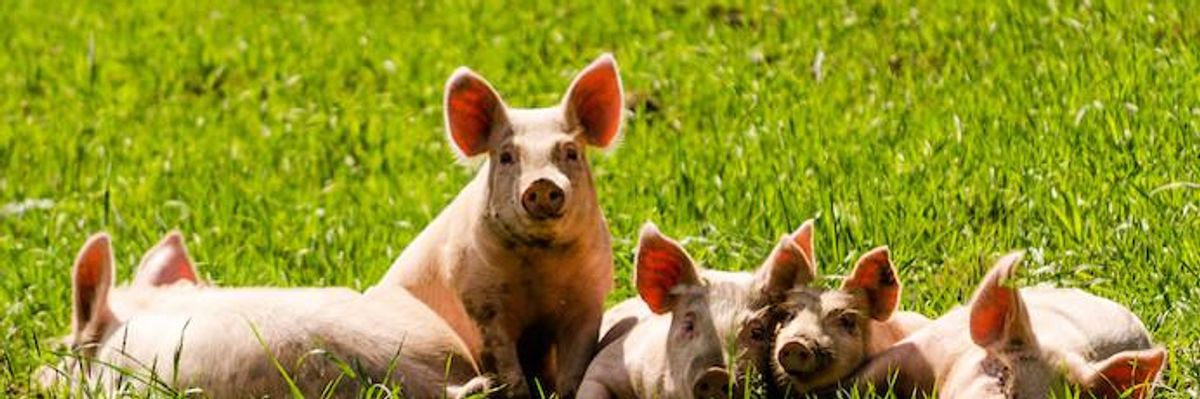
"There is real promise for transformational change in our food system when we design a vision for our future that includes everyone," writes Rebecca Wolf. (Photo: Nicholas Erwin/CC BY-NC-ND 2.0)
A record amount of pork was shipped to China in April, according to Smithfield's export data -- the very same month the company cried wolf about a waning pork supply to the American public.
Thanks to lies like that the pandemic has exposed how unjust the fundamental structure of our country's food system is. From conditions for workers in meat processing plants to the treatment of animals on factory farms, food and factory farm systems have been under intense discussion and outrage like never before. Our modern industrial food system, long lauded as the engine that feeds the world, is being exposed for what it truly is -- a highly corporatized, Big Ag welfare racket.
But the financial crisis facing American farmers, the degradation of our shared water and air, and the exploitation of animals in this system is neither inevitable or normal. It's the result of the corporations controlling our food system going unchecked for decades.
Our Community Is Fighting Back Through The Farm System Reform Act
The lines have been drawn between Big Ag and the rest of us. While our food system's chaos poses a wicked problem, there is some good news. At the end of 2019, Senator Cory Booker introduced the Farm System Reform Act. Since then, Senators Elizabeth Warren (D-MA) and Bernie Sanders (I-VT) have co-sponsored the legislation. It's fitting that these three lead the fight in the Senate; they spent much of their time on the campaign trail getting to know community members and farmers in Iowa and people across the country living with the bleak realities of our current food system.
In a recent letter to Congress, nearly 300 diverse groups called for the swift passage of the groundbreaking bill, which proposes banning factory farms and includes a series of key reforms to rein in corporate power and build a food system that works better for regular people. Hundreds of thousands of people across the country have written or called their elected officials and urged them to co-sponsor this legislation.
This Bad, Corporatized Farm System Didn't Happen By Accident
With all the demands for change, why do we still have a system that is bad for farmers, bad for animals, bad for workers and bad for consumers?
We didn't get here by accident. This unjust system was intentionally created to benefit the biggest players -- Smithfield, Perdue, etc. - at the expense of small farmers and consumers. Our elected leaders, influenced by Big Ag money, helped create these situations:
Corporate-Friendly Politicians Allow These Harms To Continue
The stranglehold these huge multinational corporations have on our food and farm systems has devastating impacts far beyond the food that reaches our dinner tables. This highly industrialized and consolidated food system has left thousands of independent farmers unable to compete and pushed them out of business -- and has pushed many of them off of their land. It's extracted wealth from our rural communities, caused increased outmigration from rural places, and ruined the quality of life for people living near factory farms and slaughter and processing facilities.
In spite of these harms, plenty of our leaders still work to help corporations keep their control. Iowa Senators Chuck Grassley and Joni Ernst are so beholden to the pork industry that they blame God (aka wind and rain) for nitrogen and phosphorus pollution from factory farms and insist on keeping regulations voluntary. Often, politicians like these say people outside the Farm Belt shouldn't intervene. But the Farm System Reform Act is at the heart of saving America's farmland and farm economy from the current corporate oligarchs that control it, and that's what matters.
The Farm System Reform Act Goes Even Deeper
In addition to banning factory farms, this bill proposes to:
The Farm System Reform Act is the solution we need right now, and advocates are lining up behind it. Farm groups, animal welfare groups, environmental, youth and public health groups all agree -- passing the Farm System Reform Act is critical to overhauling our food system.
The excitement and support for this bill caught on in the House of Representatives, too. Earlier this year, Representative Ro Khanna (D-Ca.) introduced the House version (HR 6718) of the legislation, with an ever-growing co-sponsor list. He held a briefing for Congressmembers with leaders and activists to build momentum. You can watch the video of leaders:
Help Us Pass This Bill To Finally Stop Corporate Farm Control
There is real promise for transformational change in our food system when we design a vision for our future that includes everyone. For much of our lifetimes, all we've known is ever-consolidating corporate agriculture. But the promise of a healthy, regional, diversified food system that is good for all people, animals and the planet is ours if we commit to building the power to win -- and passing the Farm System Reform Act.
This country and this world are at a monumental crossroads. US voters have an opportunity to beat back the forces of fascism and confront the billionaires who are rigging the economy, our media system, and our democracy, making it increasingly impossible for ordinary people to get by. We’re not just talking about the election. We’re talking about what must be done once these fascist elements are vanquished from power. We need a bolder set of solutions than what either major party has so far been willing to offer and a working-class movement ready to fight like hell for it. Trump didn't emerge from nowhere. The conditions that fueled MAGA authoritarianism were created by decades of radical neoliberal economic policies and a corrupt political system dominated by corporate interests. They slashed taxes on the super-rich, promising that the benefits would trickle down. They said giveaways to the corporate titans would make life more affordable for the rest of us. It was all bullshit. And when a bitter, betrayed populace searches for someone to blame, right-wing demagogues have little trouble finding scapegoats. People know when they're being lied to, but you won't hear any of this from the corporate media. Only independent journalism—powered and funded by people who believe in building a better world—can deliver truly trustworthy daily news. If you share our vision, please contribute whatever you can to sustain our work. |
A record amount of pork was shipped to China in April, according to Smithfield's export data -- the very same month the company cried wolf about a waning pork supply to the American public.
Thanks to lies like that the pandemic has exposed how unjust the fundamental structure of our country's food system is. From conditions for workers in meat processing plants to the treatment of animals on factory farms, food and factory farm systems have been under intense discussion and outrage like never before. Our modern industrial food system, long lauded as the engine that feeds the world, is being exposed for what it truly is -- a highly corporatized, Big Ag welfare racket.
But the financial crisis facing American farmers, the degradation of our shared water and air, and the exploitation of animals in this system is neither inevitable or normal. It's the result of the corporations controlling our food system going unchecked for decades.
Our Community Is Fighting Back Through The Farm System Reform Act
The lines have been drawn between Big Ag and the rest of us. While our food system's chaos poses a wicked problem, there is some good news. At the end of 2019, Senator Cory Booker introduced the Farm System Reform Act. Since then, Senators Elizabeth Warren (D-MA) and Bernie Sanders (I-VT) have co-sponsored the legislation. It's fitting that these three lead the fight in the Senate; they spent much of their time on the campaign trail getting to know community members and farmers in Iowa and people across the country living with the bleak realities of our current food system.
In a recent letter to Congress, nearly 300 diverse groups called for the swift passage of the groundbreaking bill, which proposes banning factory farms and includes a series of key reforms to rein in corporate power and build a food system that works better for regular people. Hundreds of thousands of people across the country have written or called their elected officials and urged them to co-sponsor this legislation.
This Bad, Corporatized Farm System Didn't Happen By Accident
With all the demands for change, why do we still have a system that is bad for farmers, bad for animals, bad for workers and bad for consumers?
We didn't get here by accident. This unjust system was intentionally created to benefit the biggest players -- Smithfield, Perdue, etc. - at the expense of small farmers and consumers. Our elected leaders, influenced by Big Ag money, helped create these situations:
Corporate-Friendly Politicians Allow These Harms To Continue
The stranglehold these huge multinational corporations have on our food and farm systems has devastating impacts far beyond the food that reaches our dinner tables. This highly industrialized and consolidated food system has left thousands of independent farmers unable to compete and pushed them out of business -- and has pushed many of them off of their land. It's extracted wealth from our rural communities, caused increased outmigration from rural places, and ruined the quality of life for people living near factory farms and slaughter and processing facilities.
In spite of these harms, plenty of our leaders still work to help corporations keep their control. Iowa Senators Chuck Grassley and Joni Ernst are so beholden to the pork industry that they blame God (aka wind and rain) for nitrogen and phosphorus pollution from factory farms and insist on keeping regulations voluntary. Often, politicians like these say people outside the Farm Belt shouldn't intervene. But the Farm System Reform Act is at the heart of saving America's farmland and farm economy from the current corporate oligarchs that control it, and that's what matters.
The Farm System Reform Act Goes Even Deeper
In addition to banning factory farms, this bill proposes to:
The Farm System Reform Act is the solution we need right now, and advocates are lining up behind it. Farm groups, animal welfare groups, environmental, youth and public health groups all agree -- passing the Farm System Reform Act is critical to overhauling our food system.
The excitement and support for this bill caught on in the House of Representatives, too. Earlier this year, Representative Ro Khanna (D-Ca.) introduced the House version (HR 6718) of the legislation, with an ever-growing co-sponsor list. He held a briefing for Congressmembers with leaders and activists to build momentum. You can watch the video of leaders:
Help Us Pass This Bill To Finally Stop Corporate Farm Control
There is real promise for transformational change in our food system when we design a vision for our future that includes everyone. For much of our lifetimes, all we've known is ever-consolidating corporate agriculture. But the promise of a healthy, regional, diversified food system that is good for all people, animals and the planet is ours if we commit to building the power to win -- and passing the Farm System Reform Act.