SUBSCRIBE TO OUR FREE NEWSLETTER
Daily news & progressive opinion—funded by the people, not the corporations—delivered straight to your inbox.
5
#000000
#FFFFFF
To donate by check, phone, or other method, see our More Ways to Give page.
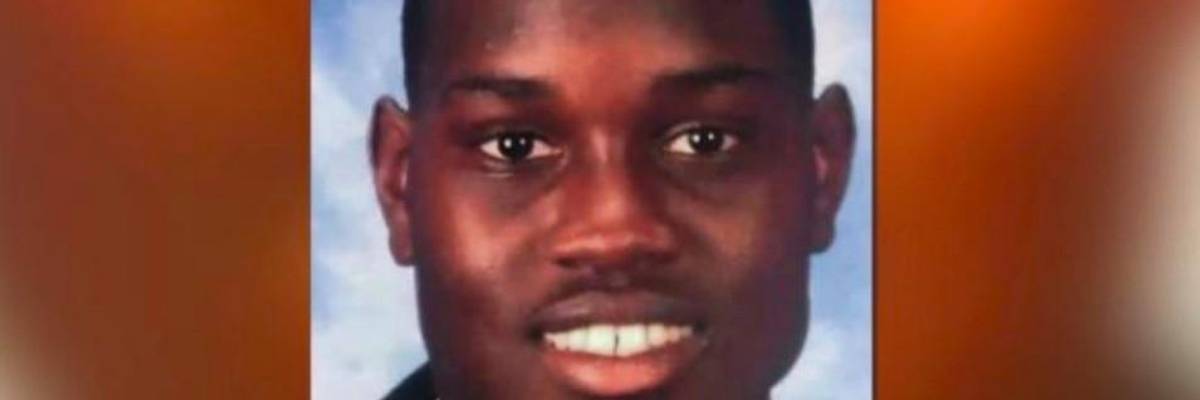
"I will say that looks like a really good young guy. It's a really disturbing situation to me (...) it could be something we didn't see on tape."
When Donald Trump made this comment about the murder of US jogger Ahmaud Arbery by a group of white men who stalked and shot him, he tapped into a long, ugly history of responding to the use of deadly force against black citizens by questioning the victims, and not the accused. By suggesting that something--anything--could have happened to make the killing of an unarmed black man defensible.
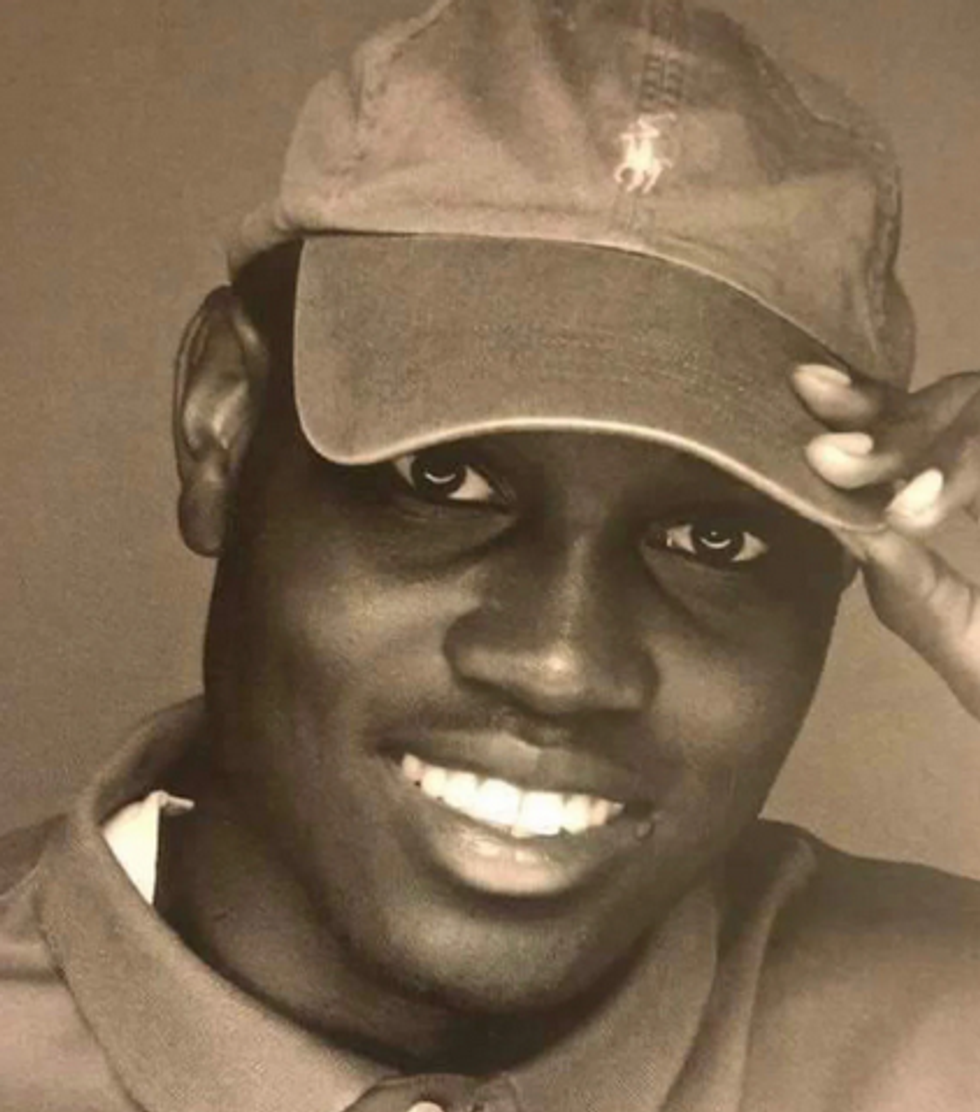
That "it could be something we didn't see on the tape."
What we didn't see on tape.
The un-taped life.
The things that happen when the cameras aren't rolling.
Work. Playing with your kids. Happiness. Shopping. Studying. Grief. Showers. Boredom.
Except, for African-Americans such as Ahmaud Arbery, these things are rarely assumed to be part of the un-taped life. The presumption of normality (let alone decency) is a luxury of privilege. Arbery's un-taped life is framed as a potentially unlimited collection of invisible transgressions and provocations. He could be a thief. Why was he there? Why didn't he comply with three armed men threatening him? What was he hiding? Even when white men film themselves stalking and murdering an unarmed black man, the internal logic of systemic racism dictates that the violent act so carefully catalogued must not, and cannot, be the whole story. Something that happened in the un-taped black life somehow forced the hand of those in the taped white life.
Because, to accept the alternative--the killing was planned and unprovoked--is to expose the murder to be a product of a racist society.
Think about how often the "what we didn't see on tape" angle, and all of the variations on that angle, have been invoked: Michael Brown in Missouri; Oscar Grant in California; Eric Garner in New York; Eric Harris in Oklahoma; Walter Scott in South Carolina; Philando Castile in Minnesota; Tamir Rice in Ohio. Even when police officers are filmed choking an unarmed man to death as he begs for his life, or are videotaped shooting an unarmed man in the back as he runs away from the police after a traffic stop, questions on their un-taped life become the primary focus. Had they committed crimes before? Why were they engaged in illegal activity to begin with? Why were they even in that part of town at that time of day? Did they do drugs? Did they have jobs? Where are the parents? Do they take care of their kids?
In other words, we are supposed to believe that it's not what you see in these videos--men murdering unarmed men--that's the story. It's what the videos do not show that's the real story. And, what is that story? Well, we can never know, as the men and women who could actually tell that story--the story of their un-taped lives--are now dead.
So, Trump's "what we didn't see on the tape" line is a Catch-22 for African-Americans, an eternal Get-Out-Of-Jail-Free card for white privilege and a key element in the perverted, self-perpetuating mechanism of discrimination.
"I will say that looks like a really good young guy. It's a really disturbing situation to me (...) it could be something we didn't see on tape."
When Donald Trump made this comment about the murder of US jogger Ahmaud Arbery by a group of white men who stalked and shot him, he tapped into a long, ugly history of responding to the use of deadly force against black citizens by questioning the victims, and not the accused. By suggesting that something--anything--could have happened to make the killing of an unarmed black man defensible.
That "it could be something we didn't see on the tape."
What we didn't see on tape.
The un-taped life.
The things that happen when the cameras aren't rolling.
Work. Playing with your kids. Happiness. Shopping. Studying. Grief. Showers. Boredom.
Except, for African-Americans such as Ahmaud Arbery, these things are rarely assumed to be part of the un-taped life. The presumption of normality (let alone decency) is a luxury of privilege. Arbery's un-taped life is framed as a potentially unlimited collection of invisible transgressions and provocations. He could be a thief. Why was he there? Why didn't he comply with three armed men threatening him? What was he hiding? Even when white men film themselves stalking and murdering an unarmed black man, the internal logic of systemic racism dictates that the violent act so carefully catalogued must not, and cannot, be the whole story. Something that happened in the un-taped black life somehow forced the hand of those in the taped white life.
Because, to accept the alternative--the killing was planned and unprovoked--is to expose the murder to be a product of a racist society.
Think about how often the "what we didn't see on tape" angle, and all of the variations on that angle, have been invoked: Michael Brown in Missouri; Oscar Grant in California; Eric Garner in New York; Eric Harris in Oklahoma; Walter Scott in South Carolina; Philando Castile in Minnesota; Tamir Rice in Ohio. Even when police officers are filmed choking an unarmed man to death as he begs for his life, or are videotaped shooting an unarmed man in the back as he runs away from the police after a traffic stop, questions on their un-taped life become the primary focus. Had they committed crimes before? Why were they engaged in illegal activity to begin with? Why were they even in that part of town at that time of day? Did they do drugs? Did they have jobs? Where are the parents? Do they take care of their kids?
In other words, we are supposed to believe that it's not what you see in these videos--men murdering unarmed men--that's the story. It's what the videos do not show that's the real story. And, what is that story? Well, we can never know, as the men and women who could actually tell that story--the story of their un-taped lives--are now dead.
So, Trump's "what we didn't see on the tape" line is a Catch-22 for African-Americans, an eternal Get-Out-Of-Jail-Free card for white privilege and a key element in the perverted, self-perpetuating mechanism of discrimination.
"I will say that looks like a really good young guy. It's a really disturbing situation to me (...) it could be something we didn't see on tape."
When Donald Trump made this comment about the murder of US jogger Ahmaud Arbery by a group of white men who stalked and shot him, he tapped into a long, ugly history of responding to the use of deadly force against black citizens by questioning the victims, and not the accused. By suggesting that something--anything--could have happened to make the killing of an unarmed black man defensible.
That "it could be something we didn't see on the tape."
What we didn't see on tape.
The un-taped life.
The things that happen when the cameras aren't rolling.
Work. Playing with your kids. Happiness. Shopping. Studying. Grief. Showers. Boredom.
Except, for African-Americans such as Ahmaud Arbery, these things are rarely assumed to be part of the un-taped life. The presumption of normality (let alone decency) is a luxury of privilege. Arbery's un-taped life is framed as a potentially unlimited collection of invisible transgressions and provocations. He could be a thief. Why was he there? Why didn't he comply with three armed men threatening him? What was he hiding? Even when white men film themselves stalking and murdering an unarmed black man, the internal logic of systemic racism dictates that the violent act so carefully catalogued must not, and cannot, be the whole story. Something that happened in the un-taped black life somehow forced the hand of those in the taped white life.
Because, to accept the alternative--the killing was planned and unprovoked--is to expose the murder to be a product of a racist society.
Think about how often the "what we didn't see on tape" angle, and all of the variations on that angle, have been invoked: Michael Brown in Missouri; Oscar Grant in California; Eric Garner in New York; Eric Harris in Oklahoma; Walter Scott in South Carolina; Philando Castile in Minnesota; Tamir Rice in Ohio. Even when police officers are filmed choking an unarmed man to death as he begs for his life, or are videotaped shooting an unarmed man in the back as he runs away from the police after a traffic stop, questions on their un-taped life become the primary focus. Had they committed crimes before? Why were they engaged in illegal activity to begin with? Why were they even in that part of town at that time of day? Did they do drugs? Did they have jobs? Where are the parents? Do they take care of their kids?
In other words, we are supposed to believe that it's not what you see in these videos--men murdering unarmed men--that's the story. It's what the videos do not show that's the real story. And, what is that story? Well, we can never know, as the men and women who could actually tell that story--the story of their un-taped lives--are now dead.
So, Trump's "what we didn't see on the tape" line is a Catch-22 for African-Americans, an eternal Get-Out-Of-Jail-Free card for white privilege and a key element in the perverted, self-perpetuating mechanism of discrimination.