SUBSCRIBE TO OUR FREE NEWSLETTER
Daily news & progressive opinion—funded by the people, not the corporations—delivered straight to your inbox.
5
#000000
#FFFFFF
To donate by check, phone, or other method, see our More Ways to Give page.
Daily news & progressive opinion—funded by the people, not the corporations—delivered straight to your inbox.
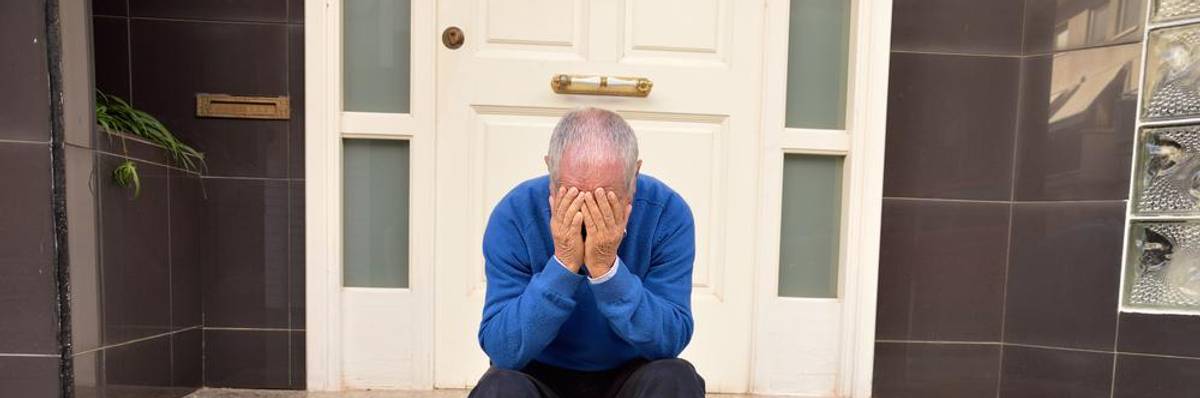
While some small businesses have managed to get government loans to keep paying their workers, they've received no similar protection from landlords demanding their monthly rent. (Photo: Shutterstock)
When I was a child, I remember having to dress up in my church clothes when I went to the bank to deposit my birthday checks or money I saved from my allowances.
The idea that banks are secular versions of church remains deeply embedded in our society today. In moments of crisis, financial institutions are considered inviolate, even when others are asked to make deep sacrifices.
That needs to change.
In the name of protecting the common good, governors across the country have ordered all non-essential worksites shuttered, leaving millions without a paycheck. But aside from some short-term bans on evictions and foreclosures, no leaders have gone further in ordering the financial economy to "stop working" -- by forgiving rents, waiving mortgage interest, and deferring mortgage principal payments.
Indeed, financial services firms continue to work hard, collecting debts from people who are out of work or small businesses that can't open.
Why is it that governors can order workers to stop working and small business owners to lock their doors, but not order landlords, bankers, and Wall Street investors to also suspend their activities? Why do ordinary people have to sacrifice, but not these institutions?
While some small businesses have managed to get government loans to keep paying their workers, they've received no similar protection from landlords demanding their monthly rent. Without relief, stimulus checks and paycheck protection loans will pass quickly through the hands of families -- and into the already full pockets of Wall Street.
Here's a serious question: Why is it that governors can order workers to stop working and small business owners to lock their doors, but not order landlords, bankers, and Wall Street investors to also suspend their activities? Why do ordinary people have to sacrifice, but not these institutions?
Some landlords have demonstrated compassion and solidarity with their tenants. New York City landlord Mario Salerno is one of them.
At the beginning of April, tenants in each of Salerno's 18 Brooklyn apartment buildings found notes taped to the door saying: "Due to the COVID-19 pandemic affecting all of us, I am waiving rent for the month of April, 2020. Stay safe, help your neighbors, and wash your hands!"
When asked by the New York Times about the hundreds of thousands of dollars he stood to lose as a result of the rent forgiveness, Salerno said that was not important: "My concern is everyone's health. I told them just to look out for your neighbor and make sure everyone has food on their table."
More landlords could follow Mr. Salerno's example if they knew the mortgage payments that they owed on their rental properties could be deferred.
In contrast, 40 large corporations, many of whom are controlled by Wall Street private equity funds, have bought up more than 2 million units of rental housing in the United States. Most picked up their properties, often at fire sale prices and with the help of federal government assistance, after the 2008 housing crisis.
So, only one has forgiven rent for some tenants.
Unless these powerful firms are ordered to put public health and family well-being before corporate profits, they are likely to again swoop in and extend their control of America's housing stock even further, as millions of families and smaller landlords lose their homes and businesses.
Ordering landlords and mortgage holders to change the terms of their contracts is not unprecedented. Following the 2008 housing crash, the federal Home Affordable Refinance Program (HARP) gave mortgage holders the right to renegotiate their federally backed mortgages on more affordable terms. Its success allowed many families to keep their homes.
I haven't gotten dressed up to go to the bank in more than half a century. It's time our leaders stop treating Wall Street like a church -- and instead demand the same sacrifices of capital that they have of workers and merchants.
Dear Common Dreams reader, It’s been nearly 30 years since I co-founded Common Dreams with my late wife, Lina Newhouser. We had the radical notion that journalism should serve the public good, not corporate profits. It was clear to us from the outset what it would take to build such a project. No paid advertisements. No corporate sponsors. No millionaire publisher telling us what to think or do. Many people said we wouldn't last a year, but we proved those doubters wrong. Together with a tremendous team of journalists and dedicated staff, we built an independent media outlet free from the constraints of profits and corporate control. Our mission has always been simple: To inform. To inspire. To ignite change for the common good. Building Common Dreams was not easy. Our survival was never guaranteed. When you take on the most powerful forces—Wall Street greed, fossil fuel industry destruction, Big Tech lobbyists, and uber-rich oligarchs who have spent billions upon billions rigging the economy and democracy in their favor—the only bulwark you have is supporters who believe in your work. But here’s the urgent message from me today. It's never been this bad out there. And it's never been this hard to keep us going. At the very moment Common Dreams is most needed, the threats we face are intensifying. We need your support now more than ever. We don't accept corporate advertising and never will. We don't have a paywall because we don't think people should be blocked from critical news based on their ability to pay. Everything we do is funded by the donations of readers like you. When everyone does the little they can afford, we are strong. But if that support retreats or dries up, so do we. Will you donate now to make sure Common Dreams not only survives but thrives? —Craig Brown, Co-founder |
When I was a child, I remember having to dress up in my church clothes when I went to the bank to deposit my birthday checks or money I saved from my allowances.
The idea that banks are secular versions of church remains deeply embedded in our society today. In moments of crisis, financial institutions are considered inviolate, even when others are asked to make deep sacrifices.
That needs to change.
In the name of protecting the common good, governors across the country have ordered all non-essential worksites shuttered, leaving millions without a paycheck. But aside from some short-term bans on evictions and foreclosures, no leaders have gone further in ordering the financial economy to "stop working" -- by forgiving rents, waiving mortgage interest, and deferring mortgage principal payments.
Indeed, financial services firms continue to work hard, collecting debts from people who are out of work or small businesses that can't open.
Why is it that governors can order workers to stop working and small business owners to lock their doors, but not order landlords, bankers, and Wall Street investors to also suspend their activities? Why do ordinary people have to sacrifice, but not these institutions?
While some small businesses have managed to get government loans to keep paying their workers, they've received no similar protection from landlords demanding their monthly rent. Without relief, stimulus checks and paycheck protection loans will pass quickly through the hands of families -- and into the already full pockets of Wall Street.
Here's a serious question: Why is it that governors can order workers to stop working and small business owners to lock their doors, but not order landlords, bankers, and Wall Street investors to also suspend their activities? Why do ordinary people have to sacrifice, but not these institutions?
Some landlords have demonstrated compassion and solidarity with their tenants. New York City landlord Mario Salerno is one of them.
At the beginning of April, tenants in each of Salerno's 18 Brooklyn apartment buildings found notes taped to the door saying: "Due to the COVID-19 pandemic affecting all of us, I am waiving rent for the month of April, 2020. Stay safe, help your neighbors, and wash your hands!"
When asked by the New York Times about the hundreds of thousands of dollars he stood to lose as a result of the rent forgiveness, Salerno said that was not important: "My concern is everyone's health. I told them just to look out for your neighbor and make sure everyone has food on their table."
More landlords could follow Mr. Salerno's example if they knew the mortgage payments that they owed on their rental properties could be deferred.
In contrast, 40 large corporations, many of whom are controlled by Wall Street private equity funds, have bought up more than 2 million units of rental housing in the United States. Most picked up their properties, often at fire sale prices and with the help of federal government assistance, after the 2008 housing crisis.
So, only one has forgiven rent for some tenants.
Unless these powerful firms are ordered to put public health and family well-being before corporate profits, they are likely to again swoop in and extend their control of America's housing stock even further, as millions of families and smaller landlords lose their homes and businesses.
Ordering landlords and mortgage holders to change the terms of their contracts is not unprecedented. Following the 2008 housing crash, the federal Home Affordable Refinance Program (HARP) gave mortgage holders the right to renegotiate their federally backed mortgages on more affordable terms. Its success allowed many families to keep their homes.
I haven't gotten dressed up to go to the bank in more than half a century. It's time our leaders stop treating Wall Street like a church -- and instead demand the same sacrifices of capital that they have of workers and merchants.
When I was a child, I remember having to dress up in my church clothes when I went to the bank to deposit my birthday checks or money I saved from my allowances.
The idea that banks are secular versions of church remains deeply embedded in our society today. In moments of crisis, financial institutions are considered inviolate, even when others are asked to make deep sacrifices.
That needs to change.
In the name of protecting the common good, governors across the country have ordered all non-essential worksites shuttered, leaving millions without a paycheck. But aside from some short-term bans on evictions and foreclosures, no leaders have gone further in ordering the financial economy to "stop working" -- by forgiving rents, waiving mortgage interest, and deferring mortgage principal payments.
Indeed, financial services firms continue to work hard, collecting debts from people who are out of work or small businesses that can't open.
Why is it that governors can order workers to stop working and small business owners to lock their doors, but not order landlords, bankers, and Wall Street investors to also suspend their activities? Why do ordinary people have to sacrifice, but not these institutions?
While some small businesses have managed to get government loans to keep paying their workers, they've received no similar protection from landlords demanding their monthly rent. Without relief, stimulus checks and paycheck protection loans will pass quickly through the hands of families -- and into the already full pockets of Wall Street.
Here's a serious question: Why is it that governors can order workers to stop working and small business owners to lock their doors, but not order landlords, bankers, and Wall Street investors to also suspend their activities? Why do ordinary people have to sacrifice, but not these institutions?
Some landlords have demonstrated compassion and solidarity with their tenants. New York City landlord Mario Salerno is one of them.
At the beginning of April, tenants in each of Salerno's 18 Brooklyn apartment buildings found notes taped to the door saying: "Due to the COVID-19 pandemic affecting all of us, I am waiving rent for the month of April, 2020. Stay safe, help your neighbors, and wash your hands!"
When asked by the New York Times about the hundreds of thousands of dollars he stood to lose as a result of the rent forgiveness, Salerno said that was not important: "My concern is everyone's health. I told them just to look out for your neighbor and make sure everyone has food on their table."
More landlords could follow Mr. Salerno's example if they knew the mortgage payments that they owed on their rental properties could be deferred.
In contrast, 40 large corporations, many of whom are controlled by Wall Street private equity funds, have bought up more than 2 million units of rental housing in the United States. Most picked up their properties, often at fire sale prices and with the help of federal government assistance, after the 2008 housing crisis.
So, only one has forgiven rent for some tenants.
Unless these powerful firms are ordered to put public health and family well-being before corporate profits, they are likely to again swoop in and extend their control of America's housing stock even further, as millions of families and smaller landlords lose their homes and businesses.
Ordering landlords and mortgage holders to change the terms of their contracts is not unprecedented. Following the 2008 housing crash, the federal Home Affordable Refinance Program (HARP) gave mortgage holders the right to renegotiate their federally backed mortgages on more affordable terms. Its success allowed many families to keep their homes.
I haven't gotten dressed up to go to the bank in more than half a century. It's time our leaders stop treating Wall Street like a church -- and instead demand the same sacrifices of capital that they have of workers and merchants.