SUBSCRIBE TO OUR FREE NEWSLETTER
Daily news & progressive opinion—funded by the people, not the corporations—delivered straight to your inbox.
5
#000000
#FFFFFF
To donate by check, phone, or other method, see our More Ways to Give page.


Daily news & progressive opinion—funded by the people, not the corporations—delivered straight to your inbox.

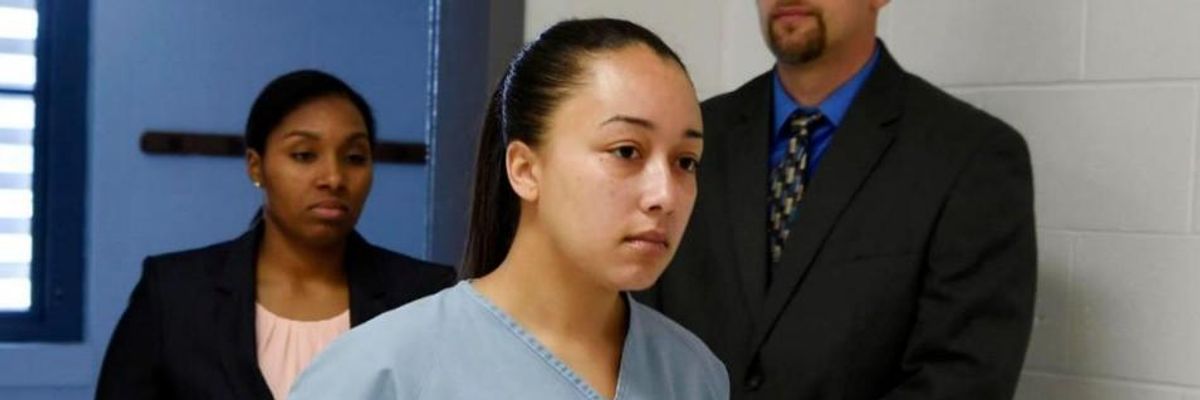
For every injustice we see in the criminal-justice system, there is a law, practice or policy that allowed it to happen. (Photo: @CBSNews/Twitter)
In August 2006, a Tennessee prosecutor convinced a jury that I was guilty of murdering a man who had trafficked me for sex. I was told to expect a sentence of 60 years. I received a life sentence. I was 16 years old.
Last week, Chrystul Kizer, charged with first-degree intentional homicide and arson in the death of a 33-year-old man who had sexually abused her multiple times, was told by a Wisconsin judge that she faces life in prison. She was 17 when she is alleged to have shot him.
The more things change.
I take responsibility for the life I took in a moment of fear and desperation. But if my trial had been held today, my defense likely would have included a discussion of domestic-minor sex trafficking and the diminished culpability of girls who are caught up in it. Since 2006, there has been new understanding of the complex trauma that sex trafficking inflicts on its young victims. Children who are bought and sold for sex are not prostitutes, they are trafficking victims. Because of the new awareness brought to my case by advocates, then-Tennessee Gov. Bill Haslam (R) granted me clemency in January, scheduling me for release after 15 years served.
But it is now painfully clear to me that my clemency has not translated into larger-scale change. As I spend my first holiday season at home since my release, many women languish in prison cells as a result of the same laws and practices that affected me.
There can be great power in putting a name and a face to injustice. When we hear a person's story, it becomes that much easier for us to put ourselves in their shoes, to empathize--and to mobilize. But how we respond determines whether the faces we see can serve as representation for the ones we don't. For every name we know--for every #freecyntoiabrown campaign--there are countless others who will never be heard. Unless we work to change the laws behind the injustices, identical injustices will follow.
For every injustice we see in the criminal-justice system, there is a law, practice or policy that allowed it to happen. That is where the change must happen. In Kizer's case, a loophole in the law allowed a judge to deny her the ability to use an "affirmative defense" -- the option to argue that she should be acquitted because the crime occurred as a result of her being trafficked. Now, unless her appeal is successful, a law specifically designed to protect victims of sex trafficking simply would not apply to Kizer. It is only when we bring the cracks in the system to light that we can effectively lobby to close them. It is only in closing these cracks that we can ensure justice for all.
A year ago, I was sitting in a prison cell, praying that the world would redefine what justice looks like for people like me. Chrystul, and all trafficking survivors, deserve the kind of justice that boldly acknowledges: "Your life matters, too."
An injustice to one is a threat to us all. #FreeEveryCyntoia

Dear Common Dreams reader, It’s been nearly 30 years since I co-founded Common Dreams with my late wife, Lina Newhouser. We had the radical notion that journalism should serve the public good, not corporate profits. It was clear to us from the outset what it would take to build such a project. No paid advertisements. No corporate sponsors. No millionaire publisher telling us what to think or do. Many people said we wouldn't last a year, but we proved those doubters wrong. Together with a tremendous team of journalists and dedicated staff, we built an independent media outlet free from the constraints of profits and corporate control. Our mission has always been simple: To inform. To inspire. To ignite change for the common good. Building Common Dreams was not easy. Our survival was never guaranteed. When you take on the most powerful forces—Wall Street greed, fossil fuel industry destruction, Big Tech lobbyists, and uber-rich oligarchs who have spent billions upon billions rigging the economy and democracy in their favor—the only bulwark you have is supporters who believe in your work. But here’s the urgent message from me today. It's never been this bad out there. And it's never been this hard to keep us going. At the very moment Common Dreams is most needed, the threats we face are intensifying. We need your support now more than ever. We don't accept corporate advertising and never will. We don't have a paywall because we don't think people should be blocked from critical news based on their ability to pay. Everything we do is funded by the donations of readers like you. When everyone does the little they can afford, we are strong. But if that support retreats or dries up, so do we. Will you donate now to make sure Common Dreams not only survives but thrives? —Craig Brown, Co-founder |
In August 2006, a Tennessee prosecutor convinced a jury that I was guilty of murdering a man who had trafficked me for sex. I was told to expect a sentence of 60 years. I received a life sentence. I was 16 years old.
Last week, Chrystul Kizer, charged with first-degree intentional homicide and arson in the death of a 33-year-old man who had sexually abused her multiple times, was told by a Wisconsin judge that she faces life in prison. She was 17 when she is alleged to have shot him.
The more things change.
I take responsibility for the life I took in a moment of fear and desperation. But if my trial had been held today, my defense likely would have included a discussion of domestic-minor sex trafficking and the diminished culpability of girls who are caught up in it. Since 2006, there has been new understanding of the complex trauma that sex trafficking inflicts on its young victims. Children who are bought and sold for sex are not prostitutes, they are trafficking victims. Because of the new awareness brought to my case by advocates, then-Tennessee Gov. Bill Haslam (R) granted me clemency in January, scheduling me for release after 15 years served.
But it is now painfully clear to me that my clemency has not translated into larger-scale change. As I spend my first holiday season at home since my release, many women languish in prison cells as a result of the same laws and practices that affected me.
There can be great power in putting a name and a face to injustice. When we hear a person's story, it becomes that much easier for us to put ourselves in their shoes, to empathize--and to mobilize. But how we respond determines whether the faces we see can serve as representation for the ones we don't. For every name we know--for every #freecyntoiabrown campaign--there are countless others who will never be heard. Unless we work to change the laws behind the injustices, identical injustices will follow.
For every injustice we see in the criminal-justice system, there is a law, practice or policy that allowed it to happen. That is where the change must happen. In Kizer's case, a loophole in the law allowed a judge to deny her the ability to use an "affirmative defense" -- the option to argue that she should be acquitted because the crime occurred as a result of her being trafficked. Now, unless her appeal is successful, a law specifically designed to protect victims of sex trafficking simply would not apply to Kizer. It is only when we bring the cracks in the system to light that we can effectively lobby to close them. It is only in closing these cracks that we can ensure justice for all.
A year ago, I was sitting in a prison cell, praying that the world would redefine what justice looks like for people like me. Chrystul, and all trafficking survivors, deserve the kind of justice that boldly acknowledges: "Your life matters, too."
An injustice to one is a threat to us all. #FreeEveryCyntoia

In August 2006, a Tennessee prosecutor convinced a jury that I was guilty of murdering a man who had trafficked me for sex. I was told to expect a sentence of 60 years. I received a life sentence. I was 16 years old.
Last week, Chrystul Kizer, charged with first-degree intentional homicide and arson in the death of a 33-year-old man who had sexually abused her multiple times, was told by a Wisconsin judge that she faces life in prison. She was 17 when she is alleged to have shot him.
The more things change.
I take responsibility for the life I took in a moment of fear and desperation. But if my trial had been held today, my defense likely would have included a discussion of domestic-minor sex trafficking and the diminished culpability of girls who are caught up in it. Since 2006, there has been new understanding of the complex trauma that sex trafficking inflicts on its young victims. Children who are bought and sold for sex are not prostitutes, they are trafficking victims. Because of the new awareness brought to my case by advocates, then-Tennessee Gov. Bill Haslam (R) granted me clemency in January, scheduling me for release after 15 years served.
But it is now painfully clear to me that my clemency has not translated into larger-scale change. As I spend my first holiday season at home since my release, many women languish in prison cells as a result of the same laws and practices that affected me.
There can be great power in putting a name and a face to injustice. When we hear a person's story, it becomes that much easier for us to put ourselves in their shoes, to empathize--and to mobilize. But how we respond determines whether the faces we see can serve as representation for the ones we don't. For every name we know--for every #freecyntoiabrown campaign--there are countless others who will never be heard. Unless we work to change the laws behind the injustices, identical injustices will follow.
For every injustice we see in the criminal-justice system, there is a law, practice or policy that allowed it to happen. That is where the change must happen. In Kizer's case, a loophole in the law allowed a judge to deny her the ability to use an "affirmative defense" -- the option to argue that she should be acquitted because the crime occurred as a result of her being trafficked. Now, unless her appeal is successful, a law specifically designed to protect victims of sex trafficking simply would not apply to Kizer. It is only when we bring the cracks in the system to light that we can effectively lobby to close them. It is only in closing these cracks that we can ensure justice for all.
A year ago, I was sitting in a prison cell, praying that the world would redefine what justice looks like for people like me. Chrystul, and all trafficking survivors, deserve the kind of justice that boldly acknowledges: "Your life matters, too."
An injustice to one is a threat to us all. #FreeEveryCyntoia