

SUBSCRIBE TO OUR FREE NEWSLETTER
Daily news & progressive opinion—funded by the people, not the corporations—delivered straight to your inbox.
5
#000000
#FFFFFF
To donate by check, phone, or other method, see our More Ways to Give page.
Daily news & progressive opinion—funded by the people, not the corporations—delivered straight to your inbox.
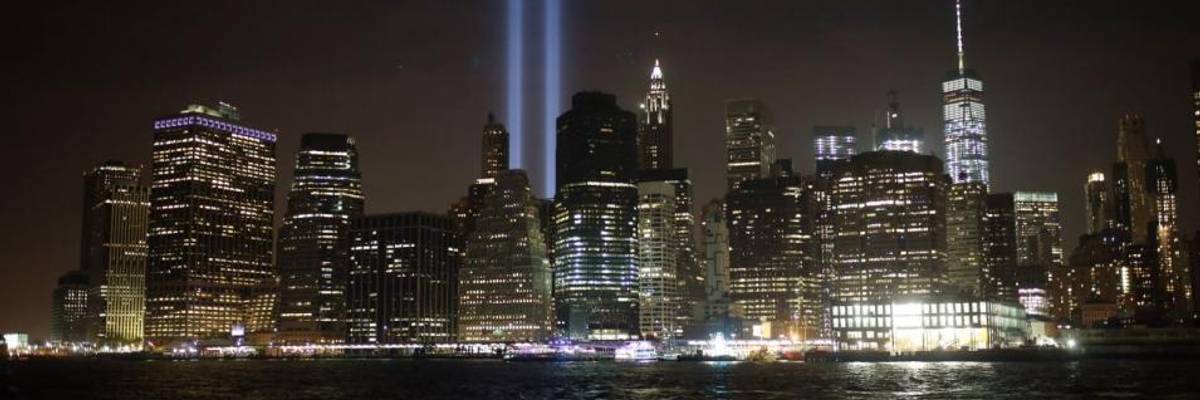
While it is easy to create enemies, it is much harder to understand the "other", a necessary approach if we wish to eliminate conflict and honor the desire for peace and security of all people in the world. (Photo by Mohammed Elshamy/Anadolu Agency/Getty Images)
A new anniversary of a catastrophe brings back strong feelings and sad memories. Such is the case of the 9/11 attacks on New York's World Trade Center, a tragedy that had long-lasting effects. New York, and the world, has not been the same since the events of September 11, 2001.
The attacks on the Twin Towers produced the most concentrated response to an emergency in the history of the United States. It is estimated that at least 100 emergency units and dozens of private ambulances headed to the scene to pick up the wounded and take them to nearby hospitals. At the same time, more than 2,000 police officers searched the towers and rescued survivors. But the weight of the response fell to the New York Fire Department, whose response to the events was truly heroic.
The attacks on the towers led to a surge in national pride and public expressions of patriotism and a strong commitment to help those that survived and the families of those who were killed. But there was also an increase of harassment incidents and hate crimes against South Asians, Middle Easterners and even those who looked like them. Several Indian Sikhs were attacked and killed because they were erroneously believed to be Muslims.
Health effects
The attacks were particularly disturbing to children, who saw the images of destruction replayed relentlessly on television. For years after the attack children suffered fom post-traumatic stress disorder. More than 2,500 contaminants, many of them dangerous carcinogens, were present in thousands of tons of toxic debris resulting from the collapse of the towers. It is estimated that over 18,000 people have become sick as a result of the toxic dust.
Economic consequences
There was a wide range of economic losses after the attacks. It is estimated that the city suffered economic losses estimated in more than $90 billion. They were the consequence of lost productivity, wide-ranging insurance claims against the city, loss of real state and art objects, and impaired tourism and trade, among many other effects.
Security and military actions
Security and protective services suffered significant changes due to the attacks. Congress passed Aviation and Transportation Security Act which affected air travel and security policies, as well as guidelines to be followed before getting on board. The Department of Homeland Security required pilots to carry firearms on board, and pilots were obliged to undergo training to prevent other terror attacks.
The USA Patriot Act was also passed, which broadened the powers of law enforcement agencies for the purpose of identifying terrorist activities. The government was given wide powers to search people's records. Through the program called Total Information Awareness special technology was developed to allow the collection and analysis of information about every individual in the United States, and detect unusual behaviors that could lead to terrorist attacks.
International
The wars in Afghanistan and Iraq have ravaged those countries, and resulted in a permanent state of instability and destruction.
Using the attacks as an excuse, the U.S. conducted wars in Afghanistan and Iraq that would have serious consequences on the U.S. economy and the world rule of law. Many people throughout the world believe that the U.S. squandered a wave of world goodwill resulting from the attacks. The wars in Afghanistan and Iraq have ravaged those countries, and resulted in a permanent state of instability and destruction. "The war -never the choice of the Afghan people- has done great harm to our people for all sorts of different local, national, regional and international reasons. Widespread corruption, the massive arming of militias, the fuelling of war by neighboring countries, the civilian losses and night raids and deterioration of security have all undermined our children's education, our women's ability to work, our ability to provide basic social services to the neediest part of the population," said Orzala Ashraf Nemat, an Afghan human rights activist.
Lesson
One of the lessons to be drawn from that tragedy is that violence begets violence and intolerance breeds intolerance. Unless there is a new approach to preventing terrorist acts we will continue to live under the threat of terror. Permanent confrontation is not the answer. While it is easy to create enemies, it is much harder to understand the "other", a necessary approach if we wish to eliminate conflict and honor the desire for peace and security of all people in the world.
Dear Common Dreams reader, It’s been nearly 30 years since I co-founded Common Dreams with my late wife, Lina Newhouser. We had the radical notion that journalism should serve the public good, not corporate profits. It was clear to us from the outset what it would take to build such a project. No paid advertisements. No corporate sponsors. No millionaire publisher telling us what to think or do. Many people said we wouldn't last a year, but we proved those doubters wrong. Together with a tremendous team of journalists and dedicated staff, we built an independent media outlet free from the constraints of profits and corporate control. Our mission has always been simple: To inform. To inspire. To ignite change for the common good. Building Common Dreams was not easy. Our survival was never guaranteed. When you take on the most powerful forces—Wall Street greed, fossil fuel industry destruction, Big Tech lobbyists, and uber-rich oligarchs who have spent billions upon billions rigging the economy and democracy in their favor—the only bulwark you have is supporters who believe in your work. But here’s the urgent message from me today. It's never been this bad out there. And it's never been this hard to keep us going. At the very moment Common Dreams is most needed, the threats we face are intensifying. We need your support now more than ever. We don't accept corporate advertising and never will. We don't have a paywall because we don't think people should be blocked from critical news based on their ability to pay. Everything we do is funded by the donations of readers like you. When everyone does the little they can afford, we are strong. But if that support retreats or dries up, so do we. Will you donate now to make sure Common Dreams not only survives but thrives? —Craig Brown, Co-founder |
A new anniversary of a catastrophe brings back strong feelings and sad memories. Such is the case of the 9/11 attacks on New York's World Trade Center, a tragedy that had long-lasting effects. New York, and the world, has not been the same since the events of September 11, 2001.
The attacks on the Twin Towers produced the most concentrated response to an emergency in the history of the United States. It is estimated that at least 100 emergency units and dozens of private ambulances headed to the scene to pick up the wounded and take them to nearby hospitals. At the same time, more than 2,000 police officers searched the towers and rescued survivors. But the weight of the response fell to the New York Fire Department, whose response to the events was truly heroic.
The attacks on the towers led to a surge in national pride and public expressions of patriotism and a strong commitment to help those that survived and the families of those who were killed. But there was also an increase of harassment incidents and hate crimes against South Asians, Middle Easterners and even those who looked like them. Several Indian Sikhs were attacked and killed because they were erroneously believed to be Muslims.
Health effects
The attacks were particularly disturbing to children, who saw the images of destruction replayed relentlessly on television. For years after the attack children suffered fom post-traumatic stress disorder. More than 2,500 contaminants, many of them dangerous carcinogens, were present in thousands of tons of toxic debris resulting from the collapse of the towers. It is estimated that over 18,000 people have become sick as a result of the toxic dust.
Economic consequences
There was a wide range of economic losses after the attacks. It is estimated that the city suffered economic losses estimated in more than $90 billion. They were the consequence of lost productivity, wide-ranging insurance claims against the city, loss of real state and art objects, and impaired tourism and trade, among many other effects.
Security and military actions
Security and protective services suffered significant changes due to the attacks. Congress passed Aviation and Transportation Security Act which affected air travel and security policies, as well as guidelines to be followed before getting on board. The Department of Homeland Security required pilots to carry firearms on board, and pilots were obliged to undergo training to prevent other terror attacks.
The USA Patriot Act was also passed, which broadened the powers of law enforcement agencies for the purpose of identifying terrorist activities. The government was given wide powers to search people's records. Through the program called Total Information Awareness special technology was developed to allow the collection and analysis of information about every individual in the United States, and detect unusual behaviors that could lead to terrorist attacks.
International
The wars in Afghanistan and Iraq have ravaged those countries, and resulted in a permanent state of instability and destruction.
Using the attacks as an excuse, the U.S. conducted wars in Afghanistan and Iraq that would have serious consequences on the U.S. economy and the world rule of law. Many people throughout the world believe that the U.S. squandered a wave of world goodwill resulting from the attacks. The wars in Afghanistan and Iraq have ravaged those countries, and resulted in a permanent state of instability and destruction. "The war -never the choice of the Afghan people- has done great harm to our people for all sorts of different local, national, regional and international reasons. Widespread corruption, the massive arming of militias, the fuelling of war by neighboring countries, the civilian losses and night raids and deterioration of security have all undermined our children's education, our women's ability to work, our ability to provide basic social services to the neediest part of the population," said Orzala Ashraf Nemat, an Afghan human rights activist.
Lesson
One of the lessons to be drawn from that tragedy is that violence begets violence and intolerance breeds intolerance. Unless there is a new approach to preventing terrorist acts we will continue to live under the threat of terror. Permanent confrontation is not the answer. While it is easy to create enemies, it is much harder to understand the "other", a necessary approach if we wish to eliminate conflict and honor the desire for peace and security of all people in the world.
A new anniversary of a catastrophe brings back strong feelings and sad memories. Such is the case of the 9/11 attacks on New York's World Trade Center, a tragedy that had long-lasting effects. New York, and the world, has not been the same since the events of September 11, 2001.
The attacks on the Twin Towers produced the most concentrated response to an emergency in the history of the United States. It is estimated that at least 100 emergency units and dozens of private ambulances headed to the scene to pick up the wounded and take them to nearby hospitals. At the same time, more than 2,000 police officers searched the towers and rescued survivors. But the weight of the response fell to the New York Fire Department, whose response to the events was truly heroic.
The attacks on the towers led to a surge in national pride and public expressions of patriotism and a strong commitment to help those that survived and the families of those who were killed. But there was also an increase of harassment incidents and hate crimes against South Asians, Middle Easterners and even those who looked like them. Several Indian Sikhs were attacked and killed because they were erroneously believed to be Muslims.
Health effects
The attacks were particularly disturbing to children, who saw the images of destruction replayed relentlessly on television. For years after the attack children suffered fom post-traumatic stress disorder. More than 2,500 contaminants, many of them dangerous carcinogens, were present in thousands of tons of toxic debris resulting from the collapse of the towers. It is estimated that over 18,000 people have become sick as a result of the toxic dust.
Economic consequences
There was a wide range of economic losses after the attacks. It is estimated that the city suffered economic losses estimated in more than $90 billion. They were the consequence of lost productivity, wide-ranging insurance claims against the city, loss of real state and art objects, and impaired tourism and trade, among many other effects.
Security and military actions
Security and protective services suffered significant changes due to the attacks. Congress passed Aviation and Transportation Security Act which affected air travel and security policies, as well as guidelines to be followed before getting on board. The Department of Homeland Security required pilots to carry firearms on board, and pilots were obliged to undergo training to prevent other terror attacks.
The USA Patriot Act was also passed, which broadened the powers of law enforcement agencies for the purpose of identifying terrorist activities. The government was given wide powers to search people's records. Through the program called Total Information Awareness special technology was developed to allow the collection and analysis of information about every individual in the United States, and detect unusual behaviors that could lead to terrorist attacks.
International
The wars in Afghanistan and Iraq have ravaged those countries, and resulted in a permanent state of instability and destruction.
Using the attacks as an excuse, the U.S. conducted wars in Afghanistan and Iraq that would have serious consequences on the U.S. economy and the world rule of law. Many people throughout the world believe that the U.S. squandered a wave of world goodwill resulting from the attacks. The wars in Afghanistan and Iraq have ravaged those countries, and resulted in a permanent state of instability and destruction. "The war -never the choice of the Afghan people- has done great harm to our people for all sorts of different local, national, regional and international reasons. Widespread corruption, the massive arming of militias, the fuelling of war by neighboring countries, the civilian losses and night raids and deterioration of security have all undermined our children's education, our women's ability to work, our ability to provide basic social services to the neediest part of the population," said Orzala Ashraf Nemat, an Afghan human rights activist.
Lesson
One of the lessons to be drawn from that tragedy is that violence begets violence and intolerance breeds intolerance. Unless there is a new approach to preventing terrorist acts we will continue to live under the threat of terror. Permanent confrontation is not the answer. While it is easy to create enemies, it is much harder to understand the "other", a necessary approach if we wish to eliminate conflict and honor the desire for peace and security of all people in the world.

