SUBSCRIBE TO OUR FREE NEWSLETTER
Daily news & progressive opinion—funded by the people, not the corporations—delivered straight to your inbox.
5
#000000
#FFFFFF
To donate by check, phone, or other method, see our More Ways to Give page.
Daily news & progressive opinion—funded by the people, not the corporations—delivered straight to your inbox.
The 16th century theologian John Calvin remarked that if you went to every cathedral in Europe and took away all the pieces of the true cross of Christ they claimed to possess, you'd have enough wood to fill a ship.
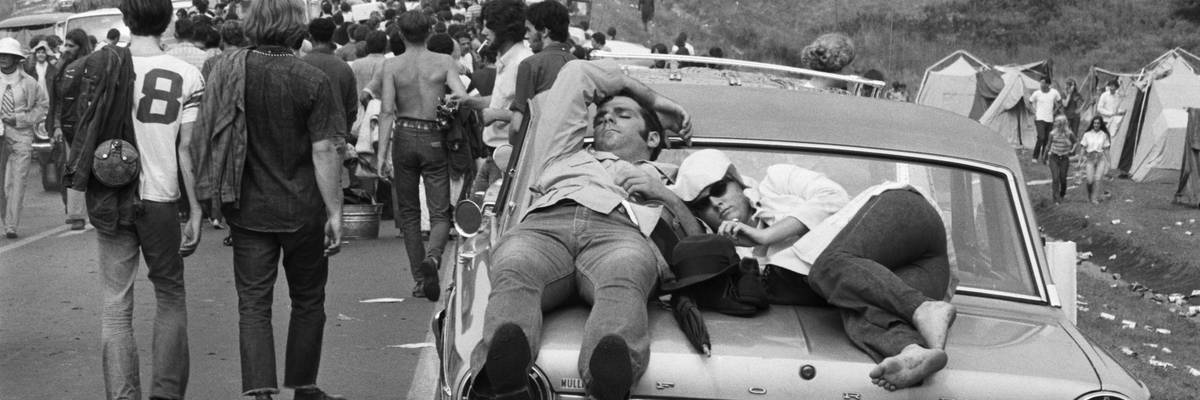
Similarly, if you took all the people who claim they were at Woodstock fifty years ago--but weren't--you could fill a city.
Actually, for that brief time in history, those who managed to get there--half a million strong, as the Joni Mitchell song goes--did constitute the third largest city in New York State. (Mitchell wasn't in attendance, by the way. Her then-boyfriend Graham Nash filled her in and she managed to beautifully capture the scene.)
I wasn't there either. In fact, I always joke that I wanted to go but my mother wouldn't let me--which is true.
A teenager, I saw the first ad for it in the Sunday New York Times in the spring of '69. At that point it seemed Woodstock would be as much a folk festival as a rock concert. I was close to many of the English faculty of my high school, went to one of them, showed the ad and got her enthusiastic support. She and her husband and I started to make a plan--Bethel, NY, where it all went down, was just a little more than 200 miles away and my teacher even had the requisite VW microbus.
But my mom got wind of our scheme, put her foot down and that was that. No mud or music for me. My father was unwell and I was working in his pharmacy that last summer before college. I remember hearing news reports on the store's radio about the massive size of the crowd and gridlock on the New York Thruway.
Two months later, during my freshman homecoming weekend, I got to see and hear The Who recreate much of their Woodstock performance--including chunks of the rock opera "Tommy"--and by the following spring the documentary of the festival was in movie theaters. One balmy Sunday night, friends and I hitchhiked a ride on the pack of a pickup truck to go to a late night showing. Fantastic.
In those times, it still seemed safe to hitchhike, especially if you were with friends. Yet a few years ago I was talking to my friend James Schamus, the producer and screenwriter who wrote the 2009 movie Taking Woodstock, directed by Ang Lee. I asked where he had been when Woodstock actually happened. He replied that as an about-to-be-ten-year-old in Los Angeles, he was safely tucked away in his family's recreation room because everyone was freaked out. The Manson family had murdered Sharon Tate and her friends in Benedict Canyon and a married couple in Los Feliz--nine dead and all of them nearby.
The killings had taken place just a few days before Woodstock. The two events were the alpha and omega of that intense summer, just as the moon landing and Ted Kennedy and the drowning death of Mary Jo Kopechne at Chappaquiddick seemed to be.
The best of us and the worst. That same summer, the Mets were having a great season and would win the World Series. Norman Mailer was running a madcap campaign for mayor of New York City with Jimmy Breslin as his running mate. But Richard Nixon was president and Spiro Agnew was his creepy veep. The Vietnam War plunged on, with nearly 12,000 American military dead in 1969 alone, and untold numbers of Vietnamese.
We are in no such war today--deaths in Afghanistan, Iraq and elsewhere have been far fewer--and yet the potential for global calamity, military or otherwise, remains high, even likely. We behave abroad with the unthinking recklessness of a bull moose in heat but at the same time allow unprecedented outside interference in our domestic affairs, including the nation's electoral process.
Here at home, we belittle the poor and take away what's left of their dignity. We racially profile, allow armed white nationalism to go virtually unchecked and treat the undocumented with ruthless cruelty. We allow the stripping away of regulations that protect our water, food and air--abuse the climate for fun and profit while denying there's a crisis and allow government to be treated as an ATM for the incumbent president and his one percent cronies. Not satisfied with this second Gilded Age, they want to drag us back to the first one, when unfettered corporate greed ran amok and rules were swept aside, never to be obeyed.
Nixon liked to promote what he called "the madman theory," believing he could convince those who opposed the United States to yield to his demands because he acted as if he might be irrational and do something crazy, like launch a nuclear attack.
But unlike Nixon's posturing, now we truly do have a cravenly unpresidential madman in the White House, spewing hatred, tyranny and deceit. We are, as Joni Mitchell told us in her Woodstock song, "caught in the devil's bargain." No amount of nostalgia for that festival or my misspent youth can distract or ease the fear that between now and the end of Trump's presidency, unless we take action, we're all going to face the music--and something a lot nastier than mud.
Dear Common Dreams reader, It’s been nearly 30 years since I co-founded Common Dreams with my late wife, Lina Newhouser. We had the radical notion that journalism should serve the public good, not corporate profits. It was clear to us from the outset what it would take to build such a project. No paid advertisements. No corporate sponsors. No millionaire publisher telling us what to think or do. Many people said we wouldn't last a year, but we proved those doubters wrong. Together with a tremendous team of journalists and dedicated staff, we built an independent media outlet free from the constraints of profits and corporate control. Our mission has always been simple: To inform. To inspire. To ignite change for the common good. Building Common Dreams was not easy. Our survival was never guaranteed. When you take on the most powerful forces—Wall Street greed, fossil fuel industry destruction, Big Tech lobbyists, and uber-rich oligarchs who have spent billions upon billions rigging the economy and democracy in their favor—the only bulwark you have is supporters who believe in your work. But here’s the urgent message from me today. It's never been this bad out there. And it's never been this hard to keep us going. At the very moment Common Dreams is most needed, the threats we face are intensifying. We need your support now more than ever. We don't accept corporate advertising and never will. We don't have a paywall because we don't think people should be blocked from critical news based on their ability to pay. Everything we do is funded by the donations of readers like you. When everyone does the little they can afford, we are strong. But if that support retreats or dries up, so do we. Will you donate now to make sure Common Dreams not only survives but thrives? —Craig Brown, Co-founder |
The 16th century theologian John Calvin remarked that if you went to every cathedral in Europe and took away all the pieces of the true cross of Christ they claimed to possess, you'd have enough wood to fill a ship.
Similarly, if you took all the people who claim they were at Woodstock fifty years ago--but weren't--you could fill a city.
Actually, for that brief time in history, those who managed to get there--half a million strong, as the Joni Mitchell song goes--did constitute the third largest city in New York State. (Mitchell wasn't in attendance, by the way. Her then-boyfriend Graham Nash filled her in and she managed to beautifully capture the scene.)
I wasn't there either. In fact, I always joke that I wanted to go but my mother wouldn't let me--which is true.
A teenager, I saw the first ad for it in the Sunday New York Times in the spring of '69. At that point it seemed Woodstock would be as much a folk festival as a rock concert. I was close to many of the English faculty of my high school, went to one of them, showed the ad and got her enthusiastic support. She and her husband and I started to make a plan--Bethel, NY, where it all went down, was just a little more than 200 miles away and my teacher even had the requisite VW microbus.
But my mom got wind of our scheme, put her foot down and that was that. No mud or music for me. My father was unwell and I was working in his pharmacy that last summer before college. I remember hearing news reports on the store's radio about the massive size of the crowd and gridlock on the New York Thruway.
Two months later, during my freshman homecoming weekend, I got to see and hear The Who recreate much of their Woodstock performance--including chunks of the rock opera "Tommy"--and by the following spring the documentary of the festival was in movie theaters. One balmy Sunday night, friends and I hitchhiked a ride on the pack of a pickup truck to go to a late night showing. Fantastic.
In those times, it still seemed safe to hitchhike, especially if you were with friends. Yet a few years ago I was talking to my friend James Schamus, the producer and screenwriter who wrote the 2009 movie Taking Woodstock, directed by Ang Lee. I asked where he had been when Woodstock actually happened. He replied that as an about-to-be-ten-year-old in Los Angeles, he was safely tucked away in his family's recreation room because everyone was freaked out. The Manson family had murdered Sharon Tate and her friends in Benedict Canyon and a married couple in Los Feliz--nine dead and all of them nearby.
The killings had taken place just a few days before Woodstock. The two events were the alpha and omega of that intense summer, just as the moon landing and Ted Kennedy and the drowning death of Mary Jo Kopechne at Chappaquiddick seemed to be.
The best of us and the worst. That same summer, the Mets were having a great season and would win the World Series. Norman Mailer was running a madcap campaign for mayor of New York City with Jimmy Breslin as his running mate. But Richard Nixon was president and Spiro Agnew was his creepy veep. The Vietnam War plunged on, with nearly 12,000 American military dead in 1969 alone, and untold numbers of Vietnamese.
We are in no such war today--deaths in Afghanistan, Iraq and elsewhere have been far fewer--and yet the potential for global calamity, military or otherwise, remains high, even likely. We behave abroad with the unthinking recklessness of a bull moose in heat but at the same time allow unprecedented outside interference in our domestic affairs, including the nation's electoral process.
Here at home, we belittle the poor and take away what's left of their dignity. We racially profile, allow armed white nationalism to go virtually unchecked and treat the undocumented with ruthless cruelty. We allow the stripping away of regulations that protect our water, food and air--abuse the climate for fun and profit while denying there's a crisis and allow government to be treated as an ATM for the incumbent president and his one percent cronies. Not satisfied with this second Gilded Age, they want to drag us back to the first one, when unfettered corporate greed ran amok and rules were swept aside, never to be obeyed.
Nixon liked to promote what he called "the madman theory," believing he could convince those who opposed the United States to yield to his demands because he acted as if he might be irrational and do something crazy, like launch a nuclear attack.
But unlike Nixon's posturing, now we truly do have a cravenly unpresidential madman in the White House, spewing hatred, tyranny and deceit. We are, as Joni Mitchell told us in her Woodstock song, "caught in the devil's bargain." No amount of nostalgia for that festival or my misspent youth can distract or ease the fear that between now and the end of Trump's presidency, unless we take action, we're all going to face the music--and something a lot nastier than mud.
The 16th century theologian John Calvin remarked that if you went to every cathedral in Europe and took away all the pieces of the true cross of Christ they claimed to possess, you'd have enough wood to fill a ship.
Similarly, if you took all the people who claim they were at Woodstock fifty years ago--but weren't--you could fill a city.
Actually, for that brief time in history, those who managed to get there--half a million strong, as the Joni Mitchell song goes--did constitute the third largest city in New York State. (Mitchell wasn't in attendance, by the way. Her then-boyfriend Graham Nash filled her in and she managed to beautifully capture the scene.)
I wasn't there either. In fact, I always joke that I wanted to go but my mother wouldn't let me--which is true.
A teenager, I saw the first ad for it in the Sunday New York Times in the spring of '69. At that point it seemed Woodstock would be as much a folk festival as a rock concert. I was close to many of the English faculty of my high school, went to one of them, showed the ad and got her enthusiastic support. She and her husband and I started to make a plan--Bethel, NY, where it all went down, was just a little more than 200 miles away and my teacher even had the requisite VW microbus.
But my mom got wind of our scheme, put her foot down and that was that. No mud or music for me. My father was unwell and I was working in his pharmacy that last summer before college. I remember hearing news reports on the store's radio about the massive size of the crowd and gridlock on the New York Thruway.
Two months later, during my freshman homecoming weekend, I got to see and hear The Who recreate much of their Woodstock performance--including chunks of the rock opera "Tommy"--and by the following spring the documentary of the festival was in movie theaters. One balmy Sunday night, friends and I hitchhiked a ride on the pack of a pickup truck to go to a late night showing. Fantastic.
In those times, it still seemed safe to hitchhike, especially if you were with friends. Yet a few years ago I was talking to my friend James Schamus, the producer and screenwriter who wrote the 2009 movie Taking Woodstock, directed by Ang Lee. I asked where he had been when Woodstock actually happened. He replied that as an about-to-be-ten-year-old in Los Angeles, he was safely tucked away in his family's recreation room because everyone was freaked out. The Manson family had murdered Sharon Tate and her friends in Benedict Canyon and a married couple in Los Feliz--nine dead and all of them nearby.
The killings had taken place just a few days before Woodstock. The two events were the alpha and omega of that intense summer, just as the moon landing and Ted Kennedy and the drowning death of Mary Jo Kopechne at Chappaquiddick seemed to be.
The best of us and the worst. That same summer, the Mets were having a great season and would win the World Series. Norman Mailer was running a madcap campaign for mayor of New York City with Jimmy Breslin as his running mate. But Richard Nixon was president and Spiro Agnew was his creepy veep. The Vietnam War plunged on, with nearly 12,000 American military dead in 1969 alone, and untold numbers of Vietnamese.
We are in no such war today--deaths in Afghanistan, Iraq and elsewhere have been far fewer--and yet the potential for global calamity, military or otherwise, remains high, even likely. We behave abroad with the unthinking recklessness of a bull moose in heat but at the same time allow unprecedented outside interference in our domestic affairs, including the nation's electoral process.
Here at home, we belittle the poor and take away what's left of their dignity. We racially profile, allow armed white nationalism to go virtually unchecked and treat the undocumented with ruthless cruelty. We allow the stripping away of regulations that protect our water, food and air--abuse the climate for fun and profit while denying there's a crisis and allow government to be treated as an ATM for the incumbent president and his one percent cronies. Not satisfied with this second Gilded Age, they want to drag us back to the first one, when unfettered corporate greed ran amok and rules were swept aside, never to be obeyed.
Nixon liked to promote what he called "the madman theory," believing he could convince those who opposed the United States to yield to his demands because he acted as if he might be irrational and do something crazy, like launch a nuclear attack.
But unlike Nixon's posturing, now we truly do have a cravenly unpresidential madman in the White House, spewing hatred, tyranny and deceit. We are, as Joni Mitchell told us in her Woodstock song, "caught in the devil's bargain." No amount of nostalgia for that festival or my misspent youth can distract or ease the fear that between now and the end of Trump's presidency, unless we take action, we're all going to face the music--and something a lot nastier than mud.