SUBSCRIBE TO OUR FREE NEWSLETTER
Daily news & progressive opinion—funded by the people, not the corporations—delivered straight to your inbox.
5
#000000
#FFFFFF
To donate by check, phone, or other method, see our More Ways to Give page.
Daily news & progressive opinion—funded by the people, not the corporations—delivered straight to your inbox.
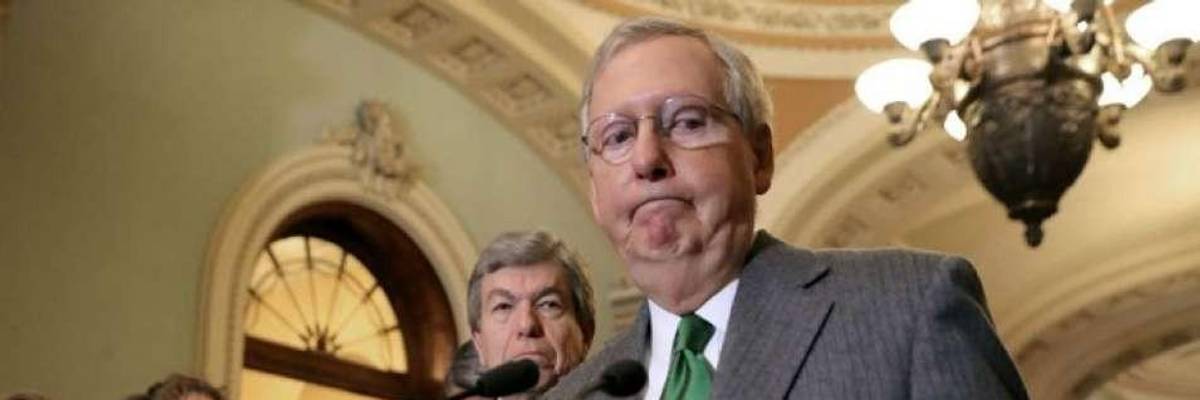
Sen. Mitch McConnell (R-Ky.) continues to refuse to bring the For the People Act and its pro-democracy, anti-corruption provisions to the floor of the Senate for a vote. (Photo: Chip Somodevilla/Getty Images)
Senate Majority Leader Mitch McConnell has built a career on weakening our democracy. Nothing seems to bring out the passion in the famously stoic McConnell more than opposing pro-democracy reforms.
Well, now he has the challenge of a lifetime. The House of Representatives has just passed HR1, the For the People Act, the most sweeping pro-democracy and anti-corruption measure of the past 50 years. McConnell has denounced HR1 and pledged that he will block it from coming to the floor of the Senate.
But if McConnell is so eager to hold a vote on the Green New Deal, a legislative proposal that he strongly opposes, why is he so committed to blocking Senate consideration of HR1? Could it be that he thinks Republicans will have a hard time voting against pro-democracy reforms? Is he worried that voters may hold accountable defenders of the current corrupt political system?
"Of course, he's right to be worried, for it is a reallocation of power away from a narrow grouping of super rich oligarchs and to the people."
Those would be reasonable fears. But McConnell should be worried also about the impact of preventing a vote on HR1. Voters are desperate for far-reaching campaign finance and ethics reforms -- divided only on whether the system should be fundamentally changed or completely rebuilt. Voters are not likely to treat his obstructionism kindly.
They are likely to be especially outraged because HR1 so effectively addresses what so many people are so outraged about and the shameful anti-democratic practices that so tarnish our nation.
Among other measures, HR1 would:
* Replace the current campaign finance system that empowers the super rich and big corporations with one that relies on small donors and public matching funds.
* End secret spending in elections.
* Eliminate partisan gerrymandering.
* Establish automatic voter registration.
* Restore voting rights to felons who have served their time.
* Make Election Day a national holiday.
McConnell calls these democracy-expanding measures a "power grab."
Of course, he's right to be worried, for it is a reallocation of power away from a narrow grouping of super rich oligarchs and to the people.
That redistribution of power is called "democracy."
McConnell is not alone in attacking HR1. The Koch Brothers' main organization, Americans for Prosperity, says "the free speech regulations in HR1 would make it more difficult than ever for people to make their voices heard and hold their elected leaders accountable."
They also are right to be worried. Those supposed "free speech regulations" are disclosure requirements that would end political dark money -- a move that would absolutely reduce the undue political influence of super rich and corporate donors who are able to hide their efforts to buy elections.
Big Business in general is upset. The U.S. Chamber of Commerce, the trade association for large corporations, leads a large grouping of trade associations in denouncing HR1 for "pushing certain voices, representing large segments of the electorate and our economy, out of the political process altogether."
Actually, HR1 is amplifying the voices of the electorate. Although the point seems to evade the trade associations, Big Business is not part of "the electorate." That said, HR1 doesn't limit corporations' ability to spend on elections -- that will require a constitutional amendment to overturn Citizens United -- though it does end their ability to finance electioneering secretly.
McConnell and the power elite are right to be frightened. HR1 would upset the normal way of doing business in Washington. It would break Corporate America's stranglehold over our government and curtail the shameful vote-suppressing activity increasing across the nation.
But they are clinging to a backward-looking strategy that is doomed to fail. In a nation marked by the most severe wealth and income inequality of the past 100 years, amid intense outrage across the political spectrum against a rigged system that works for corporations and the super rich at the expense of the rest of us, the American people will not tolerate McConnell's obstructionism. Democracy reform is coming to the United States, whether McConnell and his corporate allies like it or not.
Dear Common Dreams reader, It’s been nearly 30 years since I co-founded Common Dreams with my late wife, Lina Newhouser. We had the radical notion that journalism should serve the public good, not corporate profits. It was clear to us from the outset what it would take to build such a project. No paid advertisements. No corporate sponsors. No millionaire publisher telling us what to think or do. Many people said we wouldn't last a year, but we proved those doubters wrong. Together with a tremendous team of journalists and dedicated staff, we built an independent media outlet free from the constraints of profits and corporate control. Our mission has always been simple: To inform. To inspire. To ignite change for the common good. Building Common Dreams was not easy. Our survival was never guaranteed. When you take on the most powerful forces—Wall Street greed, fossil fuel industry destruction, Big Tech lobbyists, and uber-rich oligarchs who have spent billions upon billions rigging the economy and democracy in their favor—the only bulwark you have is supporters who believe in your work. But here’s the urgent message from me today. It's never been this bad out there. And it's never been this hard to keep us going. At the very moment Common Dreams is most needed, the threats we face are intensifying. We need your support now more than ever. We don't accept corporate advertising and never will. We don't have a paywall because we don't think people should be blocked from critical news based on their ability to pay. Everything we do is funded by the donations of readers like you. When everyone does the little they can afford, we are strong. But if that support retreats or dries up, so do we. Will you donate now to make sure Common Dreams not only survives but thrives? —Craig Brown, Co-founder |
Senate Majority Leader Mitch McConnell has built a career on weakening our democracy. Nothing seems to bring out the passion in the famously stoic McConnell more than opposing pro-democracy reforms.
Well, now he has the challenge of a lifetime. The House of Representatives has just passed HR1, the For the People Act, the most sweeping pro-democracy and anti-corruption measure of the past 50 years. McConnell has denounced HR1 and pledged that he will block it from coming to the floor of the Senate.
But if McConnell is so eager to hold a vote on the Green New Deal, a legislative proposal that he strongly opposes, why is he so committed to blocking Senate consideration of HR1? Could it be that he thinks Republicans will have a hard time voting against pro-democracy reforms? Is he worried that voters may hold accountable defenders of the current corrupt political system?
"Of course, he's right to be worried, for it is a reallocation of power away from a narrow grouping of super rich oligarchs and to the people."
Those would be reasonable fears. But McConnell should be worried also about the impact of preventing a vote on HR1. Voters are desperate for far-reaching campaign finance and ethics reforms -- divided only on whether the system should be fundamentally changed or completely rebuilt. Voters are not likely to treat his obstructionism kindly.
They are likely to be especially outraged because HR1 so effectively addresses what so many people are so outraged about and the shameful anti-democratic practices that so tarnish our nation.
Among other measures, HR1 would:
* Replace the current campaign finance system that empowers the super rich and big corporations with one that relies on small donors and public matching funds.
* End secret spending in elections.
* Eliminate partisan gerrymandering.
* Establish automatic voter registration.
* Restore voting rights to felons who have served their time.
* Make Election Day a national holiday.
McConnell calls these democracy-expanding measures a "power grab."
Of course, he's right to be worried, for it is a reallocation of power away from a narrow grouping of super rich oligarchs and to the people.
That redistribution of power is called "democracy."
McConnell is not alone in attacking HR1. The Koch Brothers' main organization, Americans for Prosperity, says "the free speech regulations in HR1 would make it more difficult than ever for people to make their voices heard and hold their elected leaders accountable."
They also are right to be worried. Those supposed "free speech regulations" are disclosure requirements that would end political dark money -- a move that would absolutely reduce the undue political influence of super rich and corporate donors who are able to hide their efforts to buy elections.
Big Business in general is upset. The U.S. Chamber of Commerce, the trade association for large corporations, leads a large grouping of trade associations in denouncing HR1 for "pushing certain voices, representing large segments of the electorate and our economy, out of the political process altogether."
Actually, HR1 is amplifying the voices of the electorate. Although the point seems to evade the trade associations, Big Business is not part of "the electorate." That said, HR1 doesn't limit corporations' ability to spend on elections -- that will require a constitutional amendment to overturn Citizens United -- though it does end their ability to finance electioneering secretly.
McConnell and the power elite are right to be frightened. HR1 would upset the normal way of doing business in Washington. It would break Corporate America's stranglehold over our government and curtail the shameful vote-suppressing activity increasing across the nation.
But they are clinging to a backward-looking strategy that is doomed to fail. In a nation marked by the most severe wealth and income inequality of the past 100 years, amid intense outrage across the political spectrum against a rigged system that works for corporations and the super rich at the expense of the rest of us, the American people will not tolerate McConnell's obstructionism. Democracy reform is coming to the United States, whether McConnell and his corporate allies like it or not.
Senate Majority Leader Mitch McConnell has built a career on weakening our democracy. Nothing seems to bring out the passion in the famously stoic McConnell more than opposing pro-democracy reforms.
Well, now he has the challenge of a lifetime. The House of Representatives has just passed HR1, the For the People Act, the most sweeping pro-democracy and anti-corruption measure of the past 50 years. McConnell has denounced HR1 and pledged that he will block it from coming to the floor of the Senate.
But if McConnell is so eager to hold a vote on the Green New Deal, a legislative proposal that he strongly opposes, why is he so committed to blocking Senate consideration of HR1? Could it be that he thinks Republicans will have a hard time voting against pro-democracy reforms? Is he worried that voters may hold accountable defenders of the current corrupt political system?
"Of course, he's right to be worried, for it is a reallocation of power away from a narrow grouping of super rich oligarchs and to the people."
Those would be reasonable fears. But McConnell should be worried also about the impact of preventing a vote on HR1. Voters are desperate for far-reaching campaign finance and ethics reforms -- divided only on whether the system should be fundamentally changed or completely rebuilt. Voters are not likely to treat his obstructionism kindly.
They are likely to be especially outraged because HR1 so effectively addresses what so many people are so outraged about and the shameful anti-democratic practices that so tarnish our nation.
Among other measures, HR1 would:
* Replace the current campaign finance system that empowers the super rich and big corporations with one that relies on small donors and public matching funds.
* End secret spending in elections.
* Eliminate partisan gerrymandering.
* Establish automatic voter registration.
* Restore voting rights to felons who have served their time.
* Make Election Day a national holiday.
McConnell calls these democracy-expanding measures a "power grab."
Of course, he's right to be worried, for it is a reallocation of power away from a narrow grouping of super rich oligarchs and to the people.
That redistribution of power is called "democracy."
McConnell is not alone in attacking HR1. The Koch Brothers' main organization, Americans for Prosperity, says "the free speech regulations in HR1 would make it more difficult than ever for people to make their voices heard and hold their elected leaders accountable."
They also are right to be worried. Those supposed "free speech regulations" are disclosure requirements that would end political dark money -- a move that would absolutely reduce the undue political influence of super rich and corporate donors who are able to hide their efforts to buy elections.
Big Business in general is upset. The U.S. Chamber of Commerce, the trade association for large corporations, leads a large grouping of trade associations in denouncing HR1 for "pushing certain voices, representing large segments of the electorate and our economy, out of the political process altogether."
Actually, HR1 is amplifying the voices of the electorate. Although the point seems to evade the trade associations, Big Business is not part of "the electorate." That said, HR1 doesn't limit corporations' ability to spend on elections -- that will require a constitutional amendment to overturn Citizens United -- though it does end their ability to finance electioneering secretly.
McConnell and the power elite are right to be frightened. HR1 would upset the normal way of doing business in Washington. It would break Corporate America's stranglehold over our government and curtail the shameful vote-suppressing activity increasing across the nation.
But they are clinging to a backward-looking strategy that is doomed to fail. In a nation marked by the most severe wealth and income inequality of the past 100 years, amid intense outrage across the political spectrum against a rigged system that works for corporations and the super rich at the expense of the rest of us, the American people will not tolerate McConnell's obstructionism. Democracy reform is coming to the United States, whether McConnell and his corporate allies like it or not.