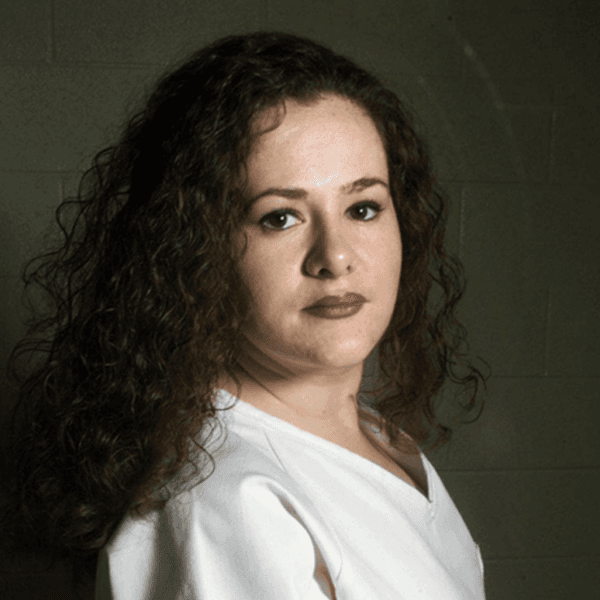

Cyntoia Brown in the PBS documentary Me Facing Life: Cyntoia's Story.
Cyntoia Brown Shows Us That Justice Is Not Blind
Is a system broken when it works as designed?
Cyntoia Brown was a victim of child sex trafficking who killed her abuser. Jeffrey Epstein was a billionaire serial child sex abuser. Both were convicted and sentenced - in ways that demonstrate the profound inequities of our criminal justice system.
On December 6, the Tennessee Supreme Court ruled that Brown must serve 51 years in prison for the shooting death of Johnny Mitchell Allen in 2004. Allen had paid to have sex with the then-16-year-old girl; she purportedly killed him while in fear for her life. She appealed her sentence as unconstitutionally harsh. The justices unanimously disagreed.
Brown, who is black, was the subject of a 2011 PBS documentary, Me Facing Life. It described how she was born with fetal alcohol syndrome, suffered from a childhood of trauma, abuse and sexual and physical violence, and was forced into prostitution.
Epstein, a friend of President Donald Trump, served just 13 months in a county jail work release program after being accused of raping or molesting dozens of underage girls. He allegedly recruited one of his victims, age 16, when she worked as a towel girl at Trump's Mar-a-Lago resort in Palm Beach, Florida.
Epstein's prosecutor, then-U.S. Attorney Alexander Acosta, crafted Epstein's inexplicably lenient 2008 deal, which has made news recently because Acosta went on to become Trump's secretary of labor.
As a former law clerk for two federal judges who has advocated for victims of police violence, prison abuse, and wrongful convictions, I have viewed the inner workings of the justice system. While people like to claim that Lady Justice is blind, in reality her vision is clouded by racism and class privilege.
While people like to claim that Lady Justice is blind, in reality her vision is clouded by racism and class privilege.
Consider the mostly white, male targets of the ongoing Mueller investigation, accused of criminal activity involving corruption, election meddling, money laundering and more. All enjoy resources, legal representation and bargaining power that is wholly unavailable to, say, a young black kid accused of dealing drugs. Even when other factors are constant, studies show that prosecutors give better deals to white defendants.
Often, white-collar crimes are perceived as less serious than street crimes, even though the former costs America $1 trillion annually, compared to $15 billion for the latter. In a country where the poor are criminalized and viewed as dangerous, the wealthy and powerful are often shielded from prosecution and punishment.
Sixty percent of the prisoners in the U.S. are people of color, most of whom are poor. They must contend with such policies as stop-and-frisk, money bail as a condition of pretrial release, court-appointed lawyers, and racially unequal sentencing.
The education and justice systems view children of color as culpable adults and deny them the presumption of innocence. Black girls as young as five are perceived as more grown up, less in need of protection and less innocent than white girls. Black boys as young as 10 are regarded as older and guilty, with dehumanizing racial stereotypes placing them at risk of police violence if they are accused of a crime.
A virtual life sentence for former child sex slave Cyntoia Brown stands in marked contrast to the light slap on the wrist for billionaire serial abuser Jeffrey Epstein. But it is not surprising in a society that treats people differently based on race, class and gender.
America fails to protect society's most vulnerable, silences women and criminalizes children of color, while letting abusive men of privilege off the hook. Some point to these different outcomes and say we are governed by a broken justice system. But is a system broken when it works as designed?
We are at a crossroads
This country and this world are at a monumental crossroads. In a few short weeks, US voters will have an opportunity to beat back the forces of fascism and confront the billionaires who are rigging the economy, our media system, and our democracy, making it increasingly impossible for ordinary people to get by. We’re not just talking about the election. We’re talking about what must be done once these fascist elements are vanquished from power. We need a bolder set of solutions than what either major party has so far been willing to offer and a working-class movement ready to fight like hell for it. Trump didn't emerge from nowhere. The conditions that fueled MAGA authoritarianism were created by decades of radical neoliberal economic policies and a corrupt political system dominated by corporate interests. They slashed taxes on the super-rich, promising that the benefits would trickle down. They said giveaways to the corporate titans would make life more affordable for the rest of us. It was all bullshit. And when a bitter, betrayed populace searches for someone to blame, right-wing demagogues have little trouble finding scapegoats. People know when they're being lied to, but you won't hear any of this from the corporate media. Only independent journalism—powered and funded by people who believe in building a better world—can deliver truly trustworthy daily news. Our Fall Campaign is underway, and we need your help. To power our newsroom through the rest of the year, we need to raise $125,000 by midnight on October 31. So if you share our vision, please contribute whatever you can to sustain our work. |
Cyntoia Brown was a victim of child sex trafficking who killed her abuser. Jeffrey Epstein was a billionaire serial child sex abuser. Both were convicted and sentenced - in ways that demonstrate the profound inequities of our criminal justice system.
On December 6, the Tennessee Supreme Court ruled that Brown must serve 51 years in prison for the shooting death of Johnny Mitchell Allen in 2004. Allen had paid to have sex with the then-16-year-old girl; she purportedly killed him while in fear for her life. She appealed her sentence as unconstitutionally harsh. The justices unanimously disagreed.
Brown, who is black, was the subject of a 2011 PBS documentary, Me Facing Life. It described how she was born with fetal alcohol syndrome, suffered from a childhood of trauma, abuse and sexual and physical violence, and was forced into prostitution.
Epstein, a friend of President Donald Trump, served just 13 months in a county jail work release program after being accused of raping or molesting dozens of underage girls. He allegedly recruited one of his victims, age 16, when she worked as a towel girl at Trump's Mar-a-Lago resort in Palm Beach, Florida.
Epstein's prosecutor, then-U.S. Attorney Alexander Acosta, crafted Epstein's inexplicably lenient 2008 deal, which has made news recently because Acosta went on to become Trump's secretary of labor.
As a former law clerk for two federal judges who has advocated for victims of police violence, prison abuse, and wrongful convictions, I have viewed the inner workings of the justice system. While people like to claim that Lady Justice is blind, in reality her vision is clouded by racism and class privilege.
While people like to claim that Lady Justice is blind, in reality her vision is clouded by racism and class privilege.
Consider the mostly white, male targets of the ongoing Mueller investigation, accused of criminal activity involving corruption, election meddling, money laundering and more. All enjoy resources, legal representation and bargaining power that is wholly unavailable to, say, a young black kid accused of dealing drugs. Even when other factors are constant, studies show that prosecutors give better deals to white defendants.
Often, white-collar crimes are perceived as less serious than street crimes, even though the former costs America $1 trillion annually, compared to $15 billion for the latter. In a country where the poor are criminalized and viewed as dangerous, the wealthy and powerful are often shielded from prosecution and punishment.
Sixty percent of the prisoners in the U.S. are people of color, most of whom are poor. They must contend with such policies as stop-and-frisk, money bail as a condition of pretrial release, court-appointed lawyers, and racially unequal sentencing.
The education and justice systems view children of color as culpable adults and deny them the presumption of innocence. Black girls as young as five are perceived as more grown up, less in need of protection and less innocent than white girls. Black boys as young as 10 are regarded as older and guilty, with dehumanizing racial stereotypes placing them at risk of police violence if they are accused of a crime.
A virtual life sentence for former child sex slave Cyntoia Brown stands in marked contrast to the light slap on the wrist for billionaire serial abuser Jeffrey Epstein. But it is not surprising in a society that treats people differently based on race, class and gender.
America fails to protect society's most vulnerable, silences women and criminalizes children of color, while letting abusive men of privilege off the hook. Some point to these different outcomes and say we are governed by a broken justice system. But is a system broken when it works as designed?
Cyntoia Brown was a victim of child sex trafficking who killed her abuser. Jeffrey Epstein was a billionaire serial child sex abuser. Both were convicted and sentenced - in ways that demonstrate the profound inequities of our criminal justice system.
On December 6, the Tennessee Supreme Court ruled that Brown must serve 51 years in prison for the shooting death of Johnny Mitchell Allen in 2004. Allen had paid to have sex with the then-16-year-old girl; she purportedly killed him while in fear for her life. She appealed her sentence as unconstitutionally harsh. The justices unanimously disagreed.
Brown, who is black, was the subject of a 2011 PBS documentary, Me Facing Life. It described how she was born with fetal alcohol syndrome, suffered from a childhood of trauma, abuse and sexual and physical violence, and was forced into prostitution.
Epstein, a friend of President Donald Trump, served just 13 months in a county jail work release program after being accused of raping or molesting dozens of underage girls. He allegedly recruited one of his victims, age 16, when she worked as a towel girl at Trump's Mar-a-Lago resort in Palm Beach, Florida.
Epstein's prosecutor, then-U.S. Attorney Alexander Acosta, crafted Epstein's inexplicably lenient 2008 deal, which has made news recently because Acosta went on to become Trump's secretary of labor.
As a former law clerk for two federal judges who has advocated for victims of police violence, prison abuse, and wrongful convictions, I have viewed the inner workings of the justice system. While people like to claim that Lady Justice is blind, in reality her vision is clouded by racism and class privilege.
While people like to claim that Lady Justice is blind, in reality her vision is clouded by racism and class privilege.
Consider the mostly white, male targets of the ongoing Mueller investigation, accused of criminal activity involving corruption, election meddling, money laundering and more. All enjoy resources, legal representation and bargaining power that is wholly unavailable to, say, a young black kid accused of dealing drugs. Even when other factors are constant, studies show that prosecutors give better deals to white defendants.
Often, white-collar crimes are perceived as less serious than street crimes, even though the former costs America $1 trillion annually, compared to $15 billion for the latter. In a country where the poor are criminalized and viewed as dangerous, the wealthy and powerful are often shielded from prosecution and punishment.
Sixty percent of the prisoners in the U.S. are people of color, most of whom are poor. They must contend with such policies as stop-and-frisk, money bail as a condition of pretrial release, court-appointed lawyers, and racially unequal sentencing.
The education and justice systems view children of color as culpable adults and deny them the presumption of innocence. Black girls as young as five are perceived as more grown up, less in need of protection and less innocent than white girls. Black boys as young as 10 are regarded as older and guilty, with dehumanizing racial stereotypes placing them at risk of police violence if they are accused of a crime.
A virtual life sentence for former child sex slave Cyntoia Brown stands in marked contrast to the light slap on the wrist for billionaire serial abuser Jeffrey Epstein. But it is not surprising in a society that treats people differently based on race, class and gender.
America fails to protect society's most vulnerable, silences women and criminalizes children of color, while letting abusive men of privilege off the hook. Some point to these different outcomes and say we are governed by a broken justice system. But is a system broken when it works as designed?