SUBSCRIBE TO OUR FREE NEWSLETTER
Daily news & progressive opinion—funded by the people, not the corporations—delivered straight to your inbox.
5
#000000
#FFFFFF
To donate by check, phone, or other method, see our More Ways to Give page.
Daily news & progressive opinion—funded by the people, not the corporations—delivered straight to your inbox.
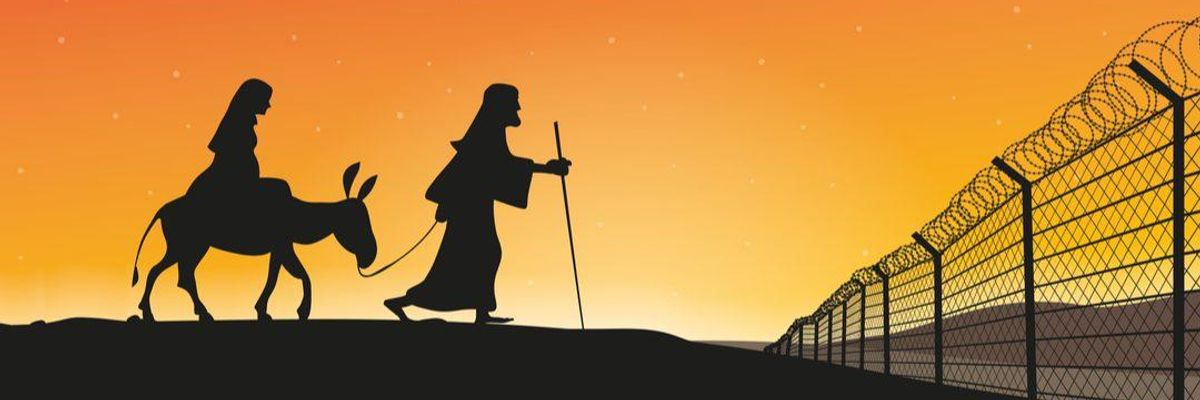
We mobilized faith leaders to the border on December 10, and for the following week groups lined up to host actions around the country expressing love and solidarity with migrants. (Photo: Shutterstock)
This holiday season -- a time so often associated with bringing family together -- my thoughts keep turning to the families in the migrant caravans making their way to the U.S. southern border.
I had the privilege of spending four days in Mexico last month with my organization, the American Friends Service Committee, to assess the needs of participants in the caravan and expand human rights monitoring.
As I crept into my children's bedrooms to give them a kiss when I got back, resisting the urge to wake them up for cuddling and conversation, I thought about what would make me pick up with them and flee, with little notice and even less information about what would lie ahead.
Over and over again, our delegation heard of the need for more strollers for the migrant caravan. Could I even imagine dropping everything to walk 3,000 difficult miles with my children in my arms -- without even a stroller?
Watching coverage of the U.S. firing tear gas at migrants at the border, and hearing the harrowing reports from my colleague who witnessed that violent repression, I thought again about the mothers I'd met in Mexico. What could push me to take the risk of facing this violence to protect my children?
I met so many people in Mexico who joined the caravan because it was their only way out.
I met so many people in Mexico who joined the caravan because it was their only way out.
I think about "Maria" (not her real name), a young mother of four I met. Maria is from El Salvador, where violence and a complete lack of opportunities put her family at risk. One of her children had already been killed by gang violence.
When word spread of the caravan, Maria made a spontaneous choice to join. She told me she was in search of opportunity for her family, and the hope of seeing her children grow up in a place without constant danger.
Like Mary and Joseph, who fled to Egypt when King Herod's government threatened their newborn child, Maria and so many other parents have picked up everything and undertaken a harrowing journey to save their children's lives.
Caravan participants I met expressed so much faith -- both in God and the idea that United States is a place that embraces those fleeing violence and poverty. What else can they do in the face of such an existential threat but hope and pray for a chance for their families to live?
In the season when many celebrate the birth of a child whose family had to flee to another country to keep him alive, what does our shared humanity demand from parents making the same difficult choice today?
In the face of our government's cruelty, I feel called to stand up for the people of the migrant caravan. That's why the American Friends Service Committee has called for a week of action in the U.S. under the name Love Knows No Borders: A moral call for migrant justice.
We mobilized faith leaders to the border on December 10, and for the following week groups lined up to host actions around the country expressing love and solidarity with migrants.
We are demanding that our country open its doors to people like Maria, and thousands of others, instead of meeting them with violence.
In this season of giving, I hope people of conscience across the country will join us in standing up for families in need of aid.
Dear Common Dreams reader, It’s been nearly 30 years since I co-founded Common Dreams with my late wife, Lina Newhouser. We had the radical notion that journalism should serve the public good, not corporate profits. It was clear to us from the outset what it would take to build such a project. No paid advertisements. No corporate sponsors. No millionaire publisher telling us what to think or do. Many people said we wouldn't last a year, but we proved those doubters wrong. Together with a tremendous team of journalists and dedicated staff, we built an independent media outlet free from the constraints of profits and corporate control. Our mission has always been simple: To inform. To inspire. To ignite change for the common good. Building Common Dreams was not easy. Our survival was never guaranteed. When you take on the most powerful forces—Wall Street greed, fossil fuel industry destruction, Big Tech lobbyists, and uber-rich oligarchs who have spent billions upon billions rigging the economy and democracy in their favor—the only bulwark you have is supporters who believe in your work. But here’s the urgent message from me today. It's never been this bad out there. And it's never been this hard to keep us going. At the very moment Common Dreams is most needed, the threats we face are intensifying. We need your support now more than ever. We don't accept corporate advertising and never will. We don't have a paywall because we don't think people should be blocked from critical news based on their ability to pay. Everything we do is funded by the donations of readers like you. When everyone does the little they can afford, we are strong. But if that support retreats or dries up, so do we. Will you donate now to make sure Common Dreams not only survives but thrives? —Craig Brown, Co-founder |
This holiday season -- a time so often associated with bringing family together -- my thoughts keep turning to the families in the migrant caravans making their way to the U.S. southern border.
I had the privilege of spending four days in Mexico last month with my organization, the American Friends Service Committee, to assess the needs of participants in the caravan and expand human rights monitoring.
As I crept into my children's bedrooms to give them a kiss when I got back, resisting the urge to wake them up for cuddling and conversation, I thought about what would make me pick up with them and flee, with little notice and even less information about what would lie ahead.
Over and over again, our delegation heard of the need for more strollers for the migrant caravan. Could I even imagine dropping everything to walk 3,000 difficult miles with my children in my arms -- without even a stroller?
Watching coverage of the U.S. firing tear gas at migrants at the border, and hearing the harrowing reports from my colleague who witnessed that violent repression, I thought again about the mothers I'd met in Mexico. What could push me to take the risk of facing this violence to protect my children?
I met so many people in Mexico who joined the caravan because it was their only way out.
I met so many people in Mexico who joined the caravan because it was their only way out.
I think about "Maria" (not her real name), a young mother of four I met. Maria is from El Salvador, where violence and a complete lack of opportunities put her family at risk. One of her children had already been killed by gang violence.
When word spread of the caravan, Maria made a spontaneous choice to join. She told me she was in search of opportunity for her family, and the hope of seeing her children grow up in a place without constant danger.
Like Mary and Joseph, who fled to Egypt when King Herod's government threatened their newborn child, Maria and so many other parents have picked up everything and undertaken a harrowing journey to save their children's lives.
Caravan participants I met expressed so much faith -- both in God and the idea that United States is a place that embraces those fleeing violence and poverty. What else can they do in the face of such an existential threat but hope and pray for a chance for their families to live?
In the season when many celebrate the birth of a child whose family had to flee to another country to keep him alive, what does our shared humanity demand from parents making the same difficult choice today?
In the face of our government's cruelty, I feel called to stand up for the people of the migrant caravan. That's why the American Friends Service Committee has called for a week of action in the U.S. under the name Love Knows No Borders: A moral call for migrant justice.
We mobilized faith leaders to the border on December 10, and for the following week groups lined up to host actions around the country expressing love and solidarity with migrants.
We are demanding that our country open its doors to people like Maria, and thousands of others, instead of meeting them with violence.
In this season of giving, I hope people of conscience across the country will join us in standing up for families in need of aid.
This holiday season -- a time so often associated with bringing family together -- my thoughts keep turning to the families in the migrant caravans making their way to the U.S. southern border.
I had the privilege of spending four days in Mexico last month with my organization, the American Friends Service Committee, to assess the needs of participants in the caravan and expand human rights monitoring.
As I crept into my children's bedrooms to give them a kiss when I got back, resisting the urge to wake them up for cuddling and conversation, I thought about what would make me pick up with them and flee, with little notice and even less information about what would lie ahead.
Over and over again, our delegation heard of the need for more strollers for the migrant caravan. Could I even imagine dropping everything to walk 3,000 difficult miles with my children in my arms -- without even a stroller?
Watching coverage of the U.S. firing tear gas at migrants at the border, and hearing the harrowing reports from my colleague who witnessed that violent repression, I thought again about the mothers I'd met in Mexico. What could push me to take the risk of facing this violence to protect my children?
I met so many people in Mexico who joined the caravan because it was their only way out.
I met so many people in Mexico who joined the caravan because it was their only way out.
I think about "Maria" (not her real name), a young mother of four I met. Maria is from El Salvador, where violence and a complete lack of opportunities put her family at risk. One of her children had already been killed by gang violence.
When word spread of the caravan, Maria made a spontaneous choice to join. She told me she was in search of opportunity for her family, and the hope of seeing her children grow up in a place without constant danger.
Like Mary and Joseph, who fled to Egypt when King Herod's government threatened their newborn child, Maria and so many other parents have picked up everything and undertaken a harrowing journey to save their children's lives.
Caravan participants I met expressed so much faith -- both in God and the idea that United States is a place that embraces those fleeing violence and poverty. What else can they do in the face of such an existential threat but hope and pray for a chance for their families to live?
In the season when many celebrate the birth of a child whose family had to flee to another country to keep him alive, what does our shared humanity demand from parents making the same difficult choice today?
In the face of our government's cruelty, I feel called to stand up for the people of the migrant caravan. That's why the American Friends Service Committee has called for a week of action in the U.S. under the name Love Knows No Borders: A moral call for migrant justice.
We mobilized faith leaders to the border on December 10, and for the following week groups lined up to host actions around the country expressing love and solidarity with migrants.
We are demanding that our country open its doors to people like Maria, and thousands of others, instead of meeting them with violence.
In this season of giving, I hope people of conscience across the country will join us in standing up for families in need of aid.