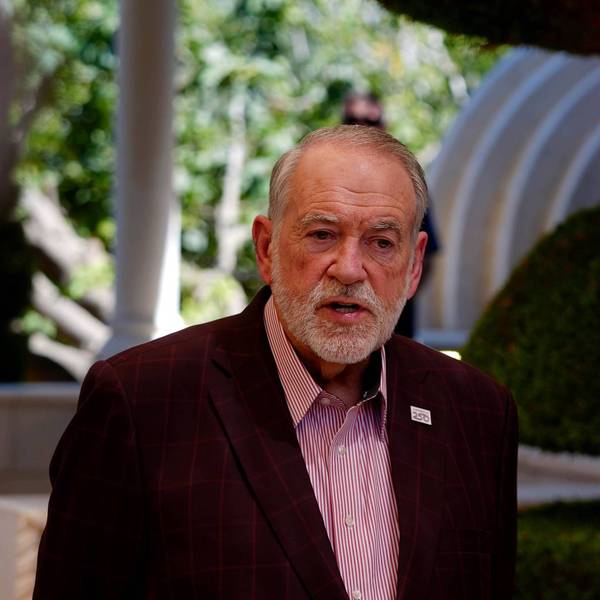
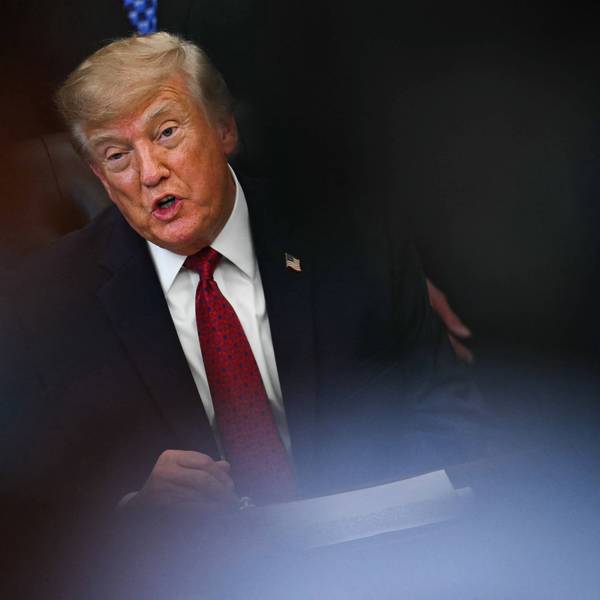

Yet as early voting gets under way across the country, Congressional campaigns have focused mainly on domestic issues and personality politics, with almost nothing to say about the war in Yemen or other critical questions of war, peace and record military spending. (Photo: Andrew Caballero-Reynolds/AFP/Getty Images)
Peacemakers, Warmongers and Fence Sitters: Who Represents You?
In lifetime voting records tabulated by Peace Action, the average House Democrat has a 72% peace voting record, while the average House Republican scores only 10%. In the Senate, the difference is 69% to 14%
As a foreign policy crisis explodes over the apparent Saudi assassination of journalist Jamal Khashoggi in Istanbul, the failure of the U.S. Congress to assert its constitutional war powers over three years of illegal U.S. military action in the war on Yemen and booming U.S. arms sales to Saudi Arabia and its coalition partners is finally coming home to roost.
The UN already reported two years ago that a child was dying every 10 minutes in Yemen, wracked by the war and its consequences, including malnutrition, diphtheria, cholera and other preventable diseases. Data already showed that more than a third of Saudi-led airstrikes were hitting schools, hospitals, markets, mosques and other civilian sites. But none of the dire warnings by UN agencies and NGOs could trigger the constitutionally required debate and decisive action by the U.S. Congress. Even now the Trump administration is trying desperately to salvage its blood-soaked arms sales to Saudi Arabia.
The elephant in the room that none of them want to discuss is that Congress keeps handing more than 60% of discretionary federal funds over to a military industrial complex whose recent wars have only succeeded in plunging half a dozen countries into intractable violence and chaos, leaving vital domestic priorities permanently underfunded.
Yet as early voting gets under way across the country, Congressional campaigns have focused mainly on domestic issues and personality politics, with almost nothing to say about the war in Yemen or other critical questions of war, peace and record military spending. The elephant in the room that none of them want to discuss is that Congress keeps handing more than 60% of discretionary federal funds over to a military industrial complex whose recent wars have only succeeded in plunging half a dozen countries into intractable violence and chaos, leaving vital domestic priorities permanently underfunded.
To fill this dangerous vacuum and help voters make critical decisions at the voting booth, the CODEPINK 2018 Peace Voter's Guide and Divestment Record has gathered data on arms industry campaign contributions from Open Secrets and the peace voting records of every Member of Congress from Peace Action, and published them all in one place for easy reference.
We invite voters to check out the Peace Voter's Guide to see where your Senators and Representatives stand on critical issues of war and peace. How much money have your representatives collected from the arms industry in this election cycle? How have they voted on critical bills and amendments for war, peace, weapons and military spending during their time in Congress?
You can use the Guide to compare your representatives with their colleagues. You can check out the differences between Democrats and Republicans, and see who are the real hawks and doves in each party.
Figures show that arms companies, including their PACS, have contributed about equally to Democrats and Republicans in the Senate in this election cycle, giving an average of over $180,000 to each Senator. In the House, however, they have given more to Republicans (an average of $46,000 each) than to Democrats ($31,000 each).
The Senators who are most indebted to the arms industry tend to be high-ranking members of committees key to Pentagon funding. In 2017-18, the senator receiving the most weapons industry contributions, $969,550, was Richard Shelby (R-AL). Shelby chairs the powerful Appropriations Committee, the committee that allocates funding for all federal agencies.
The number one recipient on the Democratic side, with $675,8287 in contributions, is Jack Reed (D-RI), ranking member at the Armed Services Committee. Other major recipients, all on key committees, are Tim Kaine (D-VA) with $607,850; Dick Durbin (D-IL) with $550,161; James Inhofe (R-OK) with $478,249; Lindsey Graham (R-SC) with $458,893; Mark Warner (D-VA) with $399,928; and Bill Nelson (D-FL) with $391,800. The arms industry's most favored House Reps are Armed Services Chair Mac Thornberry (R-TX-13), with $402,250; Appropriations Committee member Kay Granger (R-TX-12) with $368,410 and another Appropriations member Peter Visclosky (D-IN-1) with $328,583.
When it comes to critical votes on war, peace and militarism, the differences between Democrats and Republicans are more stark. In lifetime voting records tabulated by Peace Action, the average House Democrat has a 72% peace voting record, while the average House Republican scores only 10%. In the Senate, the difference is 69% to 14%.
There are noteworthy outliers, like Rep. Justin Amash (R-MI-3) with an 82% peace voting record and Rep. Pete Aguilar (D-CA-31) at only 18%. In the Senate, Republican Rand Paul (KY) has a better voting record (62%) than Democrat Joe Donnelly of Indiana (16%), although even Rand Paul would be below-average if he was a Democrat.
And then there are real champions for peace and disarmament in Congress: 16 Democrats and 10 Republicans in the House who have run this year's campaigns with no arms industry cash at all; and progressive leaders who stand up to vote for peace at almost every chance they get, like Barbara Lee (CA-13), with a 99% lifetime peace voting record, Katherine Clark (MA-5) at 98%, Jared Huffman (CA-2), Mark DeSaulnier (CA-11) and Earl Blumenauer (OR-3) at 96%, and Tammy Baldwin of Wisconsin with the highest score in the Senate at 94%.
At the other end of the scale, there are 22 Members of Congress (all Republicans) with a 0% peace voting record, meaning that they have never once voted as requested by members of Peace Action, CODEPINK and our partners in the U.S. peace community. They are Senator Tom Cotton (AR) and Representatives McSally (AZ-2), Walters (CA-45), Curbelo (FL-26), Carter (GA-1), Allen (GA-12), Bost (IL-12), LaHood (IL-18), Brooks (IN-5), Poliquin (ME-2), Bishop (MI-8), Emmer (MN-6), Stefanik (NY-21), Katko (NY-24), Rouzer (NC-7), Russell (OK-5), Costello (PA-6), Ratcliffe (TX-4), Hurd (TX-23), Brat (VA-7), Comstock (VA-10) and Newhouse (WA-4).
We invite you to explore the CODEPINK 2018 Peace Voter's Guide and Divestment Record before you vote. We hope it will help you to find incumbents or challengers where you live whose campaigns are not tainted by big contributions from the arms industry, and whom you can count on to reflect your values by casting decisive votes for peace, diplomacy and disarmament in the coming years. Please vote wisely. Millions of lives depend on it.
We are at a crossroads
This country and this world are at a monumental crossroads. In a few short weeks, US voters will have an opportunity to beat back the forces of fascism and confront the billionaires who are rigging the economy, our media system, and our democracy, making it increasingly impossible for ordinary people to get by. We’re not just talking about the election. We’re talking about what must be done once these fascist elements are vanquished from power. We need a bolder set of solutions than what either major party has so far been willing to offer and a working-class movement ready to fight like hell for it. Trump didn't emerge from nowhere. The conditions that fueled MAGA authoritarianism were created by decades of radical neoliberal economic policies and a corrupt political system dominated by corporate interests. They slashed taxes on the super-rich, promising that the benefits would trickle down. They said giveaways to the corporate titans would make life more affordable for the rest of us. It was all bullshit. And when a bitter, betrayed populace searches for someone to blame, right-wing demagogues have little trouble finding scapegoats. People know when they're being lied to, but you won't hear any of this from the corporate media. Only independent journalism—powered and funded by people who believe in building a better world—can deliver truly trustworthy daily news. Our Fall Campaign is underway, and we need your help. To power our newsroom through the rest of the year, we need to raise $125,000 by midnight on October 31. So if you share our vision, please contribute whatever you can to sustain our work. |
As a foreign policy crisis explodes over the apparent Saudi assassination of journalist Jamal Khashoggi in Istanbul, the failure of the U.S. Congress to assert its constitutional war powers over three years of illegal U.S. military action in the war on Yemen and booming U.S. arms sales to Saudi Arabia and its coalition partners is finally coming home to roost.
The UN already reported two years ago that a child was dying every 10 minutes in Yemen, wracked by the war and its consequences, including malnutrition, diphtheria, cholera and other preventable diseases. Data already showed that more than a third of Saudi-led airstrikes were hitting schools, hospitals, markets, mosques and other civilian sites. But none of the dire warnings by UN agencies and NGOs could trigger the constitutionally required debate and decisive action by the U.S. Congress. Even now the Trump administration is trying desperately to salvage its blood-soaked arms sales to Saudi Arabia.
The elephant in the room that none of them want to discuss is that Congress keeps handing more than 60% of discretionary federal funds over to a military industrial complex whose recent wars have only succeeded in plunging half a dozen countries into intractable violence and chaos, leaving vital domestic priorities permanently underfunded.
Yet as early voting gets under way across the country, Congressional campaigns have focused mainly on domestic issues and personality politics, with almost nothing to say about the war in Yemen or other critical questions of war, peace and record military spending. The elephant in the room that none of them want to discuss is that Congress keeps handing more than 60% of discretionary federal funds over to a military industrial complex whose recent wars have only succeeded in plunging half a dozen countries into intractable violence and chaos, leaving vital domestic priorities permanently underfunded.
To fill this dangerous vacuum and help voters make critical decisions at the voting booth, the CODEPINK 2018 Peace Voter's Guide and Divestment Record has gathered data on arms industry campaign contributions from Open Secrets and the peace voting records of every Member of Congress from Peace Action, and published them all in one place for easy reference.
We invite voters to check out the Peace Voter's Guide to see where your Senators and Representatives stand on critical issues of war and peace. How much money have your representatives collected from the arms industry in this election cycle? How have they voted on critical bills and amendments for war, peace, weapons and military spending during their time in Congress?
You can use the Guide to compare your representatives with their colleagues. You can check out the differences between Democrats and Republicans, and see who are the real hawks and doves in each party.
Figures show that arms companies, including their PACS, have contributed about equally to Democrats and Republicans in the Senate in this election cycle, giving an average of over $180,000 to each Senator. In the House, however, they have given more to Republicans (an average of $46,000 each) than to Democrats ($31,000 each).
The Senators who are most indebted to the arms industry tend to be high-ranking members of committees key to Pentagon funding. In 2017-18, the senator receiving the most weapons industry contributions, $969,550, was Richard Shelby (R-AL). Shelby chairs the powerful Appropriations Committee, the committee that allocates funding for all federal agencies.
The number one recipient on the Democratic side, with $675,8287 in contributions, is Jack Reed (D-RI), ranking member at the Armed Services Committee. Other major recipients, all on key committees, are Tim Kaine (D-VA) with $607,850; Dick Durbin (D-IL) with $550,161; James Inhofe (R-OK) with $478,249; Lindsey Graham (R-SC) with $458,893; Mark Warner (D-VA) with $399,928; and Bill Nelson (D-FL) with $391,800. The arms industry's most favored House Reps are Armed Services Chair Mac Thornberry (R-TX-13), with $402,250; Appropriations Committee member Kay Granger (R-TX-12) with $368,410 and another Appropriations member Peter Visclosky (D-IN-1) with $328,583.
When it comes to critical votes on war, peace and militarism, the differences between Democrats and Republicans are more stark. In lifetime voting records tabulated by Peace Action, the average House Democrat has a 72% peace voting record, while the average House Republican scores only 10%. In the Senate, the difference is 69% to 14%.
There are noteworthy outliers, like Rep. Justin Amash (R-MI-3) with an 82% peace voting record and Rep. Pete Aguilar (D-CA-31) at only 18%. In the Senate, Republican Rand Paul (KY) has a better voting record (62%) than Democrat Joe Donnelly of Indiana (16%), although even Rand Paul would be below-average if he was a Democrat.
And then there are real champions for peace and disarmament in Congress: 16 Democrats and 10 Republicans in the House who have run this year's campaigns with no arms industry cash at all; and progressive leaders who stand up to vote for peace at almost every chance they get, like Barbara Lee (CA-13), with a 99% lifetime peace voting record, Katherine Clark (MA-5) at 98%, Jared Huffman (CA-2), Mark DeSaulnier (CA-11) and Earl Blumenauer (OR-3) at 96%, and Tammy Baldwin of Wisconsin with the highest score in the Senate at 94%.
At the other end of the scale, there are 22 Members of Congress (all Republicans) with a 0% peace voting record, meaning that they have never once voted as requested by members of Peace Action, CODEPINK and our partners in the U.S. peace community. They are Senator Tom Cotton (AR) and Representatives McSally (AZ-2), Walters (CA-45), Curbelo (FL-26), Carter (GA-1), Allen (GA-12), Bost (IL-12), LaHood (IL-18), Brooks (IN-5), Poliquin (ME-2), Bishop (MI-8), Emmer (MN-6), Stefanik (NY-21), Katko (NY-24), Rouzer (NC-7), Russell (OK-5), Costello (PA-6), Ratcliffe (TX-4), Hurd (TX-23), Brat (VA-7), Comstock (VA-10) and Newhouse (WA-4).
We invite you to explore the CODEPINK 2018 Peace Voter's Guide and Divestment Record before you vote. We hope it will help you to find incumbents or challengers where you live whose campaigns are not tainted by big contributions from the arms industry, and whom you can count on to reflect your values by casting decisive votes for peace, diplomacy and disarmament in the coming years. Please vote wisely. Millions of lives depend on it.