
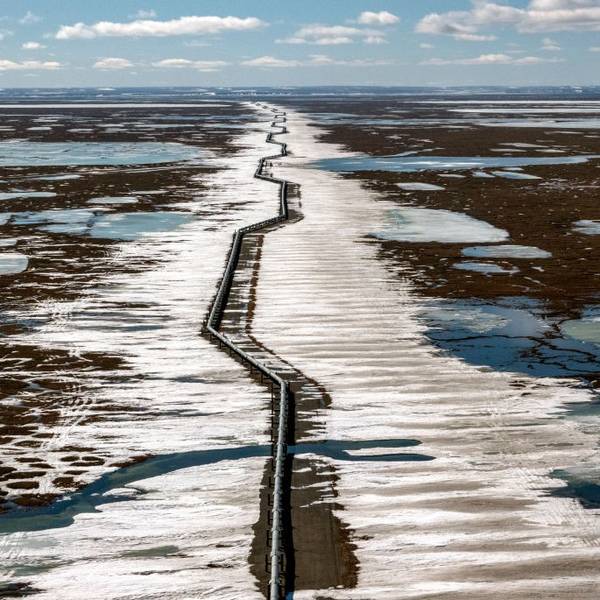
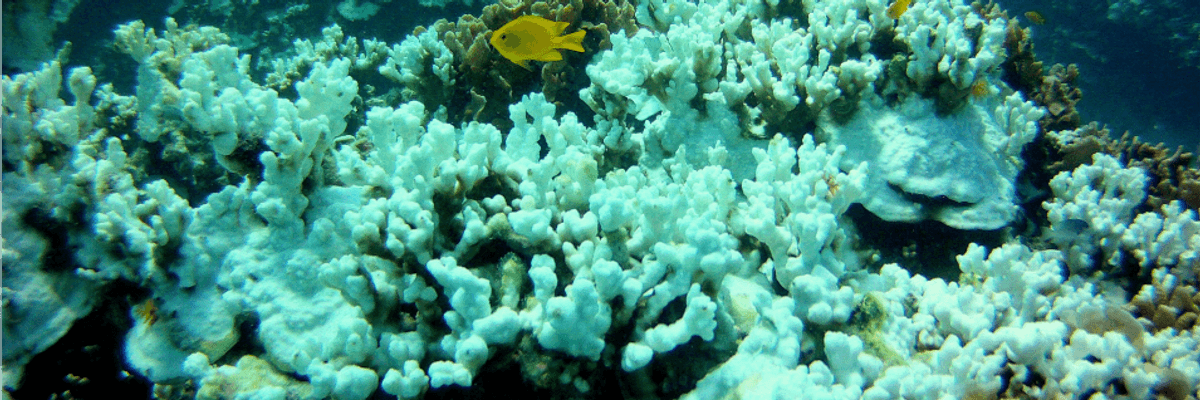
"The scientific consensus is that to create a fully sustainable ocean, we need to fully protect at least 30% of it. Currently, the U.S. protects 13.5% of coastal waters; we'll drop to a small fraction of that if the Trump administration has its way." (Photo: Eco Cafe' Phuket/flickr/cc)
What the Trump Administration Doesn't Understand About Ocean Conservation
Think of the ocean as a trust fund. If you want to rely on that fund for the rest of your days, you can only use the interest.
The Trump administration announced last week that it would open 90% of our coastal waters to oil and gas drilling. It declared last month that it would shrink or eliminate several national monuments -- both terrestrial and marine. Last year, it rolled back safety requirements that prevent spills like the Deepwater Horizon, and it stated it would reconsider protections of national marine sanctuaries. The reigning principle here, to the extent that there is one, is to put short-term economic gains first, way ahead of the environment.
Apparently lost on the administration are two simple facts: If we want to keep fishing, we need places where there is no fishing. If we want to maintain coastal tourism economies, we need places without drilling.
This is not about hugging whales and waxing sentimental about coral reefs. We need to use the ocean -- food security and jobs depend on it. But we must be careful not to use it up. And right now, despite its vastness, we are indeed in danger of using it up.
"We are also hurting our interest rate -- destroying nature's ability to heal itself."
Think of the ocean as a trust fund. If you want to rely on that fund for the rest of your days, you can only use the interest. For millenniums, humans lived off the interest of the earth's abundant natural resources. But in the last century, we've been rapidly, dramatically depleting the principal. We are also hurting our interest rate -- destroying nature's ability to heal itself.
We are overfishing the ocean, killing fish faster than they can make babies. Thirty-two percent of the world's fish populations are overfished, and another 58% are fished to their maximum. Warming and acidifying waters are annihilating our coral reefs, which are on track to collapse by 2050. That's despite the fact that many reefs are protected; the situation would be worse if fishing and other activities were permitted in those areas.
The ocean is often out of sight and out of mind, obscured beneath the surface. It can be hard to imagine how we could possibly influence something so large. But if we are not careful, we will lose our valuable ocean resources and all the food and jobs they provide.
Fishing provides work for 11% of the world's population. Seafood accounts for 17% of the world's protein. Reefs, mangroves and marshes create coastal storm protection worth billions of dollars. In the U.S., the ocean economy employs more than 3 million people -- more than farming, telecommunications and construction combined. If ocean ecosystems collapse, we'll lose all of these benefits.
That's why we must protect the principal. This means we must increase marine protected areas, not demolish them. The scientific consensus is that to create a fully sustainable ocean, we need to fully protect at least 30% of it. Currently, the U.S. protects 13.5% of coastal waters; we'll drop to a small fraction of that if the Trump administration has its way. That's going in the wrong direction.
In recent times, the U.S. has been a world leader in ocean policy and sustainably managed fisheries. That's thanks to the Magnuson Stevens Act, which outlaws overfishing and requires the rebuilding of depleted fish populations. Previous administrations, both Republican and Democrat, have added to our portfolio of protected areas. Elected officials of both parties have strongly opposed marine oil drilling, knowing how devastating spills are to the tourism and recreation sectors.
President George W. Bush created the Papahanaumokuakea Marine National Monument in the northwest Hawaiian Islands. President Obama expanded that monument. Ocean conservation, clearly, need not be partisan.
Despite the slow and steady expansion of protected areas in U.S. waters, we have no shortage of ocean left to fish. The U.S. has the largest exclusive marine economic zone of any nation in the world, so we can certainly afford to protect 30% of it -- then we can continue fishing sustainably in the other 70%. And the American public is strongly in favor of such protections. As Interior Secretary Ryan Zinke noted, "comments received were overwhelmingly in favor of maintaining existing monuments."
The rest of the world is charging ahead regardless. In 2017 alone, Chile, Mexico, Niue, Micronesia, Haiti, Canada, Pakistan and others declared new marine protected areas. They are doing so not out of the goodness of their hearts, but because it makes good economic sense. They are ensuring a long-term, ever-replenishing source of food and energy.
Instead of bankrupting our ocean, we should be restoring and conserving marine resources. That way we can have our fish and eat them too.
We are at a crossroads
This country and this world are at a monumental crossroads. In a few short weeks, US voters will have an opportunity to beat back the forces of fascism and confront the billionaires who are rigging the economy, our media system, and our democracy, making it increasingly impossible for ordinary people to get by. We’re not just talking about the election. We’re talking about what must be done once these fascist elements are vanquished from power. We need a bolder set of solutions than what either major party has so far been willing to offer and a working-class movement ready to fight like hell for it. Trump didn't emerge from nowhere. The conditions that fueled MAGA authoritarianism were created by decades of radical neoliberal economic policies and a corrupt political system dominated by corporate interests. They slashed taxes on the super-rich, promising that the benefits would trickle down. They said giveaways to the corporate titans would make life more affordable for the rest of us. It was all bullshit. And when a bitter, betrayed populace searches for someone to blame, right-wing demagogues have little trouble finding scapegoats. People know when they're being lied to, but you won't hear any of this from the corporate media. Only independent journalism—powered and funded by people who believe in building a better world—can deliver truly trustworthy daily news. Our Fall Campaign is underway, and we need your help. To power our newsroom through the rest of the year, we need to raise $125,000 by midnight on October 31. So if you share our vision, please contribute whatever you can to sustain our work. |
The Trump administration announced last week that it would open 90% of our coastal waters to oil and gas drilling. It declared last month that it would shrink or eliminate several national monuments -- both terrestrial and marine. Last year, it rolled back safety requirements that prevent spills like the Deepwater Horizon, and it stated it would reconsider protections of national marine sanctuaries. The reigning principle here, to the extent that there is one, is to put short-term economic gains first, way ahead of the environment.
Apparently lost on the administration are two simple facts: If we want to keep fishing, we need places where there is no fishing. If we want to maintain coastal tourism economies, we need places without drilling.
This is not about hugging whales and waxing sentimental about coral reefs. We need to use the ocean -- food security and jobs depend on it. But we must be careful not to use it up. And right now, despite its vastness, we are indeed in danger of using it up.
"We are also hurting our interest rate -- destroying nature's ability to heal itself."
Think of the ocean as a trust fund. If you want to rely on that fund for the rest of your days, you can only use the interest. For millenniums, humans lived off the interest of the earth's abundant natural resources. But in the last century, we've been rapidly, dramatically depleting the principal. We are also hurting our interest rate -- destroying nature's ability to heal itself.
We are overfishing the ocean, killing fish faster than they can make babies. Thirty-two percent of the world's fish populations are overfished, and another 58% are fished to their maximum. Warming and acidifying waters are annihilating our coral reefs, which are on track to collapse by 2050. That's despite the fact that many reefs are protected; the situation would be worse if fishing and other activities were permitted in those areas.
The ocean is often out of sight and out of mind, obscured beneath the surface. It can be hard to imagine how we could possibly influence something so large. But if we are not careful, we will lose our valuable ocean resources and all the food and jobs they provide.
Fishing provides work for 11% of the world's population. Seafood accounts for 17% of the world's protein. Reefs, mangroves and marshes create coastal storm protection worth billions of dollars. In the U.S., the ocean economy employs more than 3 million people -- more than farming, telecommunications and construction combined. If ocean ecosystems collapse, we'll lose all of these benefits.
That's why we must protect the principal. This means we must increase marine protected areas, not demolish them. The scientific consensus is that to create a fully sustainable ocean, we need to fully protect at least 30% of it. Currently, the U.S. protects 13.5% of coastal waters; we'll drop to a small fraction of that if the Trump administration has its way. That's going in the wrong direction.
In recent times, the U.S. has been a world leader in ocean policy and sustainably managed fisheries. That's thanks to the Magnuson Stevens Act, which outlaws overfishing and requires the rebuilding of depleted fish populations. Previous administrations, both Republican and Democrat, have added to our portfolio of protected areas. Elected officials of both parties have strongly opposed marine oil drilling, knowing how devastating spills are to the tourism and recreation sectors.
President George W. Bush created the Papahanaumokuakea Marine National Monument in the northwest Hawaiian Islands. President Obama expanded that monument. Ocean conservation, clearly, need not be partisan.
Despite the slow and steady expansion of protected areas in U.S. waters, we have no shortage of ocean left to fish. The U.S. has the largest exclusive marine economic zone of any nation in the world, so we can certainly afford to protect 30% of it -- then we can continue fishing sustainably in the other 70%. And the American public is strongly in favor of such protections. As Interior Secretary Ryan Zinke noted, "comments received were overwhelmingly in favor of maintaining existing monuments."
The rest of the world is charging ahead regardless. In 2017 alone, Chile, Mexico, Niue, Micronesia, Haiti, Canada, Pakistan and others declared new marine protected areas. They are doing so not out of the goodness of their hearts, but because it makes good economic sense. They are ensuring a long-term, ever-replenishing source of food and energy.
Instead of bankrupting our ocean, we should be restoring and conserving marine resources. That way we can have our fish and eat them too.
The Trump administration announced last week that it would open 90% of our coastal waters to oil and gas drilling. It declared last month that it would shrink or eliminate several national monuments -- both terrestrial and marine. Last year, it rolled back safety requirements that prevent spills like the Deepwater Horizon, and it stated it would reconsider protections of national marine sanctuaries. The reigning principle here, to the extent that there is one, is to put short-term economic gains first, way ahead of the environment.
Apparently lost on the administration are two simple facts: If we want to keep fishing, we need places where there is no fishing. If we want to maintain coastal tourism economies, we need places without drilling.
This is not about hugging whales and waxing sentimental about coral reefs. We need to use the ocean -- food security and jobs depend on it. But we must be careful not to use it up. And right now, despite its vastness, we are indeed in danger of using it up.
"We are also hurting our interest rate -- destroying nature's ability to heal itself."
Think of the ocean as a trust fund. If you want to rely on that fund for the rest of your days, you can only use the interest. For millenniums, humans lived off the interest of the earth's abundant natural resources. But in the last century, we've been rapidly, dramatically depleting the principal. We are also hurting our interest rate -- destroying nature's ability to heal itself.
We are overfishing the ocean, killing fish faster than they can make babies. Thirty-two percent of the world's fish populations are overfished, and another 58% are fished to their maximum. Warming and acidifying waters are annihilating our coral reefs, which are on track to collapse by 2050. That's despite the fact that many reefs are protected; the situation would be worse if fishing and other activities were permitted in those areas.
The ocean is often out of sight and out of mind, obscured beneath the surface. It can be hard to imagine how we could possibly influence something so large. But if we are not careful, we will lose our valuable ocean resources and all the food and jobs they provide.
Fishing provides work for 11% of the world's population. Seafood accounts for 17% of the world's protein. Reefs, mangroves and marshes create coastal storm protection worth billions of dollars. In the U.S., the ocean economy employs more than 3 million people -- more than farming, telecommunications and construction combined. If ocean ecosystems collapse, we'll lose all of these benefits.
That's why we must protect the principal. This means we must increase marine protected areas, not demolish them. The scientific consensus is that to create a fully sustainable ocean, we need to fully protect at least 30% of it. Currently, the U.S. protects 13.5% of coastal waters; we'll drop to a small fraction of that if the Trump administration has its way. That's going in the wrong direction.
In recent times, the U.S. has been a world leader in ocean policy and sustainably managed fisheries. That's thanks to the Magnuson Stevens Act, which outlaws overfishing and requires the rebuilding of depleted fish populations. Previous administrations, both Republican and Democrat, have added to our portfolio of protected areas. Elected officials of both parties have strongly opposed marine oil drilling, knowing how devastating spills are to the tourism and recreation sectors.
President George W. Bush created the Papahanaumokuakea Marine National Monument in the northwest Hawaiian Islands. President Obama expanded that monument. Ocean conservation, clearly, need not be partisan.
Despite the slow and steady expansion of protected areas in U.S. waters, we have no shortage of ocean left to fish. The U.S. has the largest exclusive marine economic zone of any nation in the world, so we can certainly afford to protect 30% of it -- then we can continue fishing sustainably in the other 70%. And the American public is strongly in favor of such protections. As Interior Secretary Ryan Zinke noted, "comments received were overwhelmingly in favor of maintaining existing monuments."
The rest of the world is charging ahead regardless. In 2017 alone, Chile, Mexico, Niue, Micronesia, Haiti, Canada, Pakistan and others declared new marine protected areas. They are doing so not out of the goodness of their hearts, but because it makes good economic sense. They are ensuring a long-term, ever-replenishing source of food and energy.
Instead of bankrupting our ocean, we should be restoring and conserving marine resources. That way we can have our fish and eat them too.