SUBSCRIBE TO OUR FREE NEWSLETTER
Daily news & progressive opinion—funded by the people, not the corporations—delivered straight to your inbox.
5
#000000
#FFFFFF
To donate by check, phone, or other method, see our More Ways to Give page.


Daily news & progressive opinion—funded by the people, not the corporations—delivered straight to your inbox.

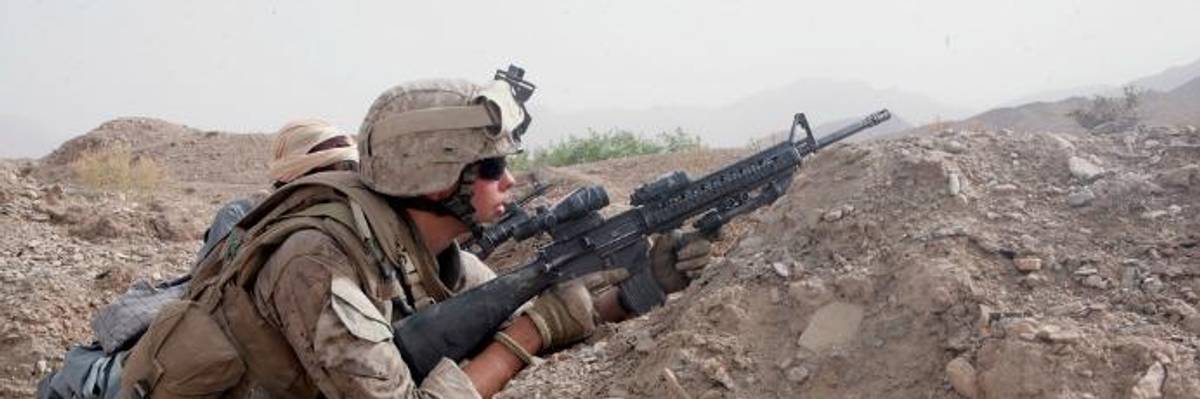
"The imperial spirit still burns hot in Washington among those who don't know or understand the outside world," writes Eric Margolis. (Photo: Cpl. Jason Guiliano/DVIDSHUB/Flickr/cc)
Much of America, including yours truly, has been watching the Public Broadcasting Service (PBS) series, "Vietnam." Instead of clarifying that confusing conflict, the series has ignited fiery controversy and a lot of long-repressed anger by soft-soaping Washington's motives.
This march to folly in Vietnam is particularly painful for me since I enlisted in the U.S. Army at the height of the war. Gripped by youthful patriotism, I strongly supported the war. In fact, the TV series even showed a pro-war march down New York's Fifth Avenue that I had joined. Talk about deja vu.
At the time, 1967, the Cold War was at full force. We really believed that if the U.S. did not make a stand in Vietnam the Soviets and Chinese would overrun all of South Asia.
No one in Washington seemed to know that China and the Soviet Union had split and become bitter enemies. As ever, our foreign human intelligence was lousy. We didn't understand that Vietnam deserved independence after a century of French colonialism. Or that what happened in Vietnam was of little importance to the rest of the world.
Three American presidents blundered into this war or prolonged it, then could not back out lest they lose face and risk humiliation. I don't for a moment believe that the 'saintly' President John Kennedy planned to end the war but was assassinated by dark, rightwing forces, as is claimed. This is a charming legend. Richard Nixon, Kennedy, and Lyndon Johnson all feared that a withdrawal from Vietnam would lose them the next election. Republicans were still snarling over 'who lost China.'
The current 17-year old U.S. war in Afghanistan has uncanny resemblances to the Vietnam War. In Kabul and Saigon, the U.S. installed puppet governments that command no loyalty except from minority groups. They were steeped in drugs and corruption, and kept in power by intensive use of American air power. As in Vietnam, the U.S. military and civilian effort in Afghanistan is led by a toxic mixture of deep ignorance and imperial arrogance.
The U.S. military understands it has long ago lost the Afghan War but cannot bear the humiliation of admitting it was defeated by lightly-armed mountain tribesmen fighting for their independence. In Vietnam, Washington could not admit that young Vietnamese guerillas and regulars had bested the U.S. armed forces thanks to their indomitable courage and intelligent tactics. No one outside Vietnam cared about the 2-3 million civilians killed in the conflict.
Unfortunately, the PBS program fails to convey this imperial arrogance and the ignorance that impelled Washington into the war--the same foolhardy behavior that sent U.S. forces into Somalia, Afghanistan, and Iraq and perhaps may do so in a second Korean War. The imperial spirit still burns hot in Washington among those who don't know or understand the outside world. The lessons of all these past conflicts have been forgotten: Washington's collective memory is only three years long.
Vietnam was not a "tragedy," as the PBS series asserts, but the product of imperial geopolitics. The same holds true for today's Mideast wars. To paraphrase a famous slogan from Vietnam, we destroyed Iraq, Afghanistan, and Syria to make them safe for 'freedom.'
One of the craziest things about the Vietnam War has rarely been acknowledged: even at peak deployment, the 550,000 US soldiers in Vietnam were outnumbered by North Vietnamese fighting units.
That's because the huge U.S. military had only about 50,000 real combat troops in the field. The other half million were support troops performing logistical and administrative functions behind the lines: a vast army of typists, cooks, truck drivers, psychologists, and pizza-makers.
Too much tail to teeth, as the Army calls it. For Thanksgiving, everyone got turkey dinner with cranberry sauce, choppered into the remotest outposts. But there were simply not enough riflemen to take on the Viet Cong and tough North Vietnamese Army whose Soviet M1954 130mm howitzer with a 27 km range were far superior to the U.S. Army's outdated WWII artillery.
Poor generalship, mediocre officers, and lack of discipline ensured that the U.S. war effort in Vietnam would become and remain a mess. Stupid, pointless attacks against heavily defended hills inflicted huge casualties on U.S. troops and eroded morale.
The monumentally stupid war mismanagement of Pentagon chief Robert McNamara, a know-it-all who knew nothing, turned the war into a macabre joke. This was the dumbest command decision since Louis XV put his girlfriend Madame de Pompadour in charge of his armies.
We soldiers, both in Vietnam and Stateside, scorned the war and mocked our officers. It didn't help that much of the U.S. force in "Nam" were often stoned and rebellious.
The January 30, 1968 Tet Offensive put the kibosh on U.S. plans to pursue the war--and even take it into south-west China. Tet was a military victory of sorts for the U.S. (and why not, with thousands of warplanes and B-52 heavy bombers) but a huge political/psychological victory for the Communists in spite of their heavy losses.
I vividly recall standing with a group of GI's reading a typed report on our company barracks advising that the Special Forces camp in the Central Highlands to which many of our company had been assigned for immediate duty had been overrun at Tet, and all its defenders killed. After that, the US Army's motto was "stay alive, avoid combat, and smoke another reefer."
The war became aimless and often surreal. We soldiers all knew our senior officers and political leaders were lying. Many soldiers were at the edge of mutiny, like the French Army in 1917. Back in those ancient days, we had expected our political leaders to be men of rectitude who told us the truth. Thanks to Vietnam, the politicians were exposed as liars and heartless cynics with no honor.
This same dark cloud hangs over our political landscape today. We have destroyed large parts of the Mideast, Afghanistan, and northern Pakistan without a second thought--yet wonder why peoples from these ravaged nations hate us. Now, North Korea seems next.
Showing defiance to Washington brought B-52 bombers, toxic Agent Orange defoliants and endless storms of napalm and white phosphorus that would burn through one's body until it hit bone.
In spite of all, our imperial impulse till throbs. The nightmare Vietnam War in which over 58,000 American soldiers died for nothing has been largely forgotten. So we can now repeat the same fatal errors again without shame, remorse or understanding.
Dear Common Dreams reader, It’s been nearly 30 years since I co-founded Common Dreams with my late wife, Lina Newhouser. We had the radical notion that journalism should serve the public good, not corporate profits. It was clear to us from the outset what it would take to build such a project. No paid advertisements. No corporate sponsors. No millionaire publisher telling us what to think or do. Many people said we wouldn't last a year, but we proved those doubters wrong. Together with a tremendous team of journalists and dedicated staff, we built an independent media outlet free from the constraints of profits and corporate control. Our mission has always been simple: To inform. To inspire. To ignite change for the common good. Building Common Dreams was not easy. Our survival was never guaranteed. When you take on the most powerful forces—Wall Street greed, fossil fuel industry destruction, Big Tech lobbyists, and uber-rich oligarchs who have spent billions upon billions rigging the economy and democracy in their favor—the only bulwark you have is supporters who believe in your work. But here’s the urgent message from me today. It's never been this bad out there. And it's never been this hard to keep us going. At the very moment Common Dreams is most needed, the threats we face are intensifying. We need your support now more than ever. We don't accept corporate advertising and never will. We don't have a paywall because we don't think people should be blocked from critical news based on their ability to pay. Everything we do is funded by the donations of readers like you. When everyone does the little they can afford, we are strong. But if that support retreats or dries up, so do we. Will you donate now to make sure Common Dreams not only survives but thrives? —Craig Brown, Co-founder |
Much of America, including yours truly, has been watching the Public Broadcasting Service (PBS) series, "Vietnam." Instead of clarifying that confusing conflict, the series has ignited fiery controversy and a lot of long-repressed anger by soft-soaping Washington's motives.
This march to folly in Vietnam is particularly painful for me since I enlisted in the U.S. Army at the height of the war. Gripped by youthful patriotism, I strongly supported the war. In fact, the TV series even showed a pro-war march down New York's Fifth Avenue that I had joined. Talk about deja vu.
At the time, 1967, the Cold War was at full force. We really believed that if the U.S. did not make a stand in Vietnam the Soviets and Chinese would overrun all of South Asia.
No one in Washington seemed to know that China and the Soviet Union had split and become bitter enemies. As ever, our foreign human intelligence was lousy. We didn't understand that Vietnam deserved independence after a century of French colonialism. Or that what happened in Vietnam was of little importance to the rest of the world.
Three American presidents blundered into this war or prolonged it, then could not back out lest they lose face and risk humiliation. I don't for a moment believe that the 'saintly' President John Kennedy planned to end the war but was assassinated by dark, rightwing forces, as is claimed. This is a charming legend. Richard Nixon, Kennedy, and Lyndon Johnson all feared that a withdrawal from Vietnam would lose them the next election. Republicans were still snarling over 'who lost China.'
The current 17-year old U.S. war in Afghanistan has uncanny resemblances to the Vietnam War. In Kabul and Saigon, the U.S. installed puppet governments that command no loyalty except from minority groups. They were steeped in drugs and corruption, and kept in power by intensive use of American air power. As in Vietnam, the U.S. military and civilian effort in Afghanistan is led by a toxic mixture of deep ignorance and imperial arrogance.
The U.S. military understands it has long ago lost the Afghan War but cannot bear the humiliation of admitting it was defeated by lightly-armed mountain tribesmen fighting for their independence. In Vietnam, Washington could not admit that young Vietnamese guerillas and regulars had bested the U.S. armed forces thanks to their indomitable courage and intelligent tactics. No one outside Vietnam cared about the 2-3 million civilians killed in the conflict.
Unfortunately, the PBS program fails to convey this imperial arrogance and the ignorance that impelled Washington into the war--the same foolhardy behavior that sent U.S. forces into Somalia, Afghanistan, and Iraq and perhaps may do so in a second Korean War. The imperial spirit still burns hot in Washington among those who don't know or understand the outside world. The lessons of all these past conflicts have been forgotten: Washington's collective memory is only three years long.
Vietnam was not a "tragedy," as the PBS series asserts, but the product of imperial geopolitics. The same holds true for today's Mideast wars. To paraphrase a famous slogan from Vietnam, we destroyed Iraq, Afghanistan, and Syria to make them safe for 'freedom.'
One of the craziest things about the Vietnam War has rarely been acknowledged: even at peak deployment, the 550,000 US soldiers in Vietnam were outnumbered by North Vietnamese fighting units.
That's because the huge U.S. military had only about 50,000 real combat troops in the field. The other half million were support troops performing logistical and administrative functions behind the lines: a vast army of typists, cooks, truck drivers, psychologists, and pizza-makers.
Too much tail to teeth, as the Army calls it. For Thanksgiving, everyone got turkey dinner with cranberry sauce, choppered into the remotest outposts. But there were simply not enough riflemen to take on the Viet Cong and tough North Vietnamese Army whose Soviet M1954 130mm howitzer with a 27 km range were far superior to the U.S. Army's outdated WWII artillery.
Poor generalship, mediocre officers, and lack of discipline ensured that the U.S. war effort in Vietnam would become and remain a mess. Stupid, pointless attacks against heavily defended hills inflicted huge casualties on U.S. troops and eroded morale.
The monumentally stupid war mismanagement of Pentagon chief Robert McNamara, a know-it-all who knew nothing, turned the war into a macabre joke. This was the dumbest command decision since Louis XV put his girlfriend Madame de Pompadour in charge of his armies.
We soldiers, both in Vietnam and Stateside, scorned the war and mocked our officers. It didn't help that much of the U.S. force in "Nam" were often stoned and rebellious.
The January 30, 1968 Tet Offensive put the kibosh on U.S. plans to pursue the war--and even take it into south-west China. Tet was a military victory of sorts for the U.S. (and why not, with thousands of warplanes and B-52 heavy bombers) but a huge political/psychological victory for the Communists in spite of their heavy losses.
I vividly recall standing with a group of GI's reading a typed report on our company barracks advising that the Special Forces camp in the Central Highlands to which many of our company had been assigned for immediate duty had been overrun at Tet, and all its defenders killed. After that, the US Army's motto was "stay alive, avoid combat, and smoke another reefer."
The war became aimless and often surreal. We soldiers all knew our senior officers and political leaders were lying. Many soldiers were at the edge of mutiny, like the French Army in 1917. Back in those ancient days, we had expected our political leaders to be men of rectitude who told us the truth. Thanks to Vietnam, the politicians were exposed as liars and heartless cynics with no honor.
This same dark cloud hangs over our political landscape today. We have destroyed large parts of the Mideast, Afghanistan, and northern Pakistan without a second thought--yet wonder why peoples from these ravaged nations hate us. Now, North Korea seems next.
Showing defiance to Washington brought B-52 bombers, toxic Agent Orange defoliants and endless storms of napalm and white phosphorus that would burn through one's body until it hit bone.
In spite of all, our imperial impulse till throbs. The nightmare Vietnam War in which over 58,000 American soldiers died for nothing has been largely forgotten. So we can now repeat the same fatal errors again without shame, remorse or understanding.

Much of America, including yours truly, has been watching the Public Broadcasting Service (PBS) series, "Vietnam." Instead of clarifying that confusing conflict, the series has ignited fiery controversy and a lot of long-repressed anger by soft-soaping Washington's motives.
This march to folly in Vietnam is particularly painful for me since I enlisted in the U.S. Army at the height of the war. Gripped by youthful patriotism, I strongly supported the war. In fact, the TV series even showed a pro-war march down New York's Fifth Avenue that I had joined. Talk about deja vu.
At the time, 1967, the Cold War was at full force. We really believed that if the U.S. did not make a stand in Vietnam the Soviets and Chinese would overrun all of South Asia.
No one in Washington seemed to know that China and the Soviet Union had split and become bitter enemies. As ever, our foreign human intelligence was lousy. We didn't understand that Vietnam deserved independence after a century of French colonialism. Or that what happened in Vietnam was of little importance to the rest of the world.
Three American presidents blundered into this war or prolonged it, then could not back out lest they lose face and risk humiliation. I don't for a moment believe that the 'saintly' President John Kennedy planned to end the war but was assassinated by dark, rightwing forces, as is claimed. This is a charming legend. Richard Nixon, Kennedy, and Lyndon Johnson all feared that a withdrawal from Vietnam would lose them the next election. Republicans were still snarling over 'who lost China.'
The current 17-year old U.S. war in Afghanistan has uncanny resemblances to the Vietnam War. In Kabul and Saigon, the U.S. installed puppet governments that command no loyalty except from minority groups. They were steeped in drugs and corruption, and kept in power by intensive use of American air power. As in Vietnam, the U.S. military and civilian effort in Afghanistan is led by a toxic mixture of deep ignorance and imperial arrogance.
The U.S. military understands it has long ago lost the Afghan War but cannot bear the humiliation of admitting it was defeated by lightly-armed mountain tribesmen fighting for their independence. In Vietnam, Washington could not admit that young Vietnamese guerillas and regulars had bested the U.S. armed forces thanks to their indomitable courage and intelligent tactics. No one outside Vietnam cared about the 2-3 million civilians killed in the conflict.
Unfortunately, the PBS program fails to convey this imperial arrogance and the ignorance that impelled Washington into the war--the same foolhardy behavior that sent U.S. forces into Somalia, Afghanistan, and Iraq and perhaps may do so in a second Korean War. The imperial spirit still burns hot in Washington among those who don't know or understand the outside world. The lessons of all these past conflicts have been forgotten: Washington's collective memory is only three years long.
Vietnam was not a "tragedy," as the PBS series asserts, but the product of imperial geopolitics. The same holds true for today's Mideast wars. To paraphrase a famous slogan from Vietnam, we destroyed Iraq, Afghanistan, and Syria to make them safe for 'freedom.'
One of the craziest things about the Vietnam War has rarely been acknowledged: even at peak deployment, the 550,000 US soldiers in Vietnam were outnumbered by North Vietnamese fighting units.
That's because the huge U.S. military had only about 50,000 real combat troops in the field. The other half million were support troops performing logistical and administrative functions behind the lines: a vast army of typists, cooks, truck drivers, psychologists, and pizza-makers.
Too much tail to teeth, as the Army calls it. For Thanksgiving, everyone got turkey dinner with cranberry sauce, choppered into the remotest outposts. But there were simply not enough riflemen to take on the Viet Cong and tough North Vietnamese Army whose Soviet M1954 130mm howitzer with a 27 km range were far superior to the U.S. Army's outdated WWII artillery.
Poor generalship, mediocre officers, and lack of discipline ensured that the U.S. war effort in Vietnam would become and remain a mess. Stupid, pointless attacks against heavily defended hills inflicted huge casualties on U.S. troops and eroded morale.
The monumentally stupid war mismanagement of Pentagon chief Robert McNamara, a know-it-all who knew nothing, turned the war into a macabre joke. This was the dumbest command decision since Louis XV put his girlfriend Madame de Pompadour in charge of his armies.
We soldiers, both in Vietnam and Stateside, scorned the war and mocked our officers. It didn't help that much of the U.S. force in "Nam" were often stoned and rebellious.
The January 30, 1968 Tet Offensive put the kibosh on U.S. plans to pursue the war--and even take it into south-west China. Tet was a military victory of sorts for the U.S. (and why not, with thousands of warplanes and B-52 heavy bombers) but a huge political/psychological victory for the Communists in spite of their heavy losses.
I vividly recall standing with a group of GI's reading a typed report on our company barracks advising that the Special Forces camp in the Central Highlands to which many of our company had been assigned for immediate duty had been overrun at Tet, and all its defenders killed. After that, the US Army's motto was "stay alive, avoid combat, and smoke another reefer."
The war became aimless and often surreal. We soldiers all knew our senior officers and political leaders were lying. Many soldiers were at the edge of mutiny, like the French Army in 1917. Back in those ancient days, we had expected our political leaders to be men of rectitude who told us the truth. Thanks to Vietnam, the politicians were exposed as liars and heartless cynics with no honor.
This same dark cloud hangs over our political landscape today. We have destroyed large parts of the Mideast, Afghanistan, and northern Pakistan without a second thought--yet wonder why peoples from these ravaged nations hate us. Now, North Korea seems next.
Showing defiance to Washington brought B-52 bombers, toxic Agent Orange defoliants and endless storms of napalm and white phosphorus that would burn through one's body until it hit bone.
In spite of all, our imperial impulse till throbs. The nightmare Vietnam War in which over 58,000 American soldiers died for nothing has been largely forgotten. So we can now repeat the same fatal errors again without shame, remorse or understanding.