SUBSCRIBE TO OUR FREE NEWSLETTER
Daily news & progressive opinion—funded by the people, not the corporations—delivered straight to your inbox.
5
#000000
#FFFFFF
To donate by check, phone, or other method, see our More Ways to Give page.
Daily news & progressive opinion—funded by the people, not the corporations—delivered straight to your inbox.
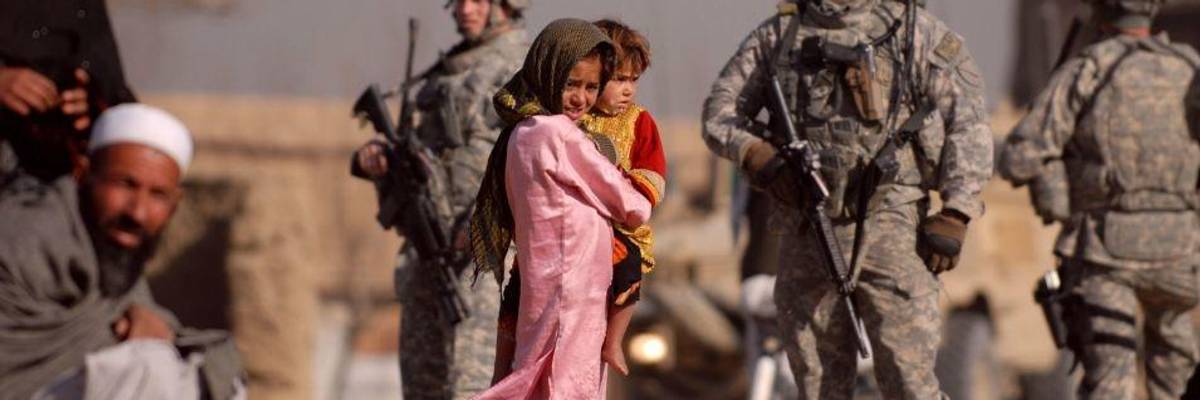
The new Trump round of escalation in Afghanistan, writes Sachs, "will yield no benefits for our country or any other." (Photo: U.S. Army Lt. Col. Mike Brady, Task Force Cyclone, 38th Infantry Division Public Affairs)
For years Donald Trump called for an end to America's war in Afghanistan. Yet as president he has quickly decided to expand the war. Since Trump's presidency fails daily on so many levels, it's easy to overlook an important lesson of Trump's awful Afghanistan decision.
For years Donald Trump called for an end to America's war in Afghanistan. Yet as president he has quickly decided to expand the war. Since Trump's presidency fails daily on so many levels, it's easy to overlook an important lesson of Trump's awful Afghanistan decision.
The Afghanistan war is both tragic and absurd. Starting in 1979, the CIA funded Islamic jihadists (including Afghan fighters called the Mujahideen, and indirectly, Arab fighters that became Al Qaeda) to fight the Soviet-backed Afghanistan government. Since then, with an interlude in the 1990s, the United States has been at war in Afghanistan.
One could chalk it all up to another CIA harebrained scheme, though this one is worse than most, inaugurating an era of war and blowback terrorism that has lasted nearly 40 years. When Obama directed the killing of Osama bin Laden, at least he could have explained to the American people that Al Qaeda was America's Frankenstein's monster facilitated by extensive CIA funding in Afghanistan and Pakistan.
The new Trump round of escalation will yield no benefits for our country or any other. We will spend tens of billions of dollars more to kill more Afghans, prolong that country's destabilization, return Americans home maimed or in body bags, foment atrocities on both sides, and do nothing to staunch terrorism. Terrorists can establish cells in countless places throughout Africa, the Middle East, and Central Asia, even if they were to be pushed from Afghanistan.
The decision-making process, though, was revealing. Trump opposed the war, one of the few areas where his foreign policy positions made sense. Yet he acceded to the generals. He is surrounded by three father-figure generals: White House chief of staff, national security adviser, and secretary of defense. The generals did what generals do: They viewed Afghanistan through a military lens and mustered a can-do promise of a military path to American victory.
The underlying problem, of course, is that countries like Vietnam, Afghanistan, Iraq, Syria, and Libya do not pose military challenges for the United States, but rather diplomatic and developmental challenges. Even when the United States "wins" such a war, as it did in Afghanistan in 2002, Iraq in 2003, and Libya in 2011, the United States can't win the peace. This is a seemingly trivial point, but perhaps not so to the CIA and many generals.
As French leader Georges Clemenceau famously said, war is too important to be left to the generals. Yet American politics now leaves war to the generals. Not only did Obama and Trump both defer to the generals who argued for open-ended war in Afghanistan, but in both cases and many more, Congress didn't even raise a peep. Article I, Section 8, Clause 11 of the Constitution, which assigns Congress the authority to declare war, is essentially null and void.
Leaving war to the generals has become Washington's default mode on the civilian side of government as well. Who now runs environmental policy? The polluters. The Environmental Protection Agency is being staffed with lobbyists of America's worst polluting industries. Who runs the Energy Department? Lobbyists of big coal, oil, and gas companies
With regard to economics and finance, the keys to the kingdom are now in the hands of Wall Street, and notably the primus inter pares of Wall Street, Goldman Sachs (a different Sachs, I must emphasize). Goldman Sachs has staffed the top economics teams of all administrations since Clinton. Trump's economic team is headed by National Economic Council director Gary Cohn, a former president of Goldman Sachs, and Treasury Secretary Stephen Mnuchin, a former chief information officer at Goldman Sachs.
Step by step, our political institutions have been captured by the narrow interest groups that government is meant to oversee. Generals decide on wars; Wall Street on finance; oil and gas companies on energy policy; drug companies and health insurers on health care policies. The general interest is subordinated to the special interests. Trump isn't draining the swamp. He's turning it into a Trump resort and cashing in.
Aristotle taught that politics is about ethics and the common good. America's restoration depends, with rising urgency, on the return of politics to the common good.
Dear Common Dreams reader, It’s been nearly 30 years since I co-founded Common Dreams with my late wife, Lina Newhouser. We had the radical notion that journalism should serve the public good, not corporate profits. It was clear to us from the outset what it would take to build such a project. No paid advertisements. No corporate sponsors. No millionaire publisher telling us what to think or do. Many people said we wouldn't last a year, but we proved those doubters wrong. Together with a tremendous team of journalists and dedicated staff, we built an independent media outlet free from the constraints of profits and corporate control. Our mission has always been simple: To inform. To inspire. To ignite change for the common good. Building Common Dreams was not easy. Our survival was never guaranteed. When you take on the most powerful forces—Wall Street greed, fossil fuel industry destruction, Big Tech lobbyists, and uber-rich oligarchs who have spent billions upon billions rigging the economy and democracy in their favor—the only bulwark you have is supporters who believe in your work. But here’s the urgent message from me today. It's never been this bad out there. And it's never been this hard to keep us going. At the very moment Common Dreams is most needed, the threats we face are intensifying. We need your support now more than ever. We don't accept corporate advertising and never will. We don't have a paywall because we don't think people should be blocked from critical news based on their ability to pay. Everything we do is funded by the donations of readers like you. When everyone does the little they can afford, we are strong. But if that support retreats or dries up, so do we. Will you donate now to make sure Common Dreams not only survives but thrives? —Craig Brown, Co-founder |
For years Donald Trump called for an end to America's war in Afghanistan. Yet as president he has quickly decided to expand the war. Since Trump's presidency fails daily on so many levels, it's easy to overlook an important lesson of Trump's awful Afghanistan decision.
The Afghanistan war is both tragic and absurd. Starting in 1979, the CIA funded Islamic jihadists (including Afghan fighters called the Mujahideen, and indirectly, Arab fighters that became Al Qaeda) to fight the Soviet-backed Afghanistan government. Since then, with an interlude in the 1990s, the United States has been at war in Afghanistan.
One could chalk it all up to another CIA harebrained scheme, though this one is worse than most, inaugurating an era of war and blowback terrorism that has lasted nearly 40 years. When Obama directed the killing of Osama bin Laden, at least he could have explained to the American people that Al Qaeda was America's Frankenstein's monster facilitated by extensive CIA funding in Afghanistan and Pakistan.
The new Trump round of escalation will yield no benefits for our country or any other. We will spend tens of billions of dollars more to kill more Afghans, prolong that country's destabilization, return Americans home maimed or in body bags, foment atrocities on both sides, and do nothing to staunch terrorism. Terrorists can establish cells in countless places throughout Africa, the Middle East, and Central Asia, even if they were to be pushed from Afghanistan.
The decision-making process, though, was revealing. Trump opposed the war, one of the few areas where his foreign policy positions made sense. Yet he acceded to the generals. He is surrounded by three father-figure generals: White House chief of staff, national security adviser, and secretary of defense. The generals did what generals do: They viewed Afghanistan through a military lens and mustered a can-do promise of a military path to American victory.
The underlying problem, of course, is that countries like Vietnam, Afghanistan, Iraq, Syria, and Libya do not pose military challenges for the United States, but rather diplomatic and developmental challenges. Even when the United States "wins" such a war, as it did in Afghanistan in 2002, Iraq in 2003, and Libya in 2011, the United States can't win the peace. This is a seemingly trivial point, but perhaps not so to the CIA and many generals.
As French leader Georges Clemenceau famously said, war is too important to be left to the generals. Yet American politics now leaves war to the generals. Not only did Obama and Trump both defer to the generals who argued for open-ended war in Afghanistan, but in both cases and many more, Congress didn't even raise a peep. Article I, Section 8, Clause 11 of the Constitution, which assigns Congress the authority to declare war, is essentially null and void.
Leaving war to the generals has become Washington's default mode on the civilian side of government as well. Who now runs environmental policy? The polluters. The Environmental Protection Agency is being staffed with lobbyists of America's worst polluting industries. Who runs the Energy Department? Lobbyists of big coal, oil, and gas companies
With regard to economics and finance, the keys to the kingdom are now in the hands of Wall Street, and notably the primus inter pares of Wall Street, Goldman Sachs (a different Sachs, I must emphasize). Goldman Sachs has staffed the top economics teams of all administrations since Clinton. Trump's economic team is headed by National Economic Council director Gary Cohn, a former president of Goldman Sachs, and Treasury Secretary Stephen Mnuchin, a former chief information officer at Goldman Sachs.
Step by step, our political institutions have been captured by the narrow interest groups that government is meant to oversee. Generals decide on wars; Wall Street on finance; oil and gas companies on energy policy; drug companies and health insurers on health care policies. The general interest is subordinated to the special interests. Trump isn't draining the swamp. He's turning it into a Trump resort and cashing in.
Aristotle taught that politics is about ethics and the common good. America's restoration depends, with rising urgency, on the return of politics to the common good.
For years Donald Trump called for an end to America's war in Afghanistan. Yet as president he has quickly decided to expand the war. Since Trump's presidency fails daily on so many levels, it's easy to overlook an important lesson of Trump's awful Afghanistan decision.
The Afghanistan war is both tragic and absurd. Starting in 1979, the CIA funded Islamic jihadists (including Afghan fighters called the Mujahideen, and indirectly, Arab fighters that became Al Qaeda) to fight the Soviet-backed Afghanistan government. Since then, with an interlude in the 1990s, the United States has been at war in Afghanistan.
One could chalk it all up to another CIA harebrained scheme, though this one is worse than most, inaugurating an era of war and blowback terrorism that has lasted nearly 40 years. When Obama directed the killing of Osama bin Laden, at least he could have explained to the American people that Al Qaeda was America's Frankenstein's monster facilitated by extensive CIA funding in Afghanistan and Pakistan.
The new Trump round of escalation will yield no benefits for our country or any other. We will spend tens of billions of dollars more to kill more Afghans, prolong that country's destabilization, return Americans home maimed or in body bags, foment atrocities on both sides, and do nothing to staunch terrorism. Terrorists can establish cells in countless places throughout Africa, the Middle East, and Central Asia, even if they were to be pushed from Afghanistan.
The decision-making process, though, was revealing. Trump opposed the war, one of the few areas where his foreign policy positions made sense. Yet he acceded to the generals. He is surrounded by three father-figure generals: White House chief of staff, national security adviser, and secretary of defense. The generals did what generals do: They viewed Afghanistan through a military lens and mustered a can-do promise of a military path to American victory.
The underlying problem, of course, is that countries like Vietnam, Afghanistan, Iraq, Syria, and Libya do not pose military challenges for the United States, but rather diplomatic and developmental challenges. Even when the United States "wins" such a war, as it did in Afghanistan in 2002, Iraq in 2003, and Libya in 2011, the United States can't win the peace. This is a seemingly trivial point, but perhaps not so to the CIA and many generals.
As French leader Georges Clemenceau famously said, war is too important to be left to the generals. Yet American politics now leaves war to the generals. Not only did Obama and Trump both defer to the generals who argued for open-ended war in Afghanistan, but in both cases and many more, Congress didn't even raise a peep. Article I, Section 8, Clause 11 of the Constitution, which assigns Congress the authority to declare war, is essentially null and void.
Leaving war to the generals has become Washington's default mode on the civilian side of government as well. Who now runs environmental policy? The polluters. The Environmental Protection Agency is being staffed with lobbyists of America's worst polluting industries. Who runs the Energy Department? Lobbyists of big coal, oil, and gas companies
With regard to economics and finance, the keys to the kingdom are now in the hands of Wall Street, and notably the primus inter pares of Wall Street, Goldman Sachs (a different Sachs, I must emphasize). Goldman Sachs has staffed the top economics teams of all administrations since Clinton. Trump's economic team is headed by National Economic Council director Gary Cohn, a former president of Goldman Sachs, and Treasury Secretary Stephen Mnuchin, a former chief information officer at Goldman Sachs.
Step by step, our political institutions have been captured by the narrow interest groups that government is meant to oversee. Generals decide on wars; Wall Street on finance; oil and gas companies on energy policy; drug companies and health insurers on health care policies. The general interest is subordinated to the special interests. Trump isn't draining the swamp. He's turning it into a Trump resort and cashing in.
Aristotle taught that politics is about ethics and the common good. America's restoration depends, with rising urgency, on the return of politics to the common good.