
Bernie Sanders's Hard Fight for Hillary Clinton
One of the many things that makes Donald Trump angry is that Bernie Sanders does not seem to hold grudges. In recent speeches, Trump has pointed to the information that has come out, through WikiLeaks' disclosures of John Podesta's e-mails, about the Clinton team's attitude toward Sanders during the primaries: the slights ("doofus"), the schemes ("where would you stick the knife?"), and the eye-rolling ("socialist math"). Perhaps worst of all--at least from Trump's point of view--was Donna Brazile's passing along of debate questions. "Now, Bernie Sanders should be angry right?
One of the many things that makes Donald Trump angry is that Bernie Sanders does not seem to hold grudges. In recent speeches, Trump has pointed to the information that has come out, through WikiLeaks' disclosures of John Podesta's e-mails, about the Clinton team's attitude toward Sanders during the primaries: the slights ("doofus"), the schemes ("where would you stick the knife?"), and the eye-rolling ("socialist math"). Perhaps worst of all--at least from Trump's point of view--was Donna Brazile's passing along of debate questions. "Now, Bernie Sanders should be angry right? Shouldn't he be angry?" Trump asked a crowd in Florida. He sounded a little bit puzzled--he would be so mad.
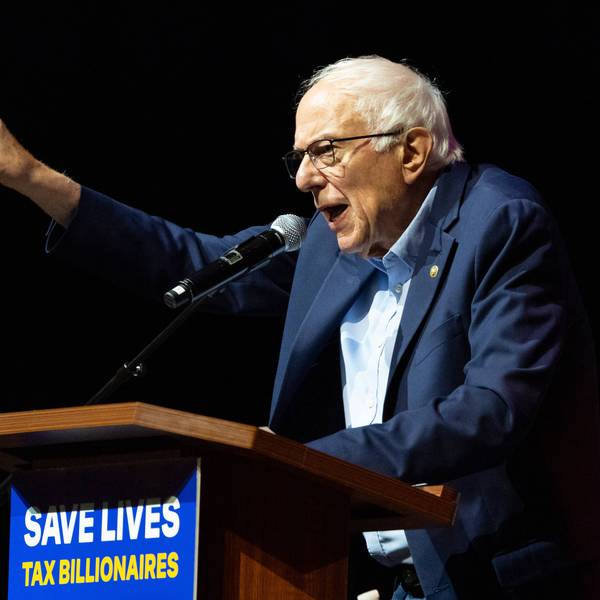
The truth is that Bernie Sanders is very, very angry--at Donald Trump. He is angry enough to have spent weeks travelling on behalf of Hillary Clinton, speaking for her in union halls and arenas, to students and activists. When he talks, he is entirely Bernie--"We are going to fight for that democracy; we are not going to become an oligarchy"--and he hints strongly that he has done some negotiating with her before getting on the stage, and will continue to do so after, as he hopes, she is elected. When praising her positions, he often says "Secretary Clinton has told me" or "Secretary Clinton has promised," as though he knows that it might not work, with the sort of swing audiences he is dispatched to persuade (students, working-class voters), simply to declare that taking these stands is in her nature. But he knows what he wants: for her to win. "This campaign is not a personality contest," Sanders said near the beginning of a speech in Raleigh, North Carolina, on Thursday night. "We're not voting for high-school president. We're voting for the most powerful leader in the entire world." He had been introduced by Pharrell Williams, the musician, who was now sitting on the stage with Clinton herself, as if it were an actual high-school election. Statements like that serve to remind Sanders's supporters that they don't need to be charmed by Hillary Clinton--he is over it, and they ought to be, too. But, if personality doesn't matter, the person does.
"There are many, many differences between Secretary Clinton and Mr. Trump," Sanders told the crowd. "But there is one that is very, very profound. Are you ready for a very radical thought right now? I don't want anyone to faint! I think we have some paramedics here"--"paramedics here" is, it turns out, an excellent phrase for demonstrating a Brooklyn accent--"but I do want to make this announcement. Are you ready for it?" The crowd indicated that it was. "All right. Madam Secretary, you correct me if I'm wrong here; I don't want to misspeak for you--Secretary Clinton believes in science!"
When the cheering had abated, Sanders continued, "I know I put her in a difficult position--2016, to believe in science, a little bit dangerous--but what the heck." He then referred to her "very specific ideas" for combatting climate change, before turning to the mind of Donald Trump. "After years and years of studying the issue from a scientific perspective--I'm joking, I'm joking--he has concluded that climate change is a hoax emanating from China. Now, why he chose China and not Mexico or some Muslim country, I don't know."
That addendum, about Trump's depiction of Mexicans and Muslims, is a reminder of why Sanders really isn't joking; nor does he think that Trump is. One thing that Sanders saw, perhaps earlier than most people, is that Trump is both serious and dangerous. And he knows, from time spent with his own crowds, the strengths of the passions that Trump exploits when he talks about political corruption. Sanders is clearly outraged that a billionaire would try to be the spokesman for those grievances. It may also be that his historical perspective, which may give him too narrow a view in some areas, has left him distinctly well prepared to recognize the threat that Trump poses. Sanders does not treat a wealthy bully sowing divisions among the working class as a phenomenon entirely outside the tradition of our country's politics--as the freak appearance of a buffoon. He does not look at Trump and wonder how someone so crass and demagogic could ever have disrupted the pageant of American society, which is and has always been great.
"I disagree with Donald Trump on virtually all of his policy positions," Sanders said. "But what upsets me the most--what upsets me, it's beyond disagreement--is we have struggled for so many years to overcome discrimination, and he is running his campaign, the cornerstone of which is bigotry. Now, as Americans we can disagree on many issues. But we have come too far--too many people have gone to jail, and too many have died in the struggle for equal rights. We are not going back to a bigoted society."
Since conceding defeat in the primaries, Sanders has been one of the real champions of this campaign. He let his supporters yell at him and deride him as a sellout in bleak delegate breakfasts at the Democratic National Convention, in Philadelphia, as he endorsed Clinton and explained why they needed to do the same. He made getting support for her his priority, putting aside any subtle, undermining gestures that might have better preserved his rebel-rock-star status. He has kept doing so despite other revelations in the Podesta e-mails, ones that are not about him personally but about issues that he believes in--for example, about money in politics, as exemplified by the Clinton team's nurturing of donors. And he has earned the right to negotiate hard on such issues in the future.
As Sanders finished his speech in Raleigh--"We have to do everything that we can to elect Secretary Clinton!"--Clinton and Pharrell were on their feet, cheering. "Wow!" Clinton said, when she took to the rostrum. "Whew! I gotta say, after hearing from these two extraordinary men, I feel all fired up and ready to go for the next five days!" She knew what it was like to run against Sanders. Having him on her side was "a lot more fun." A few hours later, Sanders was off on his own to Iowa. Trump is ahead in that state, in the latest average of polls, by about two and a half points. Sanders had three events scheduled for Friday--Cedar Falls, Iowa City, Davenport. On Saturday, there would be more.
We are at a crossroads
This country and this world are at a monumental crossroads. In a few short weeks, US voters will have an opportunity to beat back the forces of fascism and confront the billionaires who are rigging the economy, our media system, and our democracy, making it increasingly impossible for ordinary people to get by. We’re not just talking about the election. We’re talking about what must be done once these fascist elements are vanquished from power. We need a bolder set of solutions than what either major party has so far been willing to offer and a working-class movement ready to fight like hell for it. Trump didn't emerge from nowhere. The conditions that fueled MAGA authoritarianism were created by decades of radical neoliberal economic policies and a corrupt political system dominated by corporate interests. They slashed taxes on the super-rich, promising that the benefits would trickle down. They said giveaways to the corporate titans would make life more affordable for the rest of us. It was all bullshit. And when a bitter, betrayed populace searches for someone to blame, right-wing demagogues have little trouble finding scapegoats. People know when they're being lied to, but you won't hear any of this from the corporate media. Only independent journalism—powered and funded by people who believe in building a better world—can deliver truly trustworthy daily news. Our Fall Campaign is underway, and we need your help. To power our newsroom through the rest of the year, we need to raise $125,000 by midnight on October 31. So if you share our vision, please contribute whatever you can to sustain our work. |
One of the many things that makes Donald Trump angry is that Bernie Sanders does not seem to hold grudges. In recent speeches, Trump has pointed to the information that has come out, through WikiLeaks' disclosures of John Podesta's e-mails, about the Clinton team's attitude toward Sanders during the primaries: the slights ("doofus"), the schemes ("where would you stick the knife?"), and the eye-rolling ("socialist math"). Perhaps worst of all--at least from Trump's point of view--was Donna Brazile's passing along of debate questions. "Now, Bernie Sanders should be angry right? Shouldn't he be angry?" Trump asked a crowd in Florida. He sounded a little bit puzzled--he would be so mad.
The truth is that Bernie Sanders is very, very angry--at Donald Trump. He is angry enough to have spent weeks travelling on behalf of Hillary Clinton, speaking for her in union halls and arenas, to students and activists. When he talks, he is entirely Bernie--"We are going to fight for that democracy; we are not going to become an oligarchy"--and he hints strongly that he has done some negotiating with her before getting on the stage, and will continue to do so after, as he hopes, she is elected. When praising her positions, he often says "Secretary Clinton has told me" or "Secretary Clinton has promised," as though he knows that it might not work, with the sort of swing audiences he is dispatched to persuade (students, working-class voters), simply to declare that taking these stands is in her nature. But he knows what he wants: for her to win. "This campaign is not a personality contest," Sanders said near the beginning of a speech in Raleigh, North Carolina, on Thursday night. "We're not voting for high-school president. We're voting for the most powerful leader in the entire world." He had been introduced by Pharrell Williams, the musician, who was now sitting on the stage with Clinton herself, as if it were an actual high-school election. Statements like that serve to remind Sanders's supporters that they don't need to be charmed by Hillary Clinton--he is over it, and they ought to be, too. But, if personality doesn't matter, the person does.
"There are many, many differences between Secretary Clinton and Mr. Trump," Sanders told the crowd. "But there is one that is very, very profound. Are you ready for a very radical thought right now? I don't want anyone to faint! I think we have some paramedics here"--"paramedics here" is, it turns out, an excellent phrase for demonstrating a Brooklyn accent--"but I do want to make this announcement. Are you ready for it?" The crowd indicated that it was. "All right. Madam Secretary, you correct me if I'm wrong here; I don't want to misspeak for you--Secretary Clinton believes in science!"
When the cheering had abated, Sanders continued, "I know I put her in a difficult position--2016, to believe in science, a little bit dangerous--but what the heck." He then referred to her "very specific ideas" for combatting climate change, before turning to the mind of Donald Trump. "After years and years of studying the issue from a scientific perspective--I'm joking, I'm joking--he has concluded that climate change is a hoax emanating from China. Now, why he chose China and not Mexico or some Muslim country, I don't know."
That addendum, about Trump's depiction of Mexicans and Muslims, is a reminder of why Sanders really isn't joking; nor does he think that Trump is. One thing that Sanders saw, perhaps earlier than most people, is that Trump is both serious and dangerous. And he knows, from time spent with his own crowds, the strengths of the passions that Trump exploits when he talks about political corruption. Sanders is clearly outraged that a billionaire would try to be the spokesman for those grievances. It may also be that his historical perspective, which may give him too narrow a view in some areas, has left him distinctly well prepared to recognize the threat that Trump poses. Sanders does not treat a wealthy bully sowing divisions among the working class as a phenomenon entirely outside the tradition of our country's politics--as the freak appearance of a buffoon. He does not look at Trump and wonder how someone so crass and demagogic could ever have disrupted the pageant of American society, which is and has always been great.
"I disagree with Donald Trump on virtually all of his policy positions," Sanders said. "But what upsets me the most--what upsets me, it's beyond disagreement--is we have struggled for so many years to overcome discrimination, and he is running his campaign, the cornerstone of which is bigotry. Now, as Americans we can disagree on many issues. But we have come too far--too many people have gone to jail, and too many have died in the struggle for equal rights. We are not going back to a bigoted society."
Since conceding defeat in the primaries, Sanders has been one of the real champions of this campaign. He let his supporters yell at him and deride him as a sellout in bleak delegate breakfasts at the Democratic National Convention, in Philadelphia, as he endorsed Clinton and explained why they needed to do the same. He made getting support for her his priority, putting aside any subtle, undermining gestures that might have better preserved his rebel-rock-star status. He has kept doing so despite other revelations in the Podesta e-mails, ones that are not about him personally but about issues that he believes in--for example, about money in politics, as exemplified by the Clinton team's nurturing of donors. And he has earned the right to negotiate hard on such issues in the future.
As Sanders finished his speech in Raleigh--"We have to do everything that we can to elect Secretary Clinton!"--Clinton and Pharrell were on their feet, cheering. "Wow!" Clinton said, when she took to the rostrum. "Whew! I gotta say, after hearing from these two extraordinary men, I feel all fired up and ready to go for the next five days!" She knew what it was like to run against Sanders. Having him on her side was "a lot more fun." A few hours later, Sanders was off on his own to Iowa. Trump is ahead in that state, in the latest average of polls, by about two and a half points. Sanders had three events scheduled for Friday--Cedar Falls, Iowa City, Davenport. On Saturday, there would be more.
One of the many things that makes Donald Trump angry is that Bernie Sanders does not seem to hold grudges. In recent speeches, Trump has pointed to the information that has come out, through WikiLeaks' disclosures of John Podesta's e-mails, about the Clinton team's attitude toward Sanders during the primaries: the slights ("doofus"), the schemes ("where would you stick the knife?"), and the eye-rolling ("socialist math"). Perhaps worst of all--at least from Trump's point of view--was Donna Brazile's passing along of debate questions. "Now, Bernie Sanders should be angry right? Shouldn't he be angry?" Trump asked a crowd in Florida. He sounded a little bit puzzled--he would be so mad.
The truth is that Bernie Sanders is very, very angry--at Donald Trump. He is angry enough to have spent weeks travelling on behalf of Hillary Clinton, speaking for her in union halls and arenas, to students and activists. When he talks, he is entirely Bernie--"We are going to fight for that democracy; we are not going to become an oligarchy"--and he hints strongly that he has done some negotiating with her before getting on the stage, and will continue to do so after, as he hopes, she is elected. When praising her positions, he often says "Secretary Clinton has told me" or "Secretary Clinton has promised," as though he knows that it might not work, with the sort of swing audiences he is dispatched to persuade (students, working-class voters), simply to declare that taking these stands is in her nature. But he knows what he wants: for her to win. "This campaign is not a personality contest," Sanders said near the beginning of a speech in Raleigh, North Carolina, on Thursday night. "We're not voting for high-school president. We're voting for the most powerful leader in the entire world." He had been introduced by Pharrell Williams, the musician, who was now sitting on the stage with Clinton herself, as if it were an actual high-school election. Statements like that serve to remind Sanders's supporters that they don't need to be charmed by Hillary Clinton--he is over it, and they ought to be, too. But, if personality doesn't matter, the person does.
"There are many, many differences between Secretary Clinton and Mr. Trump," Sanders told the crowd. "But there is one that is very, very profound. Are you ready for a very radical thought right now? I don't want anyone to faint! I think we have some paramedics here"--"paramedics here" is, it turns out, an excellent phrase for demonstrating a Brooklyn accent--"but I do want to make this announcement. Are you ready for it?" The crowd indicated that it was. "All right. Madam Secretary, you correct me if I'm wrong here; I don't want to misspeak for you--Secretary Clinton believes in science!"
When the cheering had abated, Sanders continued, "I know I put her in a difficult position--2016, to believe in science, a little bit dangerous--but what the heck." He then referred to her "very specific ideas" for combatting climate change, before turning to the mind of Donald Trump. "After years and years of studying the issue from a scientific perspective--I'm joking, I'm joking--he has concluded that climate change is a hoax emanating from China. Now, why he chose China and not Mexico or some Muslim country, I don't know."
That addendum, about Trump's depiction of Mexicans and Muslims, is a reminder of why Sanders really isn't joking; nor does he think that Trump is. One thing that Sanders saw, perhaps earlier than most people, is that Trump is both serious and dangerous. And he knows, from time spent with his own crowds, the strengths of the passions that Trump exploits when he talks about political corruption. Sanders is clearly outraged that a billionaire would try to be the spokesman for those grievances. It may also be that his historical perspective, which may give him too narrow a view in some areas, has left him distinctly well prepared to recognize the threat that Trump poses. Sanders does not treat a wealthy bully sowing divisions among the working class as a phenomenon entirely outside the tradition of our country's politics--as the freak appearance of a buffoon. He does not look at Trump and wonder how someone so crass and demagogic could ever have disrupted the pageant of American society, which is and has always been great.
"I disagree with Donald Trump on virtually all of his policy positions," Sanders said. "But what upsets me the most--what upsets me, it's beyond disagreement--is we have struggled for so many years to overcome discrimination, and he is running his campaign, the cornerstone of which is bigotry. Now, as Americans we can disagree on many issues. But we have come too far--too many people have gone to jail, and too many have died in the struggle for equal rights. We are not going back to a bigoted society."
Since conceding defeat in the primaries, Sanders has been one of the real champions of this campaign. He let his supporters yell at him and deride him as a sellout in bleak delegate breakfasts at the Democratic National Convention, in Philadelphia, as he endorsed Clinton and explained why they needed to do the same. He made getting support for her his priority, putting aside any subtle, undermining gestures that might have better preserved his rebel-rock-star status. He has kept doing so despite other revelations in the Podesta e-mails, ones that are not about him personally but about issues that he believes in--for example, about money in politics, as exemplified by the Clinton team's nurturing of donors. And he has earned the right to negotiate hard on such issues in the future.
As Sanders finished his speech in Raleigh--"We have to do everything that we can to elect Secretary Clinton!"--Clinton and Pharrell were on their feet, cheering. "Wow!" Clinton said, when she took to the rostrum. "Whew! I gotta say, after hearing from these two extraordinary men, I feel all fired up and ready to go for the next five days!" She knew what it was like to run against Sanders. Having him on her side was "a lot more fun." A few hours later, Sanders was off on his own to Iowa. Trump is ahead in that state, in the latest average of polls, by about two and a half points. Sanders had three events scheduled for Friday--Cedar Falls, Iowa City, Davenport. On Saturday, there would be more.