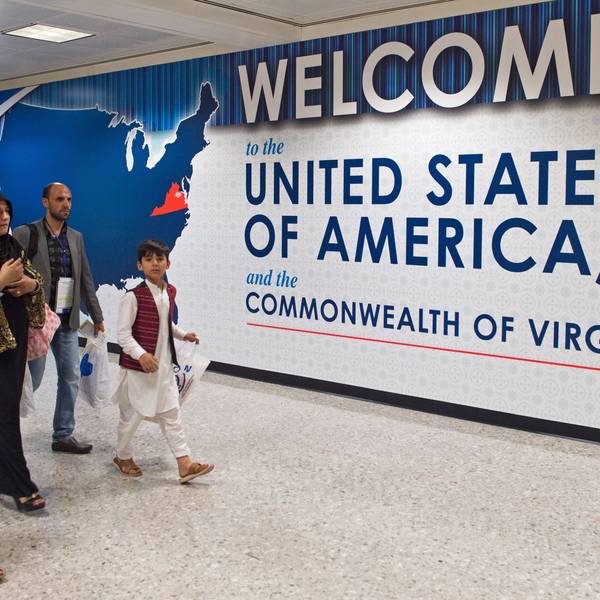

House-Passed Visa Waiver Discrimination is Trump Lite
From time to time, people ask me where I'm from. "I'm from Arkansas," I say brightly.
"You don't sound like you're from Arkansas," the people say suspiciously. (I think this roughly translates as: "You speak English like a Chicago Jew.")
"No, really," I say. "You can check my birth certificate. I was born in Fayetteville." (When I say "Fayetteville," I try to pronounce it in two syllables, like my friend from Little Rock says it: Fayt-ville.)
The people don't buy it. "How old were you when you left Arkansas?" they ask knowingly.
"Six months old," I confess. "And I haven't set foot in Arkansas since." When I happened to be born, my mother happened to be a graduate student at the University of Arkansas. I'm not "from Arkansas" at all. Every other member of my immediate family was born in Illinois.
The world is full of people like me - people who were born in places that they are not "from." My grandfather Max was born in Grodno, which is now in Belarus, a country that didn't even exist when Max was born there. But he wasn't from Grodno. He was from Chicago.
This is a basic fact about the world. You know it, I know it, and the American people know it, as Bob Dole used to say.
But the bill to tighten the visa waiver program that passed the House of Representatives doesn't acknowledge this reality. It treats people as being "from" places that they are not "from," simply because they happen to carry the nationality of that place, even if they have never set foot there. Under the House-passed bill, a French citizen who was born in Paris, who never in her whole life left France for any purpose, would be excluded from the visa waiver program as "Syrian" if her father happened to be Syrian, would be excluded as "Iranian" if her father happened to be Iranian. And since the visa waiver program is reciprocal with France, if these provisions became U.S. law, France might do the same to U.S. citizens - exclude them from the visa waiver program by treating them as being "from" places that they are not "from."
The word on the street has been that it is very likely that some version of the visa waiver bill will be attached to the Omnibus spending bill that must pass Congress and be signed by the President in the next few days to stop the federal government from shutting down. But there's no reason that the visa waiver bill has to be attached in exactly the form in which it passed the House. This language isn't set in stone. The Senate hasn't approved it. The nationality-based blanket exclusions could be removed, leaving uncontroversial reforms intact.
At the very least, the nationality-based blanket exclusions could be sunset, so that they would eventually expire if they were not renewed. Even the Patriot Act, passed in the wake of the September 11 attacks, had a sunset. And every major Democratic proposal for an AUMF against ISIS, including President Obama's proposed AUMF, including the bipartisan, bicameral Flake-Kaine-Rigell-Welch AUMF, has a sunset. Why not a sunset for nationality-based discrimination that is linked to the war?
People for whom the Enlightenment was not a wasted experiment in human history are justly aghast at Donald Trump's proposal to exclude all Muslims from entering the United States. But the nationality-based discrimination of the House-passed visa waiver bill is Trump Lite: it's Trumpism applied to a smaller group of people. You could say that's less bad, in the sense that fewer people will be hit by it, but it's also harder to reverse, because smaller groups of people have fewer friends and are therefore more vulnerable, as Pastor Niemoller might have said.
And in an important way, the House-passed nationality discrimination is worse than Trump: it has no time limit. Trump has said his proposal to ban Muslims would be temporary; the House passed nationality-based discrimination, if it became law in the form passed by the House, would be permanent. Because it has no sunset, it would never expire. Secretary of State Kerry has said that if the U.S. and Russia follow through on their November 14 Vienna agreement with a joint campaign against ISIS, the campaign against ISIS could be wrapped up in a few months. But the nationality-based discrimination of the visa waiver bill would still be on the books. And once things are permanent law, they can be very hard to get rid of. The 2002 Iraq AUMF is like Freddy. You can't kill it. Saddam Hussein is dead, his government is long gone, but the 2002 Iraq AUMF is alive, still being invoked as legal authority for what the U.S. is doing in Iraq.
You can urge President Obama and Congress to sunset the discriminatory provisions of the visa waiver bill here.
An Urgent Message From Our Co-Founder
Dear Common Dreams reader, It’s been nearly 30 years since I co-founded Common Dreams with my late wife, Lina Newhouser. We had the radical notion that journalism should serve the public good, not corporate profits. It was clear to us from the outset what it would take to build such a project. No paid advertisements. No corporate sponsors. No millionaire publisher telling us what to think or do. Many people said we wouldn't last a year, but we proved those doubters wrong. Together with a tremendous team of journalists and dedicated staff, we built an independent media outlet free from the constraints of profits and corporate control. Our mission has always been simple: To inform. To inspire. To ignite change for the common good. Building Common Dreams was not easy. Our survival was never guaranteed. When you take on the most powerful forces—Wall Street greed, fossil fuel industry destruction, Big Tech lobbyists, and uber-rich oligarchs who have spent billions upon billions rigging the economy and democracy in their favor—the only bulwark you have is supporters who believe in your work. But here’s the urgent message from me today. It's never been this bad out there. And it's never been this hard to keep us going. At the very moment Common Dreams is most needed, the threats we face are intensifying. We need your support now more than ever. We don't accept corporate advertising and never will. We don't have a paywall because we don't think people should be blocked from critical news based on their ability to pay. Everything we do is funded by the donations of readers like you. When everyone does the little they can afford, we are strong. But if that support retreats or dries up, so do we. Will you donate now to make sure Common Dreams not only survives but thrives? —Craig Brown, Co-founder |
From time to time, people ask me where I'm from. "I'm from Arkansas," I say brightly.
"You don't sound like you're from Arkansas," the people say suspiciously. (I think this roughly translates as: "You speak English like a Chicago Jew.")
"No, really," I say. "You can check my birth certificate. I was born in Fayetteville." (When I say "Fayetteville," I try to pronounce it in two syllables, like my friend from Little Rock says it: Fayt-ville.)
The people don't buy it. "How old were you when you left Arkansas?" they ask knowingly.
"Six months old," I confess. "And I haven't set foot in Arkansas since." When I happened to be born, my mother happened to be a graduate student at the University of Arkansas. I'm not "from Arkansas" at all. Every other member of my immediate family was born in Illinois.
The world is full of people like me - people who were born in places that they are not "from." My grandfather Max was born in Grodno, which is now in Belarus, a country that didn't even exist when Max was born there. But he wasn't from Grodno. He was from Chicago.
This is a basic fact about the world. You know it, I know it, and the American people know it, as Bob Dole used to say.
But the bill to tighten the visa waiver program that passed the House of Representatives doesn't acknowledge this reality. It treats people as being "from" places that they are not "from," simply because they happen to carry the nationality of that place, even if they have never set foot there. Under the House-passed bill, a French citizen who was born in Paris, who never in her whole life left France for any purpose, would be excluded from the visa waiver program as "Syrian" if her father happened to be Syrian, would be excluded as "Iranian" if her father happened to be Iranian. And since the visa waiver program is reciprocal with France, if these provisions became U.S. law, France might do the same to U.S. citizens - exclude them from the visa waiver program by treating them as being "from" places that they are not "from."
The word on the street has been that it is very likely that some version of the visa waiver bill will be attached to the Omnibus spending bill that must pass Congress and be signed by the President in the next few days to stop the federal government from shutting down. But there's no reason that the visa waiver bill has to be attached in exactly the form in which it passed the House. This language isn't set in stone. The Senate hasn't approved it. The nationality-based blanket exclusions could be removed, leaving uncontroversial reforms intact.
At the very least, the nationality-based blanket exclusions could be sunset, so that they would eventually expire if they were not renewed. Even the Patriot Act, passed in the wake of the September 11 attacks, had a sunset. And every major Democratic proposal for an AUMF against ISIS, including President Obama's proposed AUMF, including the bipartisan, bicameral Flake-Kaine-Rigell-Welch AUMF, has a sunset. Why not a sunset for nationality-based discrimination that is linked to the war?
People for whom the Enlightenment was not a wasted experiment in human history are justly aghast at Donald Trump's proposal to exclude all Muslims from entering the United States. But the nationality-based discrimination of the House-passed visa waiver bill is Trump Lite: it's Trumpism applied to a smaller group of people. You could say that's less bad, in the sense that fewer people will be hit by it, but it's also harder to reverse, because smaller groups of people have fewer friends and are therefore more vulnerable, as Pastor Niemoller might have said.
And in an important way, the House-passed nationality discrimination is worse than Trump: it has no time limit. Trump has said his proposal to ban Muslims would be temporary; the House passed nationality-based discrimination, if it became law in the form passed by the House, would be permanent. Because it has no sunset, it would never expire. Secretary of State Kerry has said that if the U.S. and Russia follow through on their November 14 Vienna agreement with a joint campaign against ISIS, the campaign against ISIS could be wrapped up in a few months. But the nationality-based discrimination of the visa waiver bill would still be on the books. And once things are permanent law, they can be very hard to get rid of. The 2002 Iraq AUMF is like Freddy. You can't kill it. Saddam Hussein is dead, his government is long gone, but the 2002 Iraq AUMF is alive, still being invoked as legal authority for what the U.S. is doing in Iraq.
You can urge President Obama and Congress to sunset the discriminatory provisions of the visa waiver bill here.
From time to time, people ask me where I'm from. "I'm from Arkansas," I say brightly.
"You don't sound like you're from Arkansas," the people say suspiciously. (I think this roughly translates as: "You speak English like a Chicago Jew.")
"No, really," I say. "You can check my birth certificate. I was born in Fayetteville." (When I say "Fayetteville," I try to pronounce it in two syllables, like my friend from Little Rock says it: Fayt-ville.)
The people don't buy it. "How old were you when you left Arkansas?" they ask knowingly.
"Six months old," I confess. "And I haven't set foot in Arkansas since." When I happened to be born, my mother happened to be a graduate student at the University of Arkansas. I'm not "from Arkansas" at all. Every other member of my immediate family was born in Illinois.
The world is full of people like me - people who were born in places that they are not "from." My grandfather Max was born in Grodno, which is now in Belarus, a country that didn't even exist when Max was born there. But he wasn't from Grodno. He was from Chicago.
This is a basic fact about the world. You know it, I know it, and the American people know it, as Bob Dole used to say.
But the bill to tighten the visa waiver program that passed the House of Representatives doesn't acknowledge this reality. It treats people as being "from" places that they are not "from," simply because they happen to carry the nationality of that place, even if they have never set foot there. Under the House-passed bill, a French citizen who was born in Paris, who never in her whole life left France for any purpose, would be excluded from the visa waiver program as "Syrian" if her father happened to be Syrian, would be excluded as "Iranian" if her father happened to be Iranian. And since the visa waiver program is reciprocal with France, if these provisions became U.S. law, France might do the same to U.S. citizens - exclude them from the visa waiver program by treating them as being "from" places that they are not "from."
The word on the street has been that it is very likely that some version of the visa waiver bill will be attached to the Omnibus spending bill that must pass Congress and be signed by the President in the next few days to stop the federal government from shutting down. But there's no reason that the visa waiver bill has to be attached in exactly the form in which it passed the House. This language isn't set in stone. The Senate hasn't approved it. The nationality-based blanket exclusions could be removed, leaving uncontroversial reforms intact.
At the very least, the nationality-based blanket exclusions could be sunset, so that they would eventually expire if they were not renewed. Even the Patriot Act, passed in the wake of the September 11 attacks, had a sunset. And every major Democratic proposal for an AUMF against ISIS, including President Obama's proposed AUMF, including the bipartisan, bicameral Flake-Kaine-Rigell-Welch AUMF, has a sunset. Why not a sunset for nationality-based discrimination that is linked to the war?
People for whom the Enlightenment was not a wasted experiment in human history are justly aghast at Donald Trump's proposal to exclude all Muslims from entering the United States. But the nationality-based discrimination of the House-passed visa waiver bill is Trump Lite: it's Trumpism applied to a smaller group of people. You could say that's less bad, in the sense that fewer people will be hit by it, but it's also harder to reverse, because smaller groups of people have fewer friends and are therefore more vulnerable, as Pastor Niemoller might have said.
And in an important way, the House-passed nationality discrimination is worse than Trump: it has no time limit. Trump has said his proposal to ban Muslims would be temporary; the House passed nationality-based discrimination, if it became law in the form passed by the House, would be permanent. Because it has no sunset, it would never expire. Secretary of State Kerry has said that if the U.S. and Russia follow through on their November 14 Vienna agreement with a joint campaign against ISIS, the campaign against ISIS could be wrapped up in a few months. But the nationality-based discrimination of the visa waiver bill would still be on the books. And once things are permanent law, they can be very hard to get rid of. The 2002 Iraq AUMF is like Freddy. You can't kill it. Saddam Hussein is dead, his government is long gone, but the 2002 Iraq AUMF is alive, still being invoked as legal authority for what the U.S. is doing in Iraq.
You can urge President Obama and Congress to sunset the discriminatory provisions of the visa waiver bill here.