

Executions, far from being useful examples to the survivors, have, I am persuaded, a quite contrary effect. . . .
--Mary Wollstonecraft, Letter 19 (1796)
It makes you proud to be an American. I mean a lesser country wouldn't give any of these things a second thought. During the week of May 18, 2014 we learned of two different decisions, each of which proves that we keep on trying to be the world leader in showing respect for human life, in both the preserving and the taking. The first decision pertained to Guantanamo.
On May 23, 2014 a federal court entered an order permitting the folks at Guantanamo to continue force-feeding Abu Wa'el Dhiab so that he won't die. Mr. Dhiab, a Syrian national, was captured in Pakistan 12 years ago and has been at Guantanamo ever since. He has not been charged with any crime and was cleared for transfer five years ago. At first he was not released because the government worried about how he'd be treated in Syria and later because of the civil war taking place there. Mr. Dhiab does not want to be at Guantanamo. He would rather be dead. Accordingly he has engaged in a hunger strike. The United States does not want Mr. Dhiab to die. The procedure used by the government to keep Mr. Dhiab alive is not done in a hospital and is very painful. Mr. Dhiab has gone to court to ask the court to permit him to die or, alternatively, require the government to force-feed him humanely at the hospital at Guantanamo Bay. The judge who considered Mr. Dhiab's request for a restraining order observed that Mr. Dhiab was willing to be force-fed if it were done in the hospital and "he could be spared the agony of having the feeding tubes inserted and removed for each feeding, and if he could be spared the pain and discomfort of the restraint chair." Were that done, the judge observed, the litigation over whether he could be force fed or permitted to die could be litigated in a "civilized and legally appropriate manner. The Department of Defense refuses to make these compromises." She went on to state that: "Thanks to the intransigence of the Department of Defense, Mr. Dhiab may well suffer unnecessary pain from certain enteral feeding practice and forcible cell extractions. However, the Court simply cannot let Mr. Dhiab die." And thus we have an example of the compassion that is ingrained in our culture.
From Guantanamo where we show our compassion by keeping people who want to die alive, we go to Tennessee where the state government is looking for compassionate ways to help people who want to live, die. In a number of recent executions in the United States, the person being executed has been manifestly uncomfortable during the procedure and his discomfort has then caused discomfort for the society that imposes the punishment. For some time Tennessee executioners used a combination of drugs to execute the condemned that could not be used when euthanizing animals because of the Tennessee "Nonlivestock Animal Humane Death Act." That Act banned the drug being used to assist in human executions from being used on nonlivestock animals because of the pain suffered by the animal during the procedure.
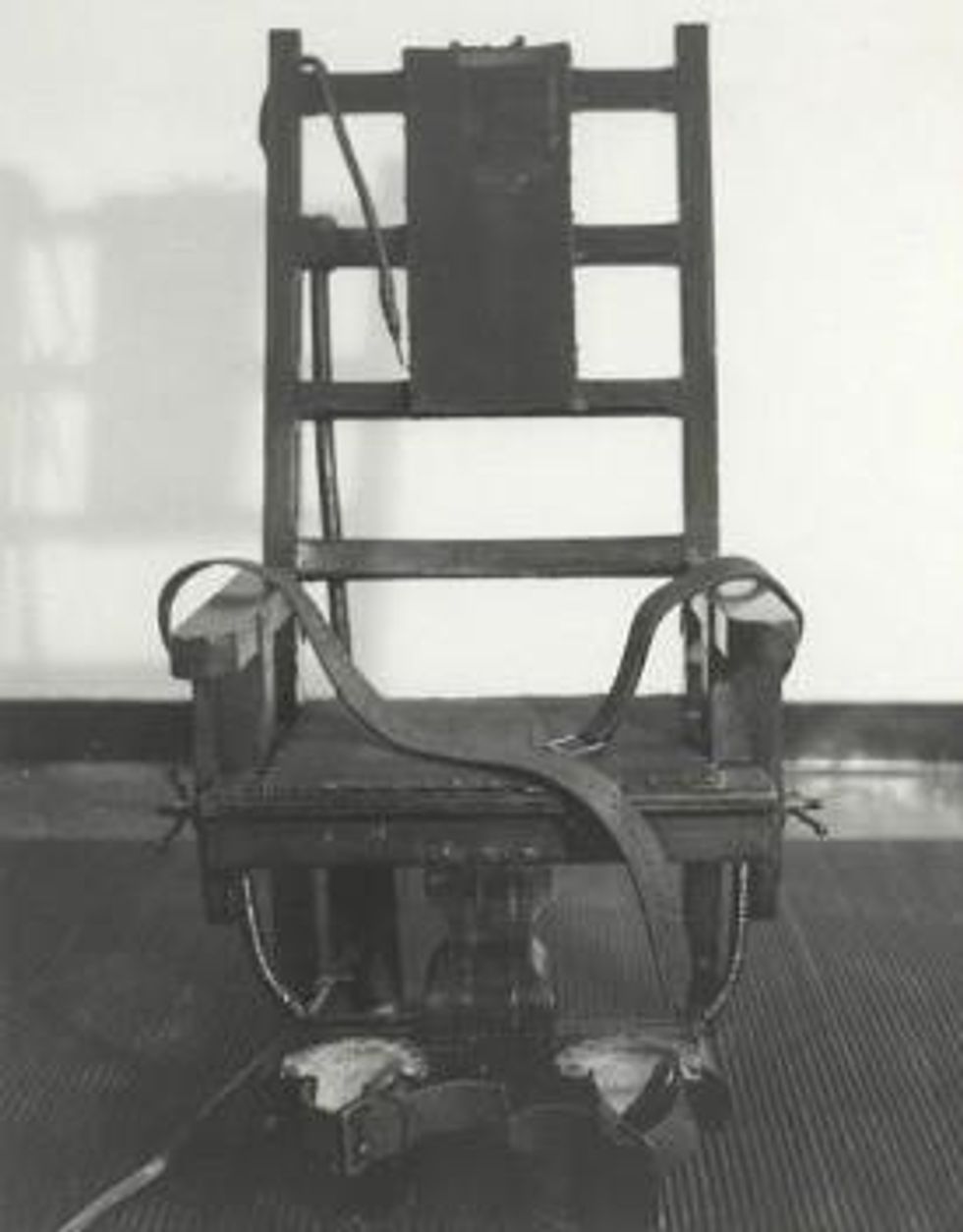
Tennessee has now concluded that it does not want to get caught up in the dilemma facing many state executioners when the drugs that humanely dispatch the unwanted are unavailable. Accordingly, on May 22, 2014, the governor signed a bill bringing back the electric chair or "old sparkey" as it was fondly called. Under the new law, if the desired drugs for a lethal injection are unavailable, the convict is to be seated in an electric chair from which he is dispatched to the hereafter.
There is a reason the electric chair has not been a prominent part of the execution scene for many years. It is because of botched executions. During two Florida executions in the 1990s, flames shot out of the masks of the persons being executed greatly upsetting onlookers. As a result, the electric chair has not been used in Florida since 1999. Its bad reputation notwithstanding, it will enjoy an encore appearance in Tennessee.
During the debate in the Tennessee legislature prior that body's approval of the chair's return, one legislator said he not only supported use of the electric chair but would support hanging and the firing squad as alternate methods of execution. Dennis Powers, the sponsor of the bill reintroducing the electric chair explained why its reintroduction into the Tennessee death chamber, notwithstanding its checkered background, did not give him legal or ethical concerns. He explained that: "It's not our job to judge. That's God's job to judge. Our job is to arrange the meeting."
And there you have it. In Guantanamo, authorities try to postpone the meeting of Mr. Dhiab and whatever deity may be awaiting his arrival. In Tennessee authorities take steps to hasten the meeting. Go figure.
Executions, far from being useful examples to the survivors, have, I am persuaded, a quite contrary effect. . . .
--Mary Wollstonecraft, Letter 19 (1796)
It makes you proud to be an American. I mean a lesser country wouldn't give any of these things a second thought. During the week of May 18, 2014 we learned of two different decisions, each of which proves that we keep on trying to be the world leader in showing respect for human life, in both the preserving and the taking. The first decision pertained to Guantanamo.
On May 23, 2014 a federal court entered an order permitting the folks at Guantanamo to continue force-feeding Abu Wa'el Dhiab so that he won't die. Mr. Dhiab, a Syrian national, was captured in Pakistan 12 years ago and has been at Guantanamo ever since. He has not been charged with any crime and was cleared for transfer five years ago. At first he was not released because the government worried about how he'd be treated in Syria and later because of the civil war taking place there. Mr. Dhiab does not want to be at Guantanamo. He would rather be dead. Accordingly he has engaged in a hunger strike. The United States does not want Mr. Dhiab to die. The procedure used by the government to keep Mr. Dhiab alive is not done in a hospital and is very painful. Mr. Dhiab has gone to court to ask the court to permit him to die or, alternatively, require the government to force-feed him humanely at the hospital at Guantanamo Bay. The judge who considered Mr. Dhiab's request for a restraining order observed that Mr. Dhiab was willing to be force-fed if it were done in the hospital and "he could be spared the agony of having the feeding tubes inserted and removed for each feeding, and if he could be spared the pain and discomfort of the restraint chair." Were that done, the judge observed, the litigation over whether he could be force fed or permitted to die could be litigated in a "civilized and legally appropriate manner. The Department of Defense refuses to make these compromises." She went on to state that: "Thanks to the intransigence of the Department of Defense, Mr. Dhiab may well suffer unnecessary pain from certain enteral feeding practice and forcible cell extractions. However, the Court simply cannot let Mr. Dhiab die." And thus we have an example of the compassion that is ingrained in our culture.
From Guantanamo where we show our compassion by keeping people who want to die alive, we go to Tennessee where the state government is looking for compassionate ways to help people who want to live, die. In a number of recent executions in the United States, the person being executed has been manifestly uncomfortable during the procedure and his discomfort has then caused discomfort for the society that imposes the punishment. For some time Tennessee executioners used a combination of drugs to execute the condemned that could not be used when euthanizing animals because of the Tennessee "Nonlivestock Animal Humane Death Act." That Act banned the drug being used to assist in human executions from being used on nonlivestock animals because of the pain suffered by the animal during the procedure.
Tennessee has now concluded that it does not want to get caught up in the dilemma facing many state executioners when the drugs that humanely dispatch the unwanted are unavailable. Accordingly, on May 22, 2014, the governor signed a bill bringing back the electric chair or "old sparkey" as it was fondly called. Under the new law, if the desired drugs for a lethal injection are unavailable, the convict is to be seated in an electric chair from which he is dispatched to the hereafter.
There is a reason the electric chair has not been a prominent part of the execution scene for many years. It is because of botched executions. During two Florida executions in the 1990s, flames shot out of the masks of the persons being executed greatly upsetting onlookers. As a result, the electric chair has not been used in Florida since 1999. Its bad reputation notwithstanding, it will enjoy an encore appearance in Tennessee.
During the debate in the Tennessee legislature prior that body's approval of the chair's return, one legislator said he not only supported use of the electric chair but would support hanging and the firing squad as alternate methods of execution. Dennis Powers, the sponsor of the bill reintroducing the electric chair explained why its reintroduction into the Tennessee death chamber, notwithstanding its checkered background, did not give him legal or ethical concerns. He explained that: "It's not our job to judge. That's God's job to judge. Our job is to arrange the meeting."
And there you have it. In Guantanamo, authorities try to postpone the meeting of Mr. Dhiab and whatever deity may be awaiting his arrival. In Tennessee authorities take steps to hasten the meeting. Go figure.
Executions, far from being useful examples to the survivors, have, I am persuaded, a quite contrary effect. . . .
--Mary Wollstonecraft, Letter 19 (1796)
It makes you proud to be an American. I mean a lesser country wouldn't give any of these things a second thought. During the week of May 18, 2014 we learned of two different decisions, each of which proves that we keep on trying to be the world leader in showing respect for human life, in both the preserving and the taking. The first decision pertained to Guantanamo.
On May 23, 2014 a federal court entered an order permitting the folks at Guantanamo to continue force-feeding Abu Wa'el Dhiab so that he won't die. Mr. Dhiab, a Syrian national, was captured in Pakistan 12 years ago and has been at Guantanamo ever since. He has not been charged with any crime and was cleared for transfer five years ago. At first he was not released because the government worried about how he'd be treated in Syria and later because of the civil war taking place there. Mr. Dhiab does not want to be at Guantanamo. He would rather be dead. Accordingly he has engaged in a hunger strike. The United States does not want Mr. Dhiab to die. The procedure used by the government to keep Mr. Dhiab alive is not done in a hospital and is very painful. Mr. Dhiab has gone to court to ask the court to permit him to die or, alternatively, require the government to force-feed him humanely at the hospital at Guantanamo Bay. The judge who considered Mr. Dhiab's request for a restraining order observed that Mr. Dhiab was willing to be force-fed if it were done in the hospital and "he could be spared the agony of having the feeding tubes inserted and removed for each feeding, and if he could be spared the pain and discomfort of the restraint chair." Were that done, the judge observed, the litigation over whether he could be force fed or permitted to die could be litigated in a "civilized and legally appropriate manner. The Department of Defense refuses to make these compromises." She went on to state that: "Thanks to the intransigence of the Department of Defense, Mr. Dhiab may well suffer unnecessary pain from certain enteral feeding practice and forcible cell extractions. However, the Court simply cannot let Mr. Dhiab die." And thus we have an example of the compassion that is ingrained in our culture.
From Guantanamo where we show our compassion by keeping people who want to die alive, we go to Tennessee where the state government is looking for compassionate ways to help people who want to live, die. In a number of recent executions in the United States, the person being executed has been manifestly uncomfortable during the procedure and his discomfort has then caused discomfort for the society that imposes the punishment. For some time Tennessee executioners used a combination of drugs to execute the condemned that could not be used when euthanizing animals because of the Tennessee "Nonlivestock Animal Humane Death Act." That Act banned the drug being used to assist in human executions from being used on nonlivestock animals because of the pain suffered by the animal during the procedure.
Tennessee has now concluded that it does not want to get caught up in the dilemma facing many state executioners when the drugs that humanely dispatch the unwanted are unavailable. Accordingly, on May 22, 2014, the governor signed a bill bringing back the electric chair or "old sparkey" as it was fondly called. Under the new law, if the desired drugs for a lethal injection are unavailable, the convict is to be seated in an electric chair from which he is dispatched to the hereafter.
There is a reason the electric chair has not been a prominent part of the execution scene for many years. It is because of botched executions. During two Florida executions in the 1990s, flames shot out of the masks of the persons being executed greatly upsetting onlookers. As a result, the electric chair has not been used in Florida since 1999. Its bad reputation notwithstanding, it will enjoy an encore appearance in Tennessee.
During the debate in the Tennessee legislature prior that body's approval of the chair's return, one legislator said he not only supported use of the electric chair but would support hanging and the firing squad as alternate methods of execution. Dennis Powers, the sponsor of the bill reintroducing the electric chair explained why its reintroduction into the Tennessee death chamber, notwithstanding its checkered background, did not give him legal or ethical concerns. He explained that: "It's not our job to judge. That's God's job to judge. Our job is to arrange the meeting."
And there you have it. In Guantanamo, authorities try to postpone the meeting of Mr. Dhiab and whatever deity may be awaiting his arrival. In Tennessee authorities take steps to hasten the meeting. Go figure.