SUBSCRIBE TO OUR FREE NEWSLETTER
Daily news & progressive opinion—funded by the people, not the corporations—delivered straight to your inbox.
5
#000000
#FFFFFF
To donate by check, phone, or other method, see our More Ways to Give page.
Daily news & progressive opinion—funded by the people, not the corporations—delivered straight to your inbox.
National Nurses United: Nurses vs.Computer Care Ad (HD)See more ads and learn more at: https://www.InsistOnAnRN.org Nurses Vs. Computer Care - Healthcare is changing. And not for ...
Noticed how little in the healthcare debate we hear one word that should be at its center - care?
Nurses have noticed, and are alarmed at worrisome changes now putting patients at risk.
A new video from National Nurses United starring the decidedly non-personal "FRANK" is a humorous or not so humorous glimpse into one of the most troubling mutations.
Largely away from the media focus on websites and insurance markets, hospitals, with a helping hand from insurers and other corporate interests, are, dramatically altering your ability to get the care you need.
They're even re-defining what it means to be sick.
For those reasons and more, NNU has launched a public advocacy campaign as an alert about sweeping changes in the healthcare delivery system that are occurring far outside the media spotlight, but frighteningly real to nurses and many patients alike.
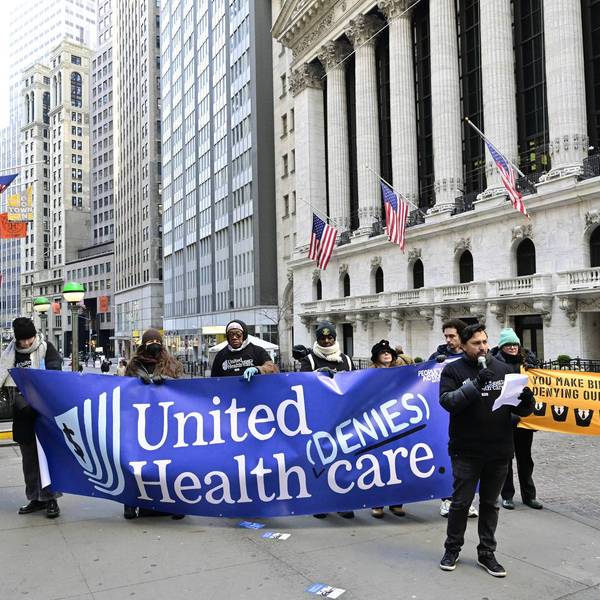
To highlight these startling mutations, NNU is sponsoring radio ads, videos, legislation, and holding rallies, marches and other street actions across the country to warn patients and communities what they may face the next time they are at their most vulnerable.
One of the biggest dangerous developments is the proliferation of unproven medical technology.
"FRANK" and company shine a light on computer care at the bedside with only a modicum of hyperbole.
You may think "Frank," as in "Formatted Recognition Analysis, Non-Human Konclusion," bears little resemblance to reality.
But every day RNs see "clinical decision" type systems on which hospital executives are spending hundreds of millions of dollars that spit out an instant diagnosis, prognosis and treatment protocol that may bear little correspondence to your actual condition and treatment need.
Increasingly, the computers rely on a concept known as "population health," in which the diagnosis, prognosis and treatment recommendations are based on factors common to a broad swatch of similar people.
When the patient in our "Personalized Care" ad asks for a registered nurse - not the computer and its algorithms - the hospital executive blandly explains the algorithms "tell us what disease you should have based on what other patients have had."
"That makes no sense. I'm not other patients. I'm me!" our patient says crying out for help.
"Look it's not all about You!" the executive retorts. "We've spent millions on algorithms, software, computers."
So, you're only as sick, as someone else with a similar symptom, regardless of what other health problems you may have. And your outlook for recovery, and what care, if any, you receive, is increasingly determined by others that fit your "profile," not your own health status.
Thus the crux of this trend with individualized care fading away as hospitals spend instead on experimental medical technology.
Much of the medical technology is being promoted as the cure all for everything that ails our broken healthcare system from medical errors to how to cut healthcare costs.
Too often technology fails on all those counts. Unsafe staffing is a far more common cause of medical errors, and, as noted, when hospitals spend millions, even billions system-wide, on unproven technology, they are driving up costs, not cutting them.
Unfortunately, there are substantial federal financial incentives within the 2009 stimulus bill. The federal government has handed out more than $23 billion in incentive payments to hospital implementing Electronic Health Records systems, which are linked to the bedside computers, since 2011, it was reported last week.
It's worth emphasizing that the device manufacturers and other industry lobbyists pushed for the federal handouts, as the Washington Post noted, "in a sophisticated, decade-long campaign to shape public opinion and win over Washington's political machinery."
Our video has a happy ending, when an actual RN, Bonnie Castillo, enters the room and tells the hospital billing director, "FRANK," and "Steve," the "highly cost-effective computer technician" to "Move! Now!," get out of the way and get human help.
Other ads in this campaign talk about the hospital's emphasis on collecting your bill and then working to kick you out the door as quickly as possible, and the essential role of having an RN at the bedside. Check out the whole series here.
The ads are a reminder that "when it matters most, insist on a registered nurse." That's one way to respond to the latest assault wave on care from a depersonalized system that is far more focused on its profits than your care.
Dear Common Dreams reader, It’s been nearly 30 years since I co-founded Common Dreams with my late wife, Lina Newhouser. We had the radical notion that journalism should serve the public good, not corporate profits. It was clear to us from the outset what it would take to build such a project. No paid advertisements. No corporate sponsors. No millionaire publisher telling us what to think or do. Many people said we wouldn't last a year, but we proved those doubters wrong. Together with a tremendous team of journalists and dedicated staff, we built an independent media outlet free from the constraints of profits and corporate control. Our mission has always been simple: To inform. To inspire. To ignite change for the common good. Building Common Dreams was not easy. Our survival was never guaranteed. When you take on the most powerful forces—Wall Street greed, fossil fuel industry destruction, Big Tech lobbyists, and uber-rich oligarchs who have spent billions upon billions rigging the economy and democracy in their favor—the only bulwark you have is supporters who believe in your work. But here’s the urgent message from me today. It's never been this bad out there. And it's never been this hard to keep us going. At the very moment Common Dreams is most needed, the threats we face are intensifying. We need your support now more than ever. We don't accept corporate advertising and never will. We don't have a paywall because we don't think people should be blocked from critical news based on their ability to pay. Everything we do is funded by the donations of readers like you. When everyone does the little they can afford, we are strong. But if that support retreats or dries up, so do we. Will you donate now to make sure Common Dreams not only survives but thrives? —Craig Brown, Co-founder |
National Nurses United: Nurses vs.Computer Care Ad (HD)See more ads and learn more at: https://www.InsistOnAnRN.org Nurses Vs. Computer Care - Healthcare is changing. And not for ...
Noticed how little in the healthcare debate we hear one word that should be at its center - care?
Nurses have noticed, and are alarmed at worrisome changes now putting patients at risk.
A new video from National Nurses United starring the decidedly non-personal "FRANK" is a humorous or not so humorous glimpse into one of the most troubling mutations.
Largely away from the media focus on websites and insurance markets, hospitals, with a helping hand from insurers and other corporate interests, are, dramatically altering your ability to get the care you need.
They're even re-defining what it means to be sick.
For those reasons and more, NNU has launched a public advocacy campaign as an alert about sweeping changes in the healthcare delivery system that are occurring far outside the media spotlight, but frighteningly real to nurses and many patients alike.
To highlight these startling mutations, NNU is sponsoring radio ads, videos, legislation, and holding rallies, marches and other street actions across the country to warn patients and communities what they may face the next time they are at their most vulnerable.
One of the biggest dangerous developments is the proliferation of unproven medical technology.
"FRANK" and company shine a light on computer care at the bedside with only a modicum of hyperbole.
You may think "Frank," as in "Formatted Recognition Analysis, Non-Human Konclusion," bears little resemblance to reality.
But every day RNs see "clinical decision" type systems on which hospital executives are spending hundreds of millions of dollars that spit out an instant diagnosis, prognosis and treatment protocol that may bear little correspondence to your actual condition and treatment need.
Increasingly, the computers rely on a concept known as "population health," in which the diagnosis, prognosis and treatment recommendations are based on factors common to a broad swatch of similar people.
When the patient in our "Personalized Care" ad asks for a registered nurse - not the computer and its algorithms - the hospital executive blandly explains the algorithms "tell us what disease you should have based on what other patients have had."
"That makes no sense. I'm not other patients. I'm me!" our patient says crying out for help.
"Look it's not all about You!" the executive retorts. "We've spent millions on algorithms, software, computers."
So, you're only as sick, as someone else with a similar symptom, regardless of what other health problems you may have. And your outlook for recovery, and what care, if any, you receive, is increasingly determined by others that fit your "profile," not your own health status.
Thus the crux of this trend with individualized care fading away as hospitals spend instead on experimental medical technology.
Much of the medical technology is being promoted as the cure all for everything that ails our broken healthcare system from medical errors to how to cut healthcare costs.
Too often technology fails on all those counts. Unsafe staffing is a far more common cause of medical errors, and, as noted, when hospitals spend millions, even billions system-wide, on unproven technology, they are driving up costs, not cutting them.
Unfortunately, there are substantial federal financial incentives within the 2009 stimulus bill. The federal government has handed out more than $23 billion in incentive payments to hospital implementing Electronic Health Records systems, which are linked to the bedside computers, since 2011, it was reported last week.
It's worth emphasizing that the device manufacturers and other industry lobbyists pushed for the federal handouts, as the Washington Post noted, "in a sophisticated, decade-long campaign to shape public opinion and win over Washington's political machinery."
Our video has a happy ending, when an actual RN, Bonnie Castillo, enters the room and tells the hospital billing director, "FRANK," and "Steve," the "highly cost-effective computer technician" to "Move! Now!," get out of the way and get human help.
Other ads in this campaign talk about the hospital's emphasis on collecting your bill and then working to kick you out the door as quickly as possible, and the essential role of having an RN at the bedside. Check out the whole series here.
The ads are a reminder that "when it matters most, insist on a registered nurse." That's one way to respond to the latest assault wave on care from a depersonalized system that is far more focused on its profits than your care.
National Nurses United: Nurses vs.Computer Care Ad (HD)See more ads and learn more at: https://www.InsistOnAnRN.org Nurses Vs. Computer Care - Healthcare is changing. And not for ...
Noticed how little in the healthcare debate we hear one word that should be at its center - care?
Nurses have noticed, and are alarmed at worrisome changes now putting patients at risk.
A new video from National Nurses United starring the decidedly non-personal "FRANK" is a humorous or not so humorous glimpse into one of the most troubling mutations.
Largely away from the media focus on websites and insurance markets, hospitals, with a helping hand from insurers and other corporate interests, are, dramatically altering your ability to get the care you need.
They're even re-defining what it means to be sick.
For those reasons and more, NNU has launched a public advocacy campaign as an alert about sweeping changes in the healthcare delivery system that are occurring far outside the media spotlight, but frighteningly real to nurses and many patients alike.
To highlight these startling mutations, NNU is sponsoring radio ads, videos, legislation, and holding rallies, marches and other street actions across the country to warn patients and communities what they may face the next time they are at their most vulnerable.
One of the biggest dangerous developments is the proliferation of unproven medical technology.
"FRANK" and company shine a light on computer care at the bedside with only a modicum of hyperbole.
You may think "Frank," as in "Formatted Recognition Analysis, Non-Human Konclusion," bears little resemblance to reality.
But every day RNs see "clinical decision" type systems on which hospital executives are spending hundreds of millions of dollars that spit out an instant diagnosis, prognosis and treatment protocol that may bear little correspondence to your actual condition and treatment need.
Increasingly, the computers rely on a concept known as "population health," in which the diagnosis, prognosis and treatment recommendations are based on factors common to a broad swatch of similar people.
When the patient in our "Personalized Care" ad asks for a registered nurse - not the computer and its algorithms - the hospital executive blandly explains the algorithms "tell us what disease you should have based on what other patients have had."
"That makes no sense. I'm not other patients. I'm me!" our patient says crying out for help.
"Look it's not all about You!" the executive retorts. "We've spent millions on algorithms, software, computers."
So, you're only as sick, as someone else with a similar symptom, regardless of what other health problems you may have. And your outlook for recovery, and what care, if any, you receive, is increasingly determined by others that fit your "profile," not your own health status.
Thus the crux of this trend with individualized care fading away as hospitals spend instead on experimental medical technology.
Much of the medical technology is being promoted as the cure all for everything that ails our broken healthcare system from medical errors to how to cut healthcare costs.
Too often technology fails on all those counts. Unsafe staffing is a far more common cause of medical errors, and, as noted, when hospitals spend millions, even billions system-wide, on unproven technology, they are driving up costs, not cutting them.
Unfortunately, there are substantial federal financial incentives within the 2009 stimulus bill. The federal government has handed out more than $23 billion in incentive payments to hospital implementing Electronic Health Records systems, which are linked to the bedside computers, since 2011, it was reported last week.
It's worth emphasizing that the device manufacturers and other industry lobbyists pushed for the federal handouts, as the Washington Post noted, "in a sophisticated, decade-long campaign to shape public opinion and win over Washington's political machinery."
Our video has a happy ending, when an actual RN, Bonnie Castillo, enters the room and tells the hospital billing director, "FRANK," and "Steve," the "highly cost-effective computer technician" to "Move! Now!," get out of the way and get human help.
Other ads in this campaign talk about the hospital's emphasis on collecting your bill and then working to kick you out the door as quickly as possible, and the essential role of having an RN at the bedside. Check out the whole series here.
The ads are a reminder that "when it matters most, insist on a registered nurse." That's one way to respond to the latest assault wave on care from a depersonalized system that is far more focused on its profits than your care.