

SUBSCRIBE TO OUR FREE NEWSLETTER
Daily news & progressive opinion—funded by the people, not the corporations—delivered straight to your inbox.
5
#000000
#FFFFFF
To donate by check, phone, or other method, see our More Ways to Give page.
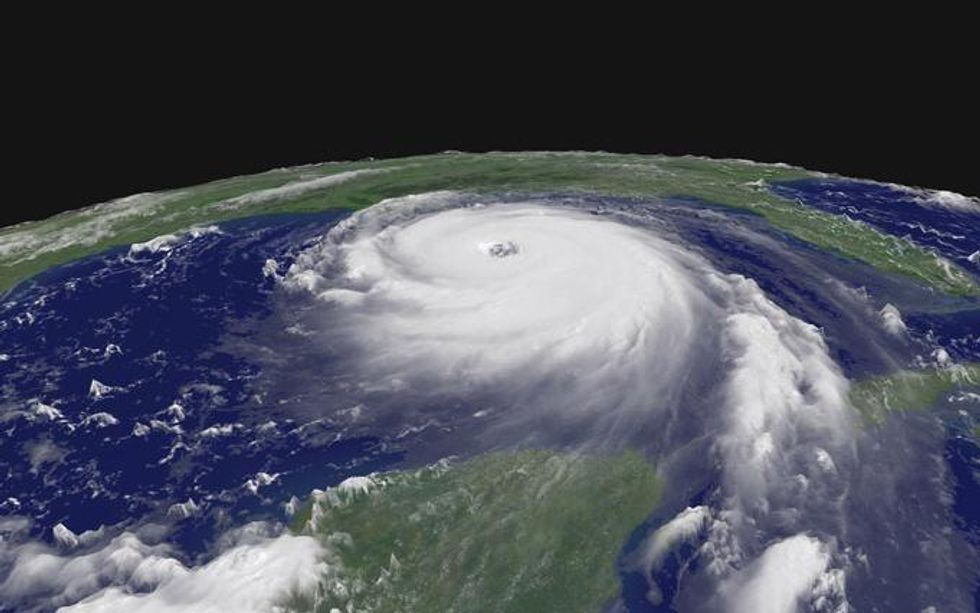
In a time when we still regularly hear tired, old, polluter-generated talking points questioning climate change, Kerry called on us to trust the 97 percent. That is the 97 percent of scientists who say that climate change is real and largely due to our dependence on oil and coal. Making the rapid pace of climate change real, Kerry pointed out that "all 10 of the hottest years on record have actually happened since Google went online in 1998."
We know that climate change is causing sea rise, end of species, ocean acidification, water shortages, fundamental transformation in agriculture, and extreme weather events. Kerry pointed out that the economic costs of climate change are massive - both from the cost of rebuilding and the "potentially catastrophic effects on the global supply chain." And he urged us not to waste time debating whose responsibility it is to act. Although with this Kerry was calling on countries around the world to step up, I would add that this should also be a call to corporations and especially to the fossil fuel industry. Just as some countries such as the United States "contribute more to the problem and therefore must also contribute more to the solution", some industries also contribute more to the problem and need to change their way of working if we are to reach solutions to climate change.
Pushing back against those who questioned the cost of a transition to clean energy, Kerry said it is an opportunity and reminded that the "devastating human toll pollution takes comes with a hefty price tag." He urged governments around the world to "look further down the road" and factor in "the long-term cost of carbon pollution" and "the cost of survival." And he turned the cost complaints on their head reminding us that "If the worst case scenario never materializes, the steps that we are urging will still leave our air and water cleaner, our food supply more secure, and our populations healthier. Meanwhile, if 97 percent of scientists happen to be correct, and the naysayers are wrong, then we will have thwarted one of the gravest threats to our planet."
Kerry himself noted how appalling it is that so little has changed since the international agreement to tackle climate change in 1992 and blamed lack of political resolve. He noted that "as a result of this complacency, last year the amount of carbon dioxide in our atmosphere reached the highest point in human history - despite all of the warnings."
So, does this speech herald a change in US diplomacy? The launch of this "series of discussions" on the urgency of climate change comes as we have seen climate change more and more integrated into President Obama's speeches at home and Secretary Kerry's foreign policy meetings around the world. Kerry said that he is instructing Chiefs of Missions at US embassies around the world to "make climate change a top priority and to use all the tools of diplomacy they have at their disposal to address this threat". Beyond that, Kerry pointed to the actions that the US is taking including curbing carbon pollution at its source in our cars, trucks and power plants. He talked about using bilateral discussions such as those with China to strengthen climate action and to lay a better groundwork for the international climate negotiations. He said that we need to stop incentives to climate polluting coal and oil. Kerry's speech should also mean putting a stop to dirty energy infrastructure projects such as the proposed Keystone XL pipeline that would drive expansion of the carbon-intensive tar sands oil production.
In a time when we still regularly hear tired, old, polluter-generated talking points questioning climate change, Kerry called on us to trust the 97 percent. That is the 97 percent of scientists who say that climate change is real and largely due to our dependence on oil and coal. Making the rapid pace of climate change real, Kerry pointed out that "all 10 of the hottest years on record have actually happened since Google went online in 1998."
We know that climate change is causing sea rise, end of species, ocean acidification, water shortages, fundamental transformation in agriculture, and extreme weather events. Kerry pointed out that the economic costs of climate change are massive - both from the cost of rebuilding and the "potentially catastrophic effects on the global supply chain." And he urged us not to waste time debating whose responsibility it is to act. Although with this Kerry was calling on countries around the world to step up, I would add that this should also be a call to corporations and especially to the fossil fuel industry. Just as some countries such as the United States "contribute more to the problem and therefore must also contribute more to the solution", some industries also contribute more to the problem and need to change their way of working if we are to reach solutions to climate change.
Pushing back against those who questioned the cost of a transition to clean energy, Kerry said it is an opportunity and reminded that the "devastating human toll pollution takes comes with a hefty price tag." He urged governments around the world to "look further down the road" and factor in "the long-term cost of carbon pollution" and "the cost of survival." And he turned the cost complaints on their head reminding us that "If the worst case scenario never materializes, the steps that we are urging will still leave our air and water cleaner, our food supply more secure, and our populations healthier. Meanwhile, if 97 percent of scientists happen to be correct, and the naysayers are wrong, then we will have thwarted one of the gravest threats to our planet."
Kerry himself noted how appalling it is that so little has changed since the international agreement to tackle climate change in 1992 and blamed lack of political resolve. He noted that "as a result of this complacency, last year the amount of carbon dioxide in our atmosphere reached the highest point in human history - despite all of the warnings."
So, does this speech herald a change in US diplomacy? The launch of this "series of discussions" on the urgency of climate change comes as we have seen climate change more and more integrated into President Obama's speeches at home and Secretary Kerry's foreign policy meetings around the world. Kerry said that he is instructing Chiefs of Missions at US embassies around the world to "make climate change a top priority and to use all the tools of diplomacy they have at their disposal to address this threat". Beyond that, Kerry pointed to the actions that the US is taking including curbing carbon pollution at its source in our cars, trucks and power plants. He talked about using bilateral discussions such as those with China to strengthen climate action and to lay a better groundwork for the international climate negotiations. He said that we need to stop incentives to climate polluting coal and oil. Kerry's speech should also mean putting a stop to dirty energy infrastructure projects such as the proposed Keystone XL pipeline that would drive expansion of the carbon-intensive tar sands oil production.
In a time when we still regularly hear tired, old, polluter-generated talking points questioning climate change, Kerry called on us to trust the 97 percent. That is the 97 percent of scientists who say that climate change is real and largely due to our dependence on oil and coal. Making the rapid pace of climate change real, Kerry pointed out that "all 10 of the hottest years on record have actually happened since Google went online in 1998."
We know that climate change is causing sea rise, end of species, ocean acidification, water shortages, fundamental transformation in agriculture, and extreme weather events. Kerry pointed out that the economic costs of climate change are massive - both from the cost of rebuilding and the "potentially catastrophic effects on the global supply chain." And he urged us not to waste time debating whose responsibility it is to act. Although with this Kerry was calling on countries around the world to step up, I would add that this should also be a call to corporations and especially to the fossil fuel industry. Just as some countries such as the United States "contribute more to the problem and therefore must also contribute more to the solution", some industries also contribute more to the problem and need to change their way of working if we are to reach solutions to climate change.
Pushing back against those who questioned the cost of a transition to clean energy, Kerry said it is an opportunity and reminded that the "devastating human toll pollution takes comes with a hefty price tag." He urged governments around the world to "look further down the road" and factor in "the long-term cost of carbon pollution" and "the cost of survival." And he turned the cost complaints on their head reminding us that "If the worst case scenario never materializes, the steps that we are urging will still leave our air and water cleaner, our food supply more secure, and our populations healthier. Meanwhile, if 97 percent of scientists happen to be correct, and the naysayers are wrong, then we will have thwarted one of the gravest threats to our planet."
Kerry himself noted how appalling it is that so little has changed since the international agreement to tackle climate change in 1992 and blamed lack of political resolve. He noted that "as a result of this complacency, last year the amount of carbon dioxide in our atmosphere reached the highest point in human history - despite all of the warnings."
So, does this speech herald a change in US diplomacy? The launch of this "series of discussions" on the urgency of climate change comes as we have seen climate change more and more integrated into President Obama's speeches at home and Secretary Kerry's foreign policy meetings around the world. Kerry said that he is instructing Chiefs of Missions at US embassies around the world to "make climate change a top priority and to use all the tools of diplomacy they have at their disposal to address this threat". Beyond that, Kerry pointed to the actions that the US is taking including curbing carbon pollution at its source in our cars, trucks and power plants. He talked about using bilateral discussions such as those with China to strengthen climate action and to lay a better groundwork for the international climate negotiations. He said that we need to stop incentives to climate polluting coal and oil. Kerry's speech should also mean putting a stop to dirty energy infrastructure projects such as the proposed Keystone XL pipeline that would drive expansion of the carbon-intensive tar sands oil production.

