The Need for a Peace Narrative in the Middle East
Growing up in Tucuman, a town in the North of Argentina, I had the opportunity to see a small example of peaceful coexistence and collaboration between Arabs and Jews. I was reminded of that experience after reading an article by Uri Avnery, one of the leading peace activists in Israel, on the need for a peace narrative in the Middle East.

Tucuman, a medium-size city in the North of Argentina received numerous immigrants (among them my father) who came to that city at the beginning of the last century, notably among them citizens from Arab countries. The city also had a substantial Jewish population.
In the downtown area there was a stretch of several blocks called "la Maipu" after the name of its main street. What made this part of the city so unusual is that dozens of shops owned by both Arabs and Jews existed there. I don't remember of a single incident of violence between both communities while I lived there. In some cases, the shop owners from both communities collaborated with each other because of shared commercial interests.
In the 1950s, my father, together with two friends, founded what they called the "Cultural Atheneum Gibran Halil Gibran" named after the famous Lebanese writer. Its main purpose the organization of lectures by noted speakers, like Literature Nobel Prize winner Miguel Angel Asturias and such famous Argentinean writers as Ernesto Sabato and Ezequiel Martinez Estrada.
Because of the high intellectual caliber of the lecturers these events were very well attended -even though there was a relatively high entrance fee- by students, professors and a cultured general public.
Many of the lectures were presented at the Sociedad Sirio Libanesa (Syrian and Lebanese Society) long before the painful schism between the two countries. At the time, there was considerable unease among the Society's directors about permitting Jewish intellectuals to attend the lectures.
Because of my father's untiring efforts, however, Jewish students and teachers were allowed to participate in those events, something that had never happened before. In both cases, commercial and cultural common interests allowed both Arabs and Jews to collaborate, overcoming traditional distrust. A common-interest narrative had been developed, one leading to a totally peaceful relationship between both communities.
If a common narrative could be created then, can one be created now in the Middle East based on the common need for peace? I believe it can, but only if each side of the conflict is able to see the other in real terms, not in the usual demonizing terms created by decades of antagonism.
Uri Avnery, a leading peace activist in Israel, argues that this lack of a common focus is the main block to peace now in the Middle East. "Reconciliation is impossible if either side is totally oblivious to the narrative of the other, their history, beliefs, perceptions, myths," argues Avnery. And he adds, "Only if the American intermediaries, neutral or otherwise, understand both can they contribute to furthering peace."
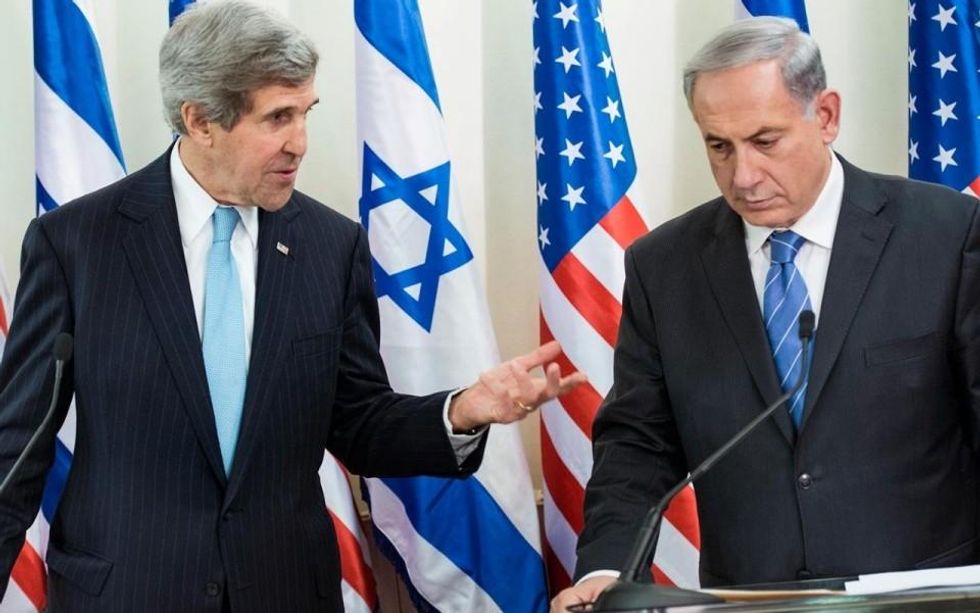
Avnery's thoughts are particularly valid now, when US Secretary of State John Kerry is ceaselessly trying to keep peace negotiations alive between Israelis and Palestinians. I continue to wonder if, in my hometown, thousands of miles away from the Middle East, a common narrative was found based on shared commercial and cultural interests, why the same couldn't occur now, based on the more important goal of peace between both peoples?

An Urgent Message From Our Co-Founder
Dear Common Dreams reader, The U.S. is on a fast track to authoritarianism like nothing I've ever seen. Meanwhile, corporate news outlets are utterly capitulating to Trump, twisting their coverage to avoid drawing his ire while lining up to stuff cash in his pockets. That's why I believe that Common Dreams is doing the best and most consequential reporting that we've ever done. Our small but mighty team is a progressive reporting powerhouse, covering the news every day that the corporate media never will. Our mission has always been simple: To inform. To inspire. And to ignite change for the common good. Now here's the key piece that I want all our readers to understand: None of this would be possible without your financial support. That's not just some fundraising cliche. It's the absolute and literal truth. We don't accept corporate advertising and never will. We don't have a paywall because we don't think people should be blocked from critical news based on their ability to pay. Everything we do is funded by the donations of readers like you. Will you donate now to help power the nonprofit, independent reporting of Common Dreams? Thank you for being a vital member of our community. Together, we can keep independent journalism alive when it’s needed most. - Craig Brown, Co-founder |
Growing up in Tucuman, a town in the North of Argentina, I had the opportunity to see a small example of peaceful coexistence and collaboration between Arabs and Jews. I was reminded of that experience after reading an article by Uri Avnery, one of the leading peace activists in Israel, on the need for a peace narrative in the Middle East.

Tucuman, a medium-size city in the North of Argentina received numerous immigrants (among them my father) who came to that city at the beginning of the last century, notably among them citizens from Arab countries. The city also had a substantial Jewish population.
In the downtown area there was a stretch of several blocks called "la Maipu" after the name of its main street. What made this part of the city so unusual is that dozens of shops owned by both Arabs and Jews existed there. I don't remember of a single incident of violence between both communities while I lived there. In some cases, the shop owners from both communities collaborated with each other because of shared commercial interests.
In the 1950s, my father, together with two friends, founded what they called the "Cultural Atheneum Gibran Halil Gibran" named after the famous Lebanese writer. Its main purpose the organization of lectures by noted speakers, like Literature Nobel Prize winner Miguel Angel Asturias and such famous Argentinean writers as Ernesto Sabato and Ezequiel Martinez Estrada.
Because of the high intellectual caliber of the lecturers these events were very well attended -even though there was a relatively high entrance fee- by students, professors and a cultured general public.
Many of the lectures were presented at the Sociedad Sirio Libanesa (Syrian and Lebanese Society) long before the painful schism between the two countries. At the time, there was considerable unease among the Society's directors about permitting Jewish intellectuals to attend the lectures.
Because of my father's untiring efforts, however, Jewish students and teachers were allowed to participate in those events, something that had never happened before. In both cases, commercial and cultural common interests allowed both Arabs and Jews to collaborate, overcoming traditional distrust. A common-interest narrative had been developed, one leading to a totally peaceful relationship between both communities.
If a common narrative could be created then, can one be created now in the Middle East based on the common need for peace? I believe it can, but only if each side of the conflict is able to see the other in real terms, not in the usual demonizing terms created by decades of antagonism.
Uri Avnery, a leading peace activist in Israel, argues that this lack of a common focus is the main block to peace now in the Middle East. "Reconciliation is impossible if either side is totally oblivious to the narrative of the other, their history, beliefs, perceptions, myths," argues Avnery. And he adds, "Only if the American intermediaries, neutral or otherwise, understand both can they contribute to furthering peace."
Avnery's thoughts are particularly valid now, when US Secretary of State John Kerry is ceaselessly trying to keep peace negotiations alive between Israelis and Palestinians. I continue to wonder if, in my hometown, thousands of miles away from the Middle East, a common narrative was found based on shared commercial and cultural interests, why the same couldn't occur now, based on the more important goal of peace between both peoples?
Growing up in Tucuman, a town in the North of Argentina, I had the opportunity to see a small example of peaceful coexistence and collaboration between Arabs and Jews. I was reminded of that experience after reading an article by Uri Avnery, one of the leading peace activists in Israel, on the need for a peace narrative in the Middle East.

Tucuman, a medium-size city in the North of Argentina received numerous immigrants (among them my father) who came to that city at the beginning of the last century, notably among them citizens from Arab countries. The city also had a substantial Jewish population.
In the downtown area there was a stretch of several blocks called "la Maipu" after the name of its main street. What made this part of the city so unusual is that dozens of shops owned by both Arabs and Jews existed there. I don't remember of a single incident of violence between both communities while I lived there. In some cases, the shop owners from both communities collaborated with each other because of shared commercial interests.
In the 1950s, my father, together with two friends, founded what they called the "Cultural Atheneum Gibran Halil Gibran" named after the famous Lebanese writer. Its main purpose the organization of lectures by noted speakers, like Literature Nobel Prize winner Miguel Angel Asturias and such famous Argentinean writers as Ernesto Sabato and Ezequiel Martinez Estrada.
Because of the high intellectual caliber of the lecturers these events were very well attended -even though there was a relatively high entrance fee- by students, professors and a cultured general public.
Many of the lectures were presented at the Sociedad Sirio Libanesa (Syrian and Lebanese Society) long before the painful schism between the two countries. At the time, there was considerable unease among the Society's directors about permitting Jewish intellectuals to attend the lectures.
Because of my father's untiring efforts, however, Jewish students and teachers were allowed to participate in those events, something that had never happened before. In both cases, commercial and cultural common interests allowed both Arabs and Jews to collaborate, overcoming traditional distrust. A common-interest narrative had been developed, one leading to a totally peaceful relationship between both communities.
If a common narrative could be created then, can one be created now in the Middle East based on the common need for peace? I believe it can, but only if each side of the conflict is able to see the other in real terms, not in the usual demonizing terms created by decades of antagonism.
Uri Avnery, a leading peace activist in Israel, argues that this lack of a common focus is the main block to peace now in the Middle East. "Reconciliation is impossible if either side is totally oblivious to the narrative of the other, their history, beliefs, perceptions, myths," argues Avnery. And he adds, "Only if the American intermediaries, neutral or otherwise, understand both can they contribute to furthering peace."
Avnery's thoughts are particularly valid now, when US Secretary of State John Kerry is ceaselessly trying to keep peace negotiations alive between Israelis and Palestinians. I continue to wonder if, in my hometown, thousands of miles away from the Middle East, a common narrative was found based on shared commercial and cultural interests, why the same couldn't occur now, based on the more important goal of peace between both peoples?