

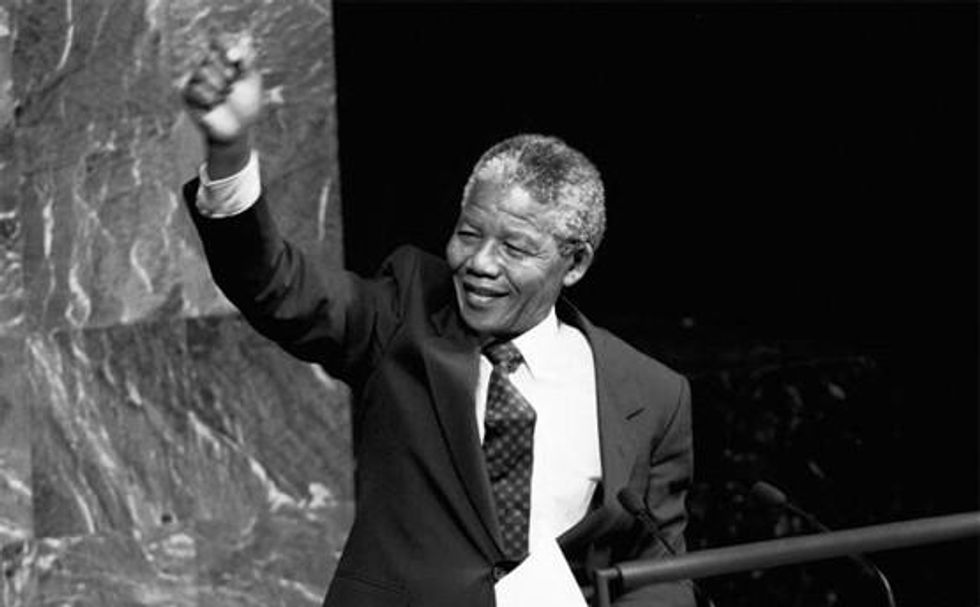
We celebrate Mandela most of all for the extraordinary compassion and courage with which he reached out to his former oppressors in a spirit of forgiveness. He acknowledged their common humanity and welcomed their participation in forging a new "rainbow" nation. He exemplified, along with Gandhi and Martin Luther King Jr., the highest and best of what it means to be human.
The system imprisoned both the jailers and the jailed.
Although I never had the privilege of meeting Nelson Mandela, I did meet leaders of the African National Congress (ANC) who spent time with Mandela during his 27 years in prison and subsequently joined him in leading South Africa's post-apartheid government.
It was in January 1992, during the historic transition period that followed Mandela's release from prison. I traveled to South Africa at the invitation of the Business School at the University of the Witwatersrand to speak at a workshop organized to prepare a group of ANC leaders for their roles in the new government. Several had been in prison with Mandela.
They were clearly men of intelligence and ability who looked more to the future than to the past. Apart from their passionate commitment to creating a new South Africa, they seemed much like the participants I had encountered in previous management seminars for successful executives. As I recall, they made no mention in the workshop of their years of forced isolation or the physical and mental abuse they endured at the hands of their jailers.
Outside of class, we did have some conversations about their prison experience. But even there, I don't recall a word of resentment or anger against their cruel and racist jailers.
What I do recall is their deep sense that those on both sides of the apartheid struggle were victims of an unjust system that suppressed the realization of their full humanity. In effect, the system imprisoned both the jailers and the jailed. They showed a profound and universal insight into the consequences of Apartheid's systemic injustice. It's an insight that applies with equal force to today's global economic system, which suppresses the humanity of both its winners and its losers.
Even now, the depth and beauty of the wisdom, compassion, and humanity of the ANC leaders I had the privilege of meeting in 1992 brings tears to my eyes. Never before and never since have I experienced such wisdom and spiritual maturity. I came away with a new hope for humanity and regularly look back on this encounter as an inspiring demonstration of human possibility.
I never met Mandela, but I look back on this experience with a sense that I at least had a brief encounter with his
extraordinary spirit.
________________________________
This article was written for YES! Magazine, a national, nonprofit media organization that fuses powerful ideas and practical actions.
We celebrate Mandela most of all for the extraordinary compassion and courage with which he reached out to his former oppressors in a spirit of forgiveness. He acknowledged their common humanity and welcomed their participation in forging a new "rainbow" nation. He exemplified, along with Gandhi and Martin Luther King Jr., the highest and best of what it means to be human.
The system imprisoned both the jailers and the jailed.
Although I never had the privilege of meeting Nelson Mandela, I did meet leaders of the African National Congress (ANC) who spent time with Mandela during his 27 years in prison and subsequently joined him in leading South Africa's post-apartheid government.
It was in January 1992, during the historic transition period that followed Mandela's release from prison. I traveled to South Africa at the invitation of the Business School at the University of the Witwatersrand to speak at a workshop organized to prepare a group of ANC leaders for their roles in the new government. Several had been in prison with Mandela.
They were clearly men of intelligence and ability who looked more to the future than to the past. Apart from their passionate commitment to creating a new South Africa, they seemed much like the participants I had encountered in previous management seminars for successful executives. As I recall, they made no mention in the workshop of their years of forced isolation or the physical and mental abuse they endured at the hands of their jailers.
Outside of class, we did have some conversations about their prison experience. But even there, I don't recall a word of resentment or anger against their cruel and racist jailers.
What I do recall is their deep sense that those on both sides of the apartheid struggle were victims of an unjust system that suppressed the realization of their full humanity. In effect, the system imprisoned both the jailers and the jailed. They showed a profound and universal insight into the consequences of Apartheid's systemic injustice. It's an insight that applies with equal force to today's global economic system, which suppresses the humanity of both its winners and its losers.
Even now, the depth and beauty of the wisdom, compassion, and humanity of the ANC leaders I had the privilege of meeting in 1992 brings tears to my eyes. Never before and never since have I experienced such wisdom and spiritual maturity. I came away with a new hope for humanity and regularly look back on this encounter as an inspiring demonstration of human possibility.
I never met Mandela, but I look back on this experience with a sense that I at least had a brief encounter with his
extraordinary spirit.
________________________________
This article was written for YES! Magazine, a national, nonprofit media organization that fuses powerful ideas and practical actions.
We celebrate Mandela most of all for the extraordinary compassion and courage with which he reached out to his former oppressors in a spirit of forgiveness. He acknowledged their common humanity and welcomed their participation in forging a new "rainbow" nation. He exemplified, along with Gandhi and Martin Luther King Jr., the highest and best of what it means to be human.
The system imprisoned both the jailers and the jailed.
Although I never had the privilege of meeting Nelson Mandela, I did meet leaders of the African National Congress (ANC) who spent time with Mandela during his 27 years in prison and subsequently joined him in leading South Africa's post-apartheid government.
It was in January 1992, during the historic transition period that followed Mandela's release from prison. I traveled to South Africa at the invitation of the Business School at the University of the Witwatersrand to speak at a workshop organized to prepare a group of ANC leaders for their roles in the new government. Several had been in prison with Mandela.
They were clearly men of intelligence and ability who looked more to the future than to the past. Apart from their passionate commitment to creating a new South Africa, they seemed much like the participants I had encountered in previous management seminars for successful executives. As I recall, they made no mention in the workshop of their years of forced isolation or the physical and mental abuse they endured at the hands of their jailers.
Outside of class, we did have some conversations about their prison experience. But even there, I don't recall a word of resentment or anger against their cruel and racist jailers.
What I do recall is their deep sense that those on both sides of the apartheid struggle were victims of an unjust system that suppressed the realization of their full humanity. In effect, the system imprisoned both the jailers and the jailed. They showed a profound and universal insight into the consequences of Apartheid's systemic injustice. It's an insight that applies with equal force to today's global economic system, which suppresses the humanity of both its winners and its losers.
Even now, the depth and beauty of the wisdom, compassion, and humanity of the ANC leaders I had the privilege of meeting in 1992 brings tears to my eyes. Never before and never since have I experienced such wisdom and spiritual maturity. I came away with a new hope for humanity and regularly look back on this encounter as an inspiring demonstration of human possibility.
I never met Mandela, but I look back on this experience with a sense that I at least had a brief encounter with his
extraordinary spirit.
________________________________
This article was written for YES! Magazine, a national, nonprofit media organization that fuses powerful ideas and practical actions.