First, the massive increase in beef and pork exports that have been negotiated will put a terrible strain on our water supplies. Beef producers can now export close to 70,000 tonnes of beef to Europe and an undisclosed but higher amount of pork. Meat production is highly water intensive. It takes over 15 million litres of water to produce one tonne of beef, for example. Already Alberta's dwindling water supplies are over-taxed by a beef industry that is rapidly expanding and expected to double its water footprint by 2025, according to an assessment done before this deal was signed. Intensive hog operations in Manitoba are killing Lake Winnipeg, their waste creating nutrient overload that covers over half the lake in blue green algae. To protect our precious watersheds, what we need is more sustainable and local food production, not massive new trade deals that will strain our water sources beyond their capacity.
Second, this deal will give French companies Suez and Veolia, the two biggest private water operations in the world, access to run our water services for profit. Under a recent edict, the Harper government has tied federal funding of municipal water infrastructure construction or upgrading to privatization of water services. Cash-strapped municipalities can only access federal funds if they adopt a public-private partnership model, and several cities have recently put their water or wastewater services contracts up for private bids. If Suez or Veolia are successful in bidding for these contracts (and under the new deal, local governments cannot favour local bidders) and a future city council decides it wants to move back to a public system, as municipalities are doing all over the world, these corporations will be able to sue for huge compensation. Private water operators charge far higher rates than public operators and cut corners when it comes to source protection. Privatization of water services violates the essential principle that Canada's water is a public trust.
The same "investor-state" clause contained in the Canada-EU deal poses the third threat to Canada's water. The rules essentially say that if a government introduces new environmental, health or safety rules that were not in place when the foreign corporation made its investment, it has the right to compensation, which a domestic corporation does not have. For instance, an American energy company is suing Canada for $250 million in damages using a similar NAFTA rule because Quebec decided to protect its water by placing a moratorium on fracking. Moreover, transnational corporations are now claiming ownership of the actual water they require in their operations. Another American company successfully sued Ottawa for $130 million for the "water rights" it left behind when it abandoned its pulp and paper operations in Newfoundland, leaving workers without jobs or pensions. The new deal with Europe will give large European corporations similar rights, further eroding the ability of governments to protect our fragile watersheds and ecosystems.
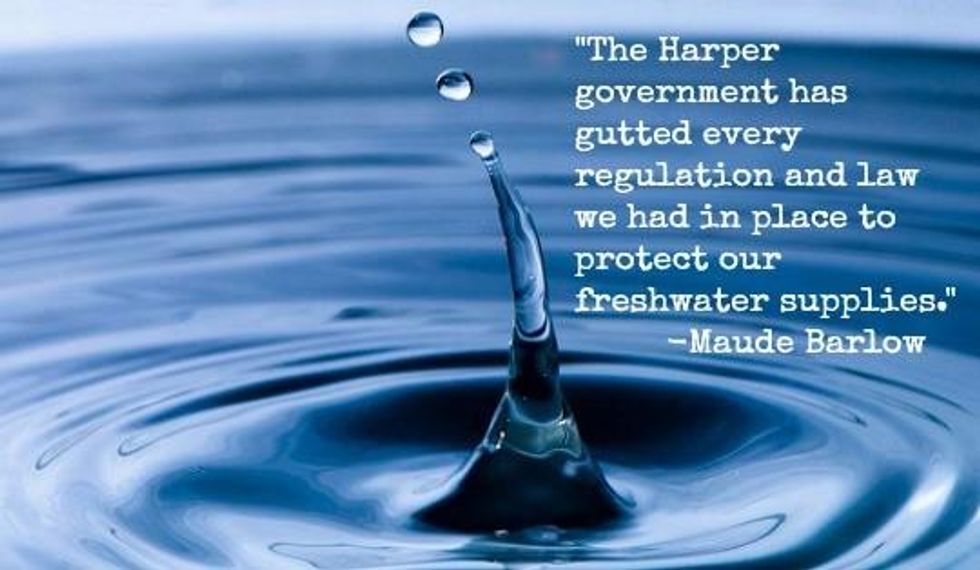
The Harper government has gutted every regulation and law we had in place to protect our freshwater supplies. Now this deregulation is locked in as corporations from Europe as well as the U.S. can soon claim to have invested in an environment without water protection rules and sue any future government that tries to undo the damage.
On a planet running out of clean accessible water, this is a really stupid way to treat our water.
First, the massive increase in beef and pork exports that have been negotiated will put a terrible strain on our water supplies. Beef producers can now export close to 70,000 tonnes of beef to Europe and an undisclosed but higher amount of pork. Meat production is highly water intensive. It takes over 15 million litres of water to produce one tonne of beef, for example. Already Alberta's dwindling water supplies are over-taxed by a beef industry that is rapidly expanding and expected to double its water footprint by 2025, according to an assessment done before this deal was signed. Intensive hog operations in Manitoba are killing Lake Winnipeg, their waste creating nutrient overload that covers over half the lake in blue green algae. To protect our precious watersheds, what we need is more sustainable and local food production, not massive new trade deals that will strain our water sources beyond their capacity.
Second, this deal will give French companies Suez and Veolia, the two biggest private water operations in the world, access to run our water services for profit. Under a recent edict, the Harper government has tied federal funding of municipal water infrastructure construction or upgrading to privatization of water services. Cash-strapped municipalities can only access federal funds if they adopt a public-private partnership model, and several cities have recently put their water or wastewater services contracts up for private bids. If Suez or Veolia are successful in bidding for these contracts (and under the new deal, local governments cannot favour local bidders) and a future city council decides it wants to move back to a public system, as municipalities are doing all over the world, these corporations will be able to sue for huge compensation. Private water operators charge far higher rates than public operators and cut corners when it comes to source protection. Privatization of water services violates the essential principle that Canada's water is a public trust.
The same "investor-state" clause contained in the Canada-EU deal poses the third threat to Canada's water. The rules essentially say that if a government introduces new environmental, health or safety rules that were not in place when the foreign corporation made its investment, it has the right to compensation, which a domestic corporation does not have. For instance, an American energy company is suing Canada for $250 million in damages using a similar NAFTA rule because Quebec decided to protect its water by placing a moratorium on fracking. Moreover, transnational corporations are now claiming ownership of the actual water they require in their operations. Another American company successfully sued Ottawa for $130 million for the "water rights" it left behind when it abandoned its pulp and paper operations in Newfoundland, leaving workers without jobs or pensions. The new deal with Europe will give large European corporations similar rights, further eroding the ability of governments to protect our fragile watersheds and ecosystems.
The Harper government has gutted every regulation and law we had in place to protect our freshwater supplies. Now this deregulation is locked in as corporations from Europe as well as the U.S. can soon claim to have invested in an environment without water protection rules and sue any future government that tries to undo the damage.
On a planet running out of clean accessible water, this is a really stupid way to treat our water.
First, the massive increase in beef and pork exports that have been negotiated will put a terrible strain on our water supplies. Beef producers can now export close to 70,000 tonnes of beef to Europe and an undisclosed but higher amount of pork. Meat production is highly water intensive. It takes over 15 million litres of water to produce one tonne of beef, for example. Already Alberta's dwindling water supplies are over-taxed by a beef industry that is rapidly expanding and expected to double its water footprint by 2025, according to an assessment done before this deal was signed. Intensive hog operations in Manitoba are killing Lake Winnipeg, their waste creating nutrient overload that covers over half the lake in blue green algae. To protect our precious watersheds, what we need is more sustainable and local food production, not massive new trade deals that will strain our water sources beyond their capacity.
Second, this deal will give French companies Suez and Veolia, the two biggest private water operations in the world, access to run our water services for profit. Under a recent edict, the Harper government has tied federal funding of municipal water infrastructure construction or upgrading to privatization of water services. Cash-strapped municipalities can only access federal funds if they adopt a public-private partnership model, and several cities have recently put their water or wastewater services contracts up for private bids. If Suez or Veolia are successful in bidding for these contracts (and under the new deal, local governments cannot favour local bidders) and a future city council decides it wants to move back to a public system, as municipalities are doing all over the world, these corporations will be able to sue for huge compensation. Private water operators charge far higher rates than public operators and cut corners when it comes to source protection. Privatization of water services violates the essential principle that Canada's water is a public trust.
The same "investor-state" clause contained in the Canada-EU deal poses the third threat to Canada's water. The rules essentially say that if a government introduces new environmental, health or safety rules that were not in place when the foreign corporation made its investment, it has the right to compensation, which a domestic corporation does not have. For instance, an American energy company is suing Canada for $250 million in damages using a similar NAFTA rule because Quebec decided to protect its water by placing a moratorium on fracking. Moreover, transnational corporations are now claiming ownership of the actual water they require in their operations. Another American company successfully sued Ottawa for $130 million for the "water rights" it left behind when it abandoned its pulp and paper operations in Newfoundland, leaving workers without jobs or pensions. The new deal with Europe will give large European corporations similar rights, further eroding the ability of governments to protect our fragile watersheds and ecosystems.
The Harper government has gutted every regulation and law we had in place to protect our freshwater supplies. Now this deregulation is locked in as corporations from Europe as well as the U.S. can soon claim to have invested in an environment without water protection rules and sue any future government that tries to undo the damage.
On a planet running out of clean accessible water, this is a really stupid way to treat our water.