

Isn't it high time to amend or repeal the Espionage Act of 1917 so that it can't be used to charge whistle-blowers or journalists with "aiding the enemy"?
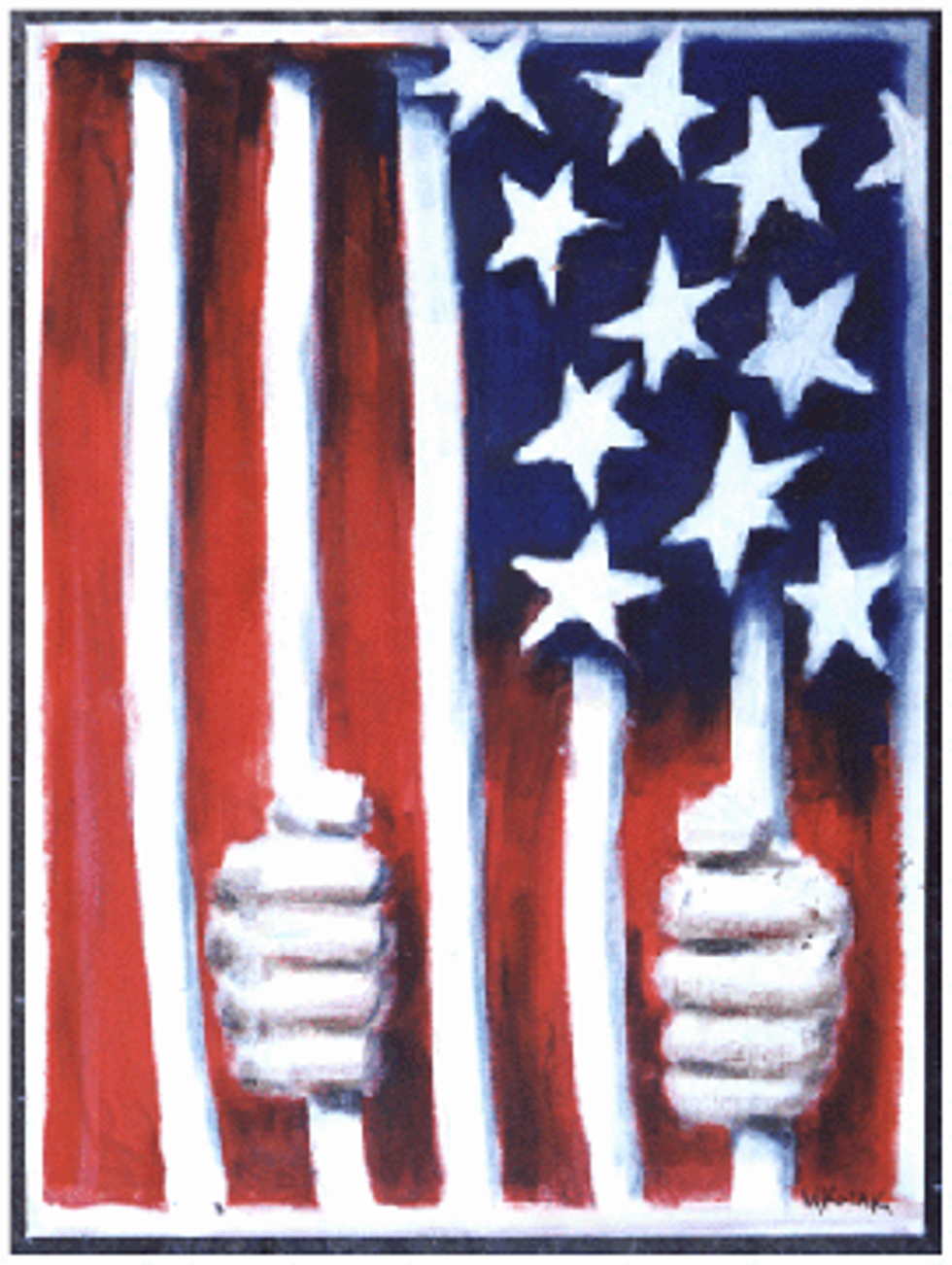
Note that this demand is completely separable from saying that there should be no consequences for whistle-blowers who leak classified information to the media or journalists who publish classified information that is leaked to them. If I say that I am against the death penalty, it does not mean that I am against consequences for people who are found guilty of committing murder. It means that I don't think that execution by the state should be one of those consequences. If I say that I am against the use of incarceration to punish nonviolent drug offenses, it does not mean that I am against consequences for people who are found guilty of nonviolent drug offenses. It means that I don't think that incarceration should be one of those consequences. If I say that I am against a war - or killing Iranian civilians by cutting off their access to essential medicines, in blatant violation of international humanitarian law - to prevent Iran from "acquiring a nuclear weapons capability," [sic] it does not mean that I think that efforts by Iran to pursue a "nuclear weapons capability" should face no consequences. The question is not whether the conduct being sanctioned should face no sanction. The question is whether "the punishment fits the crime."
You don't have to think that Edward Snowden or Bradley Manning or John Kiriakou are heroes - for the record, I do think that they are heroes - and patriots, Mr. President - but if you don't, I still want to recruit you for reform - to say that these men should not have been, and should not be, charged as foreign spies, nor threatened with being so charged. To treat government employees - or government contractors - who leak classified information to the media in the public interest as foreign spies is a deep stain on our democracy. And it's high time to permanently remove this stain.
Bradley Manning was charged with "aiding the enemy" for leaking diplomatic cables to the New York Times and the Guardian via WikiLeaks. He was found not guilty on this charge. American journalism breathed a "sigh of relief" when Manning was acquitted on the charge.
But why should American journalism have been holding its breath in the first place? Manning never should have been charged with this crime. He still potentially faces many decades in prison, showing that the charge was unnecessary to ensure that he faced serious consequences for his actions.
Carrying this law on the books imposes four unacceptable costs:
1. It allows excessive punishment for whistle-blowers. It's one thing to say that someone who breaks law, regulation, or agreement to disclose information in the public interest should be ready to face consequences. It's quite another to say that they should be ready to face being crucified. It's not in the public interest for potential whistle-blowers to face such a high bar of personal courage.
2. It allows an excessive threat to be used as an intimidation tactic to bully a defendant into a guilty plea. You hear it said that Edward Snowden should be ready to face trial in the U.S., and that such a trial would serve the public interest. But you don't learn much from a trial in which a defendant pleads guilty to avoid the prospect of excessive punishment. The threat of prosecution for "aiding the enemy" has been used to intimidate whistle-blowers into pleading guilty to lesser charges.
3. It allows selective prosecution of whistle-blowers on an extreme charge. Government officials who leak classified information in support of government policy face no sanction, while government officials who leak classified information in opposition to government policy face an extreme sanction. This strengthens classification as a tool for suppressing effective dissent.
4. It allows the government and its media apologists to poison public debate by throwing around words like "traitor." Shouldn't we learn something from what just happened in the Snowden case? The government and its media apologists launched a full-court press to brand Snowden a "traitor" in public discourse, not a "whistle-blower," in an attempt to throttle debate about Snowden's disclosures. The prospect of charges of "aiding the enemy" under the Espionage Act was a key tool in this government-media jihad. If the House vote on the Amash-Conyers amendment nearly defunding a piece of the NSA's blanket surveillance didn't prove that Snowden is a whistle-blower, then two plus two has a debatable relationship to four. But we shouldn't need a nearly successful rebellion in the House of Representatives against the leadership of both parties to ensure fair play in public discourse.
The Espionage Act was created by the "liberal" Wilson Administration to silence domestic political criticism of U.S. entry into World War I. Under the Espionage Act, trade union leader Eugene Debs got ten years in prison for giving a speech against the war, on the grounds that this harmed military recruitment. Nearly a hundred years after its passage, it's time to remove this blot on our democracy.
Isn't it high time to amend or repeal the Espionage Act of 1917 so that it can't be used to charge whistle-blowers or journalists with "aiding the enemy"?
Note that this demand is completely separable from saying that there should be no consequences for whistle-blowers who leak classified information to the media or journalists who publish classified information that is leaked to them. If I say that I am against the death penalty, it does not mean that I am against consequences for people who are found guilty of committing murder. It means that I don't think that execution by the state should be one of those consequences. If I say that I am against the use of incarceration to punish nonviolent drug offenses, it does not mean that I am against consequences for people who are found guilty of nonviolent drug offenses. It means that I don't think that incarceration should be one of those consequences. If I say that I am against a war - or killing Iranian civilians by cutting off their access to essential medicines, in blatant violation of international humanitarian law - to prevent Iran from "acquiring a nuclear weapons capability," [sic] it does not mean that I think that efforts by Iran to pursue a "nuclear weapons capability" should face no consequences. The question is not whether the conduct being sanctioned should face no sanction. The question is whether "the punishment fits the crime."
You don't have to think that Edward Snowden or Bradley Manning or John Kiriakou are heroes - for the record, I do think that they are heroes - and patriots, Mr. President - but if you don't, I still want to recruit you for reform - to say that these men should not have been, and should not be, charged as foreign spies, nor threatened with being so charged. To treat government employees - or government contractors - who leak classified information to the media in the public interest as foreign spies is a deep stain on our democracy. And it's high time to permanently remove this stain.
Bradley Manning was charged with "aiding the enemy" for leaking diplomatic cables to the New York Times and the Guardian via WikiLeaks. He was found not guilty on this charge. American journalism breathed a "sigh of relief" when Manning was acquitted on the charge.
But why should American journalism have been holding its breath in the first place? Manning never should have been charged with this crime. He still potentially faces many decades in prison, showing that the charge was unnecessary to ensure that he faced serious consequences for his actions.
Carrying this law on the books imposes four unacceptable costs:
1. It allows excessive punishment for whistle-blowers. It's one thing to say that someone who breaks law, regulation, or agreement to disclose information in the public interest should be ready to face consequences. It's quite another to say that they should be ready to face being crucified. It's not in the public interest for potential whistle-blowers to face such a high bar of personal courage.
2. It allows an excessive threat to be used as an intimidation tactic to bully a defendant into a guilty plea. You hear it said that Edward Snowden should be ready to face trial in the U.S., and that such a trial would serve the public interest. But you don't learn much from a trial in which a defendant pleads guilty to avoid the prospect of excessive punishment. The threat of prosecution for "aiding the enemy" has been used to intimidate whistle-blowers into pleading guilty to lesser charges.
3. It allows selective prosecution of whistle-blowers on an extreme charge. Government officials who leak classified information in support of government policy face no sanction, while government officials who leak classified information in opposition to government policy face an extreme sanction. This strengthens classification as a tool for suppressing effective dissent.
4. It allows the government and its media apologists to poison public debate by throwing around words like "traitor." Shouldn't we learn something from what just happened in the Snowden case? The government and its media apologists launched a full-court press to brand Snowden a "traitor" in public discourse, not a "whistle-blower," in an attempt to throttle debate about Snowden's disclosures. The prospect of charges of "aiding the enemy" under the Espionage Act was a key tool in this government-media jihad. If the House vote on the Amash-Conyers amendment nearly defunding a piece of the NSA's blanket surveillance didn't prove that Snowden is a whistle-blower, then two plus two has a debatable relationship to four. But we shouldn't need a nearly successful rebellion in the House of Representatives against the leadership of both parties to ensure fair play in public discourse.
The Espionage Act was created by the "liberal" Wilson Administration to silence domestic political criticism of U.S. entry into World War I. Under the Espionage Act, trade union leader Eugene Debs got ten years in prison for giving a speech against the war, on the grounds that this harmed military recruitment. Nearly a hundred years after its passage, it's time to remove this blot on our democracy.
Isn't it high time to amend or repeal the Espionage Act of 1917 so that it can't be used to charge whistle-blowers or journalists with "aiding the enemy"?
Note that this demand is completely separable from saying that there should be no consequences for whistle-blowers who leak classified information to the media or journalists who publish classified information that is leaked to them. If I say that I am against the death penalty, it does not mean that I am against consequences for people who are found guilty of committing murder. It means that I don't think that execution by the state should be one of those consequences. If I say that I am against the use of incarceration to punish nonviolent drug offenses, it does not mean that I am against consequences for people who are found guilty of nonviolent drug offenses. It means that I don't think that incarceration should be one of those consequences. If I say that I am against a war - or killing Iranian civilians by cutting off their access to essential medicines, in blatant violation of international humanitarian law - to prevent Iran from "acquiring a nuclear weapons capability," [sic] it does not mean that I think that efforts by Iran to pursue a "nuclear weapons capability" should face no consequences. The question is not whether the conduct being sanctioned should face no sanction. The question is whether "the punishment fits the crime."
You don't have to think that Edward Snowden or Bradley Manning or John Kiriakou are heroes - for the record, I do think that they are heroes - and patriots, Mr. President - but if you don't, I still want to recruit you for reform - to say that these men should not have been, and should not be, charged as foreign spies, nor threatened with being so charged. To treat government employees - or government contractors - who leak classified information to the media in the public interest as foreign spies is a deep stain on our democracy. And it's high time to permanently remove this stain.
Bradley Manning was charged with "aiding the enemy" for leaking diplomatic cables to the New York Times and the Guardian via WikiLeaks. He was found not guilty on this charge. American journalism breathed a "sigh of relief" when Manning was acquitted on the charge.
But why should American journalism have been holding its breath in the first place? Manning never should have been charged with this crime. He still potentially faces many decades in prison, showing that the charge was unnecessary to ensure that he faced serious consequences for his actions.
Carrying this law on the books imposes four unacceptable costs:
1. It allows excessive punishment for whistle-blowers. It's one thing to say that someone who breaks law, regulation, or agreement to disclose information in the public interest should be ready to face consequences. It's quite another to say that they should be ready to face being crucified. It's not in the public interest for potential whistle-blowers to face such a high bar of personal courage.
2. It allows an excessive threat to be used as an intimidation tactic to bully a defendant into a guilty plea. You hear it said that Edward Snowden should be ready to face trial in the U.S., and that such a trial would serve the public interest. But you don't learn much from a trial in which a defendant pleads guilty to avoid the prospect of excessive punishment. The threat of prosecution for "aiding the enemy" has been used to intimidate whistle-blowers into pleading guilty to lesser charges.
3. It allows selective prosecution of whistle-blowers on an extreme charge. Government officials who leak classified information in support of government policy face no sanction, while government officials who leak classified information in opposition to government policy face an extreme sanction. This strengthens classification as a tool for suppressing effective dissent.
4. It allows the government and its media apologists to poison public debate by throwing around words like "traitor." Shouldn't we learn something from what just happened in the Snowden case? The government and its media apologists launched a full-court press to brand Snowden a "traitor" in public discourse, not a "whistle-blower," in an attempt to throttle debate about Snowden's disclosures. The prospect of charges of "aiding the enemy" under the Espionage Act was a key tool in this government-media jihad. If the House vote on the Amash-Conyers amendment nearly defunding a piece of the NSA's blanket surveillance didn't prove that Snowden is a whistle-blower, then two plus two has a debatable relationship to four. But we shouldn't need a nearly successful rebellion in the House of Representatives against the leadership of both parties to ensure fair play in public discourse.
The Espionage Act was created by the "liberal" Wilson Administration to silence domestic political criticism of U.S. entry into World War I. Under the Espionage Act, trade union leader Eugene Debs got ten years in prison for giving a speech against the war, on the grounds that this harmed military recruitment. Nearly a hundred years after its passage, it's time to remove this blot on our democracy.