SUBSCRIBE TO OUR FREE NEWSLETTER
Daily news & progressive opinion—funded by the people, not the corporations—delivered straight to your inbox.
5
#000000
#FFFFFF
To donate by check, phone, or other method, see our More Ways to Give page.
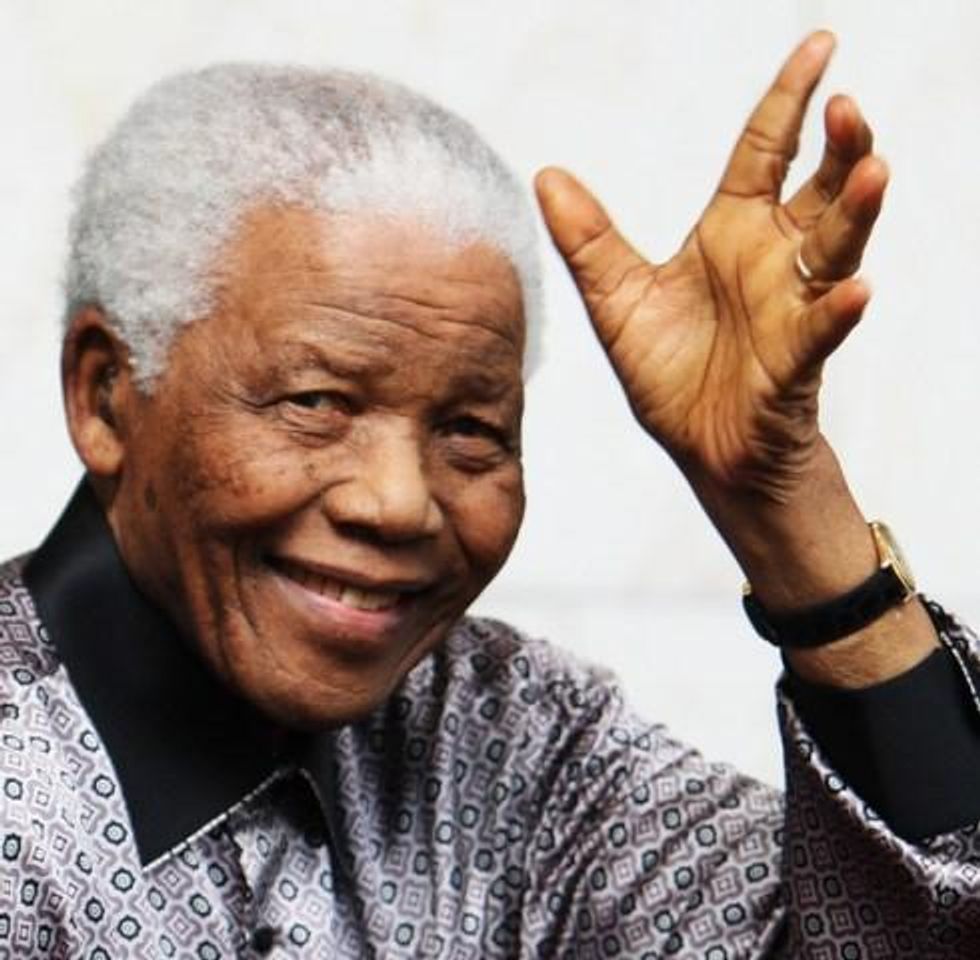
Taking immediate recognition of the deep wellsprings of respect, affection and sorrow over the loss of his leadership to the people of South Africa and the world, leaders from various nations can come together to establish the Nelson Mandela Institute for Global Human Rights with an endowment of one billion dollars. The founders must be possessed of a vision that includes posterity's rights to peace and justice, to freedom and opportunity compatible with the survival of the Planet.
To be perceived as impeccable for this specific noble mission, the founders must select themselves so as to define a unanimity of purpose, a resolve and expeditiousness. To turn the powerful spirit of Nelson Mandela into a powerful vision and proliferate his ideals and actions, his courage and humanity, his uncanny sense of what it takes to move the immovable and inspire the shameless to higher levels of human possibilities, a combination of seasoned knowledge and material resources will be required.
The founders need not be angels, need not be pure in background or without "baggage." They need only to be lawful and capable in creating a well-funded Institute and engaging with substantive experienced and innovative people in human rights, research, communication and advocacy to carry forward Mandela's work. Most immediately, the founders need to come together with all deliberate speed. At the outset they need not be representative of the world. That will come later. The immediate need is for a critical mass of individuals with foresight who can create the Mandela Institute.
By way of non-exclusive suggestion, suppose a quartet of Bishop Desmond Tutu, Congressman John Lewis, Warren Buffett and former President Bill Clinton initiated a conversation between themselves. Here is what could happen forthwith:
Bishop Tutu brings his friendship and alliance with Nelson Mandela, together with the respect of his country's people and human rights advocates around the world with whom he has worked tirelessly.
Congressman John Lewis brings his ground-level valor in the U.S. civil rights movement of the sixties and the widespread, non-partisan high regard for his undeterred principles and moral values.
Warren Buffett brings a core of multi-billionaires who have pledged to give at least half their estate to good works (See The Giving Pledge). They are looking for good, collaborative ideas.
Bill Clinton brings his unrivalled rolodex of establishment achievers and leaders, who come to his annual conference, to discuss commercial and charitable ways to improve the world.
Beside the memorial vision, nothing gathers attentive support more than the availability of material resources. Mr. Buffett (who modestly tells friends that at least he gets his calls returned) can draw on over 100 (and growing) pledgers from the U.S. and other countries. Their combined reported net worth is $504 billion. An average of $10 million from each pledger for this grand institution would take the fundraising over the one billion dollar level. This can occur before major foundations decide on significant founding contributions. As the proposal moves into organization and substantive phases, the organizers of the Institute do have to be impeccable, pure of heart and results oriented, without the conflicting or distracting personal ambition that self-censors their worthiest traits and ideals.
The fine details of the Institute's leadership and activities, so as to maximize its great potential, are, of course, important. But they are not immediate. For now it is the guiding light, work and principles of Nelson Mandela that can assure that he lives through the coming generations in both deeds and grassroots leaders who reflect his courage and humanity.
Taking immediate recognition of the deep wellsprings of respect, affection and sorrow over the loss of his leadership to the people of South Africa and the world, leaders from various nations can come together to establish the Nelson Mandela Institute for Global Human Rights with an endowment of one billion dollars. The founders must be possessed of a vision that includes posterity's rights to peace and justice, to freedom and opportunity compatible with the survival of the Planet.
To be perceived as impeccable for this specific noble mission, the founders must select themselves so as to define a unanimity of purpose, a resolve and expeditiousness. To turn the powerful spirit of Nelson Mandela into a powerful vision and proliferate his ideals and actions, his courage and humanity, his uncanny sense of what it takes to move the immovable and inspire the shameless to higher levels of human possibilities, a combination of seasoned knowledge and material resources will be required.
The founders need not be angels, need not be pure in background or without "baggage." They need only to be lawful and capable in creating a well-funded Institute and engaging with substantive experienced and innovative people in human rights, research, communication and advocacy to carry forward Mandela's work. Most immediately, the founders need to come together with all deliberate speed. At the outset they need not be representative of the world. That will come later. The immediate need is for a critical mass of individuals with foresight who can create the Mandela Institute.
By way of non-exclusive suggestion, suppose a quartet of Bishop Desmond Tutu, Congressman John Lewis, Warren Buffett and former President Bill Clinton initiated a conversation between themselves. Here is what could happen forthwith:
Bishop Tutu brings his friendship and alliance with Nelson Mandela, together with the respect of his country's people and human rights advocates around the world with whom he has worked tirelessly.
Congressman John Lewis brings his ground-level valor in the U.S. civil rights movement of the sixties and the widespread, non-partisan high regard for his undeterred principles and moral values.
Warren Buffett brings a core of multi-billionaires who have pledged to give at least half their estate to good works (See The Giving Pledge). They are looking for good, collaborative ideas.
Bill Clinton brings his unrivalled rolodex of establishment achievers and leaders, who come to his annual conference, to discuss commercial and charitable ways to improve the world.
Beside the memorial vision, nothing gathers attentive support more than the availability of material resources. Mr. Buffett (who modestly tells friends that at least he gets his calls returned) can draw on over 100 (and growing) pledgers from the U.S. and other countries. Their combined reported net worth is $504 billion. An average of $10 million from each pledger for this grand institution would take the fundraising over the one billion dollar level. This can occur before major foundations decide on significant founding contributions. As the proposal moves into organization and substantive phases, the organizers of the Institute do have to be impeccable, pure of heart and results oriented, without the conflicting or distracting personal ambition that self-censors their worthiest traits and ideals.
The fine details of the Institute's leadership and activities, so as to maximize its great potential, are, of course, important. But they are not immediate. For now it is the guiding light, work and principles of Nelson Mandela that can assure that he lives through the coming generations in both deeds and grassroots leaders who reflect his courage and humanity.
Taking immediate recognition of the deep wellsprings of respect, affection and sorrow over the loss of his leadership to the people of South Africa and the world, leaders from various nations can come together to establish the Nelson Mandela Institute for Global Human Rights with an endowment of one billion dollars. The founders must be possessed of a vision that includes posterity's rights to peace and justice, to freedom and opportunity compatible with the survival of the Planet.
To be perceived as impeccable for this specific noble mission, the founders must select themselves so as to define a unanimity of purpose, a resolve and expeditiousness. To turn the powerful spirit of Nelson Mandela into a powerful vision and proliferate his ideals and actions, his courage and humanity, his uncanny sense of what it takes to move the immovable and inspire the shameless to higher levels of human possibilities, a combination of seasoned knowledge and material resources will be required.
The founders need not be angels, need not be pure in background or without "baggage." They need only to be lawful and capable in creating a well-funded Institute and engaging with substantive experienced and innovative people in human rights, research, communication and advocacy to carry forward Mandela's work. Most immediately, the founders need to come together with all deliberate speed. At the outset they need not be representative of the world. That will come later. The immediate need is for a critical mass of individuals with foresight who can create the Mandela Institute.
By way of non-exclusive suggestion, suppose a quartet of Bishop Desmond Tutu, Congressman John Lewis, Warren Buffett and former President Bill Clinton initiated a conversation between themselves. Here is what could happen forthwith:
Bishop Tutu brings his friendship and alliance with Nelson Mandela, together with the respect of his country's people and human rights advocates around the world with whom he has worked tirelessly.
Congressman John Lewis brings his ground-level valor in the U.S. civil rights movement of the sixties and the widespread, non-partisan high regard for his undeterred principles and moral values.
Warren Buffett brings a core of multi-billionaires who have pledged to give at least half their estate to good works (See The Giving Pledge). They are looking for good, collaborative ideas.
Bill Clinton brings his unrivalled rolodex of establishment achievers and leaders, who come to his annual conference, to discuss commercial and charitable ways to improve the world.
Beside the memorial vision, nothing gathers attentive support more than the availability of material resources. Mr. Buffett (who modestly tells friends that at least he gets his calls returned) can draw on over 100 (and growing) pledgers from the U.S. and other countries. Their combined reported net worth is $504 billion. An average of $10 million from each pledger for this grand institution would take the fundraising over the one billion dollar level. This can occur before major foundations decide on significant founding contributions. As the proposal moves into organization and substantive phases, the organizers of the Institute do have to be impeccable, pure of heart and results oriented, without the conflicting or distracting personal ambition that self-censors their worthiest traits and ideals.
The fine details of the Institute's leadership and activities, so as to maximize its great potential, are, of course, important. But they are not immediate. For now it is the guiding light, work and principles of Nelson Mandela that can assure that he lives through the coming generations in both deeds and grassroots leaders who reflect his courage and humanity.