SUBSCRIBE TO OUR FREE NEWSLETTER
Daily news & progressive opinion—funded by the people, not the corporations—delivered straight to your inbox.
5
#000000
#FFFFFF
To donate by check, phone, or other method, see our More Ways to Give page.
The A1 story in Sunday's New York Times, written by Declan Walsh, is titled "U.S. Shift Poses Risk to Pakistan." The story argues that, with the United States gradually dwindling down its political and military engagement with Pakistan, the latter faces a highly uncertain future. Walsh tells us that the disengagement will "diminish" the "prestige" and "political importance" Pakistan held as a
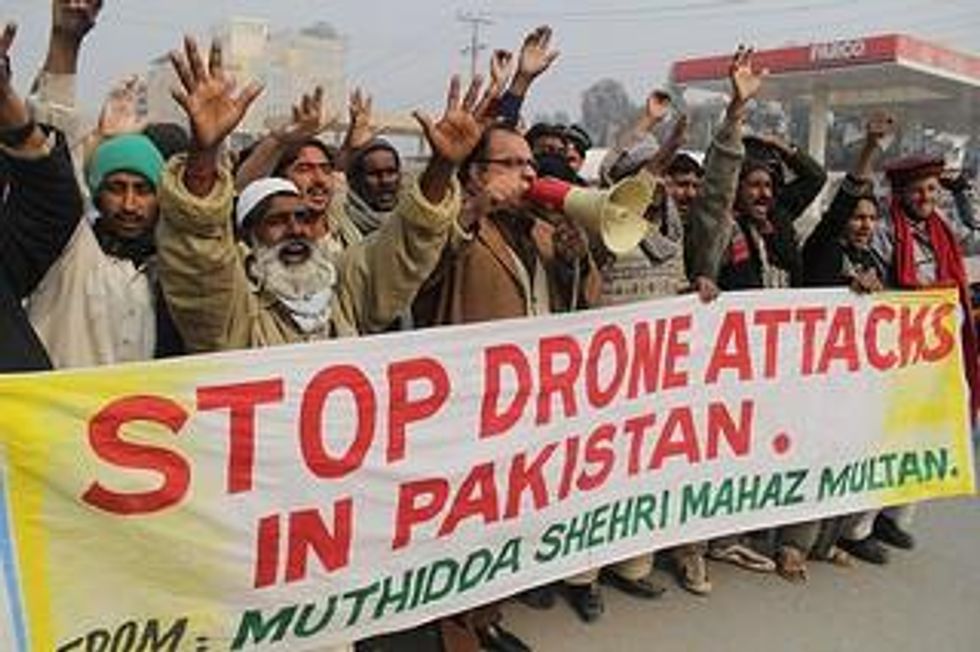
It's a piece that is revealing because one voice is noticeably left out of the analysis: that of the Pakistani people. Arguably the most salient fact about the U.S.-Pakistan dynamic is that Pakistanis - you know, the actual human beings who live in that country - despise the U.S. government and think the interaction between the two countries does more harm than good. Gallup conducted polling on these matters in Pakistan last year. An amazing 92% of Pakistanis expressed disapproval of U.S. leadership (i.e. Obama), while 4% approved. In a separate poll, 55% of Pakistanis reported that interaction with the West constitutes "more of a threat"; just 39% thought it was "more of a benefit."
In a surprising development, Pakistanis don't seem to support flagrant intrusions on their sovereignty, drone strikes that kill their fellow citizens, and a corrupt, secretive military government that regularly colludes with the U.S. (as of October, just 23% of Pakistanis expressed "confidence" in their government, which Gallup reports is widely viewed as being "too cozy" with the U.S.).
The Times article does not pay much attention to the thoughts and opinions of the Pakistani people, though. They're background players and largely irrelevant. Walsh instead quotes a single Pakistani academic to support the article's thesis; at other times in the piece he relies on unnamed "analysts" and "experts." The only other individual he does quote on this narrow question of whether or not American disengagement "poses a risk" for Pakistan, a former Pakistani foreign minister, explicitly rejects the notion, saying that "less American involvement is good, not bad."
The article concludes by stressing that, in fact, this alleged "shift" in the U.S.'s posture toward Pakistan is largely illusory, with "few" doubting that America "will remain deeply involved in Pakistan." A former Obama administration official confidently predicts that the "mutual dependency" between the two countries "will not go away." This basically undermines the entire point of the story.
Declan Walsh is a good reporter and he has spent a lot of time in Pakistan. But his virtual ignoring of the Pakistanis' clearly expressed thoughts on these matters is instructive (the extent of the Pakistanis' role in the article is a single sentence pointing out that drone strikes "stoked anger"). Consider the reverse scenario. Let's say Pakistan had been propping up a corrupt military government here in the United States for years with aid and support. Pakistan was violating U.S. sovereignty at will, assassinating residents it considers a threat to Pakistani security, dumping their corpses in the ocean. Pakistan flew robots over American skies, from which missiles were regularly launched, killing American men, women, and children. Now imagine how we would feel if the most esteemed newspaper in the world published an article about all of this on its front page that completely ignored the will of the American public and disregarded our opinions.
Perhaps, when discussing geopolitics, we should consider the views of the populations themselves, and not just governments and elites. It's a radical notion, but it just might make sense.
The A1 story in Sunday's New York Times, written by Declan Walsh, is titled "U.S. Shift Poses Risk to Pakistan." The story argues that, with the United States gradually dwindling down its political and military engagement with Pakistan, the latter faces a highly uncertain future. Walsh tells us that the disengagement will "diminish" the "prestige" and "political importance" Pakistan held as a
It's a piece that is revealing because one voice is noticeably left out of the analysis: that of the Pakistani people. Arguably the most salient fact about the U.S.-Pakistan dynamic is that Pakistanis - you know, the actual human beings who live in that country - despise the U.S. government and think the interaction between the two countries does more harm than good. Gallup conducted polling on these matters in Pakistan last year. An amazing 92% of Pakistanis expressed disapproval of U.S. leadership (i.e. Obama), while 4% approved. In a separate poll, 55% of Pakistanis reported that interaction with the West constitutes "more of a threat"; just 39% thought it was "more of a benefit."
In a surprising development, Pakistanis don't seem to support flagrant intrusions on their sovereignty, drone strikes that kill their fellow citizens, and a corrupt, secretive military government that regularly colludes with the U.S. (as of October, just 23% of Pakistanis expressed "confidence" in their government, which Gallup reports is widely viewed as being "too cozy" with the U.S.).
The Times article does not pay much attention to the thoughts and opinions of the Pakistani people, though. They're background players and largely irrelevant. Walsh instead quotes a single Pakistani academic to support the article's thesis; at other times in the piece he relies on unnamed "analysts" and "experts." The only other individual he does quote on this narrow question of whether or not American disengagement "poses a risk" for Pakistan, a former Pakistani foreign minister, explicitly rejects the notion, saying that "less American involvement is good, not bad."
The article concludes by stressing that, in fact, this alleged "shift" in the U.S.'s posture toward Pakistan is largely illusory, with "few" doubting that America "will remain deeply involved in Pakistan." A former Obama administration official confidently predicts that the "mutual dependency" between the two countries "will not go away." This basically undermines the entire point of the story.
Declan Walsh is a good reporter and he has spent a lot of time in Pakistan. But his virtual ignoring of the Pakistanis' clearly expressed thoughts on these matters is instructive (the extent of the Pakistanis' role in the article is a single sentence pointing out that drone strikes "stoked anger"). Consider the reverse scenario. Let's say Pakistan had been propping up a corrupt military government here in the United States for years with aid and support. Pakistan was violating U.S. sovereignty at will, assassinating residents it considers a threat to Pakistani security, dumping their corpses in the ocean. Pakistan flew robots over American skies, from which missiles were regularly launched, killing American men, women, and children. Now imagine how we would feel if the most esteemed newspaper in the world published an article about all of this on its front page that completely ignored the will of the American public and disregarded our opinions.
Perhaps, when discussing geopolitics, we should consider the views of the populations themselves, and not just governments and elites. It's a radical notion, but it just might make sense.
The A1 story in Sunday's New York Times, written by Declan Walsh, is titled "U.S. Shift Poses Risk to Pakistan." The story argues that, with the United States gradually dwindling down its political and military engagement with Pakistan, the latter faces a highly uncertain future. Walsh tells us that the disengagement will "diminish" the "prestige" and "political importance" Pakistan held as a
It's a piece that is revealing because one voice is noticeably left out of the analysis: that of the Pakistani people. Arguably the most salient fact about the U.S.-Pakistan dynamic is that Pakistanis - you know, the actual human beings who live in that country - despise the U.S. government and think the interaction between the two countries does more harm than good. Gallup conducted polling on these matters in Pakistan last year. An amazing 92% of Pakistanis expressed disapproval of U.S. leadership (i.e. Obama), while 4% approved. In a separate poll, 55% of Pakistanis reported that interaction with the West constitutes "more of a threat"; just 39% thought it was "more of a benefit."
In a surprising development, Pakistanis don't seem to support flagrant intrusions on their sovereignty, drone strikes that kill their fellow citizens, and a corrupt, secretive military government that regularly colludes with the U.S. (as of October, just 23% of Pakistanis expressed "confidence" in their government, which Gallup reports is widely viewed as being "too cozy" with the U.S.).
The Times article does not pay much attention to the thoughts and opinions of the Pakistani people, though. They're background players and largely irrelevant. Walsh instead quotes a single Pakistani academic to support the article's thesis; at other times in the piece he relies on unnamed "analysts" and "experts." The only other individual he does quote on this narrow question of whether or not American disengagement "poses a risk" for Pakistan, a former Pakistani foreign minister, explicitly rejects the notion, saying that "less American involvement is good, not bad."
The article concludes by stressing that, in fact, this alleged "shift" in the U.S.'s posture toward Pakistan is largely illusory, with "few" doubting that America "will remain deeply involved in Pakistan." A former Obama administration official confidently predicts that the "mutual dependency" between the two countries "will not go away." This basically undermines the entire point of the story.
Declan Walsh is a good reporter and he has spent a lot of time in Pakistan. But his virtual ignoring of the Pakistanis' clearly expressed thoughts on these matters is instructive (the extent of the Pakistanis' role in the article is a single sentence pointing out that drone strikes "stoked anger"). Consider the reverse scenario. Let's say Pakistan had been propping up a corrupt military government here in the United States for years with aid and support. Pakistan was violating U.S. sovereignty at will, assassinating residents it considers a threat to Pakistani security, dumping their corpses in the ocean. Pakistan flew robots over American skies, from which missiles were regularly launched, killing American men, women, and children. Now imagine how we would feel if the most esteemed newspaper in the world published an article about all of this on its front page that completely ignored the will of the American public and disregarded our opinions.
Perhaps, when discussing geopolitics, we should consider the views of the populations themselves, and not just governments and elites. It's a radical notion, but it just might make sense.