
In one of the fiery oratories for which he was well-known, the late Hugo Chavez once stated his belief that "the American empire is the greatest menace to our planet." While his detractors have often sought to paint his rhetorical flourishes as a manifestation of unprovoked and unpopular extremism, to his death Chavez remained extremely popular with the majority of the Venezuelan people.
Indeed, far from being an outlier, Chavez fit well within the spectrum of both Central and Latin American popular opinion. While his style may have been his own, his beliefs and worldview regarding US interventionism were reflected in other leaders throughout the region. Looking at the history of US engagement in Latin America, it becomes evident why such a situation exists. From overthrowing democratically elected leaders, operating death squads, and torturing civilians, the history of US involvement in the region has understandably helped create a widespread popular backlash that persists to this day.
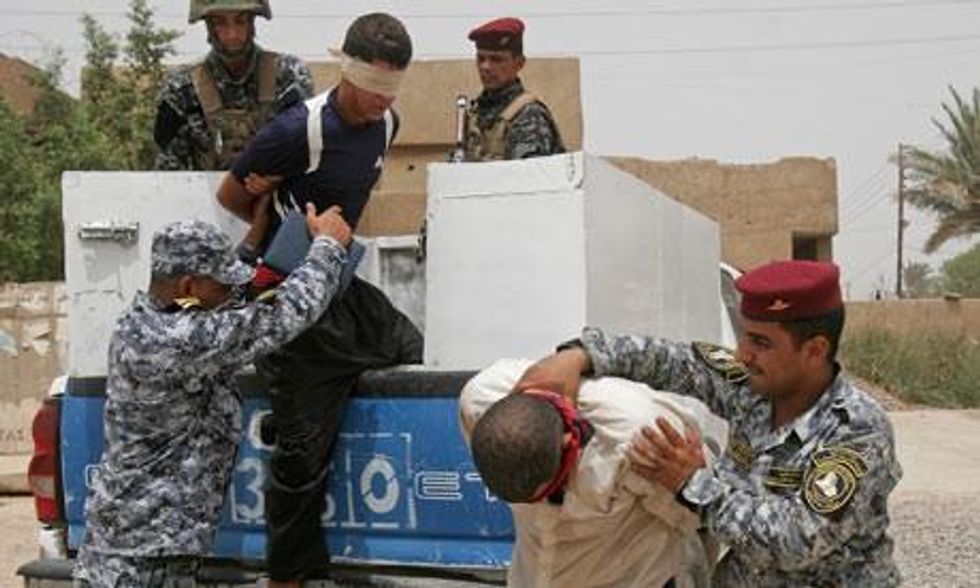
The primary theatre of war has since switched from Latin America to the Middle East, but many of the same tactics of that period - which caused so much devastation and engendered so much visceral anger - seem to have been redeployed on the other side of the world. As reported this week by the Guardian, recent investigations have suggested that Pentagon officials at the highest levels oversaw torture facilities during the war in Iraq. The allegations are decidedly gruesome: rooms used for interrogating detainees stained with blood; children tied into extreme stress positions with their bodies beaten to discoloration.
Most chillingly, a veteran of the United States' "dirty war" in El Salvador was reported to have been brought in to personally oversee the interrogation facilities. As described by Iraqi officials this program was condoned at the highest levels of the US military and utilized "all means of torture to make the detainee confess ... using electricity, hanging him upside down, pulling out their nails". The alleged involvement of a senior participant of the American intervention in El Salvador is, indeed, particularly odious given the legacy of institutionalized torture and murder which characterized US military involvement in that country.
At the now infamous School of the Americas, thousands of Latin American "special forces" were explicitly trained in torture techniques by US handlers. Many of those SOA graduates took their new training home to El Salvador, where they waged a war that killed an estimated 80,000 Salvadoran civilians. Similar "trainees" were sent out in the thousands to kill and maim on behalf of US interests in wars from Honduras to Guatemala. In the latter alone, US-supported death squads murdered over 50,000 civilians suspected of holding sympathies with leftist rebels. The creation and patronage of locally trained militias to wreak havoc among subject populations in pursuit of American military objectives is a tactic that seems to have been adapted to the present day with great effect - most notably in Iraq.
On a summer night 2008, armed paramilitaries broke into Hassan Mahsan's home in Baghdad's Sadr City district and put a gun to his young daughter's head. Demanding he reveal the location of a suspected insurgent, the men threatened to kill his daughter in front of the family before dragging Mahsan off for interrogation and telling his wife "he is finished". The paramilitaries were members of the Iraqi Special Operations Forces (ISOF), an elite counterterrorism force referred to as "the dirty brigade". Believed to be trained and guided by US military advisers at every level of its organizational hierarchy, the ISOF has been structured so as to place it outside the confines of normal oversight for such organizations. Operating today essentially as a private paramilitary force for Prime Minister Nouri al-Maliki, the ISOF has also been described as a "local ally" of the United States in the country - a euphemism for an asset utilized for covert special operations.
While on-the-ground covert operatives have been instrumental in training proxies and operating interrogation facilities, this is not the only point of convergence between Latin America policy and the Middle East. Continuation of direct involvement of those complicit in past atrocities indeed extends to policymakers, too. Elliott Abrams - one of the leading advocates for the Iraq war and a neoconservative intellectual at the Council on Foreign Relations - had a similarly dark history in South and Central America before moving on to the Middle East. A participant in the Iran-Contra affair, where he helped funnel money from arms sales to wantonly violent Nicaraguan militias seeking to overthrow the country's leftist government, Abrams also distinguished himself as a prominent figure attempting to minimize a massacre of civilians by the El Salvadoran military. Despite this dubious background, Abrams' career in Washington remained has remained intact. This has allowed him to publicly lobby to export to Iraq the same US interventionist policies he helped impose on Salvadorans, Nicaraguans and others.
The policy of proxy warfare against civilian populations in Latin America over time provoked sufficient revulsion among the US political establishment to outlaw it. Prompted by revelations of US covert support for Columbian military atrocities in the 1990s, a bill sponsored by Senator Patrick Leahy (Democrat, Vermont) was passed to prohibit the patronage of militant groups known to violate human rights. Though imperfect and unevenly applied, the Leahy Law in itself represents a commendable effort to prevent the abuses and the consequent rise in anti-American sentiment witnessed in places like Latin America.
This week, however, US Admiral William McRaven undertook an effort to roll back the earnest accomplishments of Senator Leahy and others. In a speech before the House armed services committee, McRaven publicly called for the easing of those rules. In comments criticized by Human Rights Watch, McRaven called for changing the tenets of the Leahy Law that prohibit American forces from training individuals and groups charged with human rights abuses.
The Leahy Law was passed before the onset of the "war on terror", and it would appear that whatever lessons had been learned in Latin America are now slipping from memory. Today, public opinion in the continent is aligned firmly against US interests. The legacy of the "dirty wars" are reflected in the popularity of leaders such as Chavez, whose denunciations of alleged US imperialism made him a heroic figure far beyond the borders of his own country.
Yet, the same discredited US policies of that era are now being repeated within the Middle East and the wider Muslim world. The use of torture, the patronage of sectarian proxy forces, and the facilitation of widespread human rights abuses all characterize US policy in the "war on terror". Indeed, many of the same actors complicit in past crimes have returned to help develop and implement present US policy.
Today, Latin America and the Middle East are bound in blood by the experiences of American military intervention and covert warfare. The "dirty wars" of the recent past are playing out once again; time will tell what type of political alignment they will give rise to in response.
In one of the fiery oratories for which he was well-known, the late Hugo Chavez once stated his belief that "the American empire is the greatest menace to our planet." While his detractors have often sought to paint his rhetorical flourishes as a manifestation of unprovoked and unpopular extremism, to his death Chavez remained extremely popular with the majority of the Venezuelan people.
Indeed, far from being an outlier, Chavez fit well within the spectrum of both Central and Latin American popular opinion. While his style may have been his own, his beliefs and worldview regarding US interventionism were reflected in other leaders throughout the region. Looking at the history of US engagement in Latin America, it becomes evident why such a situation exists. From overthrowing democratically elected leaders, operating death squads, and torturing civilians, the history of US involvement in the region has understandably helped create a widespread popular backlash that persists to this day.
The primary theatre of war has since switched from Latin America to the Middle East, but many of the same tactics of that period - which caused so much devastation and engendered so much visceral anger - seem to have been redeployed on the other side of the world. As reported this week by the Guardian, recent investigations have suggested that Pentagon officials at the highest levels oversaw torture facilities during the war in Iraq. The allegations are decidedly gruesome: rooms used for interrogating detainees stained with blood; children tied into extreme stress positions with their bodies beaten to discoloration.
Most chillingly, a veteran of the United States' "dirty war" in El Salvador was reported to have been brought in to personally oversee the interrogation facilities. As described by Iraqi officials this program was condoned at the highest levels of the US military and utilized "all means of torture to make the detainee confess ... using electricity, hanging him upside down, pulling out their nails". The alleged involvement of a senior participant of the American intervention in El Salvador is, indeed, particularly odious given the legacy of institutionalized torture and murder which characterized US military involvement in that country.
At the now infamous School of the Americas, thousands of Latin American "special forces" were explicitly trained in torture techniques by US handlers. Many of those SOA graduates took their new training home to El Salvador, where they waged a war that killed an estimated 80,000 Salvadoran civilians. Similar "trainees" were sent out in the thousands to kill and maim on behalf of US interests in wars from Honduras to Guatemala. In the latter alone, US-supported death squads murdered over 50,000 civilians suspected of holding sympathies with leftist rebels. The creation and patronage of locally trained militias to wreak havoc among subject populations in pursuit of American military objectives is a tactic that seems to have been adapted to the present day with great effect - most notably in Iraq.
On a summer night 2008, armed paramilitaries broke into Hassan Mahsan's home in Baghdad's Sadr City district and put a gun to his young daughter's head. Demanding he reveal the location of a suspected insurgent, the men threatened to kill his daughter in front of the family before dragging Mahsan off for interrogation and telling his wife "he is finished". The paramilitaries were members of the Iraqi Special Operations Forces (ISOF), an elite counterterrorism force referred to as "the dirty brigade". Believed to be trained and guided by US military advisers at every level of its organizational hierarchy, the ISOF has been structured so as to place it outside the confines of normal oversight for such organizations. Operating today essentially as a private paramilitary force for Prime Minister Nouri al-Maliki, the ISOF has also been described as a "local ally" of the United States in the country - a euphemism for an asset utilized for covert special operations.
While on-the-ground covert operatives have been instrumental in training proxies and operating interrogation facilities, this is not the only point of convergence between Latin America policy and the Middle East. Continuation of direct involvement of those complicit in past atrocities indeed extends to policymakers, too. Elliott Abrams - one of the leading advocates for the Iraq war and a neoconservative intellectual at the Council on Foreign Relations - had a similarly dark history in South and Central America before moving on to the Middle East. A participant in the Iran-Contra affair, where he helped funnel money from arms sales to wantonly violent Nicaraguan militias seeking to overthrow the country's leftist government, Abrams also distinguished himself as a prominent figure attempting to minimize a massacre of civilians by the El Salvadoran military. Despite this dubious background, Abrams' career in Washington remained has remained intact. This has allowed him to publicly lobby to export to Iraq the same US interventionist policies he helped impose on Salvadorans, Nicaraguans and others.
The policy of proxy warfare against civilian populations in Latin America over time provoked sufficient revulsion among the US political establishment to outlaw it. Prompted by revelations of US covert support for Columbian military atrocities in the 1990s, a bill sponsored by Senator Patrick Leahy (Democrat, Vermont) was passed to prohibit the patronage of militant groups known to violate human rights. Though imperfect and unevenly applied, the Leahy Law in itself represents a commendable effort to prevent the abuses and the consequent rise in anti-American sentiment witnessed in places like Latin America.
This week, however, US Admiral William McRaven undertook an effort to roll back the earnest accomplishments of Senator Leahy and others. In a speech before the House armed services committee, McRaven publicly called for the easing of those rules. In comments criticized by Human Rights Watch, McRaven called for changing the tenets of the Leahy Law that prohibit American forces from training individuals and groups charged with human rights abuses.
The Leahy Law was passed before the onset of the "war on terror", and it would appear that whatever lessons had been learned in Latin America are now slipping from memory. Today, public opinion in the continent is aligned firmly against US interests. The legacy of the "dirty wars" are reflected in the popularity of leaders such as Chavez, whose denunciations of alleged US imperialism made him a heroic figure far beyond the borders of his own country.
Yet, the same discredited US policies of that era are now being repeated within the Middle East and the wider Muslim world. The use of torture, the patronage of sectarian proxy forces, and the facilitation of widespread human rights abuses all characterize US policy in the "war on terror". Indeed, many of the same actors complicit in past crimes have returned to help develop and implement present US policy.
Today, Latin America and the Middle East are bound in blood by the experiences of American military intervention and covert warfare. The "dirty wars" of the recent past are playing out once again; time will tell what type of political alignment they will give rise to in response.
In one of the fiery oratories for which he was well-known, the late Hugo Chavez once stated his belief that "the American empire is the greatest menace to our planet." While his detractors have often sought to paint his rhetorical flourishes as a manifestation of unprovoked and unpopular extremism, to his death Chavez remained extremely popular with the majority of the Venezuelan people.
Indeed, far from being an outlier, Chavez fit well within the spectrum of both Central and Latin American popular opinion. While his style may have been his own, his beliefs and worldview regarding US interventionism were reflected in other leaders throughout the region. Looking at the history of US engagement in Latin America, it becomes evident why such a situation exists. From overthrowing democratically elected leaders, operating death squads, and torturing civilians, the history of US involvement in the region has understandably helped create a widespread popular backlash that persists to this day.
The primary theatre of war has since switched from Latin America to the Middle East, but many of the same tactics of that period - which caused so much devastation and engendered so much visceral anger - seem to have been redeployed on the other side of the world. As reported this week by the Guardian, recent investigations have suggested that Pentagon officials at the highest levels oversaw torture facilities during the war in Iraq. The allegations are decidedly gruesome: rooms used for interrogating detainees stained with blood; children tied into extreme stress positions with their bodies beaten to discoloration.
Most chillingly, a veteran of the United States' "dirty war" in El Salvador was reported to have been brought in to personally oversee the interrogation facilities. As described by Iraqi officials this program was condoned at the highest levels of the US military and utilized "all means of torture to make the detainee confess ... using electricity, hanging him upside down, pulling out their nails". The alleged involvement of a senior participant of the American intervention in El Salvador is, indeed, particularly odious given the legacy of institutionalized torture and murder which characterized US military involvement in that country.
At the now infamous School of the Americas, thousands of Latin American "special forces" were explicitly trained in torture techniques by US handlers. Many of those SOA graduates took their new training home to El Salvador, where they waged a war that killed an estimated 80,000 Salvadoran civilians. Similar "trainees" were sent out in the thousands to kill and maim on behalf of US interests in wars from Honduras to Guatemala. In the latter alone, US-supported death squads murdered over 50,000 civilians suspected of holding sympathies with leftist rebels. The creation and patronage of locally trained militias to wreak havoc among subject populations in pursuit of American military objectives is a tactic that seems to have been adapted to the present day with great effect - most notably in Iraq.
On a summer night 2008, armed paramilitaries broke into Hassan Mahsan's home in Baghdad's Sadr City district and put a gun to his young daughter's head. Demanding he reveal the location of a suspected insurgent, the men threatened to kill his daughter in front of the family before dragging Mahsan off for interrogation and telling his wife "he is finished". The paramilitaries were members of the Iraqi Special Operations Forces (ISOF), an elite counterterrorism force referred to as "the dirty brigade". Believed to be trained and guided by US military advisers at every level of its organizational hierarchy, the ISOF has been structured so as to place it outside the confines of normal oversight for such organizations. Operating today essentially as a private paramilitary force for Prime Minister Nouri al-Maliki, the ISOF has also been described as a "local ally" of the United States in the country - a euphemism for an asset utilized for covert special operations.
While on-the-ground covert operatives have been instrumental in training proxies and operating interrogation facilities, this is not the only point of convergence between Latin America policy and the Middle East. Continuation of direct involvement of those complicit in past atrocities indeed extends to policymakers, too. Elliott Abrams - one of the leading advocates for the Iraq war and a neoconservative intellectual at the Council on Foreign Relations - had a similarly dark history in South and Central America before moving on to the Middle East. A participant in the Iran-Contra affair, where he helped funnel money from arms sales to wantonly violent Nicaraguan militias seeking to overthrow the country's leftist government, Abrams also distinguished himself as a prominent figure attempting to minimize a massacre of civilians by the El Salvadoran military. Despite this dubious background, Abrams' career in Washington remained has remained intact. This has allowed him to publicly lobby to export to Iraq the same US interventionist policies he helped impose on Salvadorans, Nicaraguans and others.
The policy of proxy warfare against civilian populations in Latin America over time provoked sufficient revulsion among the US political establishment to outlaw it. Prompted by revelations of US covert support for Columbian military atrocities in the 1990s, a bill sponsored by Senator Patrick Leahy (Democrat, Vermont) was passed to prohibit the patronage of militant groups known to violate human rights. Though imperfect and unevenly applied, the Leahy Law in itself represents a commendable effort to prevent the abuses and the consequent rise in anti-American sentiment witnessed in places like Latin America.
This week, however, US Admiral William McRaven undertook an effort to roll back the earnest accomplishments of Senator Leahy and others. In a speech before the House armed services committee, McRaven publicly called for the easing of those rules. In comments criticized by Human Rights Watch, McRaven called for changing the tenets of the Leahy Law that prohibit American forces from training individuals and groups charged with human rights abuses.
The Leahy Law was passed before the onset of the "war on terror", and it would appear that whatever lessons had been learned in Latin America are now slipping from memory. Today, public opinion in the continent is aligned firmly against US interests. The legacy of the "dirty wars" are reflected in the popularity of leaders such as Chavez, whose denunciations of alleged US imperialism made him a heroic figure far beyond the borders of his own country.
Yet, the same discredited US policies of that era are now being repeated within the Middle East and the wider Muslim world. The use of torture, the patronage of sectarian proxy forces, and the facilitation of widespread human rights abuses all characterize US policy in the "war on terror". Indeed, many of the same actors complicit in past crimes have returned to help develop and implement present US policy.
Today, Latin America and the Middle East are bound in blood by the experiences of American military intervention and covert warfare. The "dirty wars" of the recent past are playing out once again; time will tell what type of political alignment they will give rise to in response.