SUBSCRIBE TO OUR FREE NEWSLETTER
Daily news & progressive opinion—funded by the people, not the corporations—delivered straight to your inbox.
5
#000000
#FFFFFF
To donate by check, phone, or other method, see our More Ways to Give page.
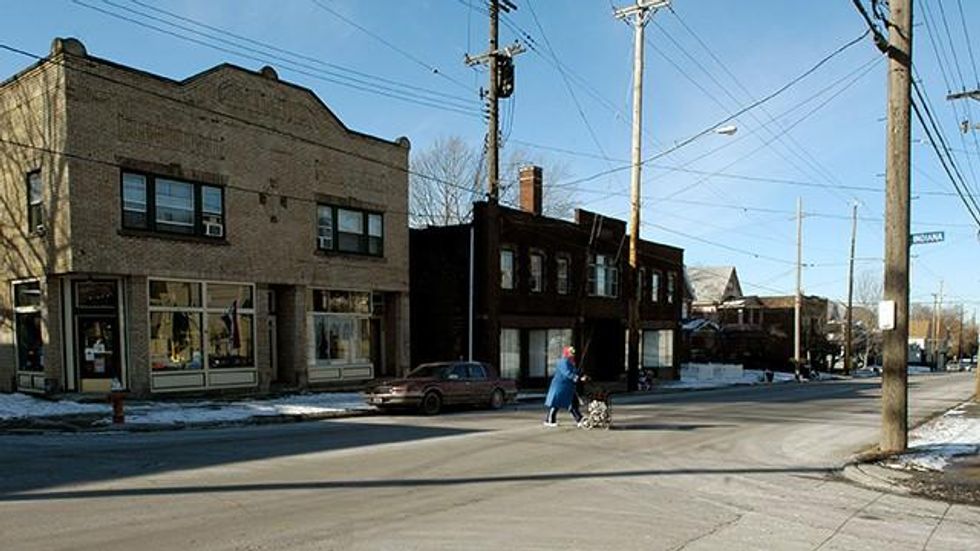
As The New York Times reported Monday, corporate profits have been skyrocketing ever since 2008 -- rising an average of 20.1 percent a year for four years in a row. But out on Main Street, average household incomes have risen only 1.4 percent a year. CEOs and big investors have been hogging the profits.
And while the stock market is roaring upward thanks largely to corporate profits earned overseas, 24 million Americans are still out there hunting for full-time jobs, month after month. But our economy is not generating many new jobs. In fact, Congress has just added to unemployment. With the sequester in force, we are going to lose a net of 750,000 jobs this year, according to the Congressional Budget Office.
This disconnect between Wall Street and Main Street, between profits and wages, between the winnings of the 1% and the stagnation of the 99% -- what I call "wedge economics" -- has been the prevailing pattern in the American economy for the past three decades. And it has been financially killing the American middle class and stealing the American Dream from average people.
Right now, "wedge economics" is mangling America's economic recovery. Anyone who has taken Economics 101 knows that what drives growth is not high stock gains for the 1% (who capture more than half of the capital gains from the market) but the power of mass consumer demand.
Economists call that the "virtuous circle of growth." What they mean is that when CEOs share more of corporate profits with their workers and pay higher wages instead of imposing wage freezes, tens of millions of Americans head for Costco or Home Depot or the local car dealer to buy. Their purchases, multiplied by the millions, is what creates the incentives for business to expand, to build new plants, buy new equipment and hire more workers.
Consumer demand is the essential job creator in the American free enterprise system. Without strong demand, built on an ample supply of good jobs and good pay, businesses simply sit on their money, as they have done for most of the past four years, hoarding $2 trillion in accumulated cash.
Old-time CEOs like Charlie Wilson, the former head of General Motors, Reginald Jones, the former chief of General Electric, or Frank Abrams, the former boss of Standard Oil of New Jersey, understood that they could drive economic growth by sharing more of the wealth. They considered it their job to take care of all the stakeholders in the corporation, not just shareholders but all the groups with a stake in the company's success.
It was the sacred trust of corporate management, as Abrams put it, "to maintain an equitable and working balance among the claims of the various directly affected interest groups...stockholders, employees, customers, and the public at large." In others words, some profits go to shareholders but another big chunk goes to employees.
But U.S. business leaders moved away from that idea starting in the 1980s and turned to cutting jobs, holding down wages, and focusing on high profits and even higher CEO pay. In 2011, the top 1% got all the gains from U.S. economic growth and the bottom 99% literally went backwards - they saw their collective incomes fall.
More broadly, "wedge economics" have brought us very slow economic growth, much slower than under the old business philosophy. We've seen ever-deeper recessions, ever-longer jobless recoveries. With lopsided winnings to the top 1%, dominated by CEOs, the drive has gone out of economic growth.
In fact, economists like Nobel laureate Joseph Stiglitz of Columbia University tell us bluntly that America's current gaping inequalities of income are bad for economic growth. "Inequality stifles, restrains and holds back our growth," Stiglitz asserts. Others agree. The International Monetary Fund has documented that high levels of income equality can be "destructive" to sustained growth and that the best condition for long-term growth is "more equality in the income distribution."
In short, what Wall Street is celebrating today may cause joy among the 1%, but unless business shares more of its gains, a booming market spells bad news for average Americans.
As The New York Times reported Monday, corporate profits have been skyrocketing ever since 2008 -- rising an average of 20.1 percent a year for four years in a row. But out on Main Street, average household incomes have risen only 1.4 percent a year. CEOs and big investors have been hogging the profits.
And while the stock market is roaring upward thanks largely to corporate profits earned overseas, 24 million Americans are still out there hunting for full-time jobs, month after month. But our economy is not generating many new jobs. In fact, Congress has just added to unemployment. With the sequester in force, we are going to lose a net of 750,000 jobs this year, according to the Congressional Budget Office.
This disconnect between Wall Street and Main Street, between profits and wages, between the winnings of the 1% and the stagnation of the 99% -- what I call "wedge economics" -- has been the prevailing pattern in the American economy for the past three decades. And it has been financially killing the American middle class and stealing the American Dream from average people.
Right now, "wedge economics" is mangling America's economic recovery. Anyone who has taken Economics 101 knows that what drives growth is not high stock gains for the 1% (who capture more than half of the capital gains from the market) but the power of mass consumer demand.
Economists call that the "virtuous circle of growth." What they mean is that when CEOs share more of corporate profits with their workers and pay higher wages instead of imposing wage freezes, tens of millions of Americans head for Costco or Home Depot or the local car dealer to buy. Their purchases, multiplied by the millions, is what creates the incentives for business to expand, to build new plants, buy new equipment and hire more workers.
Consumer demand is the essential job creator in the American free enterprise system. Without strong demand, built on an ample supply of good jobs and good pay, businesses simply sit on their money, as they have done for most of the past four years, hoarding $2 trillion in accumulated cash.
Old-time CEOs like Charlie Wilson, the former head of General Motors, Reginald Jones, the former chief of General Electric, or Frank Abrams, the former boss of Standard Oil of New Jersey, understood that they could drive economic growth by sharing more of the wealth. They considered it their job to take care of all the stakeholders in the corporation, not just shareholders but all the groups with a stake in the company's success.
It was the sacred trust of corporate management, as Abrams put it, "to maintain an equitable and working balance among the claims of the various directly affected interest groups...stockholders, employees, customers, and the public at large." In others words, some profits go to shareholders but another big chunk goes to employees.
But U.S. business leaders moved away from that idea starting in the 1980s and turned to cutting jobs, holding down wages, and focusing on high profits and even higher CEO pay. In 2011, the top 1% got all the gains from U.S. economic growth and the bottom 99% literally went backwards - they saw their collective incomes fall.
More broadly, "wedge economics" have brought us very slow economic growth, much slower than under the old business philosophy. We've seen ever-deeper recessions, ever-longer jobless recoveries. With lopsided winnings to the top 1%, dominated by CEOs, the drive has gone out of economic growth.
In fact, economists like Nobel laureate Joseph Stiglitz of Columbia University tell us bluntly that America's current gaping inequalities of income are bad for economic growth. "Inequality stifles, restrains and holds back our growth," Stiglitz asserts. Others agree. The International Monetary Fund has documented that high levels of income equality can be "destructive" to sustained growth and that the best condition for long-term growth is "more equality in the income distribution."
In short, what Wall Street is celebrating today may cause joy among the 1%, but unless business shares more of its gains, a booming market spells bad news for average Americans.
As The New York Times reported Monday, corporate profits have been skyrocketing ever since 2008 -- rising an average of 20.1 percent a year for four years in a row. But out on Main Street, average household incomes have risen only 1.4 percent a year. CEOs and big investors have been hogging the profits.
And while the stock market is roaring upward thanks largely to corporate profits earned overseas, 24 million Americans are still out there hunting for full-time jobs, month after month. But our economy is not generating many new jobs. In fact, Congress has just added to unemployment. With the sequester in force, we are going to lose a net of 750,000 jobs this year, according to the Congressional Budget Office.
This disconnect between Wall Street and Main Street, between profits and wages, between the winnings of the 1% and the stagnation of the 99% -- what I call "wedge economics" -- has been the prevailing pattern in the American economy for the past three decades. And it has been financially killing the American middle class and stealing the American Dream from average people.
Right now, "wedge economics" is mangling America's economic recovery. Anyone who has taken Economics 101 knows that what drives growth is not high stock gains for the 1% (who capture more than half of the capital gains from the market) but the power of mass consumer demand.
Economists call that the "virtuous circle of growth." What they mean is that when CEOs share more of corporate profits with their workers and pay higher wages instead of imposing wage freezes, tens of millions of Americans head for Costco or Home Depot or the local car dealer to buy. Their purchases, multiplied by the millions, is what creates the incentives for business to expand, to build new plants, buy new equipment and hire more workers.
Consumer demand is the essential job creator in the American free enterprise system. Without strong demand, built on an ample supply of good jobs and good pay, businesses simply sit on their money, as they have done for most of the past four years, hoarding $2 trillion in accumulated cash.
Old-time CEOs like Charlie Wilson, the former head of General Motors, Reginald Jones, the former chief of General Electric, or Frank Abrams, the former boss of Standard Oil of New Jersey, understood that they could drive economic growth by sharing more of the wealth. They considered it their job to take care of all the stakeholders in the corporation, not just shareholders but all the groups with a stake in the company's success.
It was the sacred trust of corporate management, as Abrams put it, "to maintain an equitable and working balance among the claims of the various directly affected interest groups...stockholders, employees, customers, and the public at large." In others words, some profits go to shareholders but another big chunk goes to employees.
But U.S. business leaders moved away from that idea starting in the 1980s and turned to cutting jobs, holding down wages, and focusing on high profits and even higher CEO pay. In 2011, the top 1% got all the gains from U.S. economic growth and the bottom 99% literally went backwards - they saw their collective incomes fall.
More broadly, "wedge economics" have brought us very slow economic growth, much slower than under the old business philosophy. We've seen ever-deeper recessions, ever-longer jobless recoveries. With lopsided winnings to the top 1%, dominated by CEOs, the drive has gone out of economic growth.
In fact, economists like Nobel laureate Joseph Stiglitz of Columbia University tell us bluntly that America's current gaping inequalities of income are bad for economic growth. "Inequality stifles, restrains and holds back our growth," Stiglitz asserts. Others agree. The International Monetary Fund has documented that high levels of income equality can be "destructive" to sustained growth and that the best condition for long-term growth is "more equality in the income distribution."
In short, what Wall Street is celebrating today may cause joy among the 1%, but unless business shares more of its gains, a booming market spells bad news for average Americans.