SUBSCRIBE TO OUR FREE NEWSLETTER
Daily news & progressive opinion—funded by the people, not the corporations—delivered straight to your inbox.
5
#000000
#FFFFFF
To donate by check, phone, or other method, see our More Ways to Give page.


Daily news & progressive opinion—funded by the people, not the corporations—delivered straight to your inbox.
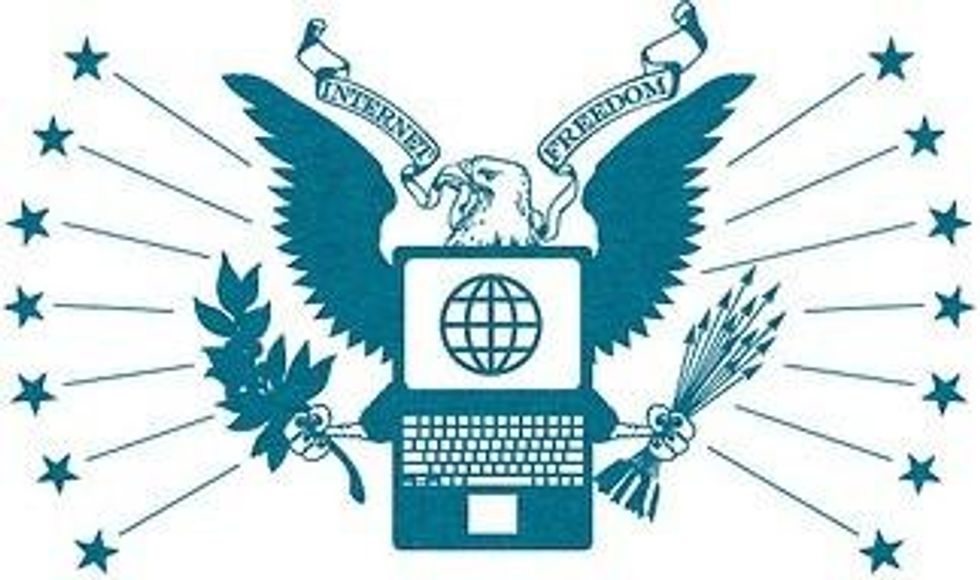
Last year, we saw more battles in Congress over Internet freedom than we have in many years as user protests stopped two dangerous bills, the censorship-oriented SOPA, and the privacy-invasive Cybersecurity Act of 2012. But Congress ended the year by ramming through a domestic spying bill and weakening the Video Privacy Protection Act.
In 2013, Congress will tackle several bills--both good and bad--that could shape Internet privacy for the next decade. Some were introduced last year, and some will be completely new. For now, here's what's ahead in the upcoming Congress:

Reforming Draconian Computer Crime Law
The Computer Fraud and Abust Act (CFAA), was one of the key laws the government used in its relentless and unjust prosecution of Aaron Swartz. Zoe Lofgren has proposed "Aaron's Law," which ensures that breaking a terms of service or other contractual obligation does not amount to a CFAA violation. Lofgren's reforms are a terrific start and will be introduced in Congress over the coming weeks. EFF has also proposed revisions to Lofgren's language and overall reform to the CFAA that reduces the draconian penalties and clarifies key definitions in the statute. The proposed reforms will go a long way in preventing a similar situation from happening to a freedom fighter like Aaron again. It's unclear where the language stands in the Senate, but Senators like Ron Wyden have voiced support for Lofgren's bill and should take up CFAA reform. You can take action and email your members of Congress to tell them to support reform of the Computer Fraud and Abuse Act here.
Update to the Electronic Communications Privacy Act (ECPA)
Once again, the 113th Congress will try to update the archaic Electronic Communications Privacy Act. The law, which was passed in 1986, lays out procedures for when the government can obtain your private electronic messages, like email or Facebook messages, from service providers. ECPA states that the government doesn't need a warrant for emails when they are older than 180 days--even though the Sixth Circuit held that this "180-day rule" violates the Fourth Amendment. Despite the ruling, the Justice Department continues to argue that the DOJ does not have to obtain a warrant.
Last Congress Senator Leahy successfully moved the Senate Judiciary Committee to approve an ECPA amendment mandating warrants for all private electronic communications, but the bill didn't get to the full Senate. This year, both Senator Leahy and House Reps. Goodlatte and Lofgren will introduce similar legislation to ensure that the same protections that apply to physical private messages also apply to virtual private messages.
Congress should take the lead from the courts and move the legislation forward.
Restricting Government and Corporate Use of your Cell Phone GPS Info
Updating ECPA is also about protecting users geolocation information, especially after the Supreme Court's decision in the GPS case, United States v. Jones. Senator Wyden and Rep. Chaffetz's GPS Act mandates that the government obtain a warrant before it seeks a user's geolocation information. Currently, the government can obtain such information without a warrant or probable cause, which is something the government has done at a staggering rate.
But the government isn't the only entity spying on cell phone users. Over and over, users are learning the hard way that private companies surreptitiously collect information from users' mobile devices and often share that data with unknown third parties. That's why Congressmen like Rep. Markey and Senator Franken introduced legislation last Congress that requires clear notification and disclosures when a company collects and shares user information with third parties. Both Congressmen plan to reintroduce and move the legislation forward in the 113th Congress.
Cybersecurity Legislation
Congressmen are also girding for another fight on Cybersecurity. Along with more warnings of an upcoming "cyber-Pearl Harbor," Congressmen named cybersecurity a priority in 2013 and are planning to reintroduce a new version of an "information sharing" cybersecurity bill called CISPA, which as EFF described at the time, carved a giant and vague "cybersecurity" loophole into all US privacy laws, while alsogranting new powers and legal immunity to companies.
The Internet community helped defeat the Cybersecurity legislation and Congress needs to craft any new bill with the utmost concern for privacy.
FBI Silent About Wanting To "Back Door" the Web
Lastly, there are rumors that the Obama Administration will propose a new Internet surveillance law, which will expand the Communications Assistance to Law Enforcement Act (CALEA), which forces telephone companies to build a wiretap-friendly backdoors into all their technology--but not social networks and other web-based communications services.In 2005, the FBI pushed the FCC to rule that VOIP and "facilities-based internet access providers" had to abide by CALEA requirements. Now they want even more power. This expansion is in spite of the fact that the FBI has yet to respond adequately to EFF's FOIA lawsuit seeking records that would justify the need to expand federal surveillance laws, given they have a myriad of ways to get such data already (Google's transparency report shows the government requests for user data is skyrocketing).
The White House and the FBI have not released what is in the proposed legislation, but one report states the FBI wants to require Internet companies, like Google, Facebook, and Twitter to build the same type of backdoors for real-time government surveillance. This would not only create a huge Internet security problem, making the Internet less safe just as Congress pushes for a cybersecurity bill, but threatens basic privacy on the web.
The potential for the 113th Congress to introduce backwards bills like CISPA and CALEA is great. But Congress, and especially new members, should take note of the Internet community's strong--and successful--opposition to bills like SOPA.
It's time to curry favor with everyday constituents, and not with giant corporations or overreaching law enforcement.

Dear Common Dreams reader, It’s been nearly 30 years since I co-founded Common Dreams with my late wife, Lina Newhouser. We had the radical notion that journalism should serve the public good, not corporate profits. It was clear to us from the outset what it would take to build such a project. No paid advertisements. No corporate sponsors. No millionaire publisher telling us what to think or do. Many people said we wouldn't last a year, but we proved those doubters wrong. Together with a tremendous team of journalists and dedicated staff, we built an independent media outlet free from the constraints of profits and corporate control. Our mission has always been simple: To inform. To inspire. To ignite change for the common good. Building Common Dreams was not easy. Our survival was never guaranteed. When you take on the most powerful forces—Wall Street greed, fossil fuel industry destruction, Big Tech lobbyists, and uber-rich oligarchs who have spent billions upon billions rigging the economy and democracy in their favor—the only bulwark you have is supporters who believe in your work. But here’s the urgent message from me today. It's never been this bad out there. And it's never been this hard to keep us going. At the very moment Common Dreams is most needed, the threats we face are intensifying. We need your support now more than ever. We don't accept corporate advertising and never will. We don't have a paywall because we don't think people should be blocked from critical news based on their ability to pay. Everything we do is funded by the donations of readers like you. When everyone does the little they can afford, we are strong. But if that support retreats or dries up, so do we. Will you donate now to make sure Common Dreams not only survives but thrives? —Craig Brown, Co-founder |
Last year, we saw more battles in Congress over Internet freedom than we have in many years as user protests stopped two dangerous bills, the censorship-oriented SOPA, and the privacy-invasive Cybersecurity Act of 2012. But Congress ended the year by ramming through a domestic spying bill and weakening the Video Privacy Protection Act.
In 2013, Congress will tackle several bills--both good and bad--that could shape Internet privacy for the next decade. Some were introduced last year, and some will be completely new. For now, here's what's ahead in the upcoming Congress:

Reforming Draconian Computer Crime Law
The Computer Fraud and Abust Act (CFAA), was one of the key laws the government used in its relentless and unjust prosecution of Aaron Swartz. Zoe Lofgren has proposed "Aaron's Law," which ensures that breaking a terms of service or other contractual obligation does not amount to a CFAA violation. Lofgren's reforms are a terrific start and will be introduced in Congress over the coming weeks. EFF has also proposed revisions to Lofgren's language and overall reform to the CFAA that reduces the draconian penalties and clarifies key definitions in the statute. The proposed reforms will go a long way in preventing a similar situation from happening to a freedom fighter like Aaron again. It's unclear where the language stands in the Senate, but Senators like Ron Wyden have voiced support for Lofgren's bill and should take up CFAA reform. You can take action and email your members of Congress to tell them to support reform of the Computer Fraud and Abuse Act here.
Update to the Electronic Communications Privacy Act (ECPA)
Once again, the 113th Congress will try to update the archaic Electronic Communications Privacy Act. The law, which was passed in 1986, lays out procedures for when the government can obtain your private electronic messages, like email or Facebook messages, from service providers. ECPA states that the government doesn't need a warrant for emails when they are older than 180 days--even though the Sixth Circuit held that this "180-day rule" violates the Fourth Amendment. Despite the ruling, the Justice Department continues to argue that the DOJ does not have to obtain a warrant.
Last Congress Senator Leahy successfully moved the Senate Judiciary Committee to approve an ECPA amendment mandating warrants for all private electronic communications, but the bill didn't get to the full Senate. This year, both Senator Leahy and House Reps. Goodlatte and Lofgren will introduce similar legislation to ensure that the same protections that apply to physical private messages also apply to virtual private messages.
Congress should take the lead from the courts and move the legislation forward.
Restricting Government and Corporate Use of your Cell Phone GPS Info
Updating ECPA is also about protecting users geolocation information, especially after the Supreme Court's decision in the GPS case, United States v. Jones. Senator Wyden and Rep. Chaffetz's GPS Act mandates that the government obtain a warrant before it seeks a user's geolocation information. Currently, the government can obtain such information without a warrant or probable cause, which is something the government has done at a staggering rate.
But the government isn't the only entity spying on cell phone users. Over and over, users are learning the hard way that private companies surreptitiously collect information from users' mobile devices and often share that data with unknown third parties. That's why Congressmen like Rep. Markey and Senator Franken introduced legislation last Congress that requires clear notification and disclosures when a company collects and shares user information with third parties. Both Congressmen plan to reintroduce and move the legislation forward in the 113th Congress.
Cybersecurity Legislation
Congressmen are also girding for another fight on Cybersecurity. Along with more warnings of an upcoming "cyber-Pearl Harbor," Congressmen named cybersecurity a priority in 2013 and are planning to reintroduce a new version of an "information sharing" cybersecurity bill called CISPA, which as EFF described at the time, carved a giant and vague "cybersecurity" loophole into all US privacy laws, while alsogranting new powers and legal immunity to companies.
The Internet community helped defeat the Cybersecurity legislation and Congress needs to craft any new bill with the utmost concern for privacy.
FBI Silent About Wanting To "Back Door" the Web
Lastly, there are rumors that the Obama Administration will propose a new Internet surveillance law, which will expand the Communications Assistance to Law Enforcement Act (CALEA), which forces telephone companies to build a wiretap-friendly backdoors into all their technology--but not social networks and other web-based communications services.In 2005, the FBI pushed the FCC to rule that VOIP and "facilities-based internet access providers" had to abide by CALEA requirements. Now they want even more power. This expansion is in spite of the fact that the FBI has yet to respond adequately to EFF's FOIA lawsuit seeking records that would justify the need to expand federal surveillance laws, given they have a myriad of ways to get such data already (Google's transparency report shows the government requests for user data is skyrocketing).
The White House and the FBI have not released what is in the proposed legislation, but one report states the FBI wants to require Internet companies, like Google, Facebook, and Twitter to build the same type of backdoors for real-time government surveillance. This would not only create a huge Internet security problem, making the Internet less safe just as Congress pushes for a cybersecurity bill, but threatens basic privacy on the web.
The potential for the 113th Congress to introduce backwards bills like CISPA and CALEA is great. But Congress, and especially new members, should take note of the Internet community's strong--and successful--opposition to bills like SOPA.
It's time to curry favor with everyday constituents, and not with giant corporations or overreaching law enforcement.

Last year, we saw more battles in Congress over Internet freedom than we have in many years as user protests stopped two dangerous bills, the censorship-oriented SOPA, and the privacy-invasive Cybersecurity Act of 2012. But Congress ended the year by ramming through a domestic spying bill and weakening the Video Privacy Protection Act.
In 2013, Congress will tackle several bills--both good and bad--that could shape Internet privacy for the next decade. Some were introduced last year, and some will be completely new. For now, here's what's ahead in the upcoming Congress:

Reforming Draconian Computer Crime Law
The Computer Fraud and Abust Act (CFAA), was one of the key laws the government used in its relentless and unjust prosecution of Aaron Swartz. Zoe Lofgren has proposed "Aaron's Law," which ensures that breaking a terms of service or other contractual obligation does not amount to a CFAA violation. Lofgren's reforms are a terrific start and will be introduced in Congress over the coming weeks. EFF has also proposed revisions to Lofgren's language and overall reform to the CFAA that reduces the draconian penalties and clarifies key definitions in the statute. The proposed reforms will go a long way in preventing a similar situation from happening to a freedom fighter like Aaron again. It's unclear where the language stands in the Senate, but Senators like Ron Wyden have voiced support for Lofgren's bill and should take up CFAA reform. You can take action and email your members of Congress to tell them to support reform of the Computer Fraud and Abuse Act here.
Update to the Electronic Communications Privacy Act (ECPA)
Once again, the 113th Congress will try to update the archaic Electronic Communications Privacy Act. The law, which was passed in 1986, lays out procedures for when the government can obtain your private electronic messages, like email or Facebook messages, from service providers. ECPA states that the government doesn't need a warrant for emails when they are older than 180 days--even though the Sixth Circuit held that this "180-day rule" violates the Fourth Amendment. Despite the ruling, the Justice Department continues to argue that the DOJ does not have to obtain a warrant.
Last Congress Senator Leahy successfully moved the Senate Judiciary Committee to approve an ECPA amendment mandating warrants for all private electronic communications, but the bill didn't get to the full Senate. This year, both Senator Leahy and House Reps. Goodlatte and Lofgren will introduce similar legislation to ensure that the same protections that apply to physical private messages also apply to virtual private messages.
Congress should take the lead from the courts and move the legislation forward.
Restricting Government and Corporate Use of your Cell Phone GPS Info
Updating ECPA is also about protecting users geolocation information, especially after the Supreme Court's decision in the GPS case, United States v. Jones. Senator Wyden and Rep. Chaffetz's GPS Act mandates that the government obtain a warrant before it seeks a user's geolocation information. Currently, the government can obtain such information without a warrant or probable cause, which is something the government has done at a staggering rate.
But the government isn't the only entity spying on cell phone users. Over and over, users are learning the hard way that private companies surreptitiously collect information from users' mobile devices and often share that data with unknown third parties. That's why Congressmen like Rep. Markey and Senator Franken introduced legislation last Congress that requires clear notification and disclosures when a company collects and shares user information with third parties. Both Congressmen plan to reintroduce and move the legislation forward in the 113th Congress.
Cybersecurity Legislation
Congressmen are also girding for another fight on Cybersecurity. Along with more warnings of an upcoming "cyber-Pearl Harbor," Congressmen named cybersecurity a priority in 2013 and are planning to reintroduce a new version of an "information sharing" cybersecurity bill called CISPA, which as EFF described at the time, carved a giant and vague "cybersecurity" loophole into all US privacy laws, while alsogranting new powers and legal immunity to companies.
The Internet community helped defeat the Cybersecurity legislation and Congress needs to craft any new bill with the utmost concern for privacy.
FBI Silent About Wanting To "Back Door" the Web
Lastly, there are rumors that the Obama Administration will propose a new Internet surveillance law, which will expand the Communications Assistance to Law Enforcement Act (CALEA), which forces telephone companies to build a wiretap-friendly backdoors into all their technology--but not social networks and other web-based communications services.In 2005, the FBI pushed the FCC to rule that VOIP and "facilities-based internet access providers" had to abide by CALEA requirements. Now they want even more power. This expansion is in spite of the fact that the FBI has yet to respond adequately to EFF's FOIA lawsuit seeking records that would justify the need to expand federal surveillance laws, given they have a myriad of ways to get such data already (Google's transparency report shows the government requests for user data is skyrocketing).
The White House and the FBI have not released what is in the proposed legislation, but one report states the FBI wants to require Internet companies, like Google, Facebook, and Twitter to build the same type of backdoors for real-time government surveillance. This would not only create a huge Internet security problem, making the Internet less safe just as Congress pushes for a cybersecurity bill, but threatens basic privacy on the web.
The potential for the 113th Congress to introduce backwards bills like CISPA and CALEA is great. But Congress, and especially new members, should take note of the Internet community's strong--and successful--opposition to bills like SOPA.
It's time to curry favor with everyday constituents, and not with giant corporations or overreaching law enforcement.