SUBSCRIBE TO OUR FREE NEWSLETTER
Daily news & progressive opinion—funded by the people, not the corporations—delivered straight to your inbox.
5
#000000
#FFFFFF
To donate by check, phone, or other method, see our More Ways to Give page.
We do not live in a world that treats all life equally. Not even close. Human beings inevitably feel certain tragedies more deeply, based on proximity to the victims, national identity, the circumstances of death and so on.
It is not surprising that there has been so much media attention paid to the horrible massacre in Newtown, Connecticut. The thought of small children being gunned down in a classroom is shocking and tragic. And the usual suggestions to avoid "politicizing" a tragedy by talking about public policy decisions that might prevent future tragedies seem to have less resonance this time around.
When we draw comparisons between a particular event and other similar tragedies, it is not to say that they all matter equally, but to remind ourselves that we're conditioned to feel that some matter quite a bit more than others.
When I heard the news about Newtown, I thought of previous mass shootings in this country. That is perhaps a natural reaction.
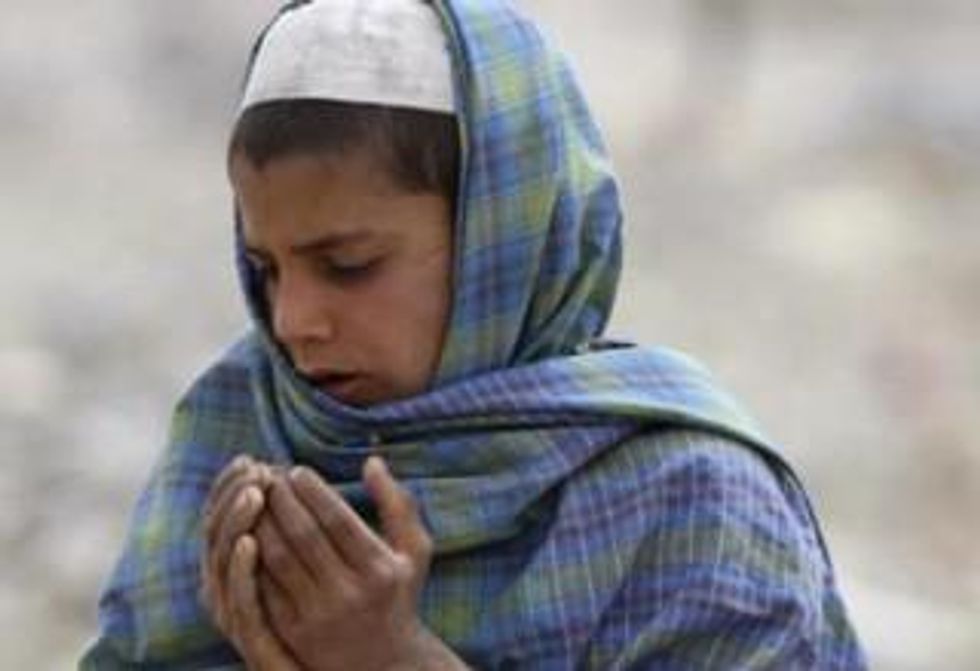
But then I also thought about the case of Sgt. Robert Bales. He is accused of massacring 16 Afghan civilians earlier this year, nine of them children. It is not the only atrocity of the Afghan War, but the accounts of the attack are particularly horrifying. Bales allegedly left his base and entered the villages of Balandi and Alkozai, near Kandahar. He proceeded to kill the victims as they slept, and then burned some of their bodies.
It is not that U.S. media failed to cover the atrocity. But the tone of the coverage placed considerable weight on the damage these deaths would do to the war effort (FAIR Media Advisory, 3/12/12). Questions were posed like, "Could this reignite a new anti-American backlash in the unstable region?" One headline stated, "Killings Threaten Afghan Mission." USA Today actually had on its front page, "Patriot Now Stands Accused in Massacre."
Seeing the atrocity this way prioritizes issues like national security-and obscures the fact that children were killed in their sleep, and that the person alleged to have killed them was a member of our military. This particular incident is, in some ways, just a more horrifying version of many other U.S. attacks that killed children in Afghanistan, or the drone attacks that have killed hundreds in Pakistan.
It is understandable, on some level, that these deaths will not affect most Americans the same way as the deaths in Newtown. They are deaths in a poor, violent country most of us will never see.

But that should not prevent us from asking ourselves-and our media-why that is, and wondering what our politics and our culture might look like if media decision-makers felt that that stories like this deserved more attention.
One has to imagine that our world would be different if we treated every tragic death as if it mattered. U.S. media shy away from imagery that could be considered too explicit or graphic-especially when it calls attention to suffering caused or endured by U.S. forces. As journalist Amy Goodman has said on countless occasions, if our media showed the brutal consequences of U.S. warmaking, those policies would change.
Sometimes these discussions can be quite explicit. Time's Joe Klein's comment that four-year-olds in Pakistan might have to die from drone attacks so that four-year-old Americans do not die in terrorist attacks was a reminder that, for some people, some lives are practically expendable.
So what would a healthier media look like? It wouldn't tell us not to grieve over Newtown. It would tell us that violence against children is deplorable no matter where it happens, or who inflicts it-and that there are things we can do to stop it, both close to home and many miles away.
We do not live in a world that treats all life equally. Not even close. Human beings inevitably feel certain tragedies more deeply, based on proximity to the victims, national identity, the circumstances of death and so on.
It is not surprising that there has been so much media attention paid to the horrible massacre in Newtown, Connecticut. The thought of small children being gunned down in a classroom is shocking and tragic. And the usual suggestions to avoid "politicizing" a tragedy by talking about public policy decisions that might prevent future tragedies seem to have less resonance this time around.
When we draw comparisons between a particular event and other similar tragedies, it is not to say that they all matter equally, but to remind ourselves that we're conditioned to feel that some matter quite a bit more than others.
When I heard the news about Newtown, I thought of previous mass shootings in this country. That is perhaps a natural reaction.
But then I also thought about the case of Sgt. Robert Bales. He is accused of massacring 16 Afghan civilians earlier this year, nine of them children. It is not the only atrocity of the Afghan War, but the accounts of the attack are particularly horrifying. Bales allegedly left his base and entered the villages of Balandi and Alkozai, near Kandahar. He proceeded to kill the victims as they slept, and then burned some of their bodies.
It is not that U.S. media failed to cover the atrocity. But the tone of the coverage placed considerable weight on the damage these deaths would do to the war effort (FAIR Media Advisory, 3/12/12). Questions were posed like, "Could this reignite a new anti-American backlash in the unstable region?" One headline stated, "Killings Threaten Afghan Mission." USA Today actually had on its front page, "Patriot Now Stands Accused in Massacre."
Seeing the atrocity this way prioritizes issues like national security-and obscures the fact that children were killed in their sleep, and that the person alleged to have killed them was a member of our military. This particular incident is, in some ways, just a more horrifying version of many other U.S. attacks that killed children in Afghanistan, or the drone attacks that have killed hundreds in Pakistan.
It is understandable, on some level, that these deaths will not affect most Americans the same way as the deaths in Newtown. They are deaths in a poor, violent country most of us will never see.
But that should not prevent us from asking ourselves-and our media-why that is, and wondering what our politics and our culture might look like if media decision-makers felt that that stories like this deserved more attention.
One has to imagine that our world would be different if we treated every tragic death as if it mattered. U.S. media shy away from imagery that could be considered too explicit or graphic-especially when it calls attention to suffering caused or endured by U.S. forces. As journalist Amy Goodman has said on countless occasions, if our media showed the brutal consequences of U.S. warmaking, those policies would change.
Sometimes these discussions can be quite explicit. Time's Joe Klein's comment that four-year-olds in Pakistan might have to die from drone attacks so that four-year-old Americans do not die in terrorist attacks was a reminder that, for some people, some lives are practically expendable.
So what would a healthier media look like? It wouldn't tell us not to grieve over Newtown. It would tell us that violence against children is deplorable no matter where it happens, or who inflicts it-and that there are things we can do to stop it, both close to home and many miles away.
We do not live in a world that treats all life equally. Not even close. Human beings inevitably feel certain tragedies more deeply, based on proximity to the victims, national identity, the circumstances of death and so on.
It is not surprising that there has been so much media attention paid to the horrible massacre in Newtown, Connecticut. The thought of small children being gunned down in a classroom is shocking and tragic. And the usual suggestions to avoid "politicizing" a tragedy by talking about public policy decisions that might prevent future tragedies seem to have less resonance this time around.
When we draw comparisons between a particular event and other similar tragedies, it is not to say that they all matter equally, but to remind ourselves that we're conditioned to feel that some matter quite a bit more than others.
When I heard the news about Newtown, I thought of previous mass shootings in this country. That is perhaps a natural reaction.
But then I also thought about the case of Sgt. Robert Bales. He is accused of massacring 16 Afghan civilians earlier this year, nine of them children. It is not the only atrocity of the Afghan War, but the accounts of the attack are particularly horrifying. Bales allegedly left his base and entered the villages of Balandi and Alkozai, near Kandahar. He proceeded to kill the victims as they slept, and then burned some of their bodies.
It is not that U.S. media failed to cover the atrocity. But the tone of the coverage placed considerable weight on the damage these deaths would do to the war effort (FAIR Media Advisory, 3/12/12). Questions were posed like, "Could this reignite a new anti-American backlash in the unstable region?" One headline stated, "Killings Threaten Afghan Mission." USA Today actually had on its front page, "Patriot Now Stands Accused in Massacre."
Seeing the atrocity this way prioritizes issues like national security-and obscures the fact that children were killed in their sleep, and that the person alleged to have killed them was a member of our military. This particular incident is, in some ways, just a more horrifying version of many other U.S. attacks that killed children in Afghanistan, or the drone attacks that have killed hundreds in Pakistan.
It is understandable, on some level, that these deaths will not affect most Americans the same way as the deaths in Newtown. They are deaths in a poor, violent country most of us will never see.
But that should not prevent us from asking ourselves-and our media-why that is, and wondering what our politics and our culture might look like if media decision-makers felt that that stories like this deserved more attention.
One has to imagine that our world would be different if we treated every tragic death as if it mattered. U.S. media shy away from imagery that could be considered too explicit or graphic-especially when it calls attention to suffering caused or endured by U.S. forces. As journalist Amy Goodman has said on countless occasions, if our media showed the brutal consequences of U.S. warmaking, those policies would change.
Sometimes these discussions can be quite explicit. Time's Joe Klein's comment that four-year-olds in Pakistan might have to die from drone attacks so that four-year-old Americans do not die in terrorist attacks was a reminder that, for some people, some lives are practically expendable.
So what would a healthier media look like? It wouldn't tell us not to grieve over Newtown. It would tell us that violence against children is deplorable no matter where it happens, or who inflicts it-and that there are things we can do to stop it, both close to home and many miles away.