SUBSCRIBE TO OUR FREE NEWSLETTER
Daily news & progressive opinion—funded by the people, not the corporations—delivered straight to your inbox.
5
#000000
#FFFFFF
To donate by check, phone, or other method, see our More Ways to Give page.
Matt Sitton knew the war in Afghanistan was going badly. He knew it because he was fighting it. He could see for himself. Twenty-six years old, with a wife and child back home, Staff Sergeant Sitton was on his third combat tour there.
Time and again, he and his men were sent through what he called "a minefield on a daily basis." His comrades were being blown apart -- at least one amputee a day, he said, "Because we are walking around aimlessly through grape rows and compounds that are littered with explosives."
Morale was low; the men struggled to remain alert. Sitton said he asked his officers to give them a break but was told to stop complaining.
"I am all for getting on the ground and fighting for my country when there is a desired endstate and we have clear guidance of what needs to be done," he wrote. "But when we are told basically to just walk around for a certain amount of time is not sitting well with me."
At home in Florida, Matt Sitton had attended a Christian school run by the Baptist church attended by Congressman Bill Young. He wrote Congressman Young and told him what was happening. "I'm concerned about the well-being of my soldiers," he said. "... I just want to return my guys home to their families healthy." He ended: "If anything, please pray for us over here. God bless."
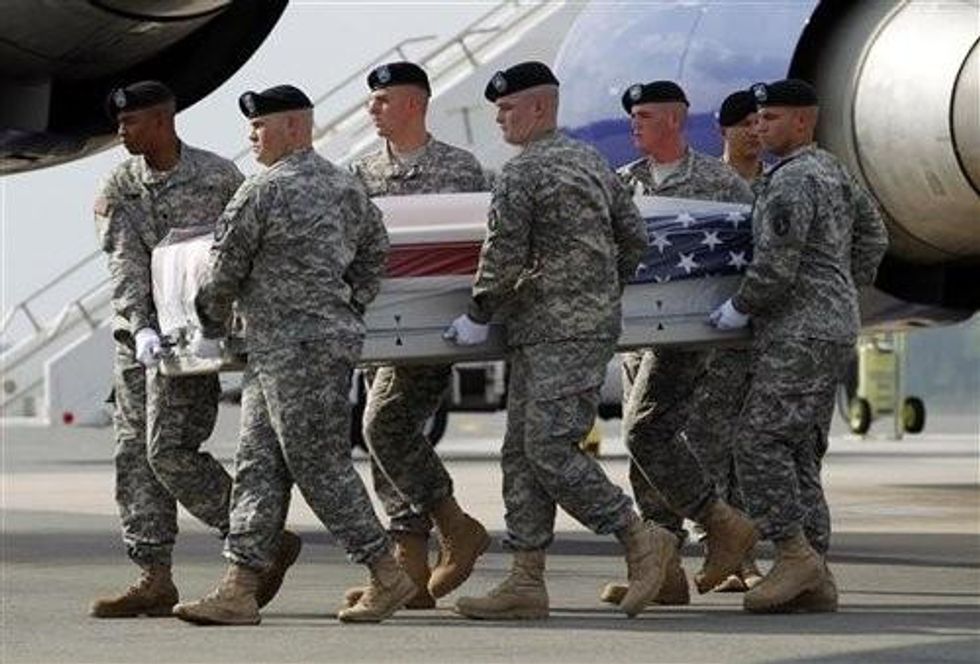
On August 2, while on patrol, Matt Sitton and a buddy were killed, blown apart by an IED, a hidden bomb. They flew Sitton's body home and held his funeral at that same Baptist church.
For a long time before Matt Sitton died, Congressman Young, the longest serving Republican in the House, called for sticking it out in Afghanistan. The powerful chairman of the Appropriations Subcommittee on Defense, he had helped continue the war by voting against an amendment requiring the President to set a timetable for withdrawal.
He's changed his mind. Touched by what Matt Sitton wrote him, Young asked that the letter be read into the Congressional Record, and has been talking to other veterans, hearing from them what "a real mess" the war is. Now he tells the Tampa Bay Times: "I think we should remove ourselves from Afghanistan as quickly as we can. I just think we're killing the kids that don't need to die."
Killing the kids that don't need to die. Let those words sink in. And this, too: Congressman Young says many of his colleagues in Congress feel the same way he does, but "they tend not to want to go public."
A few days ago, just shy of the 11th anniversary of our invasion of Afghanistan, we marked a sad and tragic milestone: the 2000th member of the American armed forces to die in combat there. There are now 68,000 American men and women in Afghanistan, down from 100,000 as President Obama has ended the surge he first ordered in late 2009. Seventeen thousand Americans have been wounded, and in the last five years alone, according to the UN, more than 13,000 Afghan civilians have died. That's a very conservative estimate.
How can we continue to justify this war begun to avenge the 9/11 attacks and punish those responsible, but now too long, too deadly, too mired in waste and corruption in a land that has resisted the ambitions of empire since the ancient Persians and Macedonians?
"Look at it this way," journalist Dexter Filkins recently wrote in The New Yorker. "After eleven years, more than four hundred billion dollars spent and two thousand Americans dead, this is what we've built: a deeply dysfunctional, predatory Afghan state that seems incapable of standing on its own -- even when we're there."
There are two more presidential debates. They will be yet another hoax unless someone puts to Barack Obama and Mitt Romney the same question asked by Congressman Young: "Why are we killing the kids that don't need to die?" And then asks it again and again to each of them until we get an honest answer.
Matt Sitton knew the war in Afghanistan was going badly. He knew it because he was fighting it. He could see for himself. Twenty-six years old, with a wife and child back home, Staff Sergeant Sitton was on his third combat tour there.
Time and again, he and his men were sent through what he called "a minefield on a daily basis." His comrades were being blown apart -- at least one amputee a day, he said, "Because we are walking around aimlessly through grape rows and compounds that are littered with explosives."
Morale was low; the men struggled to remain alert. Sitton said he asked his officers to give them a break but was told to stop complaining.
"I am all for getting on the ground and fighting for my country when there is a desired endstate and we have clear guidance of what needs to be done," he wrote. "But when we are told basically to just walk around for a certain amount of time is not sitting well with me."
At home in Florida, Matt Sitton had attended a Christian school run by the Baptist church attended by Congressman Bill Young. He wrote Congressman Young and told him what was happening. "I'm concerned about the well-being of my soldiers," he said. "... I just want to return my guys home to their families healthy." He ended: "If anything, please pray for us over here. God bless."
On August 2, while on patrol, Matt Sitton and a buddy were killed, blown apart by an IED, a hidden bomb. They flew Sitton's body home and held his funeral at that same Baptist church.
For a long time before Matt Sitton died, Congressman Young, the longest serving Republican in the House, called for sticking it out in Afghanistan. The powerful chairman of the Appropriations Subcommittee on Defense, he had helped continue the war by voting against an amendment requiring the President to set a timetable for withdrawal.
He's changed his mind. Touched by what Matt Sitton wrote him, Young asked that the letter be read into the Congressional Record, and has been talking to other veterans, hearing from them what "a real mess" the war is. Now he tells the Tampa Bay Times: "I think we should remove ourselves from Afghanistan as quickly as we can. I just think we're killing the kids that don't need to die."
Killing the kids that don't need to die. Let those words sink in. And this, too: Congressman Young says many of his colleagues in Congress feel the same way he does, but "they tend not to want to go public."
A few days ago, just shy of the 11th anniversary of our invasion of Afghanistan, we marked a sad and tragic milestone: the 2000th member of the American armed forces to die in combat there. There are now 68,000 American men and women in Afghanistan, down from 100,000 as President Obama has ended the surge he first ordered in late 2009. Seventeen thousand Americans have been wounded, and in the last five years alone, according to the UN, more than 13,000 Afghan civilians have died. That's a very conservative estimate.
How can we continue to justify this war begun to avenge the 9/11 attacks and punish those responsible, but now too long, too deadly, too mired in waste and corruption in a land that has resisted the ambitions of empire since the ancient Persians and Macedonians?
"Look at it this way," journalist Dexter Filkins recently wrote in The New Yorker. "After eleven years, more than four hundred billion dollars spent and two thousand Americans dead, this is what we've built: a deeply dysfunctional, predatory Afghan state that seems incapable of standing on its own -- even when we're there."
There are two more presidential debates. They will be yet another hoax unless someone puts to Barack Obama and Mitt Romney the same question asked by Congressman Young: "Why are we killing the kids that don't need to die?" And then asks it again and again to each of them until we get an honest answer.
Matt Sitton knew the war in Afghanistan was going badly. He knew it because he was fighting it. He could see for himself. Twenty-six years old, with a wife and child back home, Staff Sergeant Sitton was on his third combat tour there.
Time and again, he and his men were sent through what he called "a minefield on a daily basis." His comrades were being blown apart -- at least one amputee a day, he said, "Because we are walking around aimlessly through grape rows and compounds that are littered with explosives."
Morale was low; the men struggled to remain alert. Sitton said he asked his officers to give them a break but was told to stop complaining.
"I am all for getting on the ground and fighting for my country when there is a desired endstate and we have clear guidance of what needs to be done," he wrote. "But when we are told basically to just walk around for a certain amount of time is not sitting well with me."
At home in Florida, Matt Sitton had attended a Christian school run by the Baptist church attended by Congressman Bill Young. He wrote Congressman Young and told him what was happening. "I'm concerned about the well-being of my soldiers," he said. "... I just want to return my guys home to their families healthy." He ended: "If anything, please pray for us over here. God bless."
On August 2, while on patrol, Matt Sitton and a buddy were killed, blown apart by an IED, a hidden bomb. They flew Sitton's body home and held his funeral at that same Baptist church.
For a long time before Matt Sitton died, Congressman Young, the longest serving Republican in the House, called for sticking it out in Afghanistan. The powerful chairman of the Appropriations Subcommittee on Defense, he had helped continue the war by voting against an amendment requiring the President to set a timetable for withdrawal.
He's changed his mind. Touched by what Matt Sitton wrote him, Young asked that the letter be read into the Congressional Record, and has been talking to other veterans, hearing from them what "a real mess" the war is. Now he tells the Tampa Bay Times: "I think we should remove ourselves from Afghanistan as quickly as we can. I just think we're killing the kids that don't need to die."
Killing the kids that don't need to die. Let those words sink in. And this, too: Congressman Young says many of his colleagues in Congress feel the same way he does, but "they tend not to want to go public."
A few days ago, just shy of the 11th anniversary of our invasion of Afghanistan, we marked a sad and tragic milestone: the 2000th member of the American armed forces to die in combat there. There are now 68,000 American men and women in Afghanistan, down from 100,000 as President Obama has ended the surge he first ordered in late 2009. Seventeen thousand Americans have been wounded, and in the last five years alone, according to the UN, more than 13,000 Afghan civilians have died. That's a very conservative estimate.
How can we continue to justify this war begun to avenge the 9/11 attacks and punish those responsible, but now too long, too deadly, too mired in waste and corruption in a land that has resisted the ambitions of empire since the ancient Persians and Macedonians?
"Look at it this way," journalist Dexter Filkins recently wrote in The New Yorker. "After eleven years, more than four hundred billion dollars spent and two thousand Americans dead, this is what we've built: a deeply dysfunctional, predatory Afghan state that seems incapable of standing on its own -- even when we're there."
There are two more presidential debates. They will be yet another hoax unless someone puts to Barack Obama and Mitt Romney the same question asked by Congressman Young: "Why are we killing the kids that don't need to die?" And then asks it again and again to each of them until we get an honest answer.