
No Papers, No Fear at the Democratic Convention
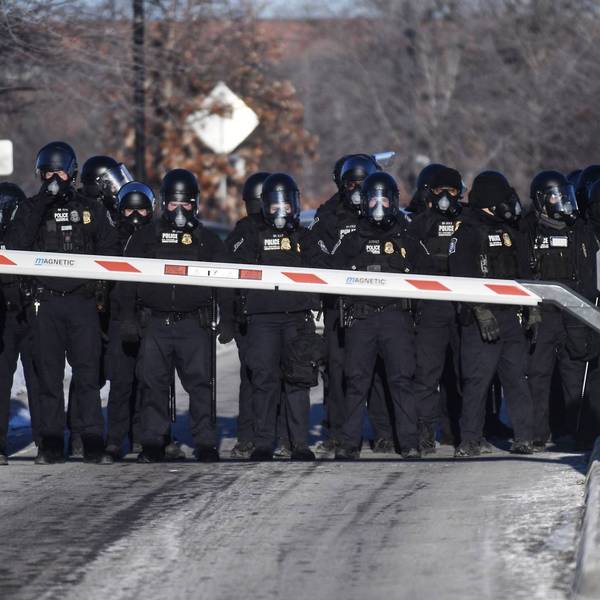
CHARLOTTE, N.C.--As the Democratic National Convention was gaveled into session Tuesday, outside in the rain, in the paramilitarized heart of Charlotte, democracy in its finest form found expression. Democracy, that is, if you believe that it's built on a foundation of grass-roots movements: the abolitionist struggle, the fight for women's suffrage, the civil-rights movement.
CHARLOTTE, N.C.--As the Democratic National Convention was gaveled into session Tuesday, outside in the rain, in the paramilitarized heart of Charlotte, democracy in its finest form found expression. Democracy, that is, if you believe that it's built on a foundation of grass-roots movements: the abolitionist struggle, the fight for women's suffrage, the civil-rights movement. In this city, where one of the first lunch counter sit-ins against segregation occurred, 10 undocumented immigrants blocked an intersection, risking arrest and possible deportation while calling on President Barack Obama and the Democratic Party to embrace the immigrant-rights movement and pass meaningful immigration reform.
"We are here to ask President Obama what his legacy will be," Rosi Carrasco said as she climbed down from the "UndocuBus," colorfully painted with butterflies, that the activists traveled in from Arizona. "What we want to say to President Obama is, on which side of the history is he going to be? Is he going to be remembered as the president that has been deporting the most people in U.S. history, or he is going to be on the side of immigrants?" Rosi's husband, Martin Unzueta, said: "I am undocumented. I've been living here for 18 years. I pay taxes, and I'm paying more taxes than Citibank."
The border state of Arizona has become ground zero in the national immigration crisis, with the passage of the notorious SB 1070 law that sought to criminalize simply being in the state without documentation. Such immigration determinations are under federal jurisdiction, and violations of them are actually civil offenses, not criminal. With SB 1070, Arizona pre-empted federal immigration policy, until most of its provisions were struck down in federal court.
While immigrant-rights activists consider the court's decision a victory, our nation remains plagued by its broken immigration policy. The Arizona law prompted similar bills in Republican-controlled state legislatures across the country. When a draconian anti-immigrant bill was signed into law in Alabama, Latinos fled east to Georgia and Florida, while Alabama farmers, unable to find hired help willing to do the backbreaking work typically reserved for migrants, saw their crops rot in the fields.
This is where movements come in. When the machinery of government breaks down, when politicians and bureaucrats create gridlock, it takes the power of the people to effect meaningful change, often at great personal risk. Across the U.S., well-organized immigrant-rights activists are increasingly engaging in civil disobedience, especially the young. Just as it was young people in North Carolina more than half a century ago who defied the advice of their elders to be more patient in the fight against segregation. Today, many young people have targeted President Obama with sit-down actions in his campaign offices, pressuring for passage of the DREAM Act. Many of these young activists came to this country as children, without documentation.
President Obama showed some sympathy for these "DREAMers" last June, when he announced a decision within the Department of Homeland Security to free 800,000 of them from the threat of potential deportation proceedings: "Imagine you've done everything right your entire life--studied hard, worked hard, maybe even graduated at the top of your class--only to suddenly face the threat of deportation to a country that you know nothing about, with a language that you may not even speak ... it makes no sense to expel talented young people, who, for all intents and purposes, are Americans--they've been raised as Americans; understand themselves to be part of this country."
Many celebrated the announcement, then challenged the president to act on his pledge. Several activists got themselves detained so they could enter the Broward Transitional Center, a pre-deportation jail in Florida, and interview detainees. They found dozens of people who are eligible for release under President Obama's policies, but who languish in the jail nevertheless.
Here in Charlotte, outside the convention center, 10 brave souls, among them a young woman and her mother, a couple and their daughter, sat down in the pouring rain on a large banner they placed in the middle of the intersection. The banner read "No Papers, No Fear" (in Spanish, "Sin Papeles, Sin Miedo"), with a large butterfly in the center. As the police surrounded them, I asked one of the women about to be arrested, "Why a butterfly?" "Because butterflies have no borders," she told me. "Butterflies are free."
Denis Moynihan contributed research to this column.
An Urgent Message From Our Co-Founder
Dear Common Dreams reader, It’s been nearly 30 years since I co-founded Common Dreams with my late wife, Lina Newhouser. We had the radical notion that journalism should serve the public good, not corporate profits. It was clear to us from the outset what it would take to build such a project. No paid advertisements. No corporate sponsors. No millionaire publisher telling us what to think or do. Many people said we wouldn't last a year, but we proved those doubters wrong. Together with a tremendous team of journalists and dedicated staff, we built an independent media outlet free from the constraints of profits and corporate control. Our mission has always been simple: To inform. To inspire. To ignite change for the common good. Building Common Dreams was not easy. Our survival was never guaranteed. When you take on the most powerful forces—Wall Street greed, fossil fuel industry destruction, Big Tech lobbyists, and uber-rich oligarchs who have spent billions upon billions rigging the economy and democracy in their favor—the only bulwark you have is supporters who believe in your work. But here’s the urgent message from me today. It's never been this bad out there. And it's never been this hard to keep us going. At the very moment Common Dreams is most needed, the threats we face are intensifying. We need your support now more than ever. We don't accept corporate advertising and never will. We don't have a paywall because we don't think people should be blocked from critical news based on their ability to pay. Everything we do is funded by the donations of readers like you. When everyone does the little they can afford, we are strong. But if that support retreats or dries up, so do we. Will you donate now to make sure Common Dreams not only survives but thrives? —Craig Brown, Co-founder |
CHARLOTTE, N.C.--As the Democratic National Convention was gaveled into session Tuesday, outside in the rain, in the paramilitarized heart of Charlotte, democracy in its finest form found expression. Democracy, that is, if you believe that it's built on a foundation of grass-roots movements: the abolitionist struggle, the fight for women's suffrage, the civil-rights movement. In this city, where one of the first lunch counter sit-ins against segregation occurred, 10 undocumented immigrants blocked an intersection, risking arrest and possible deportation while calling on President Barack Obama and the Democratic Party to embrace the immigrant-rights movement and pass meaningful immigration reform.
"We are here to ask President Obama what his legacy will be," Rosi Carrasco said as she climbed down from the "UndocuBus," colorfully painted with butterflies, that the activists traveled in from Arizona. "What we want to say to President Obama is, on which side of the history is he going to be? Is he going to be remembered as the president that has been deporting the most people in U.S. history, or he is going to be on the side of immigrants?" Rosi's husband, Martin Unzueta, said: "I am undocumented. I've been living here for 18 years. I pay taxes, and I'm paying more taxes than Citibank."
The border state of Arizona has become ground zero in the national immigration crisis, with the passage of the notorious SB 1070 law that sought to criminalize simply being in the state without documentation. Such immigration determinations are under federal jurisdiction, and violations of them are actually civil offenses, not criminal. With SB 1070, Arizona pre-empted federal immigration policy, until most of its provisions were struck down in federal court.
While immigrant-rights activists consider the court's decision a victory, our nation remains plagued by its broken immigration policy. The Arizona law prompted similar bills in Republican-controlled state legislatures across the country. When a draconian anti-immigrant bill was signed into law in Alabama, Latinos fled east to Georgia and Florida, while Alabama farmers, unable to find hired help willing to do the backbreaking work typically reserved for migrants, saw their crops rot in the fields.
This is where movements come in. When the machinery of government breaks down, when politicians and bureaucrats create gridlock, it takes the power of the people to effect meaningful change, often at great personal risk. Across the U.S., well-organized immigrant-rights activists are increasingly engaging in civil disobedience, especially the young. Just as it was young people in North Carolina more than half a century ago who defied the advice of their elders to be more patient in the fight against segregation. Today, many young people have targeted President Obama with sit-down actions in his campaign offices, pressuring for passage of the DREAM Act. Many of these young activists came to this country as children, without documentation.
President Obama showed some sympathy for these "DREAMers" last June, when he announced a decision within the Department of Homeland Security to free 800,000 of them from the threat of potential deportation proceedings: "Imagine you've done everything right your entire life--studied hard, worked hard, maybe even graduated at the top of your class--only to suddenly face the threat of deportation to a country that you know nothing about, with a language that you may not even speak ... it makes no sense to expel talented young people, who, for all intents and purposes, are Americans--they've been raised as Americans; understand themselves to be part of this country."
Many celebrated the announcement, then challenged the president to act on his pledge. Several activists got themselves detained so they could enter the Broward Transitional Center, a pre-deportation jail in Florida, and interview detainees. They found dozens of people who are eligible for release under President Obama's policies, but who languish in the jail nevertheless.
Here in Charlotte, outside the convention center, 10 brave souls, among them a young woman and her mother, a couple and their daughter, sat down in the pouring rain on a large banner they placed in the middle of the intersection. The banner read "No Papers, No Fear" (in Spanish, "Sin Papeles, Sin Miedo"), with a large butterfly in the center. As the police surrounded them, I asked one of the women about to be arrested, "Why a butterfly?" "Because butterflies have no borders," she told me. "Butterflies are free."
Denis Moynihan contributed research to this column.
CHARLOTTE, N.C.--As the Democratic National Convention was gaveled into session Tuesday, outside in the rain, in the paramilitarized heart of Charlotte, democracy in its finest form found expression. Democracy, that is, if you believe that it's built on a foundation of grass-roots movements: the abolitionist struggle, the fight for women's suffrage, the civil-rights movement. In this city, where one of the first lunch counter sit-ins against segregation occurred, 10 undocumented immigrants blocked an intersection, risking arrest and possible deportation while calling on President Barack Obama and the Democratic Party to embrace the immigrant-rights movement and pass meaningful immigration reform.
"We are here to ask President Obama what his legacy will be," Rosi Carrasco said as she climbed down from the "UndocuBus," colorfully painted with butterflies, that the activists traveled in from Arizona. "What we want to say to President Obama is, on which side of the history is he going to be? Is he going to be remembered as the president that has been deporting the most people in U.S. history, or he is going to be on the side of immigrants?" Rosi's husband, Martin Unzueta, said: "I am undocumented. I've been living here for 18 years. I pay taxes, and I'm paying more taxes than Citibank."
The border state of Arizona has become ground zero in the national immigration crisis, with the passage of the notorious SB 1070 law that sought to criminalize simply being in the state without documentation. Such immigration determinations are under federal jurisdiction, and violations of them are actually civil offenses, not criminal. With SB 1070, Arizona pre-empted federal immigration policy, until most of its provisions were struck down in federal court.
While immigrant-rights activists consider the court's decision a victory, our nation remains plagued by its broken immigration policy. The Arizona law prompted similar bills in Republican-controlled state legislatures across the country. When a draconian anti-immigrant bill was signed into law in Alabama, Latinos fled east to Georgia and Florida, while Alabama farmers, unable to find hired help willing to do the backbreaking work typically reserved for migrants, saw their crops rot in the fields.
This is where movements come in. When the machinery of government breaks down, when politicians and bureaucrats create gridlock, it takes the power of the people to effect meaningful change, often at great personal risk. Across the U.S., well-organized immigrant-rights activists are increasingly engaging in civil disobedience, especially the young. Just as it was young people in North Carolina more than half a century ago who defied the advice of their elders to be more patient in the fight against segregation. Today, many young people have targeted President Obama with sit-down actions in his campaign offices, pressuring for passage of the DREAM Act. Many of these young activists came to this country as children, without documentation.
President Obama showed some sympathy for these "DREAMers" last June, when he announced a decision within the Department of Homeland Security to free 800,000 of them from the threat of potential deportation proceedings: "Imagine you've done everything right your entire life--studied hard, worked hard, maybe even graduated at the top of your class--only to suddenly face the threat of deportation to a country that you know nothing about, with a language that you may not even speak ... it makes no sense to expel talented young people, who, for all intents and purposes, are Americans--they've been raised as Americans; understand themselves to be part of this country."
Many celebrated the announcement, then challenged the president to act on his pledge. Several activists got themselves detained so they could enter the Broward Transitional Center, a pre-deportation jail in Florida, and interview detainees. They found dozens of people who are eligible for release under President Obama's policies, but who languish in the jail nevertheless.
Here in Charlotte, outside the convention center, 10 brave souls, among them a young woman and her mother, a couple and their daughter, sat down in the pouring rain on a large banner they placed in the middle of the intersection. The banner read "No Papers, No Fear" (in Spanish, "Sin Papeles, Sin Miedo"), with a large butterfly in the center. As the police surrounded them, I asked one of the women about to be arrested, "Why a butterfly?" "Because butterflies have no borders," she told me. "Butterflies are free."
Denis Moynihan contributed research to this column.