SUBSCRIBE TO OUR FREE NEWSLETTER
Daily news & progressive opinion—funded by the people, not the corporations—delivered straight to your inbox.
5
#000000
#FFFFFF
To donate by check, phone, or other method, see our More Ways to Give page.
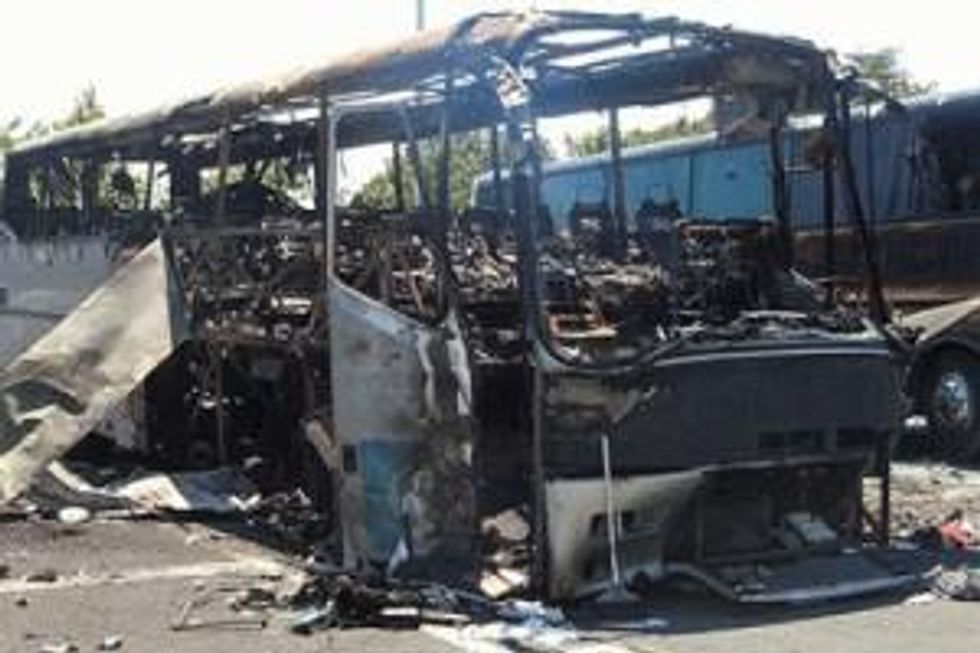
Immediately after the terror bombing of a busload of Israeli youth in Burgas, Bulgaria, both Israeli Prime Minister Benjamin Netanyahu and a "senior U.S. official" expressed certainty about Iran's responsibility. Since then, the White House has backed away from that position, after Bulgarian investigators warned against that assumption before the investigation is complete.
Similary, it is generally assumed that Iran and Hezbollah were responsible for the terrorist bombing of a Jewish community center in Buenos Aires on July 18, 1994, because US and Israeli officials, journalists and commentators have repeated that conclusion so often. It was the first reference made by those who were most eager to blame the Burgas bombing on Iran, such as Matthew Levitt and Jeffrey Goldberg.
But that terrorist bombing 18 years ago was not what it has come to appear by the constant drip of unsubstantiated journalistic and political references to it. The identification of that bombing as an Iranian operation should be regarded as a cautionary tale about the consequences of politics determining the results of a terrorist investigation.
The case made by the Argentine prosecutors that Iran and Hezbollah committed that 1994 terrorist bombing has long been cited as evidence that Iran is the world's premier terrorist state.
But the Argentine case was fraudulent in its origins and produced a trail of false evidence in service of a frame-up. There is every reason to believe that the entire Argentine investigation was essentially a cover-up that protected the real perpetrators.
That is what I learned from my ten-month investigation in 2006-07 of the case, the results of which were published in early 2008.
William Brencick, who was then chief of the political section at the US Embassy in Buenos Aires and the primary Embassy contact for the investigation of the AMIA bombing, told me in an interview in June 2007 that the US conviction about Iranian culpability was based on what he called a "wall of assumptions" -- a wall that obstructed an objective analysis of the case. The first assumption was that it was a suicide bombing, and that such an operation pointed to Hezbollah, and therefore Iran.
But the evidence produced to support that assumption was highly suspect. Of 200 initial eyewitnesses to the bombing, only one claimed to have seen the white Renault van that was supposed to have been the suicide car. And the testimony of that lone witness was contradicted by her sister, who said that she had seen only a black and yellow taxicab.
That is only the first of many indications that the official version of how the bombing went down was a tissue of lies. For example:
Apart from an Argentine investigation that led down a false trail, there were serious problems with the motives attributed to Iran and Hezbollah for killing large numbers of Jewish citizens of Argentina. The official explanation was that Iran was taking revenge on the Menem government for having reneged, under pressure from the Clinton administration, on its agreements with Iran on nuclear cooperation.
But in fact, Argentina had only halted two of the three agreements reached in 1987 and 1988, as was revealed, ironically, in documents cited by the Argentine prosecutor's report on the arrest warrant for Iranian officials dated October 2006 (unfortunately never made available in electronic form). The documents showed that the Menem government was continuing to send 20 percent enriched uranium to Iran under the third agreement, and there were negotiations continuing both before and after the bombing to resume full nuclear cooperation.
As for Hezbollah, it was generally assumed that it wanted to avenge the Israeli killing of its "ally" Mustafa Dirani in May 1994. But when Hezbollah really wanted to take revenge against Israel, as it did after the Israeli massacre in Qana in 1996, it did not target civilians in a distant country with no relationship to the conflict with Israel; it openly attacked Israel with Katyusha rockets.
It is not clear yet who committed the latest terrorist bombing against Jewish civilians in Burgas, Bulgaria. But the sorry history of that Buenos Aires investigation should not be used to draw a premature conclusion about this matter or any other terrorist action.
Immediately after the terror bombing of a busload of Israeli youth in Burgas, Bulgaria, both Israeli Prime Minister Benjamin Netanyahu and a "senior U.S. official" expressed certainty about Iran's responsibility. Since then, the White House has backed away from that position, after Bulgarian investigators warned against that assumption before the investigation is complete.
Similary, it is generally assumed that Iran and Hezbollah were responsible for the terrorist bombing of a Jewish community center in Buenos Aires on July 18, 1994, because US and Israeli officials, journalists and commentators have repeated that conclusion so often. It was the first reference made by those who were most eager to blame the Burgas bombing on Iran, such as Matthew Levitt and Jeffrey Goldberg.
But that terrorist bombing 18 years ago was not what it has come to appear by the constant drip of unsubstantiated journalistic and political references to it. The identification of that bombing as an Iranian operation should be regarded as a cautionary tale about the consequences of politics determining the results of a terrorist investigation.
The case made by the Argentine prosecutors that Iran and Hezbollah committed that 1994 terrorist bombing has long been cited as evidence that Iran is the world's premier terrorist state.
But the Argentine case was fraudulent in its origins and produced a trail of false evidence in service of a frame-up. There is every reason to believe that the entire Argentine investigation was essentially a cover-up that protected the real perpetrators.
That is what I learned from my ten-month investigation in 2006-07 of the case, the results of which were published in early 2008.
William Brencick, who was then chief of the political section at the US Embassy in Buenos Aires and the primary Embassy contact for the investigation of the AMIA bombing, told me in an interview in June 2007 that the US conviction about Iranian culpability was based on what he called a "wall of assumptions" -- a wall that obstructed an objective analysis of the case. The first assumption was that it was a suicide bombing, and that such an operation pointed to Hezbollah, and therefore Iran.
But the evidence produced to support that assumption was highly suspect. Of 200 initial eyewitnesses to the bombing, only one claimed to have seen the white Renault van that was supposed to have been the suicide car. And the testimony of that lone witness was contradicted by her sister, who said that she had seen only a black and yellow taxicab.
That is only the first of many indications that the official version of how the bombing went down was a tissue of lies. For example:
Apart from an Argentine investigation that led down a false trail, there were serious problems with the motives attributed to Iran and Hezbollah for killing large numbers of Jewish citizens of Argentina. The official explanation was that Iran was taking revenge on the Menem government for having reneged, under pressure from the Clinton administration, on its agreements with Iran on nuclear cooperation.
But in fact, Argentina had only halted two of the three agreements reached in 1987 and 1988, as was revealed, ironically, in documents cited by the Argentine prosecutor's report on the arrest warrant for Iranian officials dated October 2006 (unfortunately never made available in electronic form). The documents showed that the Menem government was continuing to send 20 percent enriched uranium to Iran under the third agreement, and there were negotiations continuing both before and after the bombing to resume full nuclear cooperation.
As for Hezbollah, it was generally assumed that it wanted to avenge the Israeli killing of its "ally" Mustafa Dirani in May 1994. But when Hezbollah really wanted to take revenge against Israel, as it did after the Israeli massacre in Qana in 1996, it did not target civilians in a distant country with no relationship to the conflict with Israel; it openly attacked Israel with Katyusha rockets.
It is not clear yet who committed the latest terrorist bombing against Jewish civilians in Burgas, Bulgaria. But the sorry history of that Buenos Aires investigation should not be used to draw a premature conclusion about this matter or any other terrorist action.
Immediately after the terror bombing of a busload of Israeli youth in Burgas, Bulgaria, both Israeli Prime Minister Benjamin Netanyahu and a "senior U.S. official" expressed certainty about Iran's responsibility. Since then, the White House has backed away from that position, after Bulgarian investigators warned against that assumption before the investigation is complete.
Similary, it is generally assumed that Iran and Hezbollah were responsible for the terrorist bombing of a Jewish community center in Buenos Aires on July 18, 1994, because US and Israeli officials, journalists and commentators have repeated that conclusion so often. It was the first reference made by those who were most eager to blame the Burgas bombing on Iran, such as Matthew Levitt and Jeffrey Goldberg.
But that terrorist bombing 18 years ago was not what it has come to appear by the constant drip of unsubstantiated journalistic and political references to it. The identification of that bombing as an Iranian operation should be regarded as a cautionary tale about the consequences of politics determining the results of a terrorist investigation.
The case made by the Argentine prosecutors that Iran and Hezbollah committed that 1994 terrorist bombing has long been cited as evidence that Iran is the world's premier terrorist state.
But the Argentine case was fraudulent in its origins and produced a trail of false evidence in service of a frame-up. There is every reason to believe that the entire Argentine investigation was essentially a cover-up that protected the real perpetrators.
That is what I learned from my ten-month investigation in 2006-07 of the case, the results of which were published in early 2008.
William Brencick, who was then chief of the political section at the US Embassy in Buenos Aires and the primary Embassy contact for the investigation of the AMIA bombing, told me in an interview in June 2007 that the US conviction about Iranian culpability was based on what he called a "wall of assumptions" -- a wall that obstructed an objective analysis of the case. The first assumption was that it was a suicide bombing, and that such an operation pointed to Hezbollah, and therefore Iran.
But the evidence produced to support that assumption was highly suspect. Of 200 initial eyewitnesses to the bombing, only one claimed to have seen the white Renault van that was supposed to have been the suicide car. And the testimony of that lone witness was contradicted by her sister, who said that she had seen only a black and yellow taxicab.
That is only the first of many indications that the official version of how the bombing went down was a tissue of lies. For example:
Apart from an Argentine investigation that led down a false trail, there were serious problems with the motives attributed to Iran and Hezbollah for killing large numbers of Jewish citizens of Argentina. The official explanation was that Iran was taking revenge on the Menem government for having reneged, under pressure from the Clinton administration, on its agreements with Iran on nuclear cooperation.
But in fact, Argentina had only halted two of the three agreements reached in 1987 and 1988, as was revealed, ironically, in documents cited by the Argentine prosecutor's report on the arrest warrant for Iranian officials dated October 2006 (unfortunately never made available in electronic form). The documents showed that the Menem government was continuing to send 20 percent enriched uranium to Iran under the third agreement, and there were negotiations continuing both before and after the bombing to resume full nuclear cooperation.
As for Hezbollah, it was generally assumed that it wanted to avenge the Israeli killing of its "ally" Mustafa Dirani in May 1994. But when Hezbollah really wanted to take revenge against Israel, as it did after the Israeli massacre in Qana in 1996, it did not target civilians in a distant country with no relationship to the conflict with Israel; it openly attacked Israel with Katyusha rockets.
It is not clear yet who committed the latest terrorist bombing against Jewish civilians in Burgas, Bulgaria. But the sorry history of that Buenos Aires investigation should not be used to draw a premature conclusion about this matter or any other terrorist action.