
Make no mistake. We had some ugly anti-labor mischief of our own during the late 19th and early 20th centuries, where union organizers, political radicals, suspected anarchists and Bolsheviks were blackballed, beaten, imprisoned, deported, murdered, and state-executed--all in the name of "law and order." But while many of these men (and women, too....they deported Emma Goldman to Russia) were clearly railroaded, at least the high-profile figures were given the semblance of a jury trial.
Question: So what happens these days in developing countries when a prominent, charismatic union activist--with the courage to stand up to sinister, government-supported business groups who have, on more than one occasion, already threatened his life--attempts to get the country's underpaid, under-benefited workers to join a labor union? Answer: They kill him.
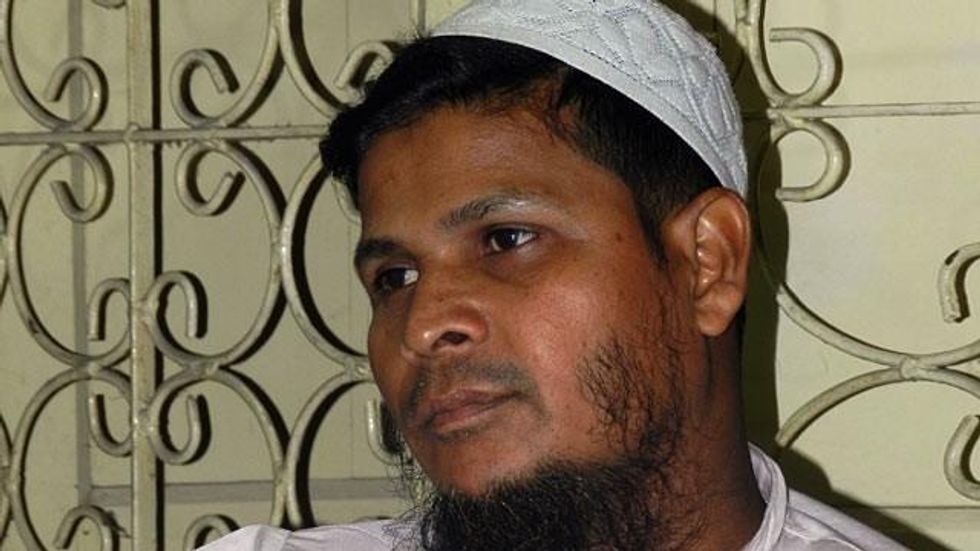
It was reported Monday, April 9, that the body of Aminul Islam, the charismatic and widely respected union leader of Bangladesh's garment industry, had been found (on Friday, April 6) dumped along side a road in Ghatail, a town approximately 60 miles northwest of Dhaka, Bangladesh's capital. Not only had Islam been murdered, local police reported that the corpse bore evidence of "severe" torture.
Since 2006, Aminul Islam had been a major thorn in the side of the garment bosses, as he fought for higher wages, safer working conditions, and increased employee dignity. Many Bangladeshis work 12-14 hour days, make as little as 21-cents per hour, and don't even get regular breaks. With a reported $19 billion in overseas sales in 2011, Bangladesh is the world's second-largest apparel exporter. The stakes are enormously high. With an estimated 5,000 factories cranking out fabric night and day, the textile industry is single-handedly keeping Bangladesh's economy afloat. Which is why they were so frightened of Aminul Islam.
Most recently, Islam had been trying to organize workers at factories owned by a company called the Shanta Group. According to shipping records, Shanta produces garments for many well-known American companies, including Tommy Hilfiger, Nike, and Ralph Lauren. Because Islam's activism was acknowledged to have been largely responsible for worker uprisings and demonstrations in 2010--demonstrations that nearly crippled the industry--business groups weren't going to stand idly by and watch him convince Shanta's 8,000 workers to join the union. They weren't going to allow it. So they killed him.
Mind you, these atrocities aren't happening only in faraway Bangladesh; they are happening in our own hemisphere as well--in Central and South America. In fact, the place where they have occurred the most--and continue to occur with chilling regularity--is Colombia. According to the Solidarity Center (the labor federation's international arm, headquarted in Washington D.C.), nearly 4,000 Colombian trade unionists have been murdered over the last 20 years. Indeed, more trade unionists are killed in Colombia each year than in the rest of the world combined.
The United States supports the government of Colombia. We support this anti-labor government that gives lip service to initiating programs designed to stop the violence, but who, in truth, has done little to prevent death squads and night-riders from tooling around the country murdering trade unionists.
And that's where the arrangement now stands. Our clothing is made by workers whose factory conditions are deplorable; our produce is harvested by workers whose field conditions are deplorable; and our government supports regimes whose human rights records are a joke. The U.S. has more than 800 military bases strewn around the word, we spend more money on defense than the rest of the world combined, and Barack Obama is awarded the Nobel Peace Prize. That's a very weird trifecta.
Make no mistake. We had some ugly anti-labor mischief of our own during the late 19th and early 20th centuries, where union organizers, political radicals, suspected anarchists and Bolsheviks were blackballed, beaten, imprisoned, deported, murdered, and state-executed--all in the name of "law and order." But while many of these men (and women, too....they deported Emma Goldman to Russia) were clearly railroaded, at least the high-profile figures were given the semblance of a jury trial.
Question: So what happens these days in developing countries when a prominent, charismatic union activist--with the courage to stand up to sinister, government-supported business groups who have, on more than one occasion, already threatened his life--attempts to get the country's underpaid, under-benefited workers to join a labor union? Answer: They kill him.
It was reported Monday, April 9, that the body of Aminul Islam, the charismatic and widely respected union leader of Bangladesh's garment industry, had been found (on Friday, April 6) dumped along side a road in Ghatail, a town approximately 60 miles northwest of Dhaka, Bangladesh's capital. Not only had Islam been murdered, local police reported that the corpse bore evidence of "severe" torture.
Since 2006, Aminul Islam had been a major thorn in the side of the garment bosses, as he fought for higher wages, safer working conditions, and increased employee dignity. Many Bangladeshis work 12-14 hour days, make as little as 21-cents per hour, and don't even get regular breaks. With a reported $19 billion in overseas sales in 2011, Bangladesh is the world's second-largest apparel exporter. The stakes are enormously high. With an estimated 5,000 factories cranking out fabric night and day, the textile industry is single-handedly keeping Bangladesh's economy afloat. Which is why they were so frightened of Aminul Islam.
Most recently, Islam had been trying to organize workers at factories owned by a company called the Shanta Group. According to shipping records, Shanta produces garments for many well-known American companies, including Tommy Hilfiger, Nike, and Ralph Lauren. Because Islam's activism was acknowledged to have been largely responsible for worker uprisings and demonstrations in 2010--demonstrations that nearly crippled the industry--business groups weren't going to stand idly by and watch him convince Shanta's 8,000 workers to join the union. They weren't going to allow it. So they killed him.
Mind you, these atrocities aren't happening only in faraway Bangladesh; they are happening in our own hemisphere as well--in Central and South America. In fact, the place where they have occurred the most--and continue to occur with chilling regularity--is Colombia. According to the Solidarity Center (the labor federation's international arm, headquarted in Washington D.C.), nearly 4,000 Colombian trade unionists have been murdered over the last 20 years. Indeed, more trade unionists are killed in Colombia each year than in the rest of the world combined.
The United States supports the government of Colombia. We support this anti-labor government that gives lip service to initiating programs designed to stop the violence, but who, in truth, has done little to prevent death squads and night-riders from tooling around the country murdering trade unionists.
And that's where the arrangement now stands. Our clothing is made by workers whose factory conditions are deplorable; our produce is harvested by workers whose field conditions are deplorable; and our government supports regimes whose human rights records are a joke. The U.S. has more than 800 military bases strewn around the word, we spend more money on defense than the rest of the world combined, and Barack Obama is awarded the Nobel Peace Prize. That's a very weird trifecta.
Make no mistake. We had some ugly anti-labor mischief of our own during the late 19th and early 20th centuries, where union organizers, political radicals, suspected anarchists and Bolsheviks were blackballed, beaten, imprisoned, deported, murdered, and state-executed--all in the name of "law and order." But while many of these men (and women, too....they deported Emma Goldman to Russia) were clearly railroaded, at least the high-profile figures were given the semblance of a jury trial.
Question: So what happens these days in developing countries when a prominent, charismatic union activist--with the courage to stand up to sinister, government-supported business groups who have, on more than one occasion, already threatened his life--attempts to get the country's underpaid, under-benefited workers to join a labor union? Answer: They kill him.
It was reported Monday, April 9, that the body of Aminul Islam, the charismatic and widely respected union leader of Bangladesh's garment industry, had been found (on Friday, April 6) dumped along side a road in Ghatail, a town approximately 60 miles northwest of Dhaka, Bangladesh's capital. Not only had Islam been murdered, local police reported that the corpse bore evidence of "severe" torture.
Since 2006, Aminul Islam had been a major thorn in the side of the garment bosses, as he fought for higher wages, safer working conditions, and increased employee dignity. Many Bangladeshis work 12-14 hour days, make as little as 21-cents per hour, and don't even get regular breaks. With a reported $19 billion in overseas sales in 2011, Bangladesh is the world's second-largest apparel exporter. The stakes are enormously high. With an estimated 5,000 factories cranking out fabric night and day, the textile industry is single-handedly keeping Bangladesh's economy afloat. Which is why they were so frightened of Aminul Islam.
Most recently, Islam had been trying to organize workers at factories owned by a company called the Shanta Group. According to shipping records, Shanta produces garments for many well-known American companies, including Tommy Hilfiger, Nike, and Ralph Lauren. Because Islam's activism was acknowledged to have been largely responsible for worker uprisings and demonstrations in 2010--demonstrations that nearly crippled the industry--business groups weren't going to stand idly by and watch him convince Shanta's 8,000 workers to join the union. They weren't going to allow it. So they killed him.
Mind you, these atrocities aren't happening only in faraway Bangladesh; they are happening in our own hemisphere as well--in Central and South America. In fact, the place where they have occurred the most--and continue to occur with chilling regularity--is Colombia. According to the Solidarity Center (the labor federation's international arm, headquarted in Washington D.C.), nearly 4,000 Colombian trade unionists have been murdered over the last 20 years. Indeed, more trade unionists are killed in Colombia each year than in the rest of the world combined.
The United States supports the government of Colombia. We support this anti-labor government that gives lip service to initiating programs designed to stop the violence, but who, in truth, has done little to prevent death squads and night-riders from tooling around the country murdering trade unionists.
And that's where the arrangement now stands. Our clothing is made by workers whose factory conditions are deplorable; our produce is harvested by workers whose field conditions are deplorable; and our government supports regimes whose human rights records are a joke. The U.S. has more than 800 military bases strewn around the word, we spend more money on defense than the rest of the world combined, and Barack Obama is awarded the Nobel Peace Prize. That's a very weird trifecta.