SUBSCRIBE TO OUR FREE NEWSLETTER
Daily news & progressive opinion—funded by the people, not the corporations—delivered straight to your inbox.
5
#000000
#FFFFFF
To donate by check, phone, or other method, see our More Ways to Give page.
War is a delusional activity by its very nature. When two sides both claim their cause is right and just, you know one of them has to be wrong, and maybe both. Still, even in time of war some statements stand out for their degree of delusionality. Take, for instance, the recent remarks of Gen. John R. Allen, commander of NATO forces in Afghanistan. Speaking of the shooting deaths of two American officers inside the Afghanistan Interior Ministry building, he called "The perpetrator of this attack ... a coward whose actions will not go unanswered." Pentagon press secretary George Little later weighed in as well, warning that "Anyone who believes they can weaken our resolve through these cowardly attacks is severely mistaken." The cowardice the officials denounced was presumably the fact that the Ministry employee suspected of the shootings had fled the scene. According to our American code of honor, they seem to be saying, killers don't hide.
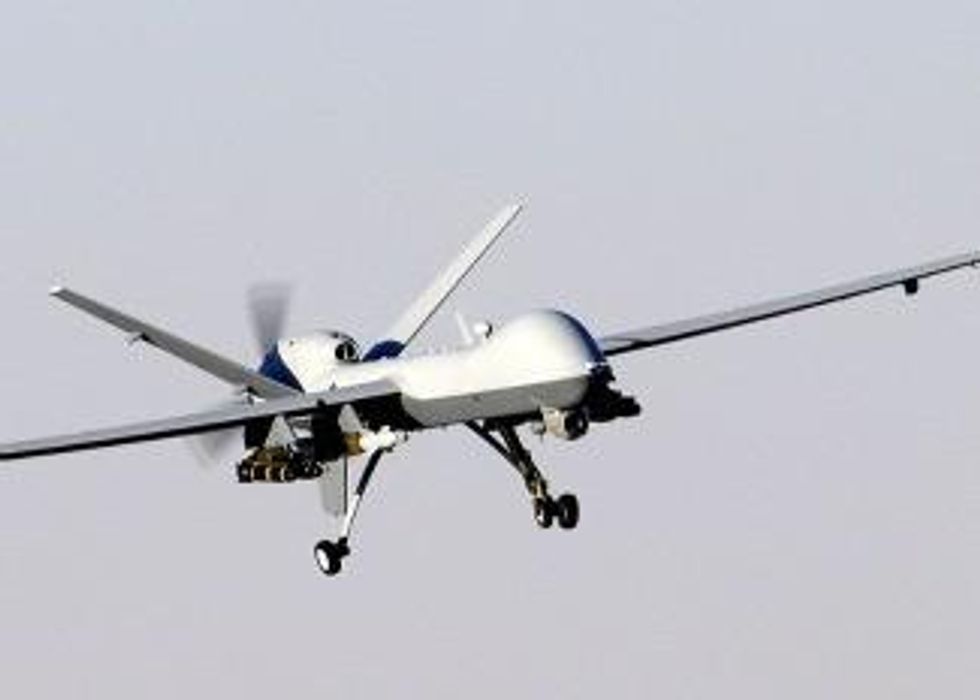
But what of killers who never show their faces at all? Is this the American way? You wouldn't think so from the outraged official comments, but obviously it is. And these days we seem quite pleased that it is. Remember the drones - or the unmanned aerial vehicles, as generals and press secretaries prefer we call them? In military speak, they are the USA's "unique assets." But, just as they say that guns don't kill people, people do, America's unique assets don't kill people, drone operators in Nevada do.
When the US military killed eight boys in Afghanistan in February, their killers didn't have to run from the boys' enraged families. They just went home after their shifts were over, unless maybe they went out to dinner or something. No one around them even knew they'd killed anybody - and it's not clear how many would have cared if they did. Does the general mean to say that he considers people who kill in that fashion cowards for not being around to face the music? Or are American standards of cowardice only applied to non-Americans?
Actually it appears we needn't worry so much about our drone operators taking this sort of consideration personally. A 2011 Air Force report found almost half of them experiencing high job-related stress levels, but it wasn't particularly caused by watching the videos of people killed as a result of their actions - that didn't actually bother them nearly so much as some feared it might. Turns out it's mostly the long hours and irregular shifts that get them down.)
Obviously, asking whether American officials mean to apply these standards to Americans is only a rhetorical question, as they so clearly don't. After all, it was only last year that the President shredded the War Powers Act by arguing that he could bomb anyone he wanted (in Libya in that instance), without Congressional approval, so long as he put no Americans at risk in the operation. So it appears that if we can just do something to improve those operator working hours, it'll be clear sailing for drone warfare.
In fact, some might argue that government officials' wartime remarks shouldn't be expected to stand up to any rigorous examination of their consistency because that's not really what they're about - they're only designed to pump up the "patriotism" of the home audience to keep them backing the war effort. Except for one thing - this Administration, just as the one before it, obviously doesn't feel the need to even secure public backing for its wars. If it has the military and the foreign policy establishment, it seems to think that's more than enough.
Given how expendable domestic foreign policy support has become in the day of the all volunteer army and the drone, it seems likely that in the long run outside forces will exert more influence in taming Washington's free bombing ways than we will. So as U.S. policy makers denounce the cowardice of their enemies, they may want to consider just how many people in the rest of the world are going to conclude that suicide bombers who give up their own lives are far less cowardly than generals, drone operators and even presidents who pride themselves on waging war in ways that carry no risk to themselves or to their constituencies.
Before calling others cowards, we might do well to remember that emerging twenty-first century proverb: People who fly drones shouldn't throw stones.
War is a delusional activity by its very nature. When two sides both claim their cause is right and just, you know one of them has to be wrong, and maybe both. Still, even in time of war some statements stand out for their degree of delusionality. Take, for instance, the recent remarks of Gen. John R. Allen, commander of NATO forces in Afghanistan. Speaking of the shooting deaths of two American officers inside the Afghanistan Interior Ministry building, he called "The perpetrator of this attack ... a coward whose actions will not go unanswered." Pentagon press secretary George Little later weighed in as well, warning that "Anyone who believes they can weaken our resolve through these cowardly attacks is severely mistaken." The cowardice the officials denounced was presumably the fact that the Ministry employee suspected of the shootings had fled the scene. According to our American code of honor, they seem to be saying, killers don't hide.
But what of killers who never show their faces at all? Is this the American way? You wouldn't think so from the outraged official comments, but obviously it is. And these days we seem quite pleased that it is. Remember the drones - or the unmanned aerial vehicles, as generals and press secretaries prefer we call them? In military speak, they are the USA's "unique assets." But, just as they say that guns don't kill people, people do, America's unique assets don't kill people, drone operators in Nevada do.
When the US military killed eight boys in Afghanistan in February, their killers didn't have to run from the boys' enraged families. They just went home after their shifts were over, unless maybe they went out to dinner or something. No one around them even knew they'd killed anybody - and it's not clear how many would have cared if they did. Does the general mean to say that he considers people who kill in that fashion cowards for not being around to face the music? Or are American standards of cowardice only applied to non-Americans?
Actually it appears we needn't worry so much about our drone operators taking this sort of consideration personally. A 2011 Air Force report found almost half of them experiencing high job-related stress levels, but it wasn't particularly caused by watching the videos of people killed as a result of their actions - that didn't actually bother them nearly so much as some feared it might. Turns out it's mostly the long hours and irregular shifts that get them down.)
Obviously, asking whether American officials mean to apply these standards to Americans is only a rhetorical question, as they so clearly don't. After all, it was only last year that the President shredded the War Powers Act by arguing that he could bomb anyone he wanted (in Libya in that instance), without Congressional approval, so long as he put no Americans at risk in the operation. So it appears that if we can just do something to improve those operator working hours, it'll be clear sailing for drone warfare.
In fact, some might argue that government officials' wartime remarks shouldn't be expected to stand up to any rigorous examination of their consistency because that's not really what they're about - they're only designed to pump up the "patriotism" of the home audience to keep them backing the war effort. Except for one thing - this Administration, just as the one before it, obviously doesn't feel the need to even secure public backing for its wars. If it has the military and the foreign policy establishment, it seems to think that's more than enough.
Given how expendable domestic foreign policy support has become in the day of the all volunteer army and the drone, it seems likely that in the long run outside forces will exert more influence in taming Washington's free bombing ways than we will. So as U.S. policy makers denounce the cowardice of their enemies, they may want to consider just how many people in the rest of the world are going to conclude that suicide bombers who give up their own lives are far less cowardly than generals, drone operators and even presidents who pride themselves on waging war in ways that carry no risk to themselves or to their constituencies.
Before calling others cowards, we might do well to remember that emerging twenty-first century proverb: People who fly drones shouldn't throw stones.
War is a delusional activity by its very nature. When two sides both claim their cause is right and just, you know one of them has to be wrong, and maybe both. Still, even in time of war some statements stand out for their degree of delusionality. Take, for instance, the recent remarks of Gen. John R. Allen, commander of NATO forces in Afghanistan. Speaking of the shooting deaths of two American officers inside the Afghanistan Interior Ministry building, he called "The perpetrator of this attack ... a coward whose actions will not go unanswered." Pentagon press secretary George Little later weighed in as well, warning that "Anyone who believes they can weaken our resolve through these cowardly attacks is severely mistaken." The cowardice the officials denounced was presumably the fact that the Ministry employee suspected of the shootings had fled the scene. According to our American code of honor, they seem to be saying, killers don't hide.
But what of killers who never show their faces at all? Is this the American way? You wouldn't think so from the outraged official comments, but obviously it is. And these days we seem quite pleased that it is. Remember the drones - or the unmanned aerial vehicles, as generals and press secretaries prefer we call them? In military speak, they are the USA's "unique assets." But, just as they say that guns don't kill people, people do, America's unique assets don't kill people, drone operators in Nevada do.
When the US military killed eight boys in Afghanistan in February, their killers didn't have to run from the boys' enraged families. They just went home after their shifts were over, unless maybe they went out to dinner or something. No one around them even knew they'd killed anybody - and it's not clear how many would have cared if they did. Does the general mean to say that he considers people who kill in that fashion cowards for not being around to face the music? Or are American standards of cowardice only applied to non-Americans?
Actually it appears we needn't worry so much about our drone operators taking this sort of consideration personally. A 2011 Air Force report found almost half of them experiencing high job-related stress levels, but it wasn't particularly caused by watching the videos of people killed as a result of their actions - that didn't actually bother them nearly so much as some feared it might. Turns out it's mostly the long hours and irregular shifts that get them down.)
Obviously, asking whether American officials mean to apply these standards to Americans is only a rhetorical question, as they so clearly don't. After all, it was only last year that the President shredded the War Powers Act by arguing that he could bomb anyone he wanted (in Libya in that instance), without Congressional approval, so long as he put no Americans at risk in the operation. So it appears that if we can just do something to improve those operator working hours, it'll be clear sailing for drone warfare.
In fact, some might argue that government officials' wartime remarks shouldn't be expected to stand up to any rigorous examination of their consistency because that's not really what they're about - they're only designed to pump up the "patriotism" of the home audience to keep them backing the war effort. Except for one thing - this Administration, just as the one before it, obviously doesn't feel the need to even secure public backing for its wars. If it has the military and the foreign policy establishment, it seems to think that's more than enough.
Given how expendable domestic foreign policy support has become in the day of the all volunteer army and the drone, it seems likely that in the long run outside forces will exert more influence in taming Washington's free bombing ways than we will. So as U.S. policy makers denounce the cowardice of their enemies, they may want to consider just how many people in the rest of the world are going to conclude that suicide bombers who give up their own lives are far less cowardly than generals, drone operators and even presidents who pride themselves on waging war in ways that carry no risk to themselves or to their constituencies.
Before calling others cowards, we might do well to remember that emerging twenty-first century proverb: People who fly drones shouldn't throw stones.