SUBSCRIBE TO OUR FREE NEWSLETTER
Daily news & progressive opinion—funded by the people, not the corporations—delivered straight to your inbox.
5
#000000
#FFFFFF
To donate by check, phone, or other method, see our More Ways to Give page.
Regular politics in Washington now resembles an ecological dead zone where truth perishes in a polluted environment. Democrats and Republicans shadowbox over their concocted fiscal crisis, neither willing to tell voters the truth, both eager to avoid blame for the damage they are doing to the country.
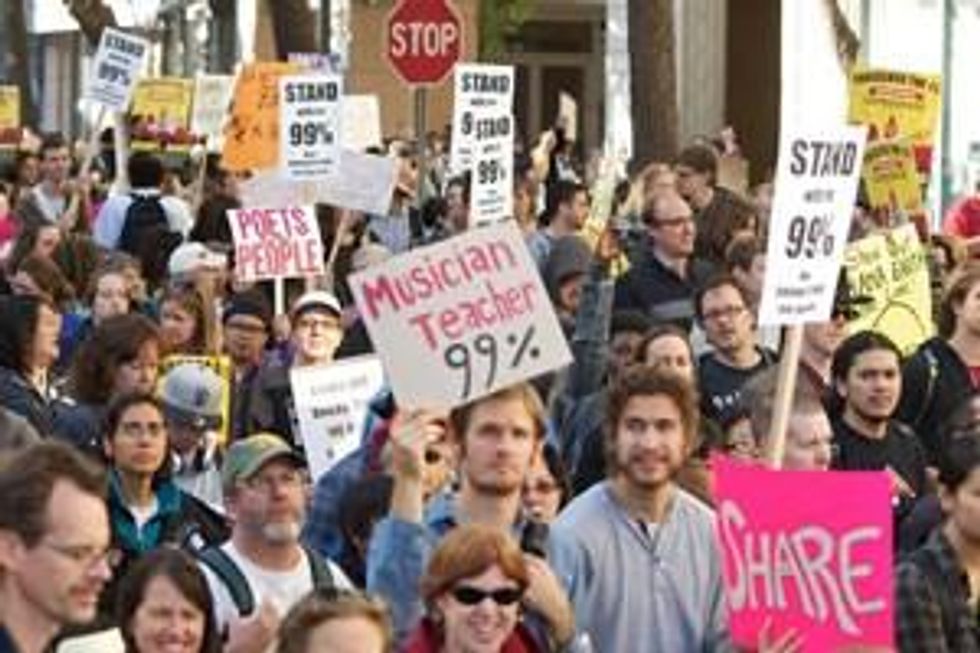
The Occupy protesters are acting like citizens, believing they have the power to change things. Their ambition reflects a core mystery of American democracy--the fact that humble people can acquire power when they convince themselves they can. Warmhearted and broad-minded, these citizens audaciously claim to speak for the 99 percent--and despite initial ridicule and dismissal of them by much of the press, polls show they have strong public support. The Occupiers have even managed to make uptight reporters write about corporate greed.
Authentic new social movements do not appear very often, and most of them fail. Throughout the nation's history, rebellions have typically been derailed by their own mistakes and divisions or snuffed out by entrenched power. Even when they endure, it can take years, sometimes generations, to overcome the resistance of the status quo. Think of the abolitionists and the civil rights movement, women's demand for the vote and equal rights, working people collectively asserting their power in unions.
As with earlier movements, governing elites have grasped the radical nature of this noisy intrusion into their privileged domain, and they have attempted to crush OWS with a series of melodramatic police raids from New York to California. But repression has failed to intimidate the rebellious citizens. Indeed, each attack only seems to strengthen the movement.
But will it last? Skeptics are entitled to their doubts, but for important reasons I am confident this movement will endure. First, because it is very unlikely the establishment will respond substantively to OWS's grievances--and that will only make the protesters more determined. OWS has brilliantly focused its many complaints on the very sector--the megabankers and financiers--on whom the politicians are dependent. In different ways, Republicans and Democrats are aligned with the greedheads and are thus unwilling to punish their crimes or cut them down to size.
This new movement is probably more threatening to President Obama, because many of the young people and minorities who campaigned and voted for him in 2008 might drift away to Occupy's direct action. If Obama refuses to get tougher on reining in Wall Street, these former supporters may just skip voting in 2012. Yet this new force can ultimately help Obama if he responds to its message. Led by the young, the movement is aligning with the reviving militancy of labor and other progressive constituencies. The spirit is open-armed and patriotic, not negative and divisive. Obama should dare to lead it rather than dodge or oppose it. The Republicans are hopeless, of course, utterly in thrall to banking industry demands.
In any case, this movement is not about electoral politics--not yet, anyway. It is about saving the country, an objective bigger than politics and politicians. Its vision is nothing less than halting the degradation and fostering the rebirth of the nation's original democratic promise. It is the nature of authentic movements to seek large and majestic goals that seem impossible to pedestrian politicians--and, at first, to most citizens. Standing up requires both uncommon courage and severe provocation.
Another reason I'm optimistic about the Occupy movement is its distinctiveness from other movements. Its horizontal, leaderless quality confuses outsiders but ensures its autonomy as a free-standing force not beholden to political parties or financial patrons that might restrict its behavior. OWS's creativity depends on its independence.
And finally, I am optimistic about Occupy because I see similarities with earlier movements that led to significant reforms. Odd as it may seem, Occupy's situation resembles in some ways the agrarian revolt of the late nineteenth century. I say odd because the Populists were poverty-plagued farmers; but like today's protesters, they were getting crushed by the banking system and monopoly capitalism. For an inspiring portrait of what ordinary Americans can accomplish in adversity, read Lawrence Goodwyn's epic history The Populist Moment. The Populists well understood that nobody was on their side, neither the government nor the bankers. As industrial capitalism advanced, the brutal credit system was converting yeoman farmers of the South and Midwest into landless peasants (a bit like the foreclosure crisis impoverishing homeowners in our time). In deep crisis, the Populists had to save themselves. They launched agricultural cooperatives and developed farsighted reform proposals, many of which were ultimately embraced by the New Deal. The Populists lost in their own time, but they planted seeds for the future and changed the nation in the long run.
Like the Populists, the Occupiers are acting in the American spirit of self-reliance, doing whatever they can to counter a destructive system and force change upon it. In the absence of serious financial reform from Congress, for example, the "move your money" campaign uses direct action to take money and power away from the megabanks. But Occupy is also demanding a new kind of government, one not captured by corporate power and rigged against ordinary people. Occupy DC, for example, has proposed a humane plan for deficit reduction. Others urge a constitutional amendment that would disarm the money power's capture of democracy. OWS can bring about a change in laws, but first it must cleanse our degraded political culture. This is a staggering challenge, of course, but radical reform will originate only from ordinary citizens--not policy experts and their Wall Street supporters, who led the nation into ruin. The movement can inspire the people to become creative citizens again. Are we up to it? Let us find out. Let the democratic conversations begin.
Regular politics in Washington now resembles an ecological dead zone where truth perishes in a polluted environment. Democrats and Republicans shadowbox over their concocted fiscal crisis, neither willing to tell voters the truth, both eager to avoid blame for the damage they are doing to the country.
The Occupy protesters are acting like citizens, believing they have the power to change things. Their ambition reflects a core mystery of American democracy--the fact that humble people can acquire power when they convince themselves they can. Warmhearted and broad-minded, these citizens audaciously claim to speak for the 99 percent--and despite initial ridicule and dismissal of them by much of the press, polls show they have strong public support. The Occupiers have even managed to make uptight reporters write about corporate greed.
Authentic new social movements do not appear very often, and most of them fail. Throughout the nation's history, rebellions have typically been derailed by their own mistakes and divisions or snuffed out by entrenched power. Even when they endure, it can take years, sometimes generations, to overcome the resistance of the status quo. Think of the abolitionists and the civil rights movement, women's demand for the vote and equal rights, working people collectively asserting their power in unions.
As with earlier movements, governing elites have grasped the radical nature of this noisy intrusion into their privileged domain, and they have attempted to crush OWS with a series of melodramatic police raids from New York to California. But repression has failed to intimidate the rebellious citizens. Indeed, each attack only seems to strengthen the movement.
But will it last? Skeptics are entitled to their doubts, but for important reasons I am confident this movement will endure. First, because it is very unlikely the establishment will respond substantively to OWS's grievances--and that will only make the protesters more determined. OWS has brilliantly focused its many complaints on the very sector--the megabankers and financiers--on whom the politicians are dependent. In different ways, Republicans and Democrats are aligned with the greedheads and are thus unwilling to punish their crimes or cut them down to size.
This new movement is probably more threatening to President Obama, because many of the young people and minorities who campaigned and voted for him in 2008 might drift away to Occupy's direct action. If Obama refuses to get tougher on reining in Wall Street, these former supporters may just skip voting in 2012. Yet this new force can ultimately help Obama if he responds to its message. Led by the young, the movement is aligning with the reviving militancy of labor and other progressive constituencies. The spirit is open-armed and patriotic, not negative and divisive. Obama should dare to lead it rather than dodge or oppose it. The Republicans are hopeless, of course, utterly in thrall to banking industry demands.
In any case, this movement is not about electoral politics--not yet, anyway. It is about saving the country, an objective bigger than politics and politicians. Its vision is nothing less than halting the degradation and fostering the rebirth of the nation's original democratic promise. It is the nature of authentic movements to seek large and majestic goals that seem impossible to pedestrian politicians--and, at first, to most citizens. Standing up requires both uncommon courage and severe provocation.
Another reason I'm optimistic about the Occupy movement is its distinctiveness from other movements. Its horizontal, leaderless quality confuses outsiders but ensures its autonomy as a free-standing force not beholden to political parties or financial patrons that might restrict its behavior. OWS's creativity depends on its independence.
And finally, I am optimistic about Occupy because I see similarities with earlier movements that led to significant reforms. Odd as it may seem, Occupy's situation resembles in some ways the agrarian revolt of the late nineteenth century. I say odd because the Populists were poverty-plagued farmers; but like today's protesters, they were getting crushed by the banking system and monopoly capitalism. For an inspiring portrait of what ordinary Americans can accomplish in adversity, read Lawrence Goodwyn's epic history The Populist Moment. The Populists well understood that nobody was on their side, neither the government nor the bankers. As industrial capitalism advanced, the brutal credit system was converting yeoman farmers of the South and Midwest into landless peasants (a bit like the foreclosure crisis impoverishing homeowners in our time). In deep crisis, the Populists had to save themselves. They launched agricultural cooperatives and developed farsighted reform proposals, many of which were ultimately embraced by the New Deal. The Populists lost in their own time, but they planted seeds for the future and changed the nation in the long run.
Like the Populists, the Occupiers are acting in the American spirit of self-reliance, doing whatever they can to counter a destructive system and force change upon it. In the absence of serious financial reform from Congress, for example, the "move your money" campaign uses direct action to take money and power away from the megabanks. But Occupy is also demanding a new kind of government, one not captured by corporate power and rigged against ordinary people. Occupy DC, for example, has proposed a humane plan for deficit reduction. Others urge a constitutional amendment that would disarm the money power's capture of democracy. OWS can bring about a change in laws, but first it must cleanse our degraded political culture. This is a staggering challenge, of course, but radical reform will originate only from ordinary citizens--not policy experts and their Wall Street supporters, who led the nation into ruin. The movement can inspire the people to become creative citizens again. Are we up to it? Let us find out. Let the democratic conversations begin.
Regular politics in Washington now resembles an ecological dead zone where truth perishes in a polluted environment. Democrats and Republicans shadowbox over their concocted fiscal crisis, neither willing to tell voters the truth, both eager to avoid blame for the damage they are doing to the country.
The Occupy protesters are acting like citizens, believing they have the power to change things. Their ambition reflects a core mystery of American democracy--the fact that humble people can acquire power when they convince themselves they can. Warmhearted and broad-minded, these citizens audaciously claim to speak for the 99 percent--and despite initial ridicule and dismissal of them by much of the press, polls show they have strong public support. The Occupiers have even managed to make uptight reporters write about corporate greed.
Authentic new social movements do not appear very often, and most of them fail. Throughout the nation's history, rebellions have typically been derailed by their own mistakes and divisions or snuffed out by entrenched power. Even when they endure, it can take years, sometimes generations, to overcome the resistance of the status quo. Think of the abolitionists and the civil rights movement, women's demand for the vote and equal rights, working people collectively asserting their power in unions.
As with earlier movements, governing elites have grasped the radical nature of this noisy intrusion into their privileged domain, and they have attempted to crush OWS with a series of melodramatic police raids from New York to California. But repression has failed to intimidate the rebellious citizens. Indeed, each attack only seems to strengthen the movement.
But will it last? Skeptics are entitled to their doubts, but for important reasons I am confident this movement will endure. First, because it is very unlikely the establishment will respond substantively to OWS's grievances--and that will only make the protesters more determined. OWS has brilliantly focused its many complaints on the very sector--the megabankers and financiers--on whom the politicians are dependent. In different ways, Republicans and Democrats are aligned with the greedheads and are thus unwilling to punish their crimes or cut them down to size.
This new movement is probably more threatening to President Obama, because many of the young people and minorities who campaigned and voted for him in 2008 might drift away to Occupy's direct action. If Obama refuses to get tougher on reining in Wall Street, these former supporters may just skip voting in 2012. Yet this new force can ultimately help Obama if he responds to its message. Led by the young, the movement is aligning with the reviving militancy of labor and other progressive constituencies. The spirit is open-armed and patriotic, not negative and divisive. Obama should dare to lead it rather than dodge or oppose it. The Republicans are hopeless, of course, utterly in thrall to banking industry demands.
In any case, this movement is not about electoral politics--not yet, anyway. It is about saving the country, an objective bigger than politics and politicians. Its vision is nothing less than halting the degradation and fostering the rebirth of the nation's original democratic promise. It is the nature of authentic movements to seek large and majestic goals that seem impossible to pedestrian politicians--and, at first, to most citizens. Standing up requires both uncommon courage and severe provocation.
Another reason I'm optimistic about the Occupy movement is its distinctiveness from other movements. Its horizontal, leaderless quality confuses outsiders but ensures its autonomy as a free-standing force not beholden to political parties or financial patrons that might restrict its behavior. OWS's creativity depends on its independence.
And finally, I am optimistic about Occupy because I see similarities with earlier movements that led to significant reforms. Odd as it may seem, Occupy's situation resembles in some ways the agrarian revolt of the late nineteenth century. I say odd because the Populists were poverty-plagued farmers; but like today's protesters, they were getting crushed by the banking system and monopoly capitalism. For an inspiring portrait of what ordinary Americans can accomplish in adversity, read Lawrence Goodwyn's epic history The Populist Moment. The Populists well understood that nobody was on their side, neither the government nor the bankers. As industrial capitalism advanced, the brutal credit system was converting yeoman farmers of the South and Midwest into landless peasants (a bit like the foreclosure crisis impoverishing homeowners in our time). In deep crisis, the Populists had to save themselves. They launched agricultural cooperatives and developed farsighted reform proposals, many of which were ultimately embraced by the New Deal. The Populists lost in their own time, but they planted seeds for the future and changed the nation in the long run.
Like the Populists, the Occupiers are acting in the American spirit of self-reliance, doing whatever they can to counter a destructive system and force change upon it. In the absence of serious financial reform from Congress, for example, the "move your money" campaign uses direct action to take money and power away from the megabanks. But Occupy is also demanding a new kind of government, one not captured by corporate power and rigged against ordinary people. Occupy DC, for example, has proposed a humane plan for deficit reduction. Others urge a constitutional amendment that would disarm the money power's capture of democracy. OWS can bring about a change in laws, but first it must cleanse our degraded political culture. This is a staggering challenge, of course, but radical reform will originate only from ordinary citizens--not policy experts and their Wall Street supporters, who led the nation into ruin. The movement can inspire the people to become creative citizens again. Are we up to it? Let us find out. Let the democratic conversations begin.