
SUBSCRIBE TO OUR FREE NEWSLETTER
Daily news & progressive opinion—funded by the people, not the corporations—delivered straight to your inbox.
5
#000000
#FFFFFF
To donate by check, phone, or other method, see our More Ways to Give page.


Daily news & progressive opinion—funded by the people, not the corporations—delivered straight to your inbox.
One group asserted that Alejandro Orellana "has done nothing wrong; speaking out against ICE terror, raids, and deportations is not a crime, protesting is not a crime!"
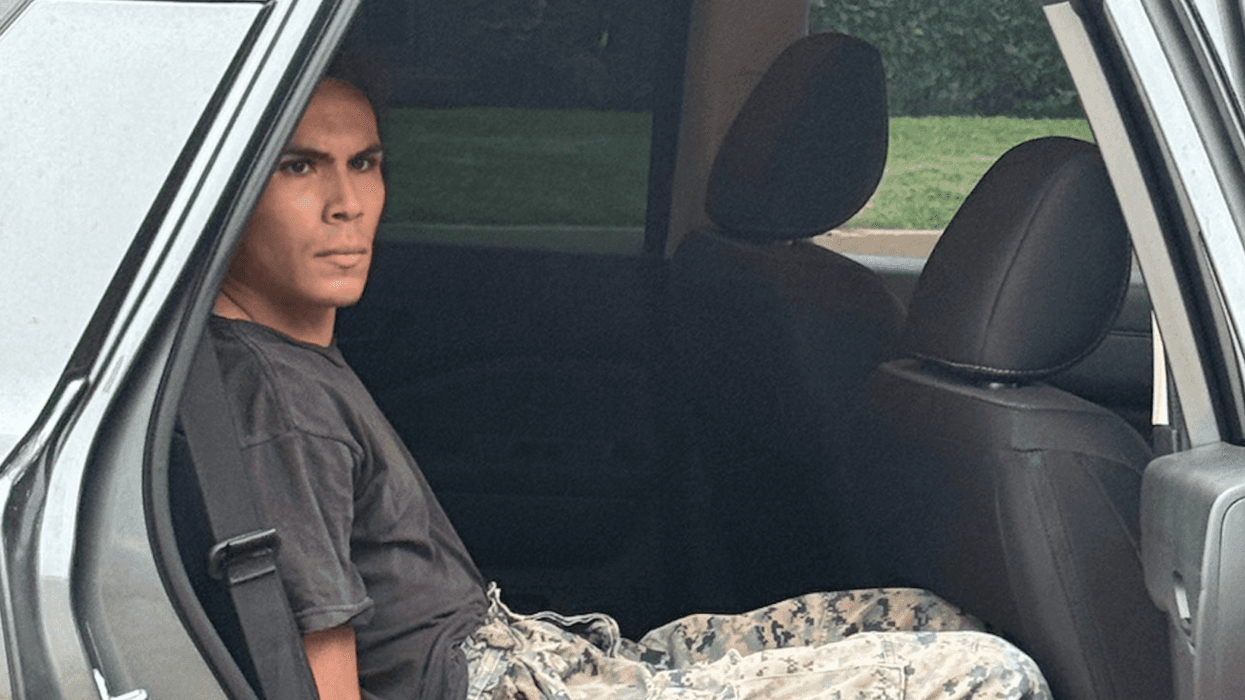
The U.S. Department of Justice on Wednesday indicted a longtime immigrant rights defender who allegedly distributed items including face shields and bottles of water to demonstrators during a downtown Los Angeles protest last month against Immigration and Customs Enforcement raids.
Alejandro Orellana, 29, of East Los Angeles was indicted by a federal grand jury for alleged conspiracy to aid and abet civil disorders. According to federal prosecutors, Orellana and others met on June 9 and loaded his Ford pickup truck with face shields, masks, bottles of water, and other items and then drove to a protest and handed out the items.
Orellana was arrested during a June 12 raid by FBI agents backed by National Guard troops and county law enforcement on his family home in East L.A. According to Los Angeles Public Press, federal agents executed a search warrant two weeks later against fellow activist Verita Topete, seizing her phone and leaving her bruised.
At a June 27 press conference at Ruben F. Salazar Park in East Los Angeles, Orellana thanked "friends, family, community, and allies" for their support.
U.S. Attorney Bill Essayli told Fox News at the time of Orellana's arrest that "we have made it a huge priority to try to identify, locate, and arrest those who are involved in organizing, supporting, funding, or facilitating these riots."
If fully convicted, Orellana—a U.S. Marine Corps veteran with no criminal record—could face up to five years behind bars.
Orellana and Topete are members of Centro CSO, a Chicano-led civil rights group that is no stranger to state surveillance and repression. Founded in 1947 by Fred Ross, Antonio Rios, and Edward Roybal—who was later elected to the Los Angeles City Council and then the U.S. House of Representatives—the group was originally known as Community Service Organization (CSO).
Notable CSO members have included César Chávez and Dolores Huerta of United Farm Workers, both of whom were targeted for FBI surveillance under longtime Director J. Edgar Hoover's COINTELPRO program.
Centro CSO was born out of CSO in the 2000s to "fight against the war in Iraq, and military recruiters, and also the fight for public education," longtime member Carlos Montes told Los Angeles Public Press. Another Centro CSO member, Sammy Carrera, told the outlet that the arrest of Orellana and seizure of Topete's phone are a continuation of state suppression of CSO.
"I don't think they anticipated such an organized community that was willing to defend our neighbors, our family members, and so they're scrambling to see, you know, see how they can smash us to stop, you, these rebellions that are being organized," Carrera said of the government's response to the anti-ICE protests.
Responding to Orellana's arrest, the Los Angeles-based Legalization 4 All (L4A) Network said last week: "Alejandro has done nothing wrong; speaking out against ICE terror, raids, and deportations is not a crime, protesting is not a crime! As Chicanos, Mexicanos, Centroamericanos around the country are being racially profiled and viciously kidnapped, activists like Alejandro have every right to speak out."
"Protesting is not a crime, fighting against ICE terror is not a crime! Legalization for all and stop the ICE raids now!" L4A added.
Noting the numerous documented injuries suffered by anti-ICE protesters at the hands of police and the Los Angeles Police Department's long history of spying on and repressing civil rights defenders, attorney Peter Bibring told Los Angeles Public Press that "taking protective measures isn't a sign of criminal activity, it's common sense."
Centro CSO has been organizing events in support of Orellana, including a planned press conference at 4:30 pm Thursday at the Edward Roybal Federal Building and a Saturday rally in La Placita Olvera.
"Our movement will continue, even if they obtain warrants to confiscate our electronic devices," Carrera said at the June 27 press conference. "Our movement will continue, even if they bring in the National Guard to raid our members. Our movement will continue. Drop the charges now!"
"This is what the Supreme Court has created by overthrowing the Constitution and the Declaration of Independence," said one progressive critic of the GOP nominee's remarks.
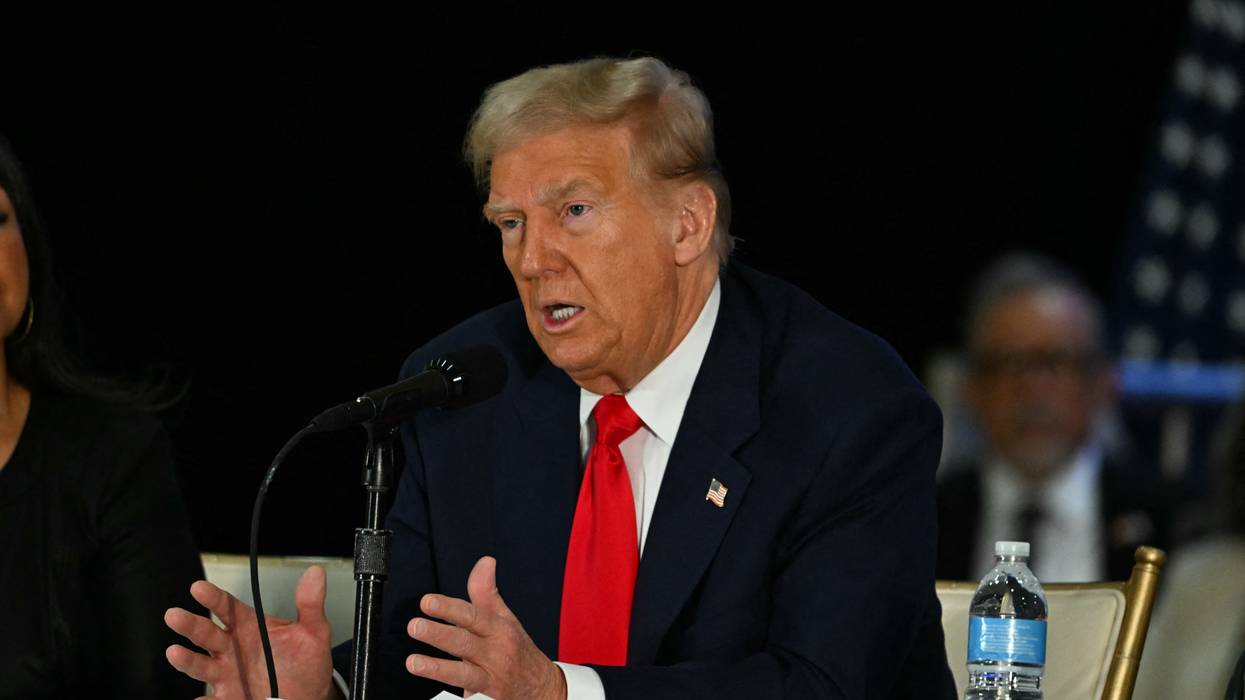
U.S. Vice President Kamala Harris' campaign said Tuesday that her Republican opponent, former President Donald Trump, would be "unchecked" and "unhinged" in a potential second term, pointing to his comments at the roundtable with Latino leaders in which he said he would use "extreme power" to close the U.S.-Mexico border.
Trump suggested that he opposed a bipartisan border bill earlier this year—and pushed Republicans in Congress to vote against it—because it was a "phony bill" that was unnecessary to stop immigrants from entering the U.S. through the southern border.
A president can unilaterally close the border, the Republican nominee claimed.
"It was a horrible bill, stupid bill," said Trump. "It's called extreme power. You have extreme power [as president]... You say, 'Close the border,' and the border's closed. That's it, very simple."
Harris has said she would push for the passage of the bipartisan legislation, which would expand capacity for migrant detention, restrict standards for asylum claims, and allow the president to shut down the border if crossings by undocumented immigrants reached a certain threshold. Republicans rejected the bill, saying it would worsen a so-called "border catastrophe."
Rights advocates have called on Democrats to push for sufficient funding to process asylum claims, resources for programs to assist unaccompanied children, international assistance to reduce forced migration, and other "effective, fair, and compassionate" solutions.
Trump's pledge to use "extreme power" to shut down the border, said Charles Idelson of National Nurses United, "is what the Supreme Court has created by overthrowing the Constitution and the Declaration of Independence."
"A second Trump term poses too big a risk for America to take."
The U.S. Supreme Court ruled this summer in a case involving Trump that a president is entitled to "absolute immunity" for "official acts" taken while in office.
The former president said late last year that if he wins a second term, he would be a dictator only on "Day One" of his presidency, allowing him to unilaterally shut down the southern border and expand fossil fuel drilling.
"A second Trump term poses too big a risk for America to take," said Matt Corridoni, a spokesperson for the Harris campaign. "An unhinged and unstable Donald Trump wants to purge the government of public servants to replace them with loyalists who will help him pursue unchecked 'extreme power' that he could use against his fellow Americans, who he calls 'the enemy from within.' This has major consequences for Americans' lives and freedoms."
"If everyone in America watched this two-minute clip, Trump would go down in a landslide," said climate leader Bill McKIbben.
Audience members at a town hall hosted by the largest Spanish-language network in the United States, Univision, did not hide their reactions to Republican presidential nominee Donald Trump's comments on the violent riot he urged his supporters to take part in on January 6, 2021—with several voters appearing perplexed as the former president called the attack on the Capitol a "day of love."
Ramiro González, a construction worker based in Tampa, Florida, said he voted for Trump in the past and was formerly registered as a Republican, but told the former president that his "action and inaction" regarding January 6 was "a little disturbing."
"What happened during January 6, and the fact that you know, you waited so long to take action while your supporters were attacking the Capitol," said González.
Trump gave a speech in Washington D.C. on January 6 and urged his supporters to march to the Capitol, where members of Congress were certifying President Joe Biden's victory in the 2020 election.
The day followed weeks of lies and legal challenges from the Trump campaign and the then-president's allies, who insisted that the election had been rigged, illegal votes had been counted, and voting machines had been hacked, and demanded recounts in several states—none of which found evidence of the claims.
In his answer to González, Trump suggested that his repeated lies about the security of the election had nothing to do with the attempted insurrection that took place on January 6.
"You had hundreds of thousands of people come to Washington," said Trump. "They didn't come because of me, they came because of the election. They thought the election was a rigged election."
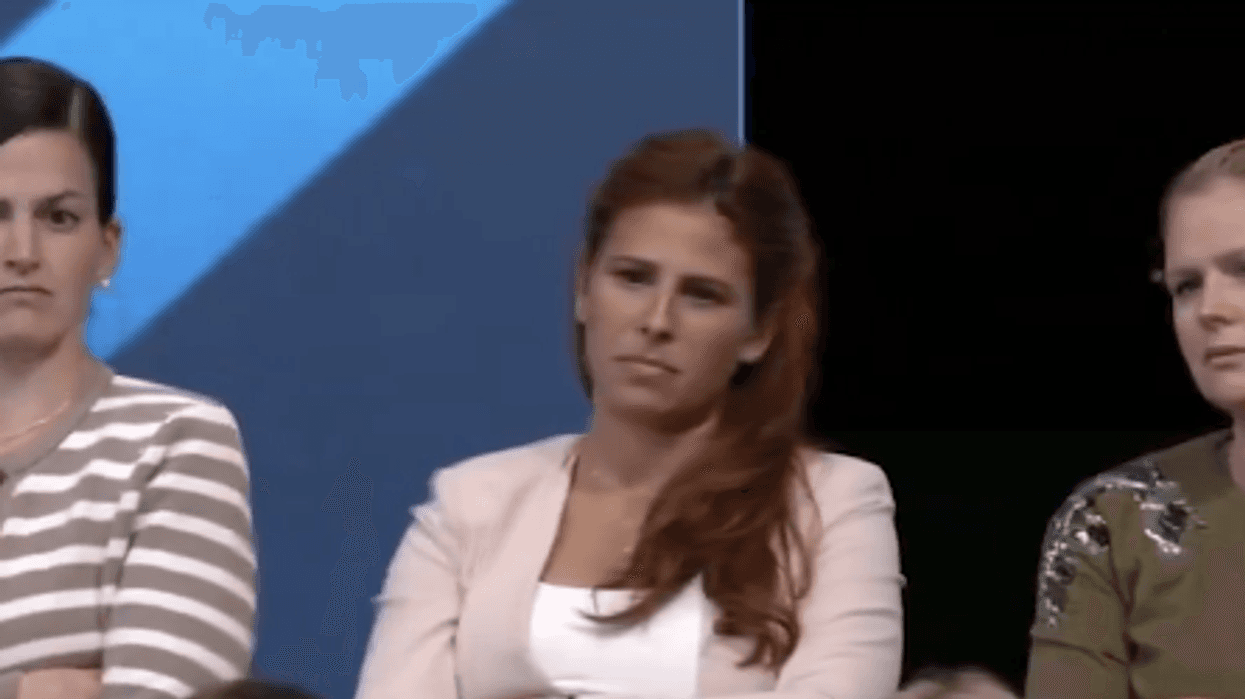
Univision's camera panned over a section of the audience as Trump replied to González, showing one woman visibly shocked as the former president claimed "no one was killed" in the riot—right after he mentioned the death of Ashli Babbitt, a Trump supporter who has fatally shot at the Capitol. Officials have linked five deaths to the attack.
González also appeared incredulous after Trump called January 6 "a day of love."
"This was the first attack on the Capitol in history by U.S. citizens and he calls it a day of love," said U.S. Rep. Jamaal Bowman (D-N.Y.). "I was there. It was a day of terror. Not just for us who were there. But for the American people. We CANNOT let this guy be back in the White House again."
Democratic Vice President Kamala Harris' presidential campaign posted a compilation video of other reactions from audience members as Trump spoke about the climate and his environmental policies.
Audience members at the town hall were credited by some political observers as giving a "masterclass" in questioning the former president. A farmworker named Jorge Velásquez asked about Trump's plan to deport millions of undocumented immigrants and pointed out that doing so would severely impact the agricultural labor force, asking how the plan would affect food prices.
"This Univision audience asked the best questions of the campaign," said progressive news outlet The Tennessee Holler on social media.
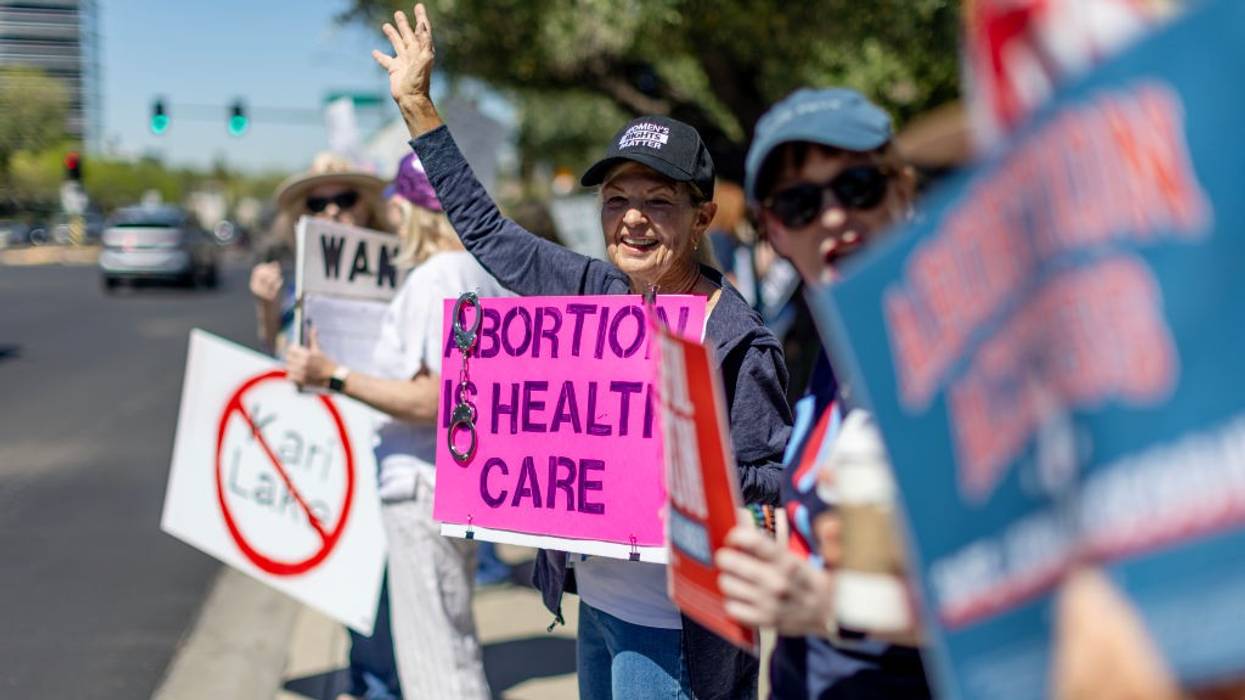
The Latino electorate will prove decisive in securing reproductive freedom and abortion access through ballot measures around the country, particularly in states where Latinos are a significant portion of the electorate.
In November, abortion rights measures will appear on ballots across ten states, including Arizona, Colorado, Florida, Nevada, and New York, where Latinos make up a significant portion of the electorate. For decades, pundits and politicians have recycled long-held misconceptions about Latino voters and abortion access, citing our conservative and religious beliefs. Anti-abortion extremists have long fueled these misconceptions through misinformation and disinformation campaigns targeting Latino communities with egregious lies and inflammatory rhetoric about abortion. Yet, polling, focus groups, and direct interactions with Latino communities have debunked these outdated tropes. The Latino electorate will prove decisive in securing reproductive freedom and abortion access through ballot measures around the country, particularly in states where Latinos are a significant portion of the electorate.
For Latinos, the freedom to decide, a pillar of our American democracy, is critical. Meanwhile, Latinos are being hit directly with anti-abortion efforts that take away that freedom such as the six-week abortion ban put into effect by the Florida Supreme Court and the 1864 abortion ban upheld by the Arizona Supreme Court. In the wake of the Dobbs decision, people of color and Latinas have felt the impact of a lack of abortion access, an element of basic healthcare. A 2023 report by the National Partnership for Women and Families estimated that nearly 6.5 million Latinas, or 42% of all Latinas of reproductive age in the country, live in a state that either had or was likely to ban abortion.
Ironically, it will be abortion access and anti-choice efforts to restrict freedom of choice that will mobilize Latino voters this election. In a poll conducted by three national reproductive justice organizations, 87% of Latinas named abortion and women’s rights as one of their top priorities as they head to the polls. Another battleground poll conducted by Somos PAC and BSP Research found that 61% of Latino registered voters expressed a more positive/favorable view of Kamala Harris after hearing that she will protect abortion rights, versus only 19% of Latinos who said they had a more negative view of Harris after hearing that. In key states to secure the White House and both chambers, Latinos make up large chunks of the electorate: Arizona (25%), Colorado (15%), Florida (20%), Nevada (20%), and New York (12%).” In the face of unprecedented attacks on basic healthcare access and targeted attempts by extremists to mislead and divide our community on this issue, this November Latinos will be key deciders on abortion access across the country.
"We can't endorse Biden or the Democratic Party, but we understand the threat that a Trump administration poses to our communities," said the director of Mijente.
The largest progressive Latinx political organization in the U.S., Mijente, said Thursday that it will not be officially endorsing a presidential candidate in the 2024 race—but emphasized that its non-endorsement doesn't mean it believes Latino voters should be disengaged from the election or the fights that will continue regardless of who wins.
In a video featuring organizers and community members from across the country, Mijente grapples with the reality that many Latino voters and rights advocates are "currently disillusioned with the Biden administration."
An Axios-Ipsos poll in April found that while Latino voters support the Democratic Party on issues such as abortion rights and immigration, support for President Joe Biden among the community had fallen precipitously to 41%, down from 55% in December 2021.
Biden, who is facing pressure to step aside in the presidential race, has recently cracked down on migrants' ability to seek asylum, and he expanded former President Donald Trump's Title 42 rule aimed at swiftly deporting immigrants.
"We can't endorse Biden or the Democratic Party, but we understand the threat that a Trump administration poses to our communities," said Marisa Franco, national director of Mijente. "Our video captures the urgency of this moment, calling for a mobilization of Latinx voters to defeat Trump. By participating in this election, we are making a strategic decision to give us the best chance to fight for a just future for our families."
The video was released ahead of Trump's planned speech accepting the party's nomination at the Republican National Convention. At the gathering, delegates have been seen holding signs reading, "Mass deportation now!" as speakers have pushed Trump's immigration agenda.
The former president intends to carry out the Republican Party's plan to "carry out the largest deportation operation in American history," and has proposed building huge detention camps to house undocumented immigrants awaiting deportation flights.
While warning Latinos of the danger posed by Trump and his vice presidential nominee, U.S. Sen. JD Vance (R-Ohio), one Mjiente organizer said in the video that "Biden seeks to form the same anti-Trump coalition from 2020, often taking our communities for granted and the progressive movement as a given."
"The status quo will make us wonder, what is our future? What is our place in this country?" said one organizer.
Illinois-based Mijente member Corina Pedraza said that Trump and the Republicans, if elected, "will dismantle gains of generations past. They seek to send us back into the shadows, back into the closet, and to the back of the bus."
While Mijente made its first presidential endorsement in 2020, supporting Sen. Bernie Sanders (I-Vt.), Ramos explained that this year, "the choice lies beyond Trump versus Biden. The contrast between these candidates is what we can do."
The group said it has launched mobilization efforts in states including Georgia, Texas, North Carolina, Pennsylvania, and Arizona "to amplify Latino voices and shape the national conversation," including through El Chisme Tour 2024.
The tour gathers organizers, artists, elected representatives, and educators in 20 cities across the U.S. and Puerto Rico, with the goal of broadening "the discussion of what's at stake in this election and engage audiences disillusioned with the current political discourse," said Franco.
"We need to reconnect at a local level with joy and strategic determination to push back the ultra-conservative agenda," she added.
Mijente's video ends with several members explaining why they plan to vote in the election and organize for justice—no matter who wins in November.
"I am voting in this election because this election is about us, not about them," said one organizer, referring to the two candidates.
"I'm organizing for my people, the present, and the future," said another.
A vote in the 2024 election, said another organizer, "is a tool that our movement can use to bring us closer to a country where we can thrive, without having to fight for everything we need to survive."
Farmworkers "should not be subjected to additional health risks due to the negligent actions of pesticide manufacturers, farm owners, and state regulatory agencies," said one analyst.
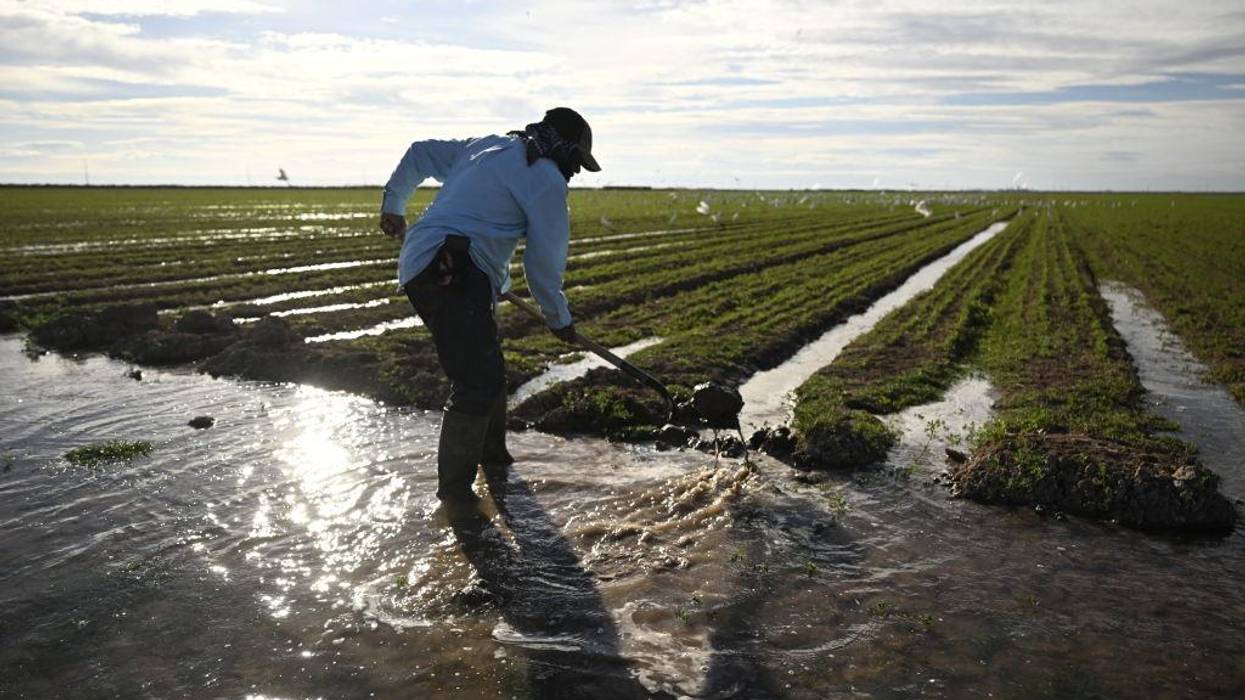
Concerns about the safety of paraquat, a highly toxic herbicide, pushed the U.S. Environmental Protection Agency in 2021 to ban its use on golf courses—but the weedkiller is still permitted for agricultural use, and a new first-of-its-kind analysis shows how the EPA's continued approval of the substance has put low-income Latino communities at disproportionate risk for health impacts.
The Environmental Working Group (EWG) found in a study released Wednesday that 5.3 million pounds of paraquat were sprayed over a five-year period in California, the only state with readily available figures on the herbicide.
Most of the weedkiller's use was concentrated in central counties where farms produce almonds, walnuts, alfalfa, and other crops—and where Latino people make up about 75% of the population and nearly the entire farm labor force.
Ninety-six percent of farmworkers in the state are Latino, and 90% of people in the agricultural workforce were born outside of the U.S., making immigrants who often work for low wages among the people who are most affected by continued use of paraquat on farms.
The ingestion of a single teaspoon of paraquat is considered deadly, which has led 60 countries to ban the chemical while the EPA released an analysis in January concluding that its health risks were outweighed by the economic benefits of using paraquat.
The weedkiller has been linked to non-Hodgkin lymphoma, respiratory damage, kidney disease, and childhood leukemia. Al Rabine, an analyst for EWG who authored the report, said the EPA has also ignored a "mountain of evidence" that paraquat causes Parkinson's disease.
An epidemiological study of central California found that people living within a third of a mile of where paraquat is sprayed are twice as likely to develop Parkinson's.
"Paraquat is not only a threat to our environment but also a direct danger to the health and well-being of these communities, particularly Latino populations, who make up the majority of the population," said Rabine. "The findings of our analysis underscore the urgent need for action by the state to protect these communities from the harmful effects of exposure to this toxic weedkiller."
Between 2017-21, EWG found, about 80% of the paraquat used on California crops was sprayed within Latino-majority census tracts. The group identified Kern County and the towns of Shafter and Wasco as "hot spots" for paraquat use.
"These three communities combined have over 80% Latino residents who witnessed almost 180,000 pounds of paraquat spraying during that time period," the group said.
In Kern County, which has a poverty rate of nearly 30%, EWG found that 1.2 million pounds of the herbicide were sprayed over roughly 1,200 square miles of farmland—threatening not only laborers who completed the work but also farmworkers who live in the surrounding communities, as paraquat can remain in soil and travel through the air—as well as coming home with workers on their clothing and potentially exposing their families.
EWG identified five "fatal flaws" in the analysis the EPA has used to defend its continued approval of paraquat for farming, including:
EWG called on the EPA to follow the lead of dozens of countries that have banned paraquat—but warned that states must not wait for the federal government to take action.
"Federal pesticide law sets a floor, not a ceiling—states can choose to restrict a chemical, even without an EPA ban," wrote EWG government affairs manager Geoff Horsfield and toxicologist Alexis Temkin. "To protect their residents and public health, state and local governments should exercise their power to ban paraquat."
Immigrant communities across central California, Horsfield said, "should not be subjected to additional health risks due to the negligent actions of pesticide manufacturers, farm owners, and state regulatory agencies."
"Policies specifically targeting reductions in overburdened populations could support more just reductions in air pollution and reduce disparities in air pollution exposure," asserted the leader of a new study.
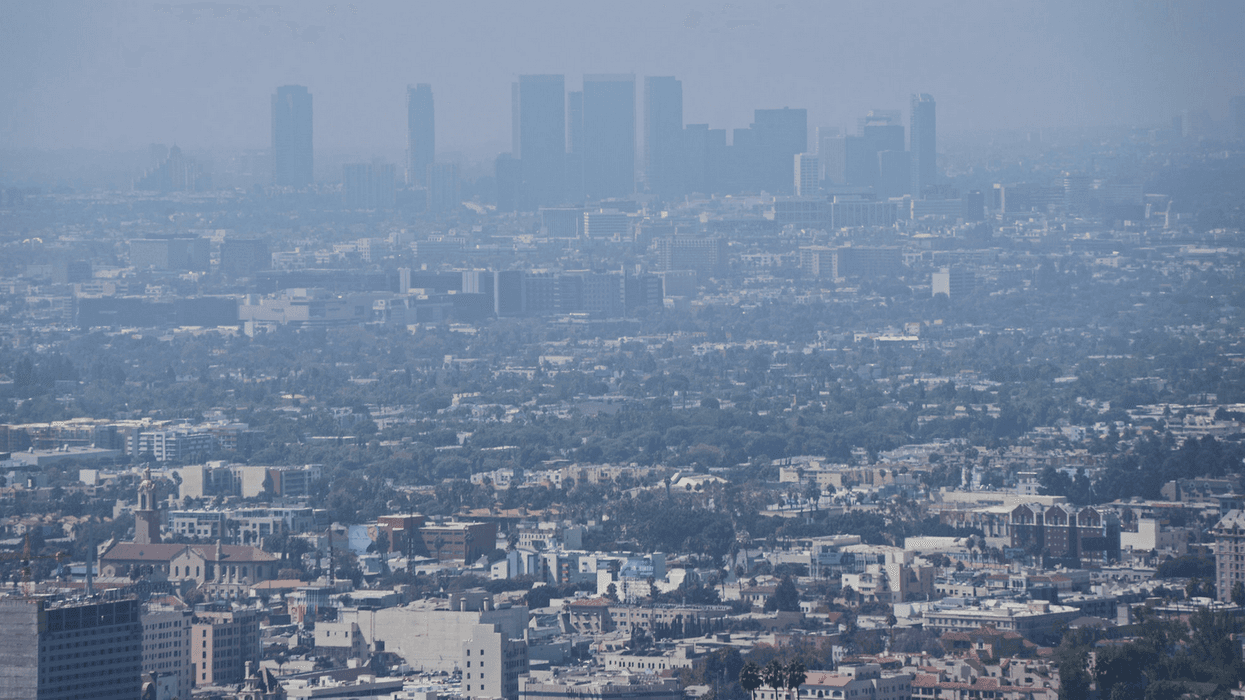
U.S. air pollution has dropped substantially in recent decades, but not everyone has benefited equally from the decline and some demographics were breathing dirtier air in 2010 than in 1970, according to research set to be published Wednesday in Nature Communications.
Researchers at Columbia University's Mailman School of Public Health studied air pollution changes in the four decades following the enactment of the landmark Clean Air Act, with a focus on racial, ethnic, and socioeconomic disparities in emissions reductions at the county level.
"The analyses provide insight on the sociodemographic characteristics of counties that have experienced disproportionate decreases in air pollution emissions over the last 40 years," said Yanelli Nunez, an environmental health scientist at the Columbia Mailman School and the study's lead author.
Specifically, the researchers found that nationwide air pollution levels from all source sectors except ammonia emissions from agriculture and organic carbon particles from homes fell between 1970 and 2010.
However, according to a statement from the Columbia Mailman School, "an increase in a county's average Hispanic or Indian American population percentage resulted in a relative increase in sulfur dioxide, nitrogen oxides, and ammonia emissions from the industry, energy generation, and agriculture sectors, respectively."
Nunez asserted that "policies specifically targeting reductions in overburdened populations could support more just reductions in air pollution and reduce disparities in air pollution exposure."
"This is an important lesson gained from 53 years of Clean Air Act implementation," she added, "which is particularly relevant as we develop policies to transition to renewable energy sources, which will have a collateral impact on air quality and, as a result, on public health."
According to a 2023 report published by the Energy Policy Institute at the University of Chicago, global air pollution is reducing human life expectancy by an average of more than two years. Research has also shown that long-term exposure to the deadly effects of air pollution increases the risk of dying from heart disease or having a heart attack.
"My message to the shooter was that he wanted to take down Mexicans. He wanted to get rid of the Hispanic people here in El Paso," said the niece of one of the victims. "We're still here and we're not going anywhere."
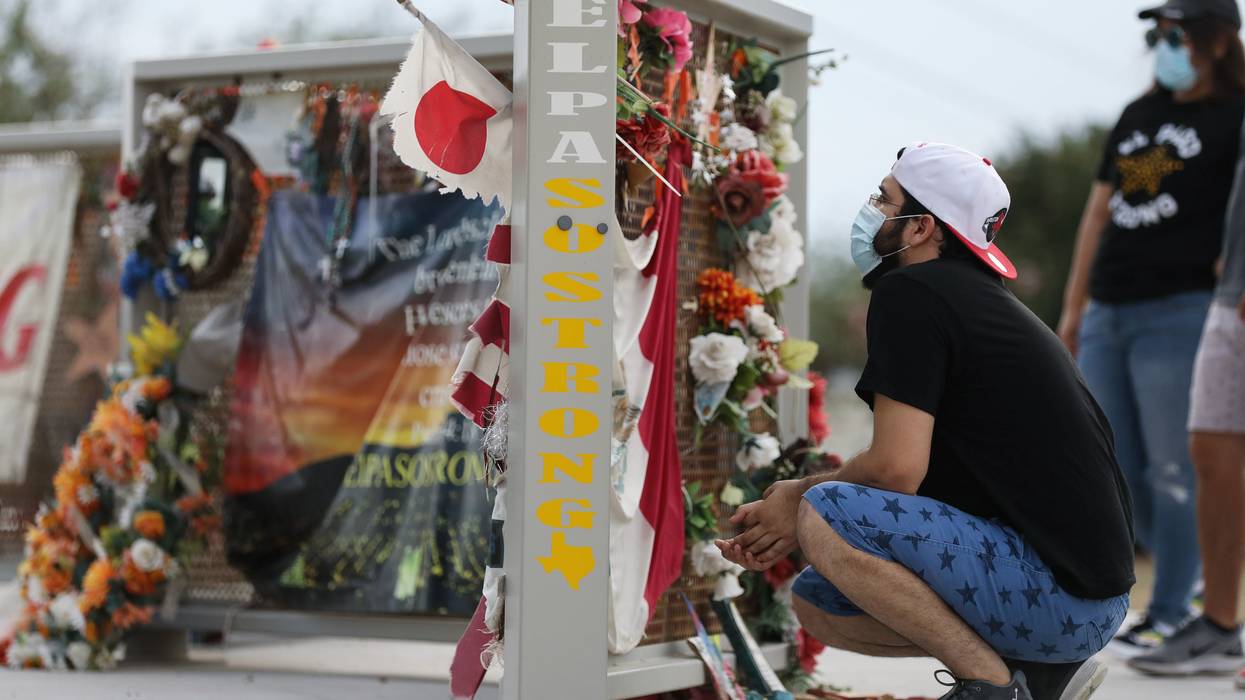
The self-described white nationalist who massacred 23 people and injured 22 others with an AK-47-style rifle in El Paso, Texas in 2019 was sentenced to 90 consecutive life sentences on Friday, following two days of courtroom statements in which survivors and family members of those who were killed in the attack directly addressed the gunman's racist views.
Addressing Patrick Crusius, the survivors condemned the shooter as a "monster" and a "coward" and spoke about the lasting trauma he inflicted on them when he entered a Walmart armed with the gun and 1,000 rounds of ammunition, intent on killing Latino people in the border city.
Stephanie Melendez, whose father, David Johnson, was killed as he saved his wife and nine-year-old granddaughter from the gunfire by shielding them under a checkout counter, talked about the attack's affect on her daughter Kaitlyn.
"You showed her evil, you showed her monsters do exist outside of storybooks," Melendez told Crusius. "I want you to remember my daughter's cries. I want them to haunt you."
Alfredo Hernandez, whose sister Maribel was killed, also said he no longer has a sense of security when he is in public places and told Crusius he is always "on the lookout for other psychos like you."
Amaris Vega, whose aunt, Teresa Sanchez, was killed by Crusius, told KFOX14 on Thursday that he "failed" to accomplish the goal he put forward in the racist manifesto that he posted online before the attack, in which he said he wanted to address the "Hispanic invasion of Texas."
"My message to the shooter was that he wanted to take down Mexicans. He wanted to get rid of the Hispanic people here in El Paso. But he didn't do that," Vega said. "He didn't win. We're still here and we're not going anywhere."
Echoing the rhetoric of numerous Republican politicians—including then-President Donald Trump—about a so-called "invasion" by immigrants and asylum-seekers from Central America, Crusius wrote that he was "defending [his] country from cultural and ethnic replacement" and said the people shopping at Walmart on August 3, 2019 were "the instigators."
Since the shooting, the GOP's claims that asylum-seekers are "invading" the U.S. have continued, with Sen. Rick Scott (R-Fla.) and Republican Georgia Gov. Brian Kemp using the term in campaign ads last year. Republican Texas Gov. Greg Abbott has also persisted in accusing immigrants of an "invasion."
Crusius' sentencing on Friday, and the anguish and grief expressed by the family members of those he killed, served as a reminder that "hateful rhetoric against our communities [has] real consequences," said Erika Andiola, communications director for the Young Center, which advocates for children in the immigration system.
Margaret Juarez, whose father was killed and whose mother survived the attack with injuries, directly addressed Crusius' manifesto and his claim that Hispanic immigrants instigated the shooting.
"Native Americans and Mexicans were already here before your American settler homies rolled in," Juarez said in the courtroom. "Think about that when you say you're defending your country."
The Black Lives Matter movement that swept the country in 2015 has--among other accomplishments--forced global media outlets to afford victims of police killings the most basic acknowledgment: a public record of their names and deaths.
The Guardian and the Washington Post maintained such a grim tally this year following the consistent failure of the U.S. government to keep adequate records.
According to the Guardian, 1,126 people were killed by police so far in 2015, averaging more than three a day, with 27 percent of those slain facing mental health issues.
The numbers confirm the racial injustices highlighted by nationwide protests. Among black people in America, 6.9 per million were killed by police, compared to 2.86 white people per million. In other words, African Americans were nearly 2.5 times as likely to be killed by police as their white counterparts.
Native-Americans and Latinos were also disproportionately likely to have their lives taken by law enforcement, with 3.4 per million and 3.35 per million killed respectively.
The high number of killings was corroborated by the Washington Post, which only tracks fatal police shootings--not killings by taser, beating, and other forms of force, such as the high-profile death of African-American man Freddie Gray in Baltimore. The paper concluded, nonetheless, that nearly 1,000 civilians were shot and killed by police this year.
What's more, the Post's analysis found that the FBI, which is tasked with tracking such shootings, is dramatically undercounting killings because "fewer than half of the nation's police departments report their incidents to the agency."
"The Post documented well more than twice as many fatal shootings this year as the average annual tally reported by the FBI over the past decade," journalists Kimberly Kindy, Marc Fisher, Julie Tate, and Jennifer Jenkins reported this week.
However, Jim Naureckas, editor of Fairness & Accuracy In Reporting's watchdog journal Extra!, argued Tuesday that the Post also "held back" key information by downplaying the connection between the high number of police killings and the grievances issued by racial justice movements.
For example, Post journalists wrote that "the kind of incidents that have ignited protests in many U.S. communities--most often, white police officers killing unarmed black men--represent less than 4 percent of fatal police shootings."
But in fact, the Black Lives Matter movement has condemned killings by officers of all races, killings of people who were armed, and killings of black women--such as Mya Hall and Rekia Boyd--by police as well as vigilante violence.
Even still, the Post's numbers are damning.
"Although black men make up only 6 percent of the U.S. population, they account for 40 percent of the unarmed men shot to death by police this year," the paper's database found. "In the majority of cases in which police shot and killed a person who had attacked someone with a weapon or brandished a gun, the person who was shot was white. But a hugely disproportionate number--3 in 5--of those killed after exhibiting less threatening behavior were black or Hispanic."
There are many things that the databases don't track, including beatings, abuse, and sexual assaults. For example, police officer Daniel Holtzclaw's serial raping of African-American women would not make it on this list of atrocities.
But perhaps, more than anything, both databases show that heightened visibility, in itself, will not end police killings or bring justice to its victims.
The end of 2015 is being marked by ongoing protests demanding "Justice for Tamir Rice," a 12-year-old African-American shot to death by a white police officer while playing with a toy gun. An Ohio Grand Jury decided Monday not to indict officers Timothy Loehmann or Frank Garmback despite video evidence that neither provided first aid to the dying child.
In a statement released Monday night, Tamir's mother, Samaria Rice, declared: "I don't want my child to have died for nothing, and I refuse to let his legacy or his name be ignored. We will continue to fight for justice for him and for all families who must live with the pain that we live with."
With eye contact and a short "Go 'head" to a swift-moving member of his security team, Republican presidential candidate and billionaire media personality Donald Trump appeared to authorize the physical ejection of Univision's anchor Jorge Ramos from a press event on Tuesday evening.
Numerous cameras captured the event in Iowa. The real estate mogul's disdain for Ramos and his questioning of Trump's controversial immigration policy ideas first saw him tell Ramos to "sit down" and "Go back to Univision." Then, a security team member moved across the stage closely behind the candidate to remove the well-known journalist from the room.
Watch:
Subsequently--and despite what witnesses to the episode can judge for themselves based on the video--Trump said it was not his decision to kick out Ramos.
As the Huffington Post reports:
[Trump] insisted that security had made the decision to kick out Ramos, but said he was fine with it.
"This guy stands up and starts screaming," Trump said. "He's obviously a very emotional person."
Trump claimed he didn't know much about Ramos, which may have been true. But he probably should -- Ramos is wildly popular as a Spanish-language anchor and well-regarded for pressing politicians from both parties on issues, particularly immigration.
Trump, by contrast, is mostly disliked by Latinos, and going after Ramos is unlikely to help that fact.
Ramos was let back into the event minutes later and took the opportunity to ask several questions. Watch the exchange:
Meanwhile, Trump continues to paralyze the punditry class by confounding traditional understandings of what a candidate for the nation's highest office can get away with. While polls find that Trump continues to lead the large field of Republican candidates, others note that television executives are elated by the ratings bonanza that Trump provides to both cable news and the major networks.
For progressive critics of Trump, however, the spectacle of Trump's campaign speaks to an ever darker side of America's contemporary political landscape. In an essay for Common Dreams on Tuesday, Christian Christensen, a professor of journalism at Stockholm University in Sweden, said that Trump's candidacy is nothing more than political "junk food" for a global audience that is exuberant to see the hubris and crassness of the American stereotype so wonderfully exemplified in the billionaire real estate mogul who became a reality TV star before ultimately running for president.
Comparing the substantive and populist-driven campaign of Sen. Bernie Sanders--which he wishes was "afforded the international media oxygen given to people like Trump"--Christensen writes:
Breathless reports of a depoliticized American citizenry fawning over a cartoonish autocrat make for good reading, but they are also de-contextualized. Trump is polling in the low 20s for a party that will likely get in the high 40s in a national election (in 16 months) where the voter turnout will be in the mid-50s. Yes, that's still a lot of people, but there are also millions of Americans disgusted with the political status quo as represented by the Republican and Democratic parties. By ignoring those millions in favor of media-friendly crackpots we relegate principled challenges to corporate-dominated politics in the US to a mere footnote in our public debate.
Trump is an easy target, and, more importantly, he's profitable clickbait. But Trump is also political and journalistic junk food: a diversion from a deeper, uncomfortable discussion about what ails both the US and Europe. There are serious people out there talking about these ailments. It's time we ate our vegetables.