

SUBSCRIBE TO OUR FREE NEWSLETTER
Daily news & progressive opinion—funded by the people, not the corporations—delivered straight to your inbox.
5
#000000
#FFFFFF
To donate by check, phone, or other method, see our More Ways to Give page.
Daily news & progressive opinion—funded by the people, not the corporations—delivered straight to your inbox.
By constantly raising the alarm about election fraud, Trump seeks to stir fear, doubt, and confusion in the minds of voters.
With 112 days to go until Election Day, President Donald Trump’s drive to undermine the vote continues. As time runs short, his efforts grow more aggressive, more brazen. But they are facing pushback with ever greater assurance.
Last Friday, Trump pushed out the remaining commissioners on the Election Assistance Commission. This tiny agency exists to provide help and funding for states. Trump had previously tried to force the commission to implement his pet voter suppression policy—requiring a passport to register to vote—but a federal court barred it from doing so in a lawsuit brought last year by the Brennan Center and others. Now, without any commissioners, the agency can’t do much of anything.
Another federal judge quashed Justice Department subpoenas issued to hundreds of election workers in Fulton County, Georgia. The judge said the subpoenas were “staggering,” and that the Justice Department was engaged in a “fishing expedition.”
Also last week, the Department of Justice (DOJ) sent a scarifying letter to state officials warning that they will be held criminally liable if noncitizens are found on the voter rolls or voting.
All of us who care about free, fair, and secure elections in 2026 should say loud and clear: Voters can vote with certainty.
Utah’s Republican lieutenant governor, who runs elections in that state, wrote: “Got another love letter this morning from the DOJ sprinkled throughout with threats of criminal prosecution. I’m sure I’m not the only chief election officer of a state who is being targeted for following state and federal laws by resisting DOJ’s demands for private voter data that have thus far been ruled illegal by at least a dozen courts. This is truly bizarre behavior by the federal agency that is supposed to be protecting civil rights.”
Trump even claimed that recently deceased Sen. Lindsey Graham’s (R-SC) last conversation with him involved his allegedly ardent support for the anti-voter SAVE Act.
Now comes word that on Thursday, Trump will deliver an address to the nation, rumored to be when he will reveal that the 2020 election was hacked by... China? Iran? Whoever.
Why is the president continuing to press on like this? Yes, he’s relitigating the 2020 election. And some of his desired election policy changes, were they to become law, could restrict the vote for millions.
But the bigger reason is to stir fear, doubt, and confusion in the minds of voters.
We’re seeing a psychological warfare campaign waged against American democracy by leaders of its own government.
People tell me of encounters they’ve recently had with voters. One voter is convinced she will have a hard time voting because she changed her name when she got married from the one on her birth certificate, even though the SAVE Act has not become law. Another worries that the Supreme Court’s Voting Rights Act ruling in Louisiana v. Callais means they cannot vote.
Crazy rumors fly. That former Venezuelan leader Nicolás Maduro, for example, will “confess” to stealing the 2020 election in exchange for leniency. And so on. Few pan out. But the decibel level can be deafening.
All this requires deftness by those who would protect the vote. Every election year, voting advocates like the Brennan Center weigh carefully whether and how to reassure voters, as merely mentioning the potential threats to voting could backfire and scare people away from the polls.
Latino voters and other immigrants, for example, may fear Immigration and Custom Enforcement being present at polling places. Even though such a deployment would be illegal, simply raising it as a possibility may cause voters to stay home. Fear would have done its work.
For other voters, though, we may see a new phenomenon: Efforts at suppression could fuel mobilization. In the South, Black voters are outraged by the efforts to redraw election maps after the Supreme Court’s Callais decision gutted the Voting Rights Act. They could turn out in historic numbers. People get really mad when you try to take something from them—and when it’s representation and the vote, watch out.
All of us who care about free, fair, and secure elections in 2026 should say loud and clear: Voters can vote with certainty. Make a plan to vote. Vote as early as you can. In person, via drop box, in the mail.
One hundred twelve days. It will feel like longer. But when this year is done, the strong response across the country to an egregious effort to undermine our democracy may be the real story.
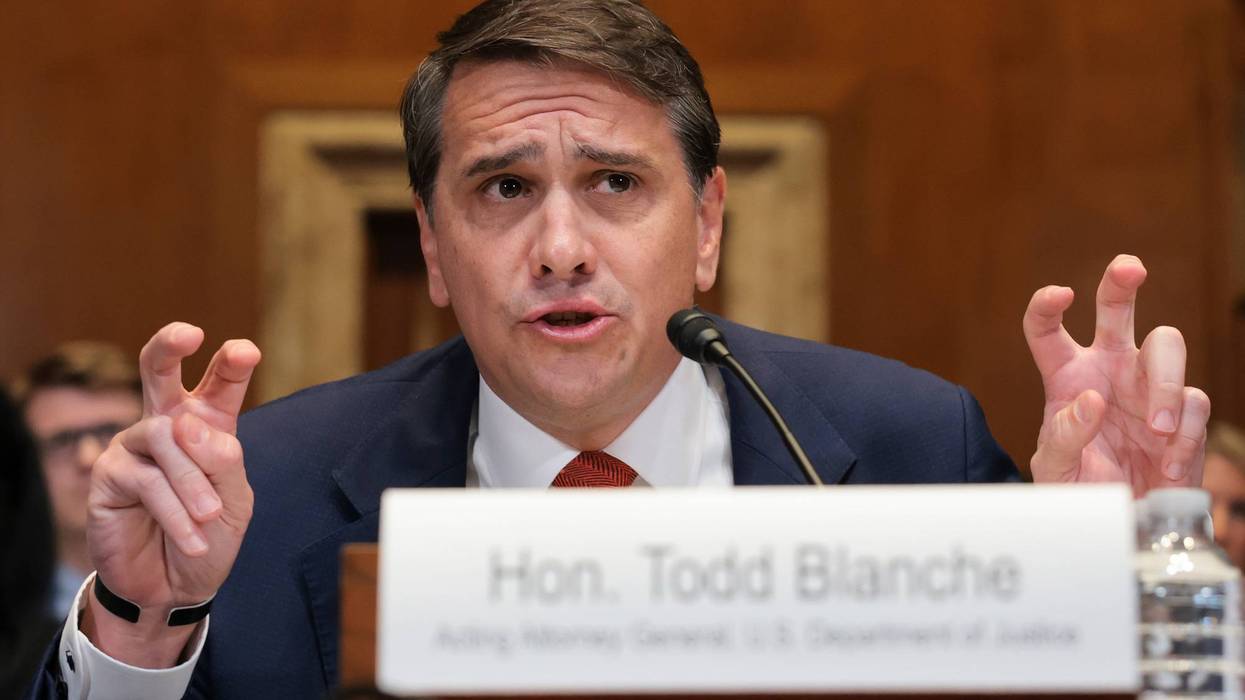
A formal letter to Acting Attorney General Todd Blanche, faithfully submitted.
Dear Acting Attorney General Todd Blanche,
I am writing to formally submit my application to your newly established federal “Anti-Weaponization Fund” for compensation in the form of a cash payment for damages incurred at the hands of the United States government.
As you stated while announcing President Trump’s new $1.776 billion fund, “The machinery of government should never be weaponized against any American, and it is this Department’s intention to make right the wrongs that were previously done while ensuring this never happens again.”
Todd, if I may, I saw your former client — President Trump, for whom you previously provided legal representation — backed you up, saying, “This is reimbursing people who were horribly treated.”
Additionally, Todd, I read an Associated Press report noting that during congressional testimony you stated that you “wouldn’t rule out the possibility that rioters who assaulted police on Jan. 6 would be eligible for fund payouts.” After hearing your remarkably broad interpretation of governmental victimization, I felt compelled to share with you what the government has done to me and my family by writing the letter below — which reveals several forms of government abuse my family and I have endured which, while you may not find as severe as the temporary loss of access to the U.S. Capitol experienced by individuals convicted of felonies related to January 6, nonetheless caused considerable hardship for us.
I was initially reassured that my request was reasonable after learning that Adam Johnson — best known for carrying Speaker Nancy Pelosi’s lectern through the Capitol during the January 6 attack — is reportedly considering a claim of up to $5 million himself.
However, after learning that Brandon Fellows — another January 6 defendant pardoned by President Trump — reportedly plans to seek $30 million from the fund, including $21.5 million for what he described as “wrongful imprisonment,” I realized that the harms experienced by my family and me may in fact fall closer to Mr. Fellows’s compensation range.
So, after reviewing your department’s stated principles, apparent standards, and anticipated applicant pool, I believe I am highly qualified for compensation and would like to make a modest request of $30 million.
In fact, Todd, I believe I possess two major qualifications that should place me among the strongest candidates for compensation, which I will detail below.
First, since this appears to function as a reparations program for people harmed by state injustice, I should begin by saying that I come from a family with a long legacy of being brutalized by the United States. And if you think the January 6 defendants have a compelling claim for compensation due to governmental mistreatment, wait until you hear about this historical episode called slavery.
My great-great-grandparents, Laura and Thomas Lenoir, were enslaved in Marion County, Mississippi, and spent their lives laboring without compensation in a nation loudly proclaiming “liberty” while designating Black people as property. After decades spent tracing our family history, my father recently discovered the very plantation where they were enslaved— a breakthrough that finally allowed our family to identify the precise location where generations of uncompensated labor helped build this country’s wealth.
My ancestors worked this land they did not own, built wealth they could not keep, and endured violence they could not legally resist. No compensation was ever provided for the stolen labor, stolen children, stolen wages, stolen land, stolen futures, or the generations of poverty and discrimination that followed emancipation. Stories of Laura’s beatings and brutal treatment have been passed down through my family for generations.
In explaining why she believed January 6 defendants deserved compensation, Rachel Powell — who prosecutors identified as one of the first rioters to breach Capitol grounds and who was filmed using a battering ram to smash a Capitol window — recently stated: “We endured a lot. Our lives are still not the same. I don’t know what kind of price you can put on that.”
Todd, I must admit I found Ms. Powell’s reflections unexpectedly relatable. Indeed, many descendants of slavery have similarly struggled to determine what monetary figure might adequately compensate for generations of forced labor and legally sanctioned terror.
For many years, I was informed that reparations for descendants of slavery were unrealistic, unaffordable, divisive, or simply impossible. Republican and Democratic leaders alike repeatedly explained that while slavery was unfortunate, there was no practical mechanism for compensating descendants in the present day. However, your department’s new fund has helped me understand that no sum of money is too large for the government to produce once it decides that a great injustice has been perpetrated.
And then there is the symbolism of the fund’s exact amount — $1.776 billion — which is especially moving. President Trump, with his trademark subtlety and keen sense of gravitas, must have chosen this specific figure for providing reparations to people claiming mistreatment by the government as a fitting tribute to a nation founded by those who declared liberty for all in 1776 while simultaneously enslaving and brutalizing Black people.
My second major qualification is that, like many of the fund’s anticipated beneficiaries who stormed the capitol building on January 6, I was also arrested at a capitol building during a political protest.
In 2012, Washington state announced a special legislative session to determine how to slash education and healthcare budgets by some $2 Billion during the aftermath of the Great Recession. At the time, I was helping organize with the Social Equity Educators (SEE), a group of educators fighting against austerity and for educational justice.
We joined a much larger mass protest at the Washington State Capitol in Olympia to oppose billions of dollars in cuts to public services. Just before lawmakers gaveled in the special budget cutting session inside the House Ways and Means Committee meeting room, several of us managed to enter the chamber before they locked the door to the many protestors surrounding the building. The moment the session began, we mic-checked the room and read aloud the Washington State Constitution language that explicitly specifies funding education is the “paramount duty” of the state, and we declared therefore the state not only had a moral obligation but also a legal obligation to fully fund public education.
After finishing the statement, I produced a pair of plastic handcuffs I got at the dollar store and invited the legislators into my custody for what I announced was citizen’s arrest.
As I approached the legislators’ benches carrying self-made citizen’s arrest warrants to issue to each member, a police officer apparently arrived at a somewhat different interpretation of the law than I had. In an astonishing twist, he arrested me instead of the legislators.
He grabbed my arm, forced it behind my back, and cinched the handcuffs tightly around my wrists. Officers then moved me into a back room while they attempted to figure out how to remove me from the building as hundreds of protesters outside chanted, “Let the teacher go!”
Eventually, police whisked me out and pushed me into the back of a squad car and repeatedly questioned me about my actions even after I informed them that I wished to speak only in the presence of legal counsel. I was transported to a nearby jail, had my mugshot taken, ordered to exchange my clothes for a jail-issued orange jumpsuit, and placed in a jail cell with several other people for the evening.
While I was in jail, unbeknownst to me, my students at Garfield High School created a Facebook page titled “Free Mr. Hagopian.” When I returned to school the next day, students had changed the page into “Seattle Student Walkout for Education.”
Within twenty-four hours of my arrest, more than 500 Garfield students organized a mass walkout protesting the education cuts, carrying signs reading “Fund Our Future” and chanting, “We’re the future of our nation, no more cuts to education!” Students later formed a coalition called Students of Washington for Change to pressure the legislature through protests and letter-writing campaigns.
Importantly, Todd, not long afterward the Washington State Supreme Court ruled that the legislature actually was violating the constitution in what became known as the McCleary decision, so I trust that my legal vindication strengthens my application considerably. And if generations of slavery fall short in qualifying me for compensation, I trust my arrest at a capitol while protesting government lawbreaking will place me in strong standing under your department’s standards.
Now Todd, in the interest of full transparency, I should acknowledge one possible weakness in my case. The Department of Justice fact sheet explaining your fund notes that “Claims are awarded on a case-by-case basis, and the Commissioners must consider a claimant’s personal conduct and character when making a determination.”
I must admit, Todd, this language gave me some pause.
While I was arrested at a capitol building during a large political protest — something I understand may weigh heavily in my favor given your department’s apparent sympathy for January 6 defendants — I did not use a battering ram to breach the Capitol building, assault police officers, carry Confederate flags through the halls of government, or attempt to overturn the results of a presidential election.
In retrospect, I recognize this may complicate my claim.
Still, I would respectfully submit that my application remains highly competitive. Unlike many January 6 defendants, when I protested at a capitol, the court later ruled that the government I was protesting had actually broken the law.
Todd, thank you for taking the time to read and consider my formal application for compensation from the Anti-Weaponization Fund.
Once my claim has been approved, you may issue a direct payment in the form of a contribution to Where I Got My Name: Down in Mississippi — a documentary film project about my father discovering the plantation where our family had been enslaved and our journey to Mississippi to recover our family’s history — or to Rethinking Schools and the Zinn Education Project, organizations that have spent decades supporting honest education about the history of this country and the people who were truly “horribly treated” by their government (as President Trump put it).
Todd, I appreciate your department’s newfound commitment to reparative justice, and I look forward to receiving confirmation of my $30 million award soon.
Sincerely,
Jesse Hagopian
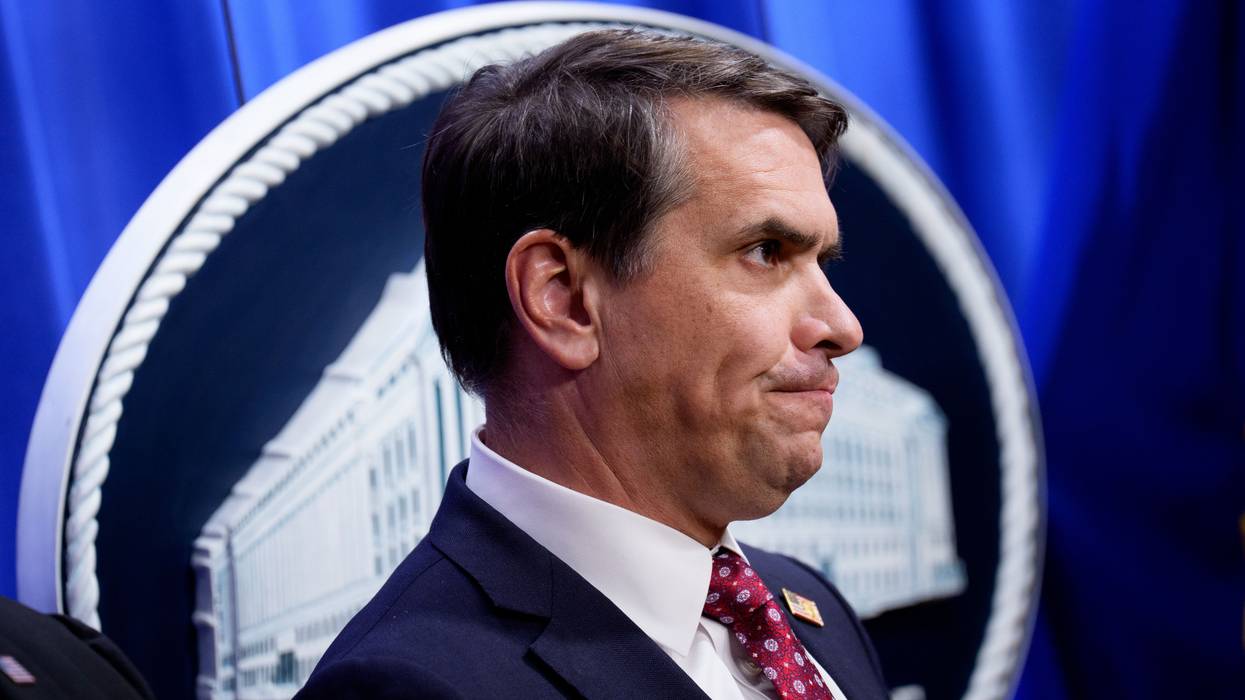
Someday Blanche’s progeny may ask him why—as the chief law enforcement officer in the United States—he helped a rogue president run roughshod over the rule of law.
During President Donald Trump’s first term, he bemoaned the failure of his first attorney general, Jeff Sessions, to protect him from the Justice Department’s investigation of Russia’s efforts to elect Trump in 2016.
“Where’s my Roy Cohn?” Trump erupted, referring to his notorious former fixer who had also been Sen. Joseph McCarthy’s hatchet man during the 1950s Senate hearings into communist activity. Trump later fired Sessions.
For a time, Attorney General William Barr was the answer. But the two men parted ways after Barr told him repeatedly that no evidence supported Trump’s obsessive claims that voter fraud had cost him the 2020 election.
In Trump’s second term, it appeared that Pam Bondi fit the bill. She tried valiantly to meet Trump’s every legal need. She transformed the Justice Department into Trump’s personal tool, prosecuted Trump’s perceived enemies, and tried to protect Trump from the fallout over the scandal involving Jeffrey Epstein’s alleged sex trafficking of minors.
Bondi's Deputy, acting Attorney General Todd Blanche, is now auditioning to remove the “Acting” from his title. He hopes to succeed where his predecessors have failed—to become Trump’s enduring Roy Cohn.
But she bungled the Epstein files. She tried but failed to prosecute two key targets on Trump’s vengeance list: New York Attorney General Letitia James and former FBI Director James Comey. She savaged her own reputation but could not save her job.
Bondi’s deputy, acting Attorney General Todd Blanche, is now auditioning to remove the “Acting” from his title. He hopes to succeed where his predecessors have failed—to become Trump’s enduring Roy Cohn.
Blanche began his legal career in 1999 as a paralegal in the US Attorney’s Office for the Southern District of New York. Working days and attending Brooklyn Law School at night, he graduated in 2003. After a stint as an associate in the Davis Polk firm and two federal court clerkships, he returned in 2006 to the US Attorney’s Office as a prosecutor and eventually became co-chief of the violent crimes division.
In 2014, Blanche joined the WilmerHale firm as a partner before moving to another big New York firm, Cadwalader, Wickersham, & Taft. In 2019, he represented Paul Manafort on state mortgage fraud charges similar to federal crimes for which Manafort had already been convicted in 2018. (Trump pardoned Manafort in December 2020). Blanche got the state law claims dismissed on double jeopardy grounds.
But in April 2023, Cadwalader balked when Blanche, then a registered Democrat, sought to represent Trump in the hush-money case involving payments to Stormy Daniels. So Blanche left Cadwalader and started his own firm. The jury eventually convicted Trump, but for Blanche it began a profitable relationship that generated over $3 million from Trump’s Save America PAC in the new firm’s first year alone.
Blanche went on to represent Trump in the Mar-a-Lago classified documents case and in the election obstruction case involving Trump’s efforts to overthrow the 2020 election. In 2024, Blanche switched his registration from Democrat to Republican.
Blanche is no longer Trump’s personal attorney, but you wouldn’t know it from his conduct in office.
Although he was the No. 2 official in the Justice Department, in July 2025 he tried to quiet the MAGA backlash over Trump’s breach of an election pledge to release the Justice Department’s Epstein files. Blanche went to Florida where Epstein’s co-conspirator Ghislane Maxwell was in prison and interviewed her personally. Openly seeking a pardon, Maxwell said that she had never seen Trump do anything inappropriate.
Mission accomplished.
Shortly thereafter, Maxwell was transferred to a “club fed-type” prison camp—even though her conviction had rendered her ineligible for such placement under Bureau of Prisons policy. Blanche said that threats against her were the reason for the transfer.
As acting attorney general, Blanche has now picked up where Bondi had failed to put Comey behind bars. At an April 28, 2026 press conference, he announced Comey’s indictment alleging that in posting an Instagram photo of sea shells that formed “86 47” on a North Carolina beach, Comey “knowingly and willfully made a threat to take the life of, and to inflict bodily harm upon, the President of the United States.”
A sea-shell death threat via Instagram.
“So, I think it's fair to say that threatening the life of anybody is dangerous and potentially a crime,” Blanche said indignantly as he explained that the charges against Comey came with a 10-year potential prison sentence. “Threatening the life of the President of the United States will never be tolerated by the Department of Justice.”
Blanche continued, “[W]hile this case is unique and this indictment stands out because of the name of the defendant, his alleged conduct is the same kind of conduct that we will never tolerate and that we will always investigate and regularly prosecute.”
Really? How about these?
“Hang Mike Pence”—Trump pardoned more than 1,500 January 6 insurrectionists, some of whom may have been responsible for the sign carrying that message and the gallows accompanying it. The statute of limitations on such “threats” is five years. Where was that indictment?
“86 46”—Anti-Biden Trump social media personality Jack Posobiec posted this in January 2022. It also appeared on T-Shirts, caps, and Republican fundraising messages.
Former Rep. Matt Gaetz (R-Fla.) posted this in February 2024: “We’ve now 86’d: McCarthy, McDaniel, McConnell. Better days are ahead for the Republican Party.”
Prosecutors face a daunting task proving Comey’s subjective intent to harm Trump. Even longtime Trump apologist Jonathan Turley, a law professor at George Washington University, acknowledged that the indictment “is unlikely to survive constitutional scrutiny. If it did, it would allow the government to criminalize a huge swath of political speech in the United States.”
When asked at his press conference how he would prove intent, Blanche said “with witnesses, with documents, and with the defendant himself,” adding: “It's very premature for me to do that today.”
That non-answer won’t suffice when Comey’s lawyers provide evidence that this is just another vindictive prosecution on Trump’s behalf at taxpayer expense.
Someday Blanche’s progeny may ask him why—as the chief law enforcement officer in the United States—he helped a rogue president run roughshod over the rule of law.
He probably won’t tell them about Roy Cohn.
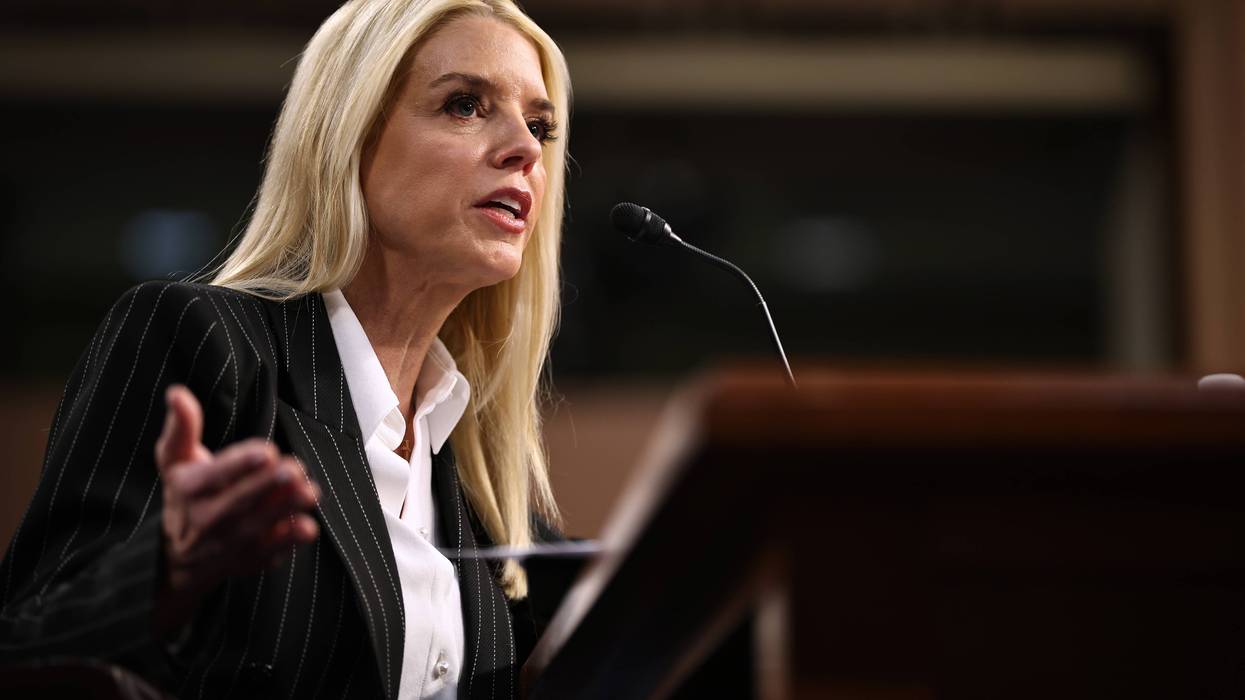
As Trump's attorney general, Bondi has undermined her integrity, defined her legacy, and destroyed the nation’s Justice Department.
Incompetence will be President Donald Trump’s undoing. The only question is whether he and his minions will undo the nation first. Today’s subject is Attorney General Pam Bondi.
In her first year, Bondi has established an unprecedented record of destruction in the service of Trump. Servitude is more apt. Here’s a small sample:
Understanding Bondi’s loyalty to Trump over her oath to uphold the Constitution requires a timeline:
Announcing Bondi as his choice for US attorney general to replace failed nominee Matt Gaetz, Trump said, “For too long, the partisan Department of Justice has been weaponized against me and other Republicans—Not anymore. Pam will refocus the DOJ to its intended purpose of fighting Crime and Making America Safe Again.”
To Bondi, that mission means slavish devotion to Trump and weaponizing the Justice Department against his enemies, including former FBI Director James Comey, NY Attorney General Letitia James, Federal Reserve Board Chair Jerome Powell, Federal Reserve Board member Lisa Cook, six Democratic lawmakers who recorded a message to troops about not following illegal orders, and on and on and on. In some cases, the only check on her abuse of power has been the refusal of grand juries—consisting of ordinary citizens—to issue indictments that she had sought against Trump’s targets.
Bondi has undermined her integrity, defined her legacy, and destroyed the nation’s Justice Department. As with many members of Trump’s cabinet, her incompetence is catching up with her, but it’s taking a toll on all of us.
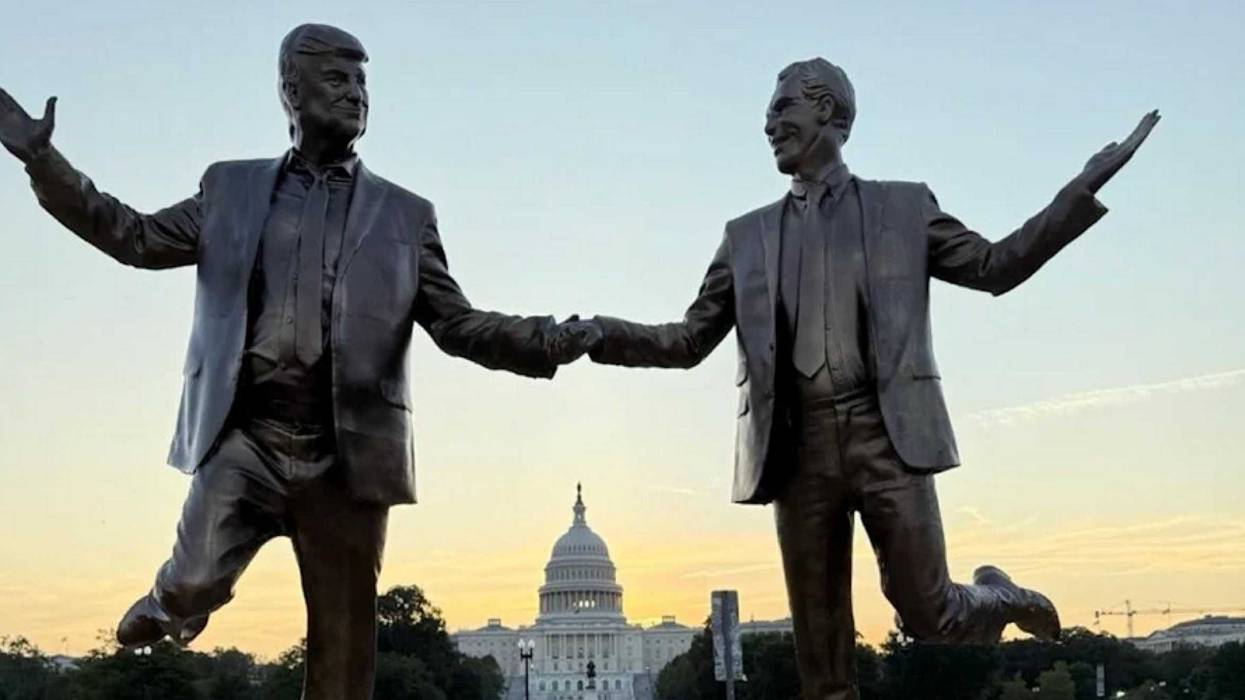
When given the opportunity to seek justice for countless women and children who were trafficked, abused, and exploited by the world’s wealthiest, most powerful people, the MAGA movement and its leaders have shown a startling disinterest in accountability.
Attorney General Pam Bondi’s contentious House hearing about the Justice Department’s handling of the Epstein files offered a clear message to the nation: Sex trafficking of women and minors is perfectly acceptable as long as wealthy white men do it.
Jeffrey Epstein, the disgraced late sex trafficker, fixer, and political networker, was found to have ties to huge number of the world’s elites on both sides of the political aisle—including Elon Musk, Peter Thiel, Ehud Barak, Bill Gates, Steve Bannon, Larry Summers, Bill Clinton, and of course, Donald Trump.
For years, Trump’s conservative backers have attacked LGBTQ+ people, drag queens, immigrants, and others, claiming a desire to protect women and children from rapists and groomers. Trump even boasted that “whether the women liked it or not,” he would “protect” them from migrants, whom he slandered as “monsters” who “kidnap and kill our children.”
But when given the opportunity to seek justice for countless women and children who were trafficked, abused, and exploited by the world’s wealthiest, most powerful people, the MAGA movement and its leaders have shown a startling disinterest in accountability. During her hearing Bondi tried desperately to deflect attention, claiming that the stock market was more deserving of public attention than Epstein’s victims.
For elites like Epstein, ideological differences were superficial. The real distinction was money, power, and connections.
Even the Republican rank and file is now mysteriously detached from the Epstein files.
Polls show that in summer 2025, 40% of GOP voters disapproved of the federal government’s handling of the Epstein files. But by January 2026, only about half that percentage disapproved—even after the Trump administration missed its deadline to release millions of files and then released them in a way that exposed the victims while protecting the perpetrators.
While some European leaders are facing harsh consequences for associating with Epstein, no Americans outside of Epstein and his closest associate Ghislaine Maxwell have faced any consequences, legal or otherwise.
That’s despite very concrete ties between the Trump administration and the sex trafficker. Not only did Trump’s Commerce Secretary Howard Lutnick admit to visiting Epstein island after lying about it (and has so far faced no consequences), but Trump himself is named more than a million times in the files, according to lawmakers with access to the unredacted documents. Several victims identify Trump by name, alleging he raped and assaulted them.
And it’s not just Trump. Epstein was an equal opportunity fixer. He was just as friendly with liberals as he was with conservatives, including Summers, Clinton, and, disconcertingly for the American left, Noam Chomsky. For elites like Epstein, ideological differences were superficial. The real distinction was money, power, and connections.
Epstein was a glorified drug dealer, and his drugs of choice were the vulnerable bodies of women and children, offered up to his friends and allies as the forbidden currency he traded in. A useful moniker has emerged to describe the global network of elites whose power and privilege continues to protect them from accountability: the Epstein Class.
Georgia Sen. John Ossoff, who faces reelection in 2026, is deploying this label, understanding that voters—at least those who haven’t bought into the MAGA cult —are increasingly aware of the double standards that wealthy power players are held to.
“This is the Epstein class, ruling our country,” said Ossoff in reference to those who make up the Trump administration. “They are the elites they pretend to hate.”
He’s right. And if the Trump administration won’t hold them to account, Americans should demand leaders who will.

This armed assault on a major American city, coupled with a thuggish offer implying that the bully boys might be pulled back if state officials will betray their voters, shows the damage that can be done without outright canceling the midterms.
The nation has been convulsed by the shooting of Alex Pretti in Minneapolis. Millions now see with sickening clarity a lawless assault by federal officers on an American city and its people. As The Wall Street Journal editorialized, it is a “moral and political debacle for the Trump presidency.”
The videos were followed by a fusillade of lies from senior government officials. Homeland Security Secretary Kristi Noem said Pretti had engaged in “domestic terrorism.” White House aide Stephen Miller called Pretti an “assassin” who tried to “murder federal agents.” Border official Gregory Bovino declared, “This looks like a situation where an individual wanted to do maximum damage and massacre law enforcement.” The instant impulse by these high officials was to bully and smear.
Another outrageous statement by a cabinet official has not gotten enough attention.
On Saturday, Attorney General Pam Bondi wrote to Minnesota Gov. Tim Walz linking the violence in Minneapolis to a demand that the state give the Justice Department complete access to the state’s sensitive voter rolls, among other things. There’s no explicit quid pro quo offered—but anyone familiar with Grade B gangster movies won’t miss the implication. Certainly that’s how state officials have read it. Let that sink in: Federal agents have killed innocent civilians in cold blood. And the response of the attorney general of the United States is to use it as leverage to illegally access voter data. That is an unambiguous abuse of power.
That sense of crisis, consciously instigated, can create opportunities to undermine the election and sow doubt and division.
As my colleague Wendy Weiser has written, “What do voter rolls have to do with ICE? Nothing. But they have a lot to do with the administration’s ongoing efforts to meddle in elections.”
Minnesota Secretary of State Steve Simon provided Bondi with the only legal and responsible answer (a simple “no”), describing her offer as “an apparent ransom.”
Make no mistake: The federal government has no authorization to demand confidential voter information from the states. In our constitutional system, states are responsible for maintaining and protecting voter rolls. Indeed, various state and federal laws limit how much data the federal government can collect.
But that hasn’t stopped it from trying. Bondi’s Justice Department has demanded access to the voter records of 44 states and Washington, DC, and it has sued more than 20 states for not complying. Two courts have already ruled on the side of the states.
Why would the administration want to hoover up this data? It would give election deniers new ammunition to push false claims of voting by people who are not US citizens. It would help the federal government pressure states into reckless voter purges, which would kick eligible citizens off the rolls just as November rolls around.
Plainly, it’s all part of a broader strategy to meddle with our elections. Last weekend, House Majority Leader Steve Scalise (R-La.) said Republicans are looking into yet another version of the unpopular SAVE Act—the bill that would require American citizens to produce a birth certificate, passport, or similar document to register to vote. At least 21 million Americans lack ready access to those documents, according to our research. The bill narrowly passed the House but stalled in the Senate last year after massive public pushback.
Bondi’s letter is a gross escalation of this effort—an explicit abuse of this moment to coerce Minnesota to step into line.
Sen. Chris Murphy (D-Conn.) worries that this escalation is by design. Over the weekend, he warned that the “Trump administration is creating this mayhem, particularly in cities in swing states, in order to take control of the election.”
When Donald Trump took office the first time in 2017, he talked of “American carnage.” Shooting of bystanders, squads of masked armed men, terrorized immigrants, clouds of tear gas, vague claims of conspiracy, and more—all bring that “carnage” to life. That sense of crisis, consciously instigated, can create opportunities to undermine the election and sow doubt and division.
To be clear (and I get asked this a lot): Donald Trump cannot cancel the midterms. Presidents have no power to do that.
But this armed assault on a major American city, coupled with a thuggish offer implying that the bully boys might be pulled back if state officials will betray their voters, shows the damage that can be done nonetheless.
The dignified and angry public response from around the country to the latest killing suggests maybe something has snapped. It would not be the first time in our history that government violence kindled an even more powerful reaction.
It’s not only the safety and sanity of people in Minnesota that’s at stake. As we are reminded once again, our democracy is on the line.
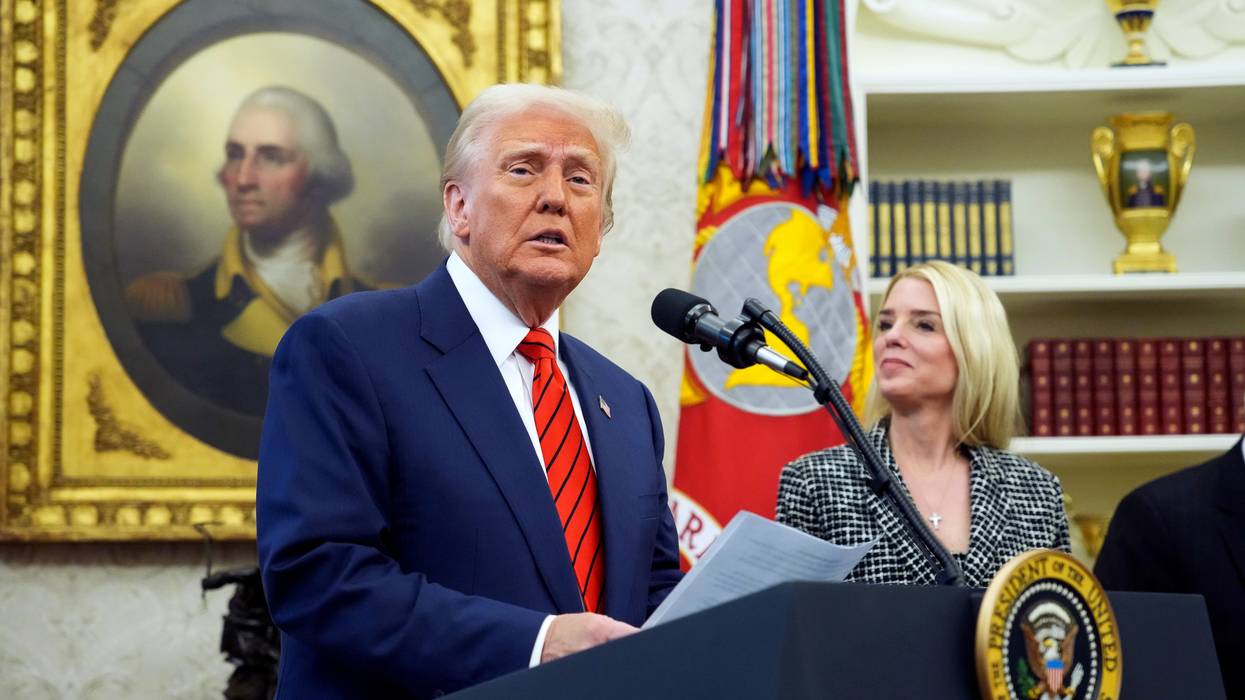
The next time you hear that Trump has somehow reversed his earlier resistance to releasing the Epstein files, remember that he hasn’t. He could have ordered their disclosure long ago; he never needed a congressional resolution compelling it.
Jeffrey Epstein may have committed suicide in 2019, but he remains an albatross around President Donald Trump’s neck. During the 2024 campaign, Trump promised to release all of the Justice Department’s Epstein files. As president, he could honor that pledge with the stroke of a social media post. Instead, he has done everything in his power to prevent such disclosure.
Some pundits claim that Trump has finally reversed his earlier resistance to releasing the files. He hasn’t. Rather, he has deployed yet another strategy to achieve his true objective—continued secrecy. And he’s relying on his faithful sycophant, Attorney General Pam Bondi, to execute it.
Back in July, Bondi’s Justice Department, together with FBI Director Kash Patel, declared that after an exhaustive review of the entire file, the investigation into Epstein’s sex trafficking of minors was over: “We did not uncover evidence that could predicate an investigation against uncharged third parties.”
The department would release no additional materials from the Epstein files: “No further disclosure would be appropriate or warranted.”
As Trump’s MAGA base erupted over his administration’s refusal to release the files, he lashed out at fellow Republicans. He called supporters clamoring for greater transparency “stupid,” “foolish,” and victims of a “Democrat hoax.”
It didn’t work.
MAGA’s anger grew. So Trump directed Bondi to ask that the courts release the grand jury transcripts in the cases against Epstein and his coconspirator, Ghislane Maxwell.
It was a ruse. Trump and his lawyers knew that the courts were not likely to release the material, which was a tiny fraction of the DOJ file anyway. Sure enough, they didn’t. And several judges wrote blistering opinions exposing the farce and blasting Bondi for pursuing the effort.
Bondi’s next ploy on Trump’s behalf was the production of documents in response to a subpoena from the House Oversight Committee. It turned out that only 3% of the 20,000 documents was new. And courts had confirmed that there were 100,000 documents in the Epstein files. Where were the rest?
A Democrat won the Arizona special election to the US House of Representatives. As a result, a discharge petition on the resolution demanding disclosure of the Epstein files would now have the crucial 218th signature required to force a vote on the House floor.
But Trump’s lackey in the House, Speaker Mike Johnson (R-La.), refused to swear in the newly-elected member. He claimed that because the House was in recess due to the government shutdown, he could not admit her. It was a subterfuge that gave Trump time to twist arms in an effort to change votes.
Three Republicans had sided with the Democrats to reach the 218-vote threshold required to move the Epstein resolution forward in the House. Bondi and Patel met with one of them, Rep. Laura Boebert (R-Colo.), in the White House Situation Room. A second target was Nancy Mace (R-S.C.). Trump attacked the third GOP defector, Rep. Marjorie Taylor Greene (R-Ga.), publicly: He withdrew his endorsement and called her “wacky,” “a disgrace,” “a traitor,” and “a nuisance.”
None of the Republicans budged. Trump was going to lose the House vote.
Faced with the reality that he couldn’t stop the House from passing the resolution requiring release of the Epstein files, Trump said that he would sign the resolution after it passed the Senate.
That’s a ruse too. And once again, he turned to Bondi for another escape hatch. In a social media post, Trump declared:
I will be asking A.G. Pam Bondi, and the Department of Justice, together with our great patriots at the FBI, to investigate Jeffrey Epstein’s involvement and relationship with Bill Clinton, Larry Summers, Reid Hoffman, J.P. Morgan, Chase, and many other people and institutions, to determine what was going on with them, and him.
Only 217 minutes later, Bondi responded:
Thank you, Mr. President. SDNY U.S. Attorney Jay Clayton is one of the most capable and trusted prosecutors in the country, and I’ve asked him to take the lead. As with all matters, the Department will pursue this with urgency and integrity to deliver answers to the American people.
Now the punchline: The Justice Department will not release materials relating to an active investigation. The investigations that Trump has ordered could well suffice. Jay Clayton, who has no criminal law experience but enjoyed a stellar pre-Trump reputation as a corporate partner in the elite firm, Sullivan & Cromwell, now faces a crucial test of character.
The stated basis for the DOJ rule is that disclosure could compromise the investigative process. Never mind that in July, Bondi said that the department’s thorough investigation of the entire file “did not uncover evidence that could predicate an investigation against uncharged third parties.”
And the department can release—or not release—whatever it chooses. There is no meaningful enforcement mechanism. If DOJ withholds Epstein material related to Trump, the public will never know, unless there’s a whistleblower somewhere. But Trump, Bondi, and Patel have purged the top ranks of the Justice Department of anyone who is not a Trump loyalist.
The next time you hear that Trump has somehow reversed his earlier resistance to releasing the Epstein files, remember that he hasn’t. He could have ordered their disclosure long ago; he never needed a congressional resolution compelling it.
But Pam Bondi has reversed her position that the files contain nothing that warrants further investigation of anyone associated with Epstein.
Leading America’s Department of Justice is someone whom no one can trust—except Donald Trump.
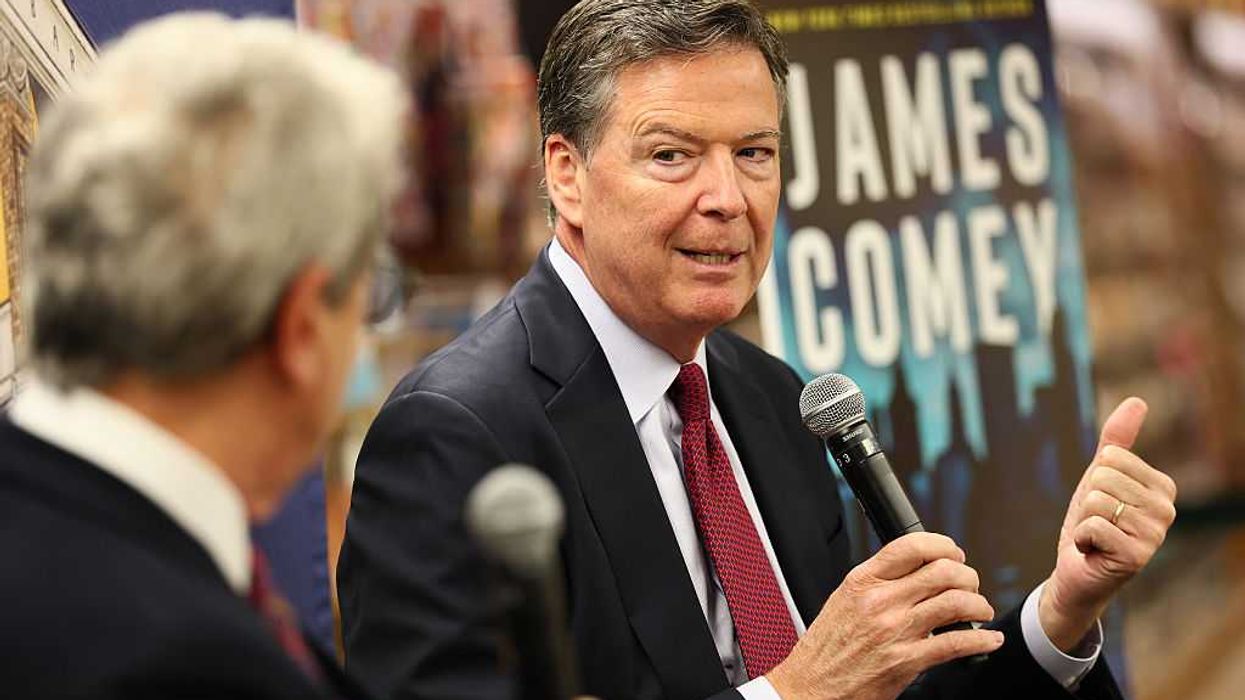
"Installing a hand-picked prosecutor to bring a meritless case demonstrates the danger our democracy is in from this wannabe dictator."
The federal indictment of former FBI Director James Comey on Thursday night unleashed a deluge of contempt directed at President Donald Trump, who pursued the case from his perch in the Oval Office, shattering the line that has long separated the operations of the Justice Department from direct presidential influence.
Rep. Jamie Raskin (D-Md.), ranking member of the House Judiciary Committee, said the charges against Comey—filed by one of Trump's former personal defense attorneys, Lindsey Halligan, installed as US Attorney for the Eastern District of Virginia just days ago, show that Trump "refuses to allow the facts or the law to stand in the way of his wrath and vengeance campaign."
Comey is charged with lying to Congress and obstruction of congressional proceedings related to testimony he gave to a US Senate committee in 2020. Still, the previous prosecutorial team in the Eastern District concluded there was not sufficient evidence to bring such a case. Earlier this week, Trump forced Halligan's predecessor, Erik Siebert, to resign after he refused to bring the charges. "He didn't quit," Trump said of Siebert, "I fired him."
Trump has named Comey as a political enemy and accused the former director of misconduct in relation to the 2016 FBI investigation into Trump and his staff over alleged ties to Russian interference with that year's presidential campaign, which Trump ultimately won against Democratic candidate Hillary Clinton.
"This vindictive prosecution shows just how far Trump and his toadies will go to exact retribution on perceived enemies."
The relentless pursuit of Comey by Trump since then, and now a federal indictment, say critics, shows that Trump is the one willing to weaponize the Justice Department against perceived political enemies, regardless of the existence or quality of evidence.
As The New York Times notes:
[The indictment] represents the most significant legal step yet by theTrump administration to harry, punish and humiliate a former official the president identified as an enemy, at the expense of procedural safeguards intended to shield the Justice Department from political interference and personal vendettas.
The bare-bones, two-page indictment was signed only by Ms. Halligan, a former defense lawyer for Mr. Trump who personally presented the case to the jury, despite her lack of any previous prosecutorial experience. Typically such filings are also endorsed by career prosecutors who have gathered the evidence in the case.
The president, said Raskin in his statement, "forced Mr. Seibert to resign in order to replace him with one of his former defense attorneys, Lindsey Halligan, who has literally no prosecutorial experience but is clearly willing to blindly carry out the president’s orders. As if by magic, within mere days of being appointed, Ms. Halligan delivered for the president by filing the exact baseless charges against Mr. Comey that her predecessor had rejected."
Trump responded to the charges on Thursday night by declaring, "Justice in America!" in a social media post, while Comey professed his innocence in a statement, saying he looks forward to defending himself at trial and that he would not be cowed. “We will not live on our knees," said Comey, "and you shouldn’t either.”
The indictment of Comey, said Christina Harvey, executive director of the progressive advocacy group Stand Up America, "isn’t justice – it’s revenge."
“By weaponizing the DOJ to settle political scores," said Harvey, Trump and Attorney General Pam Bondi "have shredded the last scraps of the Department’s independence. Americans do not want our president using taxpayer-funded prosecutors and law enforcement to exact revenge.”
Lisa Gilbert, co-president of Public Citizen, called Comey's indictment "a perversion of our justice system" and a worrying sign of what's to come.
"This vindictive prosecution shows just how far Trump and his toadies will go to exact retribution on perceived enemies. And how large perceived slights loom on the president’s priorities list," warned Gilbert. "Installing a hand-picked prosecutor to bring a meritless case demonstrates the danger our democracy is in from this wannabe dictator."
The co-chairs of the Not Above the Law coalition, which includes Public Citizen, the Constitutional Accountability Center, MoveOn, and Stand Up America, released a joint statement, saying the prosecution of Comey represents the "dangerous ongoing weaponization of our justice system" and continued:
This has all the hallmarks of a vindictive and meritless prosecution. Yet Trump's handpicked replacement is proceeding anyway, ignoring both DOJ guidelines and prosecutorial ethics. When the Department of Justice becomes a tool for settling personal grudges rather than protecting Americans from real threats, our liberties are in grave danger. Agencies that should investigate terrorism and organized crime must not become personal revenge squads for the president. Congress must act to restore independence to our justice system and stop this authoritarian abuse of power—Trump’s attorney general has made clear she won’t.
For Raskin's part, he said, "I have no doubt that a jury of his peers will acquit and vindicate Mr. Comey after being afforded the opportunity to hear all the relevant evidence. But, until that happens, Mr. Comey will be forced to spend time, money, and energy defending himself against this blatantly fraudulent and vindictive indictment."
"The rule of law was supposed to replace vendettas, blood feuds, and mad kings exacting vengeance on their perceived enemies," he added. "This sordid episode is one more savage assault on justice in America.”
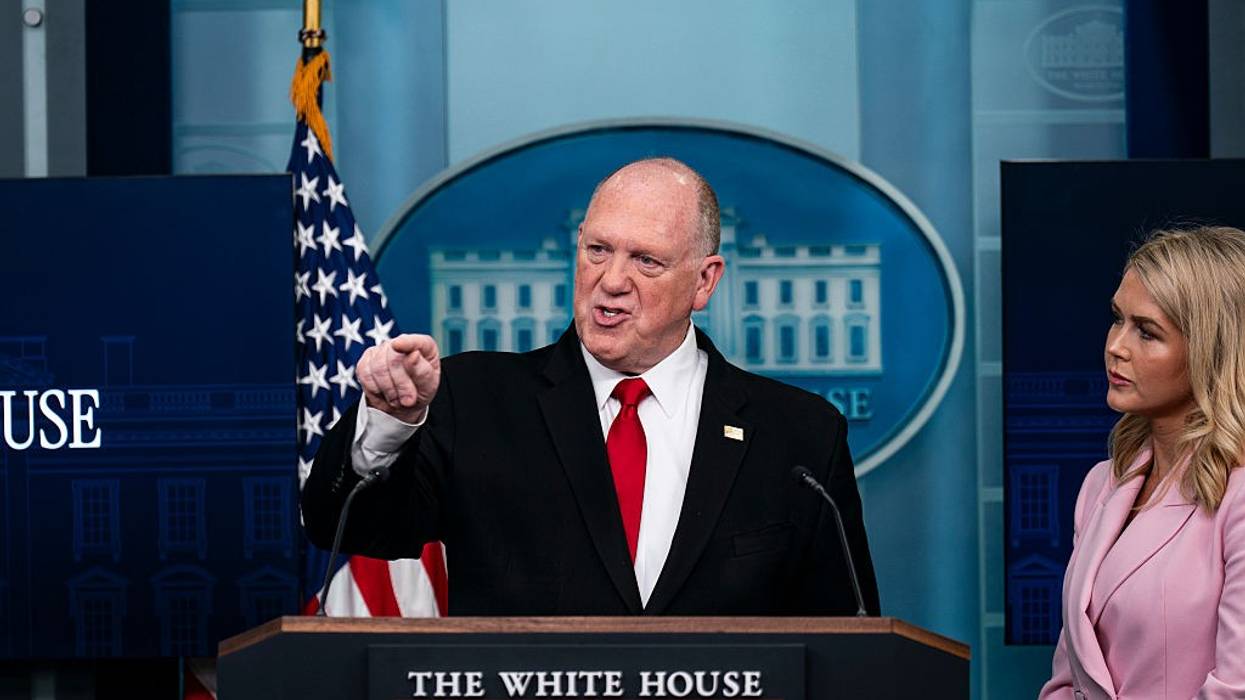
"Seriously though, has anyone ever been handed $50,000 cash in a paper bag for something legit?"
Accusations of supreme corruption, demands for an investigation, and calls for impeachment proceedings for several high-level Trump administration officials erupted on Saturday after it was reported that a Justice Department probe into Tom Homan, who serves as President Donald Trump's border czar, was dropped despite documented evidence he accepted a bribe of $50,000 delivered in a bag by undercover FBI agents as part of a sting operation.
Citing multiple people "familiar with the probe," a review of internal documents, MSNBC was the first to report that during "an undercover operation last year, the FBI recorded Tom Homan [...] accepting $50,000 in cash after indicating he could help the agents—who were posing as business executives—win government contracts in a second Trump administration."
The New York Times, which also spoke to people familiar with the case, reported that the "cash payment, which was made inside a bag from the food chain Cava, grew out of a long-running counterintelligence investigation that had not been targeting Mr. Homan," and that the encounter, as MSNBC also reported, was recorded. The Times indicates that the recording was audio, while MSNBC's version of the evidence suggests that video footage exists.
"Americans deserve disclosure of evidence showing top DHS official Homan accepting a bag full of $50,000 in cash We need to know why the investigation was dropped—all the facts and evidence." —Sen. Richard Blumenthal
The case implicates both FBI Director Kash Patel and Attorney Pam Bondi, who heads the Justice Department. Both were appointed by Trump and are deeply loyal to him politically.
MSNBC reports:
It’s unclear what reasons FBI and Justice Department officials gave for shutting down the investigation. But a Trump Justice Department appointee called the case a “deep state” probe in early 2025 and no further investigative steps were taken, the sources say.
On Sept. 20, 2024, with hidden cameras recording the scene at a meeting spot in Texas, Homan accepted $50,000 in bills, according to an internal summary of the case and sources.
The federal investigation was launched in western Texas in the summer of 2024 after a subject in a separate investigation claimed Homan was soliciting payments in exchange for awarding contracts should Trump win the presidential election, according to an internal Justice Department summary of the probe reviewed by MSNBC and people familiar with the case. The U.S. Attorney’s office in the Western District of Texas, working with the FBI, asked the Justice Department’s Public Integrity Section to join its ongoing probe “into the Border Czar and former Acting Director of Immigration and Customs Enforcement Tom Homan and others based on evidence of payment from FBI undercover agents in exchange for facilitating future contracts related to border enforcement.”
The revelations prompted Rep. Pramila Jayapal (D-Wash.) to declare that Trump's second term is the "most corrupt administration we have ever seen."
Matt Duss, executive vice-president at the Center for International Policy, asked: "Seriously though, has anyone ever been handed $50,000 cash in a paper bag for something legit?"
While that's not a legal standard, news of the dropped case against Homan, given his central role in Trump's ramped-up attacks on migrants and communities nationwide, sparked an array of outrage, many questions, and a demand for more answers from the Justice Department.
"Who's the illegal now, Tom Homan?" asked Rep. Alexandria Ocasio-Cortez (D-N.Y.).
"Tom Homan should be fired immediately and charged," said Rep. Bonnie Watson Coleman (D-N.J.). "Kash Patel should be suspended pending impeachment proceedings, and anyone who aided in this cover-up should be held accountable. Homan’s relationship with GEO Group, who own Delaney Hall in Newark, should be thoroughly investigated, and the facility closed pending that investigation. The amount of corruption in this administration is endless."
Sen. Ed Markey (D-Mass.) had a similar reaction. "Corruption that’s stunning even for this administration," Markey said. "Homan and anyone who knew and covered this up must resign."
As the Times reporting notes, the "episode raises questions about whether the administration has sought to shield one of its own officials from legal consequences, and whether Mr. Homan’s actions were considered by the White House when he was appointed to his government role."
In response to questions from MSNBC and the Times, Trump officials downplayed the seriousness of the case. They said that after it was investigated, the bribery allegations did not stand up.
White House Deputy Press Secretary Abigail Jackson told MSNBC the probe that led to the recording of Homan was a "blatantly political investigation." However, it's clear from the reporting that the original investigation was not targeting Homan at all.
In a joint statement issued Saturday, Patel and Todd Blanche, the deputy attorney general, said the investigation “was subjected to a full review by F.B.I. agents and Justice Department prosecutors. They found no credible evidence of any criminal wrongdoing.”
That hardly satisfied Democrats in Congress, who said it's clear the public has a right to know every detail about what occurred and why the case was dropped.
"Release the tapes—Americans deserve disclosure of evidence showing top DHS official Homan accepting a bag full of $50,000 in cash," said Sen. Richard Blumenthal (D-Conn.). "We need to know why the investigation was dropped—all the facts and evidence."
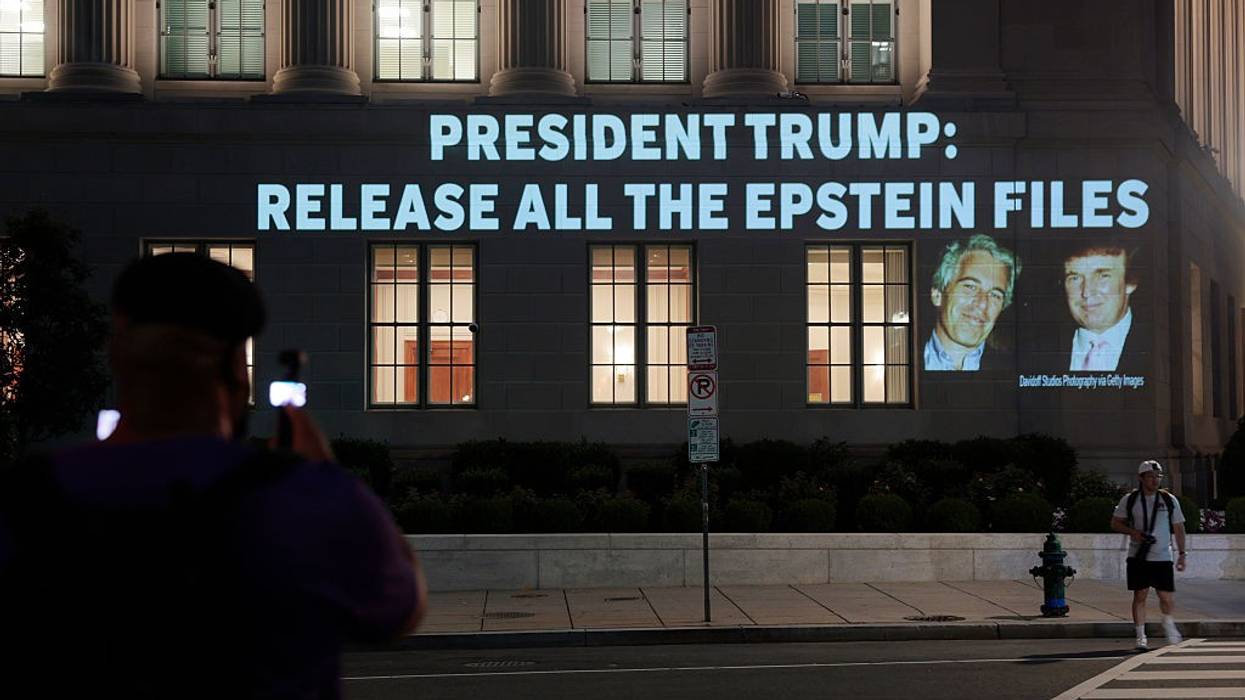
In 2019, then first-term President Donald Trump jumped aboard the Epstein conspiracy bandwagon. Six years later, he’s now trying desperately to stop it.
On August 10, 2019, Jeffrey Epstein—accused of sex trafficking in minor girls—committed suicide in his jail cell while awaiting trial, and a new conspiracy theory was born: Powerful forces silenced him. Releasing the Justice Department’s files on Epstein would reveal a “client list” of high-profile individuals, including prominent Democrats, who had a motive to kill him.
Then-President Donald Trump jumped aboard the conspiracy bandwagon. Six years later, he’s now trying desperately to stop it.
Hours after Epstein’s death, Trump retweeted a post alleging that former U.S. President Bill Clinton was connected to Epstein’s death. Trump’s supporters dutifully followed his lead:
Trump set the stage. With his loyalists now running the FBI and the Justice Department, the public would finally see the Epstein files.
The conspiracy flames that Trump fanned are now blowing back on him:
Some of Trump’s most dedicated allies were outraged at Trump’s stonewalling. He lashed out with diversions, distractions, and attacks. He accused former President Barack Obama of treason. He derided followers who “bought into this ‘bullshit’” as “PAST supporters.” And he blamed Democrats for starting the conspiracy theory in the first place:
“It was a hoax. It’s all been a big hoax. It’s perpetrated by the Democrats and some stupid Republicans and foolish Republicans fall into the net. And so they try and do the Democrats work. The Democrats are good for nothing other than these hoaxes.”
But then:
If the investigation into targets was closed, why was Blanche interviewing Maxwell?
On his way to Europe on July 25, a reporter asked Trump whether he would consider pardoning Maxwell. Trump responded, “I’m allowed to do it, but it’s something I haven’t thought about.”
After landing in Scotland, he denied that Bondi had briefed him on the Epstein matter in May: “No, I was never, never briefed, no.” He added, “I’m focused on making deals. I’m not focused on conspiracy theories.”
Ghislane Maxwell is focused on making a deal too. Trump is her ticket out of prison. The question is what she can offer that will prompt him to punch it.