

SUBSCRIBE TO OUR FREE NEWSLETTER
Daily news & progressive opinion—funded by the people, not the corporations—delivered straight to your inbox.
5
#000000
#FFFFFF
To donate by check, phone, or other method, see our More Ways to Give page.
Daily news & progressive opinion—funded by the people, not the corporations—delivered straight to your inbox.
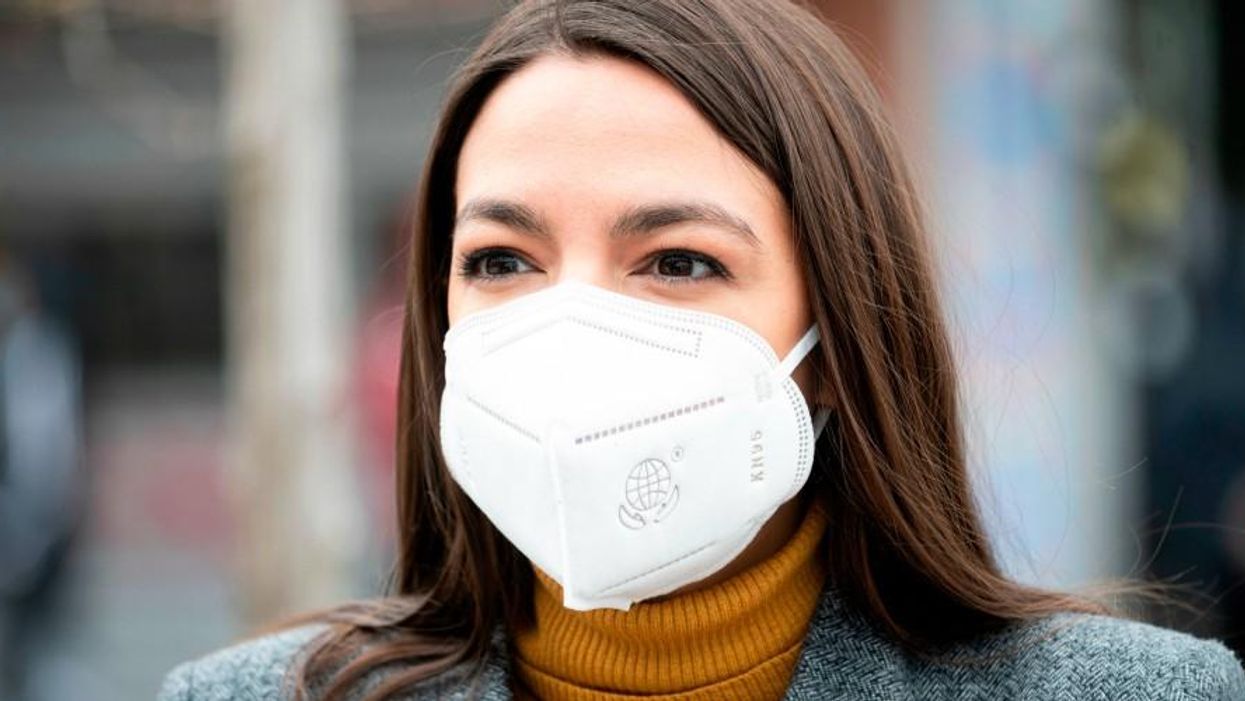
Rep. Alexandria Ocasio-Cortez on Monday welcomed the Democratic National Committee's attempt to gather as much anti-Trump energy as possible ahead of the general election by reaching out to leaders from across the political spectrum, but made clear that she will reject any attempt by so-called "moderate" Republicans who are invited to the party's convention to define what the Democratic Party stands for.
The New York Democrat responded to a BuzzFeed interview in which former Ohio Gov. John Kasich, a Republican who is speaking at the Democratic National Convention Monday night, downplayed the significance of Ocasio-Cortez's rise in the party over the past two years.
Claiming the American electorate is, by and large, "moderate," Kasich dismissed Ocasio-Cortez as being "extreme" and representative of a small minority of Democratic voters.
"Because AOC gets outsized publicity doesn't mean she represents the Democratic Party," said Kasich, who ran against President Donald Trump in the Republican primary in 2016 and has been a vocal critic of the president. "She's just a part, just some member of it."
Kasich is one of several Republicans speaking at the convention on Monday night. While citing the importance of Republicans like Kasich rejecting Trump, Ocasio-Cortez made clear that the Democratic Party shouldn't allow GOP supporters of presumptive Democratic presidential nominee Joe Biden to dictate the party's overall message to voters.
"Something tells me a Republican who fights against women's rights doesn't get to say who is or isn't representative of the Democratic Party," Ocasio-Cortez tweeted.
While Kasich is right to back former Biden over Trump in the election, the congresswoman added, he is still "an anti-choice extremist" and "is not a friend to workers."
In 2018, when he was governor of Ohio, Kasich signed into law a ban on second trimester dilation-and-evacuation abortions, a common medical method of terminating a pregnancy. Under the law doctors who perform the procedure could face a fourth-degree felony and up to 18 months in prison. In 2019, a federal court ordered the state not to enforce the portion of the law that would penalize providers.
Kasich also attempted to gut collective bargaining rights for 715,000 state employees--but was overruled by Ohio voters when the bill he signed was put up for a referendum.
"We can build bridges and not lose sight of our values," said Ocasio-Cortez, who is slated to speak for one minute at the convention.
Contrary to Kasich's claims, Ocasio-Cortez's views on the climate, healthcare, and the economy are actually in line with those of a majority of Americans, particularly Democratic voters.
In April, a month into the public health and economic crises which have forced millions of people off their employer-sponsored healthcare coverage, a Hill-HarrisX poll found that 69% of respondents supported Medicare for All. Polling last year found nearly two-thirds of Americans supported a Green New Deal to create jobs while combating the climate crisis, including 86% of Democrats. Sixty-four percent of respondents to a Reuters poll in January backed a wealth tax for the wealthiest Americans, including 77% of Democrats and 53% of Republicans.
Writer and organizer Melissa Ryan slammed Kasich for his dismissal of Ocasio-Cortez, suggesting that the Democratic Party's embrace of an "anti-choice union buster" would convince few on-the-fence voters to back Biden while shoving aside a popular progressive whose views are in line with most Democratic voters.
"Courting John Kasich might net some Independents and disgruntled Republicans, which is fine for this election," tweeted New York Times op-ed writer Wajahat Ali. "But Democrats would be wise courting progressives if they want to thrive in the future. Stop being afraid of the label and personalities like AOC who will keep rising."
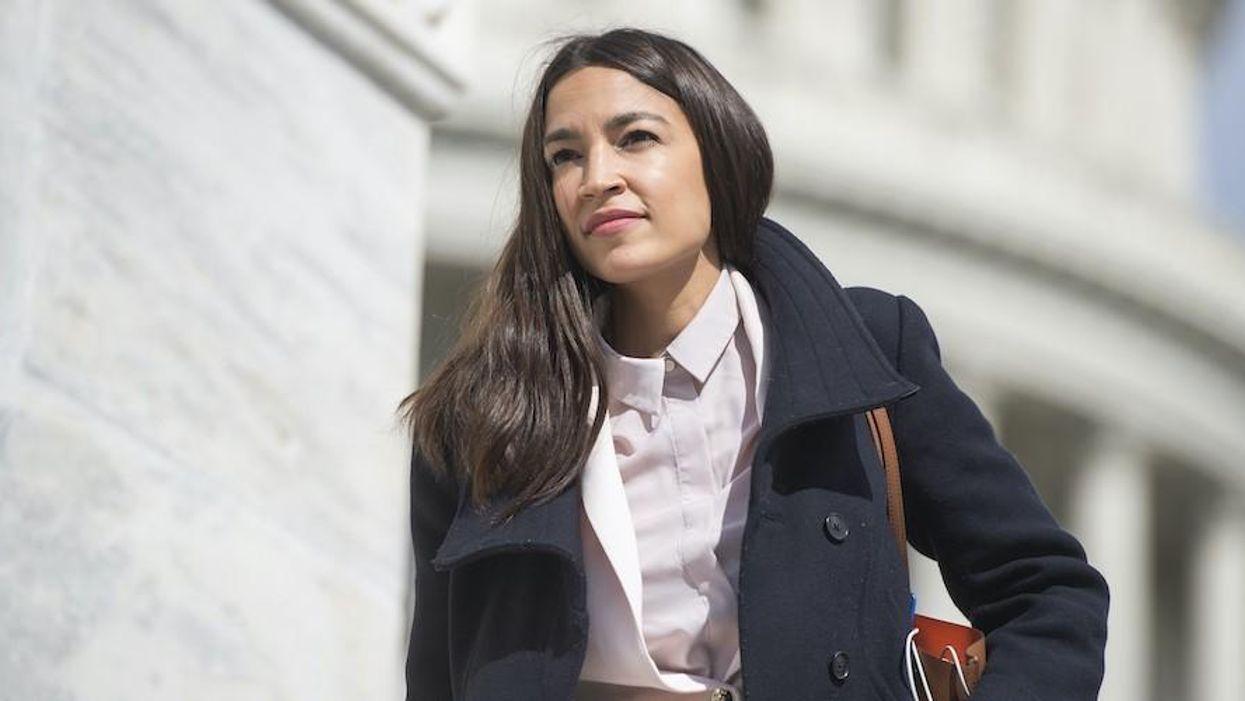
Progressives expressed their discontent with the Democratic establishment Friday after reporting from Politico indicated that it was "unclear" if popular Rep. Alexandria Ocasio-Cortez would be guaranteed a speaking slot at the party's convention.
"It would be stupid not to give" Ocasio-Cortez a role at the convention, Corbin Trent, a former top adviser to the New York Democrat, told Politico. "She's one of the best speakers the Democratic Party's got."
As Politico reported, the convention has lined up a number of party stalwarts and leaders, including more centrist types like former President Bill Clinton and former Secretary of State and 2016 nominee Hillary Clinton, as well as progressives like Sens. Elizabeth Warren (D-Mass.) and Bernie Sanders (I-Vt.).
The party has also invited former Ohio Gov. John Kasich, a Republican, to speak in a show of anti-Trump unity that goes past party.
Former Pennsylvania Gov. Ed Rendell, a powerful member of the party's centrist wing, told Politico that he doubted Ocasio-Cortez would be offered a role at the convention.
"I think Bernie and Warren will speak, and they'll represent the progressive wing of the party very ably," said Rendell.
Kasich's inclusion and Ocasio-Cortez's possible exclusion rankled advocates and activists on the left.
"You want Bill Clinton to speak but maybe not AOC," tweeted progressive activist and former Sanders campaign advisor Winnie Wong. "Okay, dummies."
Calling the decision "classic Dem shit," journalist Paul Blest opined it was unlikely that the party would ever see a repeat of former President Barack's famous keynote speech at the 2004 convention that propelled him to political stardom and the White House.
"She's one of the three most visible and culturally relevant politicians in the country," said Blest, "and she's particularly popular among young and left-leaning people, two blocs Biden needs even more in states like Wisconsin where the margin is narrow."
President Donald Trump's support has been on the decline since he entered office in January--but in a new poll from CNN, the president's popularity among his previously-solid base is shown to be crumbling.
The newest numbers (pdf) suggest that even as Trump holds rallies in states that have been largely supportive of him, as he did last week in West Virginia, his approval ratings are eroding even among groups that have been fiercely loyal since he announced his presidential run two years ago.
Trump has been popular among white Americans without college degrees--winning 67 percent of the vote in this demographic in 2016--the broadest show of support from the group of any presidential candidate since 1980. The new survey, released Monday night, shows that only 35 percent of respondents in this group now "strongly approve" of the job he is doing as president. In February, 47 percent of whites without college degrees approved of Trump.
The poll was taken as Trump hit the 200-day mark of his term. The first six months of his presidency have been marked by inaction and scandal, with a Republican-controlled Congress unable to pass long-planned legislation repealing the Affordable Care Act, courts blocking Trump's attempts to bar people from six majority-Muslim countries from entering the U.S., and an ongoing investigation into the Trump administration's alleged ties to Russia.
In addition to Trump's approval ratings, the poll addressed whether Americans feel they can trust the information that comes out of the White House. While a poll taken a month ago by Survey Monkey showed that 89 percent of Republicans viewed Trump as more trustworthy than CNN, the newest survey suggests that this may not translate to high levels of trust in the president.
Thirty percent of all respondents said they don't trust any information they hear from the White House. Just 13 percent of Republicans and six percent of non-college educated whites trust all or almost all of what they hear from the administration; most respondents from each group said they trust "just some" of what the White House says (41 percent and 45 percent, respectively, gave this answer).
Another poll released by the American Research Group on Tuesday showed that Trump is also quickly losing support in New Hampshire, a key state in primary elections. Poll-takers asked Republican voters in the state who they would support in 2020 primary. Fifty-two percent answered that they would vote for Gov. John Kasich of Ohio, while just 40 percent responded that they'd support Trump. In 2016, Trump won the state's Republican primary easily, gathering more than 35 percent of the vote while Kasich came in a distant second with just 16 percent.
During the Republican primaries last year, many friends of mine considered John Kasich the adult in the GIP field. When I explained his demonstrated hostility to public education, they thought I must be exaggerating.
But now the proof is there for all who are willing to learn about it.
Kasich wants all teachers to spend some time visiting businesses so they know how to prepare their students.
The Akron Beacon Journal reports:
Ohio Gov. John Kasich wants public school teachers to see what it's like to work outside the classroom so they can better match their students to the needs of local employers.
Tucked a third of the way through Kasich's 3,512-page 2018-19 state budget is a new education mandate. If the Ohio House and Senate accepts the proposal, educators looking to get or renew a teaching license this fall would have to work at or, more likely, tour a local business.
The plan, which prioritizes industry over pedagogy, is part of the governor's broader plan to drive career education and marry schooling to the needs of the economy.
"It could be as simple as teachers touring local business and having those conversations ... to just get a better sense of what those in-demand jobs are," said Ryan Burgess, director of the Governor's Office of Workforce Transformation, which put together the group that developed the "on-site work experience" externships and about 20 other proposals in Kasich's budget.
Asked how kindergarten teachers might benefit from touring a local business, Burgess said it's never too young to explore a career."
So five-year-olds will "explore a career."
Here is a better idea: How about if business leaders commit to teach for one full day in the public schools? Think of what they might learn by doing so.
Ohio Governor John Kasich (R) on Tuesday signed a 20-week abortion ban into law, ensuring that reproductive rights in the state remain under attack even as he vetoed the more controversial "heartbeat" bill that would have banned abortions as early as six weeks.
The new law, known as SB 127, bans abortions after 20 weeks and does not include exceptions for rape or incest.
Kasich said the heartbeat bill would have violated the U.S. Supreme Court's previous rulings on abortion. Yet the 20-week ban also goes against the decision made in Roe v. Wade, which protects the right to choose until around 24 weeks, when the fetus becomes viable.
Pro-choice advocates said Kasich's signing virtually confirms previous fears that the six-week ban may have been a ploy to distract from the 20-week restriction, which seems more reasonable by comparison.
"John Kasich is treating women's healthcare like a game," Kellie Copeland, executive director of NARAL Pro-Choice Ohio, said after the signing. "He thinks that by vetoing one abortion ban Ohioans will not notice that he has signed another. The 20-week abortion ban callously disregards the unique circumstances that surround a woman's pregnancy."
"Once a woman has made the decision to end a pregnancy, she needs access to safe and legal abortion care in her community," Copeland said. "Kasich's actions today will fall hardest on low-income women, women of color, and young women. History will not judge Gov. Kasich's disregard for women's health kindly."
Ohio State Rep. Greta Johnson, who serves South Akron and Barberton, tweeted a scathing response to the legislation, writing, "Don't get it twisted--the 20[-week] ban is just as unconstitutional as the 6[-week] ban. Women. Are. People. Say it out loud. Women. Are. People." Her tweet also included an image of a coat hanger surrounded by the words, "Never Again."
Ohio is now the 18th state to approve a 20-week abortion ban, although similar restrictions have been struck down in Arizona and Idaho. However, legal experts believe the new law will survive legal challenges, according to the New York Times.
Nonetheless, NARAL Ohio spokesperson Gabriel Mann told the Times, "There's no way we're going to take this lying down. It's too horrific of a restriction for women who are facing medical complications and situations where they need an abortion around that 20-week period."
Ohio lawmakers approved a bill late Tuesday that bans abortion once a fetal heartbeat can be detected. The bill is now headed to Governor John Kasich's desk. If signed, it will be one of the strictest abortion laws in the country.
The so-called heartbeat bill means that abortion could be prohibited as early as six weeks after conception--a point at which many women may not even realize they are pregnant--effectively making it illegal in the state.
Lawmakers passed the bill largely along party lines, "emboldened by anticipation of [President-elect] Donald Trump's upcoming federal and Supreme court appointments," as Cincinnati.com reports. Republicans in the state have tried to advance the heartbeat bill in some form since 2011.
In Ohio, Republicans control both legislative chambers, as well as the governor's office. Kasich is well known for his anti-choice stance, having previously sought to strip funding from Planned Parenthood, but he has also expressed skepticism over former iterations of the heartbeat bill.
NARAL Pro-Choice America launched a petition calling on Kasich to veto the legislation.
"This was completely unexpected, and senators had less than 90 minutes to review the amendment before voting," the organization wrote.
The measure was tucked last minute into an unrelated child abuse bill and has no exceptions for rape or incest. As Cincinnati.com notes, the change "would put the state in violation of current constitutional standards for abortion rights."
Planned Parenthood wrote on Twitter, "Ohio anti-abortion extremists know how unpopular their agenda is, so they have to sneak it into unrelated bills."
"After years of passing anti-abortion laws under the guise of protecting women's health and safety, they lay bare their true motives: to ban abortion in the state of Ohio," said Planned Parenthood Action Fund spokesperson Dawn Laguens.
Just hours after the bill passed, protesters gathered outside the Governor's mansion, holding signs that read, "Abortion Access Now," "My Body, My Rights, My Choice," and "Trust Women."
Federal courts have struck down similar measures in North Dakota and Arkansas, but Republican lawmakers said the Ohio bill could survive a legal challenge with the incoming administration.
"A new president, new Supreme Court appointees change the dynamic, and there was consensus in our caucus to move forward," Ohio Senate President Keith Faber told the Columbus Dispatch.
Ohio's approval comes amid more anti-choice moves around the country. On Monday, the Texas Department of State Health Services released an online pamphlet rife with medically debunked myths about abortion, including its alleged link to cancer and suicide risks. According to state law, doctors are required to give the information to all patients seeking abortions.
We heard a lot about the "war on women" during the 2012 election cycle -- mostly over Republican attacks on abortion rights and birth control.
While the phrase has faded in this election year-round, the war on women has not. The only change is that now we're fighting on two fronts -- reproductive rights and economic survival.
To a man, the three Republicans still in the nomination race oppose abortion rights.
No surprise there. But Ted Cruz has upped the ante and come out against exceptions for rape and incest. John Kasich would allow the exceptions but says there's no point in talking to him about choice.
The formerly pro-choice Trump is now not only against abortion but blurted out recently what others undoubtedly believe but are too dishonest to say out loud -- that the government should punish the women who have abortions. And probably the girls, too.
While reproductive rights are fundamental to women's well-being and autonomy, the right to fair pay and benefits is no less so.
After all, adult women are by far the majority of those working for the federal minimum wage. It's parked at $7.25 per hour because the feds haven't raised it since 2009.
The legal base pay for tipped workers lags even further behind -- it's been a measly $2.13 since 1991.
Women make up 70 percent of tipped servers, and most of them don't work in those high-dollar, white-tablecloth restaurants. They're working in low-level hash houses and places like Denny's and Red Lobster.
A Census report last year showed that the poverty risk for women spikes once they enter the workforce. For women with kids, the poverty rate is almost double that of men in the 25-34 age range -- prime working years.
Some experts say the growing gap may be partly due to continuing high unemployment rates among single mothers. Could be -- but I'm betting a bigger factor is the poverty-level minimum wage, which disproportionally affects women of color.
Every presidential candidate has weighed in on the minimum wage. While Hillary Clinton and Bernie Sanders argue over how much is enough -- $12 for her, $15 for him -- Cruz says $0 is the right number. He'd do away with the federal minimum altogether, having deemed it a "bad policy."
In typical Trump fashion, the GOP front-runner has said America needs "good paying jobs" while declaring a preference for leaving the minimum at $7.25. Not to be outdone on the contradiction front, Kasich says it's "very important that we don't raise the minimum wage willy-nilly" but then adds that Uncle Sam should let the 50 states set 50 different minimums if that's what they want.
All this adds up to a multi-pronged attack on low-wage working women, who are the least able to fight back. They're trapped by the ironclad partisanship on Capitol Hill, where Republicans have promised not to raise wages as long as they control Congress. And pushing back on those abortion restrictions states have been rolling out? Forget it.
Between Congress and the nut-case wing of the GOP calling the shots in the presidential race, the war on women promises to be a long one indeed.
To avoid an historic tumble in the November elections, what should the Republican Party do at its July 18-21 nominating convention, if "Doubtful Donald" Trump and "Terrible Ted" Cruz cancel each other out?
Their best chance is to nominate the remaining man in the race--Ohio Governor, John Kasich who polls better than Hillary Clinton who, in turn, polls better than both Trump and Cruz. (Bernie Sanders polls better against all the Republicans.)
To avoid an historic tumble in the November elections, what should the Republican Party do at its July 18-21 nominating convention, if "Doubtful Donald" Trump and "Terrible Ted" Cruz cancel each other out?
Their best chance is to nominate the remaining man in the race--Ohio Governor, John Kasich who polls better than Hillary Clinton who, in turn, polls better than both Trump and Cruz. (Bernie Sanders polls better against all the Republicans.)
Many of the Convention delegates may be in high heat and playing with the irresistible, venomous, masochistic fervor. This would be okay with the Democratic Party that would enjoy the televised spectacle of the GOP imploding. But, if cool heads are bent on rescuing the Party from the brink, here is the case they can make for Kasich.
The son of a postal worker, Kasich is a candidate who thinks, but still he is a wily politician. He spent years in the House of Representatives as a close confidante with the insurgent Newt Gingrich who overthrew the Democrats and defeated its Speaker, Tom Foley, in that memorable election of 1994.
I remember seeing Kasich huddling around a lunch table at a nearby Washington restaurant strategizing with Speaker Gingrich. Yet he was not a sycophant. He even publically suggested that the Pentagon budget may be more than a little bloated.
Kasich became Chairman of the influential House Budget Committee. In that capacity, he responded well to my request for the first Congressional hearing in history on corporate welfare or crony capitalism. The day-long hearing, being of pioneering consequence, received very little press, because the reporters knew that Kasich was not going to follow-through seriously with legislation. See, he is a politician.
As Ohio Governor, he swung into attacking the deficit, neglecting to cut corporate welfare payments or tax abatements as one important way to reduce the deficit. Three letters from me reminding him of his House Budget hearing were not answered. But, he did often reveal his compassion, most notably applying his religious principles by going with Obamacare's Medicaid program, unlike other Republican Governors who ideologically rejected this health insurance for poor families.
During the presidential debates, Governor Kasich, a decided underdog, became a contrasting voice to the crazed belligerence, insult-soaked, waves of false statements and braggadocios of Trump, Cruz, Christie, Rubio and other early dropouts.
Kasich has won only one state primary--defeating Trump in his state of Ohio. But, he has been on the modest upswing in recent primaries and receiving more press for being a comparatively sane voice amidst the shouting and overtalking of his fellow candidates.
I saw three versions of Kasich on the debate stage. Kasich, the advocate for reason, negotiation and compromise. Kasich, the presentation of himself--experienced, knowledgeable and steady. And Kasich, pulled down by the madness of the stage to say some "wild and crazy" things, especially about his proposed military policies.
He seems relatively scandal-free, has a fine family and can talk folksy because he is folksy. The biggest operating problem in his campaign is not being able to raise enough money to match his major competitors.
Donald Trump won't get the necessary 1237 delegates to gain the majority--assuming they all stay with him--at the Convention. Neither will Cruz, even with his machinations amongst the delegates which have outmaneuvered the underorganized Trump to date.
Who is left? House Speaker Paul Ryan seems to mean it when he says he's not interested in the nomination. Mitt Romney will be seen as a retread with continual plutocratic baggage in a year of progressive resurgence. And Jeb Bush has already been rejected by Republican voters in the primaries, notwithstanding his best known name and massive campaign funds.
Kasich is the remaining, vetted default option.
As expected, Donald Trump and Hillary Clinton won big in the "Mini Super Tuesday" primaries Tuesday.
As expected, Donald Trump and Hillary Clinton won big in the "Mini Super Tuesday" primaries Tuesday.
On the Republican side, the outsiders - Trump and Texas Sen. Ted Cruz - will brawl all the way into what still may be a contested convention. On the Democratic side, Clinton's increased her edge in pledged delegates. Sanders is likely to fare better in the states to come as he gains more time to introduce himself to voters. The Democratic race, too, will battle on to the convention.
Trump won three states (Florida, North Carolina and Illinois), crushing Sen. Marco Rubio in his home state of Florida, booting him out of the race. Gov. John Kasich won his home state of Ohio, stemming the Trump tide. Cruz ran second in Illinois and North Carolina, with Missouri still a tossup on Wednesday morning.
Two inconceivable interlopers - the outlandish Trump and the loathed Cruz - will compete for the Republican nomination all the way to the convention. Kasich - outlasting Bush, Rubio, and Chris Christie - will struggle to stay afloat carrying the "establishment" banner.
Republican voters scorn Obama, and increasingly are in revolt against their own party leaders. Counting Cruz and Trump together, large majorities are voting for candidates who are committed to blowing up politics as usual. Trump's base non-college educated, white males, but he's drawing support across the party.
Clinton won North Carolina and Florida handily, Ohio by more than expected, Illinois by a whisker, with Missouri still up in the air as of early Wednesday. Clinton's base - older Democratic voters - is voting for continuity. They favor continuing Obama's policies, not changing them. They favor experience and electability over honesty and shared values. They outnumber younger voters at the polls and are boosting the establishment candidate.
Sanders continues to capture the future by large margins. Millennials under 29 flock to his banner; a majority of voters under 45 support him. In closely contested Illinois, Sanders won voters under 45 by nearly two to one, 64 percent to 35 percent (and voters under 29 by 86 percent to 13 percent). In Ohio, where Clinton's margin was greater, Sanders won voters under 45 by 66 percent to 34 percent, including those under 29 by 82 percent to 18 percent. They are looking for change big time. Sanders also continues to win independent voters by large margins, his candidacy no doubt drawing them to the voting booth.
Call this the Obama effect. The conservative party, the Republicans, is increasingly older, male and white. This bastion of privilege is angry, offended by a black president, threatened by the changes in America and turning to brazen outsiders to roll back the tides.
The reform party, the Democrats, is dominated by the rising American majority - young, minority, and women. But they are divided. Older voters want experience and electability. Minority voters are proud of Obama, and favor Clinton who has wrapped herself around him in the campaign. The younger voters, independents and large numbers of single women are flocking to the insurgent candidate who decries a system that is rigged and a politics that is corrupted. Whites, including in many states white women, favor Sanders.
Democratic gatekeepers are overwhelmingly lined up behind Hillary Clinton, but the party's voters are divided. Republican gatekeepers are divided, with some mobilizing to stop Trump, others unable to stomach Cruz, and no viable standard bearer in the race. But the vast majority of Republican voters are united in revolt.
Going forward, the mainstream media will feature speculation on whether Trump's rise will blow up the Republican party. More attention should be paid, as E.J. Dionne details in his "Why the Right Went Wrong," to a Republican base that has been consolidated from Barry Goldwater on by a constant cry of betrayal.
The punditry is already rushing to crown Clinton the Democratic winner. However, the growing divide among Democrats between the older and the younger deserves more attention. The Clinton campaign people are certain that the threat posed by Trump or Cruz will help mobilize Democratic turnout. But a party whose leaders are selling more of the same may well find it hard to inspire young voters and independents who are looking for a very new deal.
While Gov. John Kasich clinched a must-win primary victory in his home state of Ohio on Tuesday, Donald Trump trounced his remaining Republican rivals elsewhere by claiming victories in Illinois, North Carolina, and Florida.
Following his defeat to the billionaire reality show host in the winner-take-all Florida primary, Sen. Marc Rubio suspended his campaign, leaving only Kasich and Ted Cruz as the two candidates left standing against Trump.
"After tonight it is clear that while we are on the right side, this year we will not be on the winning side," Rubio told supporters as he conceded the results.
As of this writing, the Republican primary in Missouri--where Trump and Cruz were neck-and-neck--has yet to be called.
Despite Trump's wins, Tuesday night's results--specifically Kasich's win in Ohio--are widely seen as increasing the chances of a contested GOP convention. As Politico reports:
The political calculations going forward for Cruz and Kasich are complex. Kasich has embraced the fact that he has no chance to win outright, and instead signaled in [a] CNN interview plans to cherry-pick more moderate states like California, Connecticut and Delaware.
The results also are likely to cause the anti-Trump forces within the GOP to reassess their position. Trump won handily in Florida despite a two-week period when Trump was subjected to more than $10 million in negative advertising.
Following his win in Ohio, Kasich told a crowd of supporters he would continue to run an issue-oriented and positive campaign as a way to counter the bluster and incendiary nature of Trump's message.
"We're going to go all the way to Cleveland and secure the Republican nomination," Kasich said to cheers and chants of his name. "We've got one more trip around Ohio this coming fall and we will beat Hillary Clinton and I will become President of the United States."