SUBSCRIBE TO OUR FREE NEWSLETTER
Daily news & progressive opinion—funded by the people, not the corporations—delivered straight to your inbox.
5
#000000
#FFFFFF
To donate by check, phone, or other method, see our More Ways to Give page.


Daily news & progressive opinion—funded by the people, not the corporations—delivered straight to your inbox.
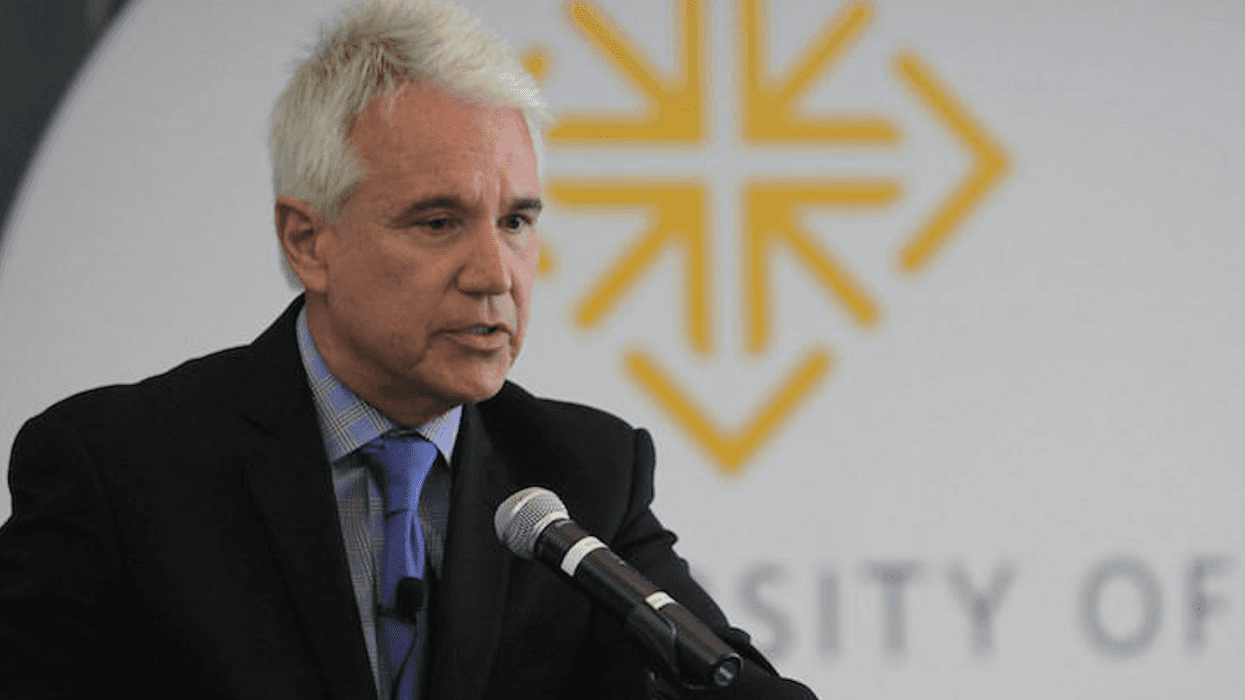
On his first day in office on Monday, Los Angeles County District Attorney George Gascon unveiled a sweeping set of plans for criminal justice reform in the nation's most populous county, including moving to phase out cash bail for all misdemeanor and some felony offenses.
"We can break the multigenerational cycles of violence, trauma, and arrest and recidivism that [have] led America to incarcerate more people than any other nation."
--Los Angeles County District Attorney George Gascon
The Los Angeles Times reports the new DA also plans to bar prosecutors in his office from pursuing sentencing enhancements in nearly all criminal cases, and is expected to end prosecution of first-time misdemeanor offenders.
Among the other campaign promises included in Gascon's reform agenda are prohibiting prosecutors from seeking the death penalty and no longer trying minors as adults.
"I recognize for many this is a new path... Whether you are a protester, a police officer, or a prosecutor, I ask you to walk with me," Gascon said at the first press conference of his new job. "I ask you to join me on this journey. We can break the multigenerational cycles of violence, trauma, and arrest and recidivism that [have] led America to incarcerate more people than any other nation."
Gascon, a native of Havana, Cuba, championed many of the reforms he is now set to implement while serving first as police chief and then district attorney of San Francisco. In 2016 the then-San Francisco DA introduced an algorithmic risk assessment tool to determine who is eligible for pre-trial release without bail.
However, the system--although well-intentioned--was plagued by bias that could be every bit as harmful as the prejudices of the humans who designed it.
Gascon was also sharply criticized during his tenure in San Francisco--which followed that of Vice President-elect Kamala Harris--for his failure to hold police accountable during a period which saw numerous high-profile officer killings of Black and Brown men including Mario Woods, Luis Gongora Pat, Amilcar Perez-Lopez, and Alex Nieto.
Still, Gascon was also widely hailed--especially outside San Francisco--for his progressive policies and actions, including his decision in 2018 to wipe clean the records of thousands of individuals who had been charged with marijuana-related misdemeanors and felonies over the preceding decades.
San Francisco has since moved to eliminate cash bail. Shortly after taking office, current San Franisco District Attorney Chesa Boudin fulfilled his campaign promise to no longer request money bail as a condition for defendants' pre-trial release.
In 2018, outgoing California Gov. Jerry Brown signed into law a bill ending cash bail in the nation's most populous state. However, the bail bond industry challenged the measure, and a 2020 state ballot initiative that would have upheld the law failed to secure sufficient support.
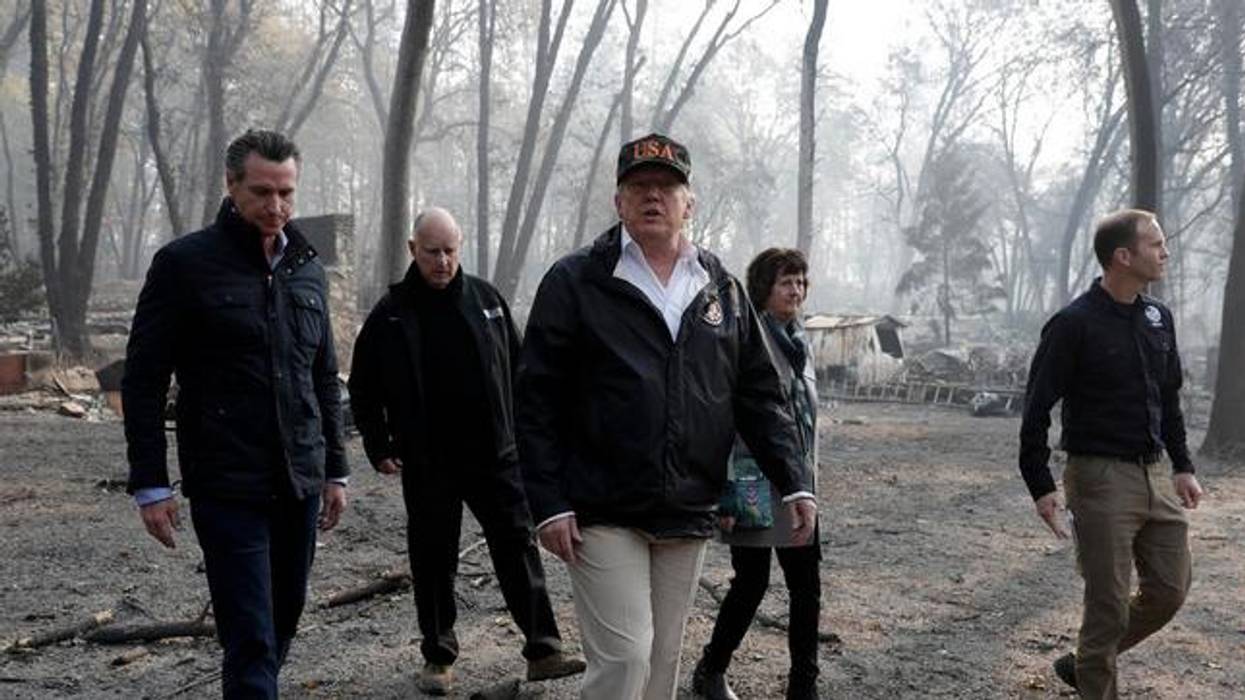
The nation of Finland was collectively dumbfounded by U.S. President Donald Trump's claim from the fire-ravaged town of Paradise, California that Finns prevent such devastating wildfires by consistently "raking" the floors of their forests.
Speaking alongside California's outgoing Gov. Jerry Brown and Democratic governor-elect Gavin Newsom over the weekend, Trump once again attempted to blame the deadliest wildfire in California's history on poor forest management, and declared that Finnish President Sauli Niinisto told him Finns spend "a lot of time on raking and cleaning and doing things, and they don't have any problem."
When Trump was asked in an interview if the human-caused climate crisis--which has contributed to prolonged droughts and high California heat--may have more to do with the devastating fires than insufficient raking, he said no.
In remarks published in a Finnish newspaper on Sunday, Niinisto said he spoke briefly with Trump about forest management when they were both in Paris for Armistice Day events last weekend, but he had no recollection of discussing "raking" as a wildfire prevention practice and laughed when the interviewer asked him about the U.S. president's comments.
"I told him that Finland is a land covered by forests, but we also have a good control system and network," Niinisto said.
Like their president, ordinary Finns were baffled by Trump's comments and quickly took to social media to mock the U.S. president with photos and videos accompanied by hashtags like #RakeFinlandGreatAgain and #RakeNews.
Just this afternoon I was busy meeting my raking quota. #RakeNews #Finland #Haravointi pic.twitter.com/HLaHU0bimO
-- Tarja van Veldhoven (@tarjuccia) November 19, 2018
One Finnish woman posted a photo pretending to vaccuum the forest floor.
"Just an ordinary day in the Finnish forest," she wrote.
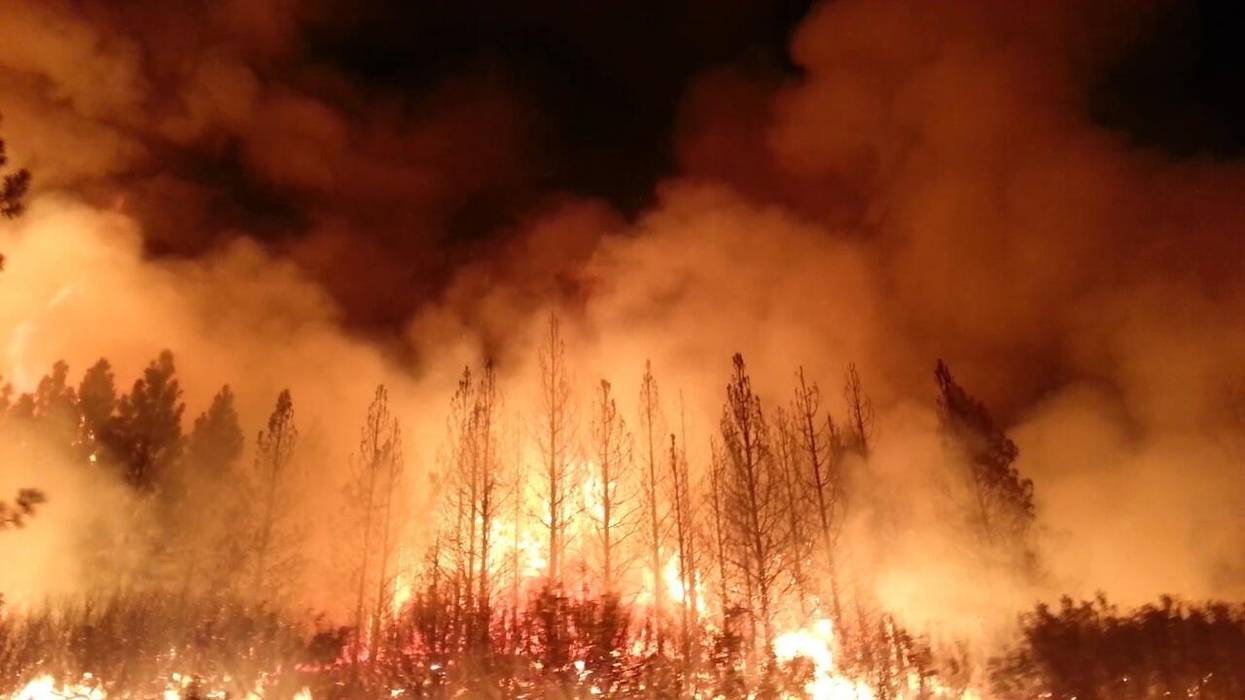
As the deadliest wild-fires ever to hit California continue to rage, an estimated 31 people are known to have died, with over 200 still missing. Some 250,000 have been forced to flee their homes. Over 100,000 acres of land has been burnt, including luxury homes in Malibu.
As California once again reels from the fires, many are warning this is climate change in action.
The town of Paradise in Northern California, home to 23,000 people, has effectively been destroyed by what is known as the "Camp Fire", and is now described as a ghost town. The grim headline in the Guardian said: "Only bones and fragments".
At one stage the fire that engulfed Paradise travelled 11 miles in 11 hours or 80 acres a minute. One fire-fighter who had been involved in trying to put out the blaze, observed: "It's devastation, total devastation, it's pretty incredible something like this occurred," "We've gone through lots of wildfire over the years, this is the worst I've seen personally."
The mayor of Paradise, Jody Jones, told the BBC: "Most of the residential [area] is gone. I would say 90%. I had an opportunity to go up there and take a look for myself. Just about everyone I know lost their home."
Yesterday, Governor Brown wrote to President Donald Tump, stating that the community of Paradise was "forever changed", noting that "every resident of Paradise will inevitably have lost their home or had a family member or loved one who had lost their home".
Brown went on to add that "November 2018 has been exceptionally dry" but the "fire weather conditions in Southern California are expected to worsen".
Indeed, in the south of California, near Los Angeles, the other major fire known as the Woolsey fire remains only 10% contained and has burned more than 87,000 acres in three days.
Brown has also made the link between climate change and the fires: He declared: "This is not the new normal, this is the new abnormal. The chickens are coming home to roost, this is real here."
Los Angeles fire chief, Daryl Osby, also made the link: "The fact of the matter is if you look at the state of California, climate challenge is happening statewide," Osby said, adding that "it is going to be here for the foreseeable future".
The statistics speak fo themselves: As Carbonbrief have noted: "In California, 14 of the 20 largest wildfires on record have occurred over the past 15 years. At the same time, the western US has experienced some of its warmest temperatures on record, with 10 of the past 15 years among the 15 warmest years on record, based on temperature records from the US National Oceanic and Atmospheric Administration (NOAA)."
As an article in Wired warns: "This is what a climate change reckoning looks like ... The consequence is fires of unprecedented, almost unimaginable scale."
But there is one person who, as usual, seems not to have grasped the reality of the situation at all. Trump's response has been widely criticised as being typically ill-informed: Yesterday, he tweeted: "With proper Forest Management, we can stop the devastation constantly going on in California. Get Smart!"
Musician Neil Young, who lost him home in the blaze, was one of many to criticse Trump's response: "Imagine a leader who defies science, saying these solutions shouldn't be part of his decision-making on our behalf. Imagine a leader who cares more for his own, convenient option than he does for the people he leads. Imagine an unfit leader. Now imagine a fit one."
He was not the only one to criticise Trump: "His comments are reckless and insulting to the firefighters and people being affected," added Harold Schaitberger, president of the International Association of Fire Fighters.
With just over 48 hours left before the deadline for California Gov. Jerry Brown to sign the nation's gold standard net neutrality bill into law and restore the protections repealed by the Republican-controlled FCC last year, a coalition of open internet advocacy groups delivered 90,000 signatures to Brown's office on Thursday demanding that he reject the aggressive lobbying efforts of telecom giants and sign SB 822 without further delay.
"We urge Governor Brown to swiftly sign SB822 into law and send a powerful message that net neutrality is here to stay."
--Jonathan Schwantes, Consumers Union
"When Trump's FCC gave up its role in defending internet users in favor of enriching Big Telecom, Californians stepped up to protect the future of the internet," Brandy Doyle, campaign manager of CREDO Action, said in a statement. "Net neutrality is a priority for Californians. It's time for Gov. Brown to stand with us in fighting back against the Trump FCC's attack on the open internet and sign SB 822 into law."
"With the repeal of federal net neutrality rules in full effect, time is of the essence," added Jonathan Schwantes, senior policy counsel for Consumers Union. "We urge Governor Brown to swiftly sign SB822 into law and send a powerful message that net neutrality is here to stay."
Advocacy groups have kept the pressure on Brown since California's legislature overwhelmingly passed SB 822 last month with bipartisan support.
If SB 822 becomes law, the measure would undo the FCC's repeal of net neutrality--likely setting up a legal clash with the Trump administration--and establish even stronger open internet protections than the 2015 regulations implemented during the Obama administration.
"Defending net neutrality is the free speech fight of our generation," Evan Greer, deputy director of Fight for the Future, declared in a statement. "SB 822 passed the legislature with overwhelming bipartisan support, despite fierce lobbying from the telecom industry. California has a chance to lead the charge to restore the free and open Internet for the entire country. Governor Brown should sign this bill and then every other state should follow suit."
While Greer said she expects Brown to side with the vast majority of Californians and Americans by signing SB 822 into law, she declared that open internet advocates will be "watching closely" to ensure that Brown does not put the profits of telecom companies over the public good.
As Governor Jerry Brown and former New York City Mayor Michael Bloomberg opened the Global Climate Action Summit Thursday, they were greeted by hundreds of protesters and direct action outside Moscone Center, led by the indigenous and frontline communities hit hardest by climate chaos.
For nearly three hours, protesters (two of whom were arrested) blocked summit entrances, chanted and unfurled banners stating, "Keep it in the Ground," and "Climate Capitalism is Killing Our Planet." As one speaker in front of Moscone Center put it, "we are the ones who are dying."
From the mass 30,000-strong climate justice march Saturday Sept. 8, to numerous protests and educational events, the message has been loud and clear: indigenous and frontline communities are bearing the most severe, immediate brunt of climate disasters, and market-driven approaches are exacerbating and prolonging the crisis.
Indigenous activists drew a direct connection between Brown's market-led carbon trading system and intensifying fossil fuel extraction: pollution credits in California, for instance, can be used to expand climate-wrecking emissions elsewhere.
"You can't buy and sell the earth with your carbon trading schemes," said Casey Camp-Horinek, an elected councilwoman for the Ponca Nation of Oklahoma. Jerry Brown, she said, "has entered the largest carbon trading scheme the world has ever seen." She termed this market-led approach "false economy, false solutions."
In her community in north-central Oklahoma, the toxic mix of refineries, injection wells, and fracking by Phillips 66 and other fossil-fuel extractors is producing what Camp-Horinek calls "an environmental genocide...Every single family has a member with cancer. We have averaged a funeral a week." The intense fossil fuel production in her area is contributing to more autoimmune, cardiovascular, and respiratory diseases, she says, and even "kids being born with bone cancer."
All of the 30 injection wells in her area are leaking methane into local tribal drinking water sources, she added.
In North Dakota, home to a fracking boom in recent years, fossil-fuel extraction has intensified as a direct result of carbon trading and offset programs pushed by Brown and others, said Kandi White, an organizer from the Mandan, Hidatsa, and Arikara tribes in that state.
"Instead of keeping fossil fuels in the ground, they want to continue to making money off it, and it hurts us," she said. People in her area, she said, suffer more cancers, and more babies are born with upper respiratory illnesses. "The planet is screaming at us," she said.
White applied for credentials to the summit but wasn't allowed access. "Those of us that are suffering the worst," she said, are not being allowed in.
Asked about solutions to the crisis, White replied, "Scientific, commonsense, traditional understanding. Capitalism, which is the carbon market system, is the problem--so carbon markets and capitalism can't possibly fix the problem. We need to leave the remaining fossil fuels in the ground," where, she noted, 50-80% of what's left lies on and in native peoples' lands. "That's why our voice is so prominent and should be heard. Yet we are the ones locked out, we've always been locked out."
Inside the summit halls, protesters briefly disrupted Bloomberg's speech, chanting, "our air is not for sale," and were removed by security,NBC Bay Area reported. Bloomberg lobbed a stunning rebuke at the protesters, likening them to right-wing border wall advocates: "We've got environmentalists protesting an environmental conference. It reminds me of people who want to build a wall along the Mexican border to keep people out from a country we go to for vacations."
Bloomberg and Brown may seem like climate action heroes compared with Donald Trump, but these leaders are "patting themselves on the back for insufficient action," said David Turnbull, a spokesperson for Oil Change International. "They're not standing up to the fossil fuel industries. Governor Brown has been very resistant to our demands to keep fossil fuels in the ground."
While Brown has snared headlines for signing legislation to make California's electricity supply 100 percent renewable by 2045--and signing an executive order directing state agencies to make California carbon neutral by that same year through carbon sequestration and reduction approaches--climate activists say his policies on carbon trading and maintaining fracking and fossil fuel production are causing immense harm.
As Turnbull put it, "pushing pollution around, trading pollution around, means that the most vulnerable communities bear the brunt."
Brown's policies "have allowed fossil fuel companies to create a living hell for Californians whose health and safety are threatened by toxic drilling operations," Cesar G. Aguirre, an organizer with the Central California Environmental Justice Network, said. "People in California's Central Valley are forced to breathe some of the dirtiest air in the nation, and Kern County has the worst air in the United States, because of toxic oil drilling. The climate crisis isn't just happening in our atmosphere, it's also happening in our bodies when we breathe this poisoned air."
Solidarity to Solutions
As sea levels and climate chaos rise, so too are the indigenous and frontline communities. The climate justice movement, once characterized as white and middle-class, is increasingly led by communities of color and indigenous people who are suffering the most direct, severe effects of climate change.
Joining forces in the It Takes Roots Alliance, several major coalitions--The Climate Justice Alliance, Grassroots Global Justice, Indigenous Environmental Network and Right to the City--organized a week of Solidarity to Solutions actions and education.
The complexity and diversity of climate-related battles and local solutions was on full display at the "Sol 2 Sol" event in La Raza Park in the Mission District this past Tuesday. Perched on park's top slope, Gwich'in Indian Nation leader Bernadette Demientieff told a group of young climate activists what's at stake for her people, who have lived with the caribou in Alaska's northeastern Arctic Circle for thousands of years.
"We're fighting for our human rights, we're fighting for our food security, we're fighting for our land," said Demientieff, executive director of the Gwich'in Steering Committee, which is also battling to protect traditional caribou herds in the Alaskan Wildlife Refuge, as new threats of oil drilling and pipelines close in around them.
In the Gwich'ins' home of northern Alaska, caribou herds have been decimated by climate change's impacts on vegetation--plummeting by 57% since 2010, according to Demientieff. "Our future generations aren't going to have land, water, and healthy animals to hunt if we don't take care of them."
Two days after an indigenous-led climate justice march roughly 30,000-people strong, and two days before the Global Climate Action Summit's more staid, officious convening, climate justice activists from around the world gathered in La Raza Park to strategize community-based solutions to the climate disasters wreaking havoc on indigenous and other frontline communities.
Bathed in an unseasonably warm sunny afternoon this Tuesday, hundreds of activists, from Native American Alaskan tribes based in the Arctic Circle to Bay Area communities of color battling gentrification and pollution, shared the public space to tell their stories from the front lines of climate change.
Alaskan Rosemary Ahtuangaruak, from the 500-person Native Village of Nuiqsut on the Arctic Ocean, said more than 75 people in her community are suffering respiratory illnesses from fast-encroaching oil industry developments by Conoco Phillips, Exxon, British Petroleum and others.
"They exempt human health protections to increase profitability," said the community health aide. She reports more cases of heart disease, thyroid illnesses, and babies being born in respiratory distress, but, "they won't connected to resource extraction."
Another health and nutrition threat from climate change: their ice cellars are melting, making it harder to freeze and store meat, and ice fishing is getting tougher as people fall through thinner ice on freezing rivers.
Down the hill, Amee Raval and Shina Robinson, organizers with the Asian-Pacific environmental network, explained that a key part of climate justice is making renewable energy accessible and affordable for low income people and communities of color. This "energy equity" requires public funding and community involvement to make these connections between low income communities and renewable energy, Raval said.
One small step in that direction: the California Public Utilities Commission now provides a 20 percent savings on solar energy to make it more accessible for lower income communities, according to Raval.
Building connections between renewable energy access and stable housing, along with community-based job creation, is key to solving this climate justice puzzle, Robinson added. "We want to make sure that the people in those buildings get to stay and enjoy these benefits" of solar access, she said. "We are mindful of every policy to make sure that job creation for communities of color is a part of it. When it comes to renewable energy jobs, she said, "is missing from those industries are folks of color and women."
Antonio Diaz, director of People Organized to Demand Economic and Environmental Rights, which hosted the Solutions event, stressed the importance of "showcasing on-the-ground climate resilience." He pointed to community-based solutions such as Hummingbird Farm in the Excelsior, and efforts to create a new public park in the Mission. "Reclaiming public lands is part of building climate resiliency, especially in a city where gentrification is such a crisis and our community fabric has been torn," he explained. "Here in San Francisco, what's being commodified and extracted is land."
Diaz noted that while San Francisco has been aggressive in reducing waste and emissions, "there's something contradictory in a city that says it's committed to sustainability and at the same time it displaces people" through evictions and gentrification--leading to more long-distance commuting, more traffic congestion, and more pollution. Linking climate and economic justice issues, Diaz said San Francisco needs to "make a commitment to be a zero-waste city and a zero-displacement city."
In response to remarks by billionaire and former New York City mayor Michael Bloomberg at the Global Climate Action Summit in San Francisco on Thursday, climate campaigners denounced as both "absurd" and "offensive" his comparison of environmentalists demanding earth-saving policies to xenophobic supporters of Trump enthusiastically pushing to build a wall along the U.S.-Mexico border.
With new word out of his camp that Bloomberg is seriously considering a run for president in 2020 as a Democratic candidate, the billionaire media and financial mogul's appearance at the summit--which critics have decried as being too friendly to business interests while locking out Indigenous voices and the members of the climate justice movement--drew loud protest.
Bloomberg dismissed the group for being "environmentalists protesting an environmental conference."
"It reminds me of people who want to build a wall along the Mexican border to keep people out from a country we go to for vacations. Something's crazy here," Bloomberg told the crowd.
Bloomberg's statement mocking the demonstrators was slammed by climate action leaders as "absurd and offensive," especially coming from someone framing himself as a political leader on the issue while continuing to promote planet-killing policies like fracking and expanded reliance on oil and gas.
"There's nothing 'crazy' about opposing fossil fuels," Wenonah Hauter, executive director of Food & Water Watch, said in a statement. "To the contrary, given the perilous condition of our planet's future, anything less than a complete rejection of dirty oil and gas is the truly crazy position to hold."
The protesters were not deterred, with Cindy Wiesner of Grassroots Global Justice Alliance saying after the group was removed from the room, "Our planet is not for sale, our communities are not for sale, our air and water is not for sale. They cannot commodify the commons."
Hundreds of protesters assembled outside the Moscone Center in San Francisco on Thursday, attempting to block key organizer Gov. Jerry Brown (D-Calif.) from entering and denouncing him for pushing corporate-friendly climate proposals and allowing fracking to continue in California while promoting the state--and himself--as a leader in the fight against the climate crisis.
"Mike Bloomberg and Governor Jerry Brown are pro-fracking apologists for an industry that is driving our planet to the brink of climate chaos," Hauter said. "They are the crazy ones."
As political and business leaders convened in San Francisco this week for the Global Climate Action Summit, protesters assembled outside the city's Moscone Center on Thursday to denounce politicians and businesses for pushing an agenda that relies too heavily on corporate power and advances "climate capitalism"--instead of one that will truly solve the planterary crisis while representing the interests of the world's most vulnerable populations.
Chanting, "What do we want? Climate justice," hundreds of demonstrators--led by many indigenous and First Nations tribe members--attempted to stop Gov. Jerry Brown (D-Calif.) from entering the event. Those protesting demanded that he and other attendees work to end California's continued dependence on oil and gas production and end reliance on wealthy corporations for business-friendly solutions to the climate crisis--and turn instead to communities that are facing its effects head-on.
Speakers at the summit include Greenpeace International executive director Jennifer Morgan, Paris Mayor Anne Hidalgo, and National Resources Defense Council president Rhea Suh--but protesters objected to the inclusion of corporate leaders as well, while local community leaders have been left without a seat at the table.
"We have the solutions," Darryl Molina Sarmiento, executive director of California-based Communities for a Better Environment, told Earther. "We are the solutions for this climate crisis, so we're here to protest in front of the summit that's on display for climate capitalism, essentially a trade show. We want to lift up that communities are not for sale."
"Jerry Brown is not our climate leader. What we're doing in California is not genuine climate leadership." --Darryl Molina Sarmiento, Communities for a Better Environment
The summit is being held with the aim of promoting action to reduce carbon and other greenhouse gas emissions, in the face of President Donald Trump's aggressive efforts to roll back regulations the Obama administration imposed on coal companies, other fossil fuel industries, and vehicle manufacturers in order to curb emissions, as well as his withdrawal from the Paris climate agreement.
But while Brown signed a bill this week mandating that California move to 100 percent renewable energy by 2045 and has positioned his state as a leader in climate action, he has also overseen the issuing of tens of thousands of fossil fuel permits and nearly 70 percent of Californians living near oil and gas wells represent black and brown communities. Meanwhile, his solar panel mandate for new buildings largely leaves out those same groups, critics say.
"Jerry Brown is not our climate leader," Molina Sarmiento told Earther. "What we're doing in California is not genuine climate leadership. We have been able to make a lot of advances, but the way in which he's proposing these kinds of solutions is creating an increase in oil infrastructure locally."
Protesters say the summit is leaving out the voices of First Nations and other communities that live on the front lines of the battle to stop the climate crisis, in areas facing rising sea levels, extreme weather events, and the construction of fossil fuel-carrying pipelines that are being built on their land.
Will Tran of KRON reported Thursday morning that at least two protesters had been arrested so far.
"Communities have asked that we put our bodies on the line as a response to the tremendous injustice that's going to be played out for the planet and people on the inside of the Global Climate Action Summit," Angela Adrar, executive director of the Climate Justice Alliance, told Earther.
Climate groups are praising the work of local organizers after California Gov. Jerry Brown signed into law on Monday legislation committing the state to 100 percent clean electricity by 2045--a move that coincided with a direct action in San Francsico where frontline communites rallied to demand an end to "climate capitalism."
"Good organizing pays off!" declared Bill McKibben, co-founder of 350.org, after Brown signed the landmark bill. "So much credit is due to community groups around California that turned the fires and droughts and floods into fuel for significant climate action."
SB 100, authored by California state Senator Kevin de Leon, also bumps up the timeline for the state's clean energy goals from 50 percent by 2030 to 60 percent by 2030.
The action by the world's fifth-largest economy, said Environment America's chairman Doug Phelps, showed that "California is lighting a path for decision makers from around the world." President Donald Trump's decision to withdraw from the Paris climate accord made such "subnational action... crucial," he added.
Indeed, Annie Notthoff, director of California advocacy for San Francisco and Sacramento at NRDC, noted that the new law "stands in stark contrast to the backpedaling by the Trump Administration, which continues to eviscerate our national commitment to reducing climate pollution and instead search for ways to subsidize dirty, expensive fossil fuels."
Yet while it represents "a goal worth celebrating," Oakland-based Miya Yoshitani, executive director of the Asian Pacific Environmental Network, said, "The critical question now is whether the transition to 100 percent renewable energy will be a just transition that benefits everyone, especially workers and communities most impacted by pollution and climate change."
Yoshitani made the remarks in San Francisco, where the grassroots-led alliance It Takes Roots staged a direction action to make sure the upcoming Global Climate Action Summit, spearheaded by Brown, puts the needs of communities above the profits of corporations, and to demand that the "climate profiteers" present for the gathering of the Brown's Task Force on Climate take their cues from those most affected by climate crisis, not a small group of power-wielders.
A call-to-action for the event--which came just two days after a 30,000-strong #RiseForClimate action in San Francisco--asserted that the governor's
promotion of carbon trading markets and other perverse subsidies to oil, gas, and other polluting corporations only perpetuates climate change, and decimates Indigenous communities and Native nations, communities of color and other working class peoples throughout California and around the world.
Such incentives for "climate capitalism" will turn frontline communities into sacrifice zones for decades to come, and despite Brown's attempts to prove he is different from Trump and the dark forces of climate denial, his "climate leadership" promotes the same corporate agenda--aimed at expanding the dig, burn, drive, dump industries destroying our communities and the air, land, and water we depend on.
The summit kicks off Wednesday and features other governors and global mayors as well as noted figures including former Vice President Al Gore, AFL-CIO president Richard Trumka, and Green for All CEO Vien Truong.
Ahead of the Global Climate Action Summit that California Gov. Jerry Brown will host in San Francisco in September, the state has released a comprehensive climate report that warns of--as the Democratic governor put it on Twitter--"the apocalyptic threat of irreversible climate change."
California's Fourth Climate Change Assessment (pdf) was developed by state agencies and researchers to guide "effective and integrated action to safeguard California" from the mounting threats posed by the global crisis. It draws from more that 40 peer-reviewed studies to outline expected economic and public health impacts--billions of dollars in damage as well as "earlier death and worsening illnesses" among residents--based on climate projections, which include:
The state is currently battling increasingly devastating wildfires that scientists have said are exacerbated by the global climate crisis. One model highlighted in the report warns that if high greenhouse gas emissions continue, California could see a 77 percent increase in the area destroyed by wildfires by the end of this century. Although President Donald Trump announced last year that he was bailing on the Paris agreement, Brown has committed to working toward reaching the global accord's emissions reduction goals.
"The basic message is that changes are happening fast, and they're not good changes. We need to rise to the challenge."
--Robert Weisenmiller, California Energy Commission
While the report forecasts a frightening future for California--the world's fifth-largest economy--it also includes proposed actions that elected officials can take to manage the growing dangers of the changing climate.
As California Energy Commission Chairman Robert Weisenmiller told the Guardian: "The good news is that it's not 'here's the dire impact,' but 'here's some ways to mitigate the dire impacts.' It should give people some hope."
"The basic message is that changes are happening fast, and they're not good changes," he concluded in remarks to the San Francisco Chornicle. "We need to rise to the challenge."
State lawmakers are currently considering the "100 Percent Clean Energy Act," or Senate Bill 100, which would force utilities to fully shift to all renewable energy by 2045. Danny Cullenward, policy director at climate advocacy group Near Zero and a researcher with the Carnegie Institution for Science, told InsideClimate News, "If that passes, it would be the single most transformative climate policy in the history of North America."
Despite positioning himself as a climate leader--especially compared with the fossil fuel-friendly agenda of Trump--Brown has been criticized by many for a set of energy policies that ultimately do not match his lofty rhetoric.
Last week, signaling to the upcoming summit and Brown's stated commitment to tackling the climate crisis, Reps. Ro Khanna and Barbara Lee (D-Calif.) sent the governor a letter urging him to end permitting for all new fossil fuel projects and establish a "just transition" to renewable energy--requests that were made by hundreds of groups that sent the governor a similar letter in April as part of the Brown's Last Chance campaign.
Following the federal lawmakers' letter, a pair of Bay Area leaders--Benicia Mayor Elizabeth Patterson and Richmond Vice Mayor Melvin Willis--echoed that call in a open letter published by the Chronicle, emphasizing that both of their communities "face the toxic consequences of California's complicity in one of the most toxic, polluting, dangerous industries on Earth and the primary driver of climate change: the oil and gas industry."
As Andy Rowell, writing for Oil Change International, argued on Tuesday, Brown "cannot warn of an apocalyptic threat of climate change and be a force for carbonization at the same time by carrying on drilling. He is running out of time to be a true climate leader. This really is Brown's last chance."
Citing threats to human health and the planet, two progressive members of Congress who represent California are calling on Democratic Gov. Jerry Brown--who considers himself a climate leader--to set a new global standard and end fossil fuel extraction across the state.
"We believe that transformative climate leadership must include bold action on the production side of fossil fuels."
--Reps. Barbara Lee and Ro Khanna
In a letter on Wednesday first reported by The Hill, Democratic Reps. Barbara Lee and Ro Khanna urged Brown to cease permitting for new oil and gas projects, and to implement a "just and equitable transition" to 100 percent renewable energy that "would protect workers, communities, and economies."
"We believe that transformative climate leadership must include bold action on the production side of fossil fuels," the letter declares. "Ending the issuance of new permits for fossil fuel development and infrastructure will establish the standard for climate policy worldwide."
While President Donald Trump announced last year that he was ditching the Paris agreement--which aims to limit global temperature rise within this century to 1.5 degrees Celsius above per-industrial levels--Brown has vowed to keep his state engaged in the accord and pledged his dedication to transitioning to renewable energy.
"Corporate interests continue to undermine our nation's leadership in the global fight against climate change. California will need to lead the way," the letter continues, noting particular threats that fossil fuels pose to the state's residents. "Climate change resulting from the continued development of oil and gas would exacerbate drought conditions, wildfires, and flooding."
Lee and Khanna's pressure on Brown comes as California battles ferocious wildfires, which scientists say are made worse by the global climate crisis and will only get more extreme as long as the international community burns fossil fuels that produce planet-warming emissions. Citing estimates (pdf) from the Union of Concern Scientists, the letter notes that about 33,000 peoples' homes in the San Francisco Bay Area could face "chronic inundation from sea level rise" within the next few decades.
Pointing out that "California is home to some of the country's most polluted air basins," the letter also acknowledges how pollution from existing oil and gas field operations and refinery facilities contributes to the "array of air quality related health problems that hurt our most overburdened communities."
"We regularly hear from constituents about the tremendous burdens that fossil fuel production places on our communities," the letter states, "especially low-income communities and communities of color."
--Lee and Khanna
"We regularly hear from constituents about the tremendous burdens that fossil fuel production places on our communities," the letter states, "especially low-income communities and communities of color."
The lawmakers' letter features the same demands that more than 750 environmental, health, justice, faith, labor, community, and consumer groups outlined in an open letter (pdf) to Brown in April.
Those organizations--including 350.org, the Center for Biological Diversity, Food & Water Watch, Friends of the Earth, and Greenpeace--have launched a campaign called Brown's Last Chance, which is promoting a petition that urges the governor to "find the courage and imagination to set a higher standard for global climate leadership."
Both letters come ahead of the Global Climate Action Summit that Brown will host in San Francisco in September. In a video promoting the summit, Brown says, "It's up to you and it's up to me and tens of millions of other people to get it together to roll back the forces of carbonization and join together to combat the existential threat of climate change."