

SUBSCRIBE TO OUR FREE NEWSLETTER
Daily news & progressive opinion—funded by the people, not the corporations—delivered straight to your inbox.
5
#000000
#FFFFFF
To donate by check, phone, or other method, see our More Ways to Give page.
Daily news & progressive opinion—funded by the people, not the corporations—delivered straight to your inbox.
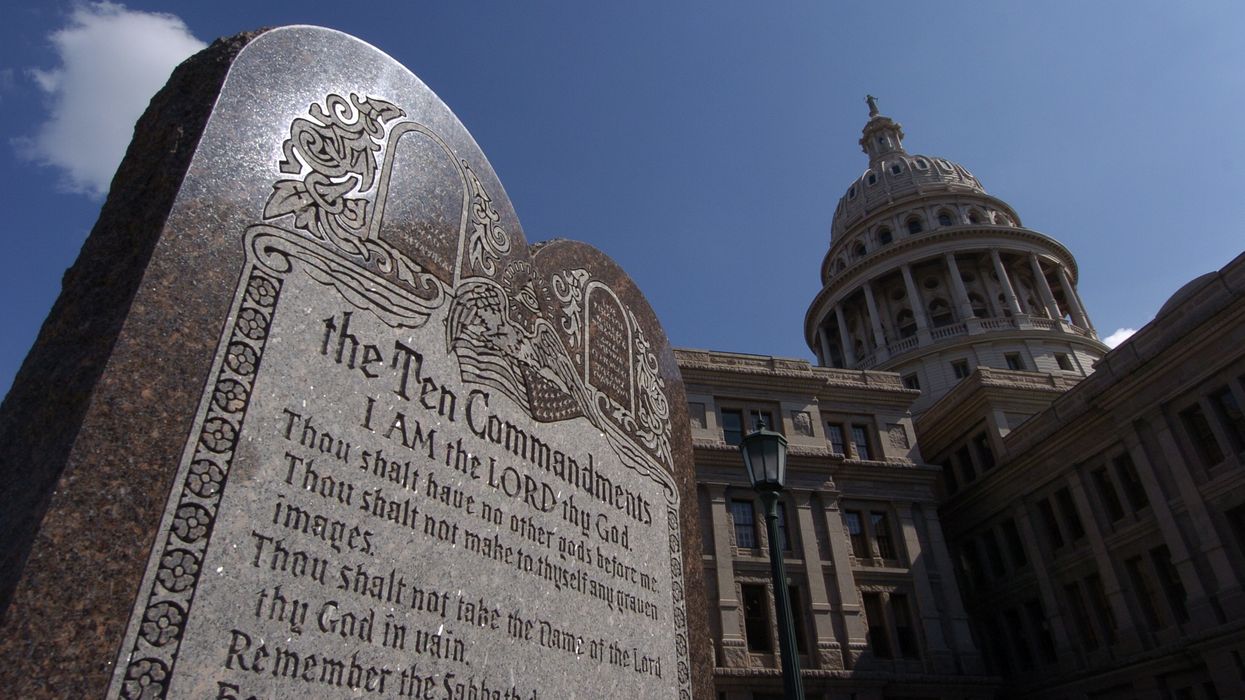
"In a diverse public school environment, all students should be treated with equal respect, regardless of their religious beliefs, or lack thereof," said one plaintiff.
A group of families is asking the US Supreme Court to strike down Texas Senate Bill 10, a state law mandating that a copy of the Ten Commandments be displayed in public school classrooms.
The families, who come from a variety of religious denominations and are being represented by several prominent civil liberties groups, argued in a Monday court filing that SB 10 violates the First Amendment of the US Constitution because it "imposes on public school children, for nearly every hour they are in school, the state's favored scripture."
In making their case, the families argued that a recent appeals court ruling upholding the Texas law ran afoul of multiple past Supreme Court rulings, including the 2022 ruling in Kennedy v. Bremerton School District, which made reference to "problematically coercive" religious messages being "publicly broadcast or recited to a captive audience," and the 1980 ruling in Stone v. Graham, which determined that posting the Ten Commandments in schools violates the Constitution's establishment clause.
Rabbi Joshua Fixler, a plaintiff in the case, said the Texas Ten Commandments law made him "not only worried about my own kids," but "deeply concerned about all the children in my congregation."
"These displays put children in the position of having to defend themselves and their families’ religious beliefs," said Fixler, "against a government mandate that makes them feel different and separate from their classmates."
Fellow plaintiff Nichole Manning, an atheist from Dallas, argued that the Texas law is "interfering with our family’s decisions about how our children engage with religion."
“As a parent, I intentionally choose to have my children attend public school because I prefer an educational environment without any religious affiliation," Manning emphasized. "In a diverse public school environment, all students should be treated with equal respect, regardless of their religious beliefs, or lack thereof."
In an editorial published in the Houston Chronicle on Monday, plaintiff Audrey Nath said that the Texas law was interfering with her right to raise her children to "celebrate the diversity of religious faiths in our families: Hinduism, Jainism, Judaism, and Quakerism."
"My 9-year-old son is proud of his heritage, and he even brought that statue of Shiva to his public school as part of a presentation about his family history," Nath explained. "SB 10 puts a permanent, state-mandated sign above his desk telling him what he carried in is forbidden."
ACLU of Texas staff attorney Chloe Kempf, who is co-representing the families, said that past legal precedents give the current Supreme Court a clear roadmap to overturn the Texas law.
"The US Supreme Court has rejected this kind of government-imposed religion before, and it should do so again,” said Kempf. “Having these posters in Texas classrooms puts students at risk of bullying, stigmatization, and religious coercion. Our nation’s bedrock principle of separating church and state means that families and faith communities—not politicians—get to decide what role religion plays in children’s lives."
Annie Laurie Gaylor, co-president of the Freedom From Religion Foundation, argued that mandating schools display the First Commandment alone is "the antithesis of our First Amendment" because it dictates "which god must be worshipped."
"It is not the government’s role to daily expose young children to a coercive display of one religion’s set of religious edicts in our public schools," Gaylor emphasized. "Our public schools exist to educate, not to proselytize."
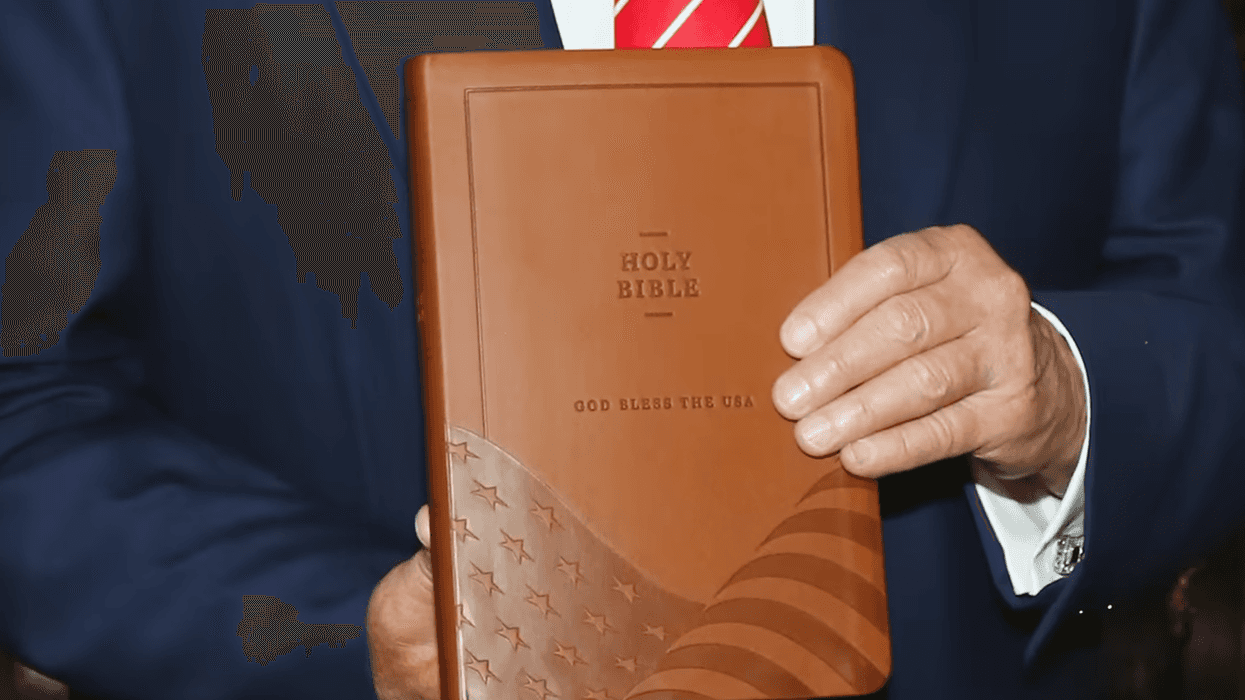
“Trump wraps himself in Christianity, wraps the Constitution inside a Bible, and is persuading supporters to finance his political brand while enriching himself," said one critic.
President Donald Trump has provided "a stunning example of political pandering and exploiting religious faith for personal profit," said a religious freedom advocate on Tuesday after financial disclosure forms revealed one of the latest ways in which the president has profited from the presidency: this time, by licensing his name to the "God Bless the USA" Bible sold by supporter and country music star Lee Greenwood.
The Bible bearing the president's name is being sold for $99.99—as are the "First Lady Edition" and the "Vice Presidential Edition."
According to his latest financial disclosures, the president has earned a total of $1,514,521 from placing his name on the religious text in a package that also includes copies of the US Constitution, the Declaration of Independence, the Bill of Rights, the Pledge of Allegiance, and the handwritten chorus of Greenwood's 1984 song "Good Bless the USA."
About $1.3 million was earned while the president was campaigning ahead of the 2024 election, while about $208,000 flowed to the president in 2025.
Anna Laurie Gaylor, co-president of the Freedom From Religion Foundation (FFRF), said that "Trump wraps himself in Christianity, wraps the Constitution inside a Bible, and is persuading supporters to finance his political brand while enriching himself to the tune of more than $1.5 million."
“As all things are with Trump, this has always been about money,” said Gaylor. "It is a stunning example of political pandering and exploiting religious faith for personal profit.”
Hemant Mehta of The Friendly Atheist noted that the disclosure also showed about $1.4 billion that the president made last year from "crypto-related schemes" and $80 million from lawsuits against media companies including CBS and ABC.
Trump has suggested the Bible venture is closest to his heart, saying in a video promoting the basic version of the "God Bless the USA Bible"—which retails at $59.99—that the religious text is his "favorite book."
"Christians are under siege," he added in the video. "We must protect content that is pro-God. We love God, and we have to protect anything that is pro-God… Our Founding Fathers did a tremendous thing when they built America on Judeo-Christian values."
The notion that the country was founded as a Christian nation has long been a fixation of the far right and has been deeply embedded in the president's celebrations marking the 250th anniversary of the Declaration of Independence—but historians say there is no evidence for the claim.
“The only rules they wrote about religion were ones that keep religion at arm’s length," Princeton University professor Kevin Kruse told The Washington Post as the White House planned an all-day prayer event on National Mall in May. "There’s a difference between saying America is a nation with many Christians in it and that America is a nation dedicated to Christianity and defined by it.”
Both Mehta and FFRF noted that Trump has "struggled to discuss even the most basic aspects of the Bible, declining on multiple occasions to identify a favorite verse or even express a preference between the Old and New Testaments."
"Trump’s Bible enterprise demonstrates how easily religious symbolism can be weaponized to enrich politicians while undermining the constitutional principle of state/church separation that protects believers and nonbelievers alike," said FFRF.
Gaylor added that "religion should never be a marketing strategy."
“Nor should the office of the presidency become a platform for selling religious merchandise," she said. "Americans deserve leaders who respect both religion and government enough to keep them separate—not presidents who see faith as another licensing opportunity.”

“That’s government-sponsored religious favoritism—and the First Amendment strictly forbids it," said one critic.
As education officials in Texas ban hundreds of books that run afoul of their interpretation of Christian morality, the State Board of Education on Friday approved a required reading list that forces the state's more than 5 million public school students to read from the Bible.
The Republican-controlled SBOE voted 9-5 with one abstention to approve the list, which includes passages from the Book of Exodus as well as the Shepherd's Psalm and the myths of Adam and Eve and David and Goliath.
"We’re going to stop watering down American history. We’re going to teach the truth. Our nation was founded as a Christian nation, and Texas is a Christian state,” Republican board member Brandon Hall—who is also a youth pastor at Cavalry Baptist Church in Springtown—said during a Thursday press conference in Austin.
That "truth" omits or marginalizes climate change, US imperialism, women's history, the genocide of Indigenous peoples, slavery, and racism.
Evelyn Brooks, the only Republican SBOE member to vote against the required reading list, told CNN on Friday that she believes the board's move is "unconstitutional."
“Teachers need to have their autonomy," she said. "They’ve been selecting books for decades."
In 2023, Texas' Republican-controlled Legislature passed HB 1605, which mandated the creation of a K-12 required reading list and directed the Texas Education Agency to develop state-owned textbooks. Those texts, called Bluebonnet Learning, contain lessons on Christianity starting in kindergarten. The SBOE approved Bluebonnet Learning as an optional curriculum in late 2024 and is currently working to correct thousands of errors in the curriculum at a cost of over $8 million to Texas taxpayers.
The SBOE action comes amid a legal battle over SB 10, a law signed last year by Republican Texas Gov. Greg Abbott that requires public elementary and secondary schools to display the Ten Commandments in every classroom. US District Judge Fred Biery, an appointee of former President Bill Clinton, subsequently issued a preliminary injunction blocking the law. Texas families also sued to block the legislation. However, Republican Texas Attorney General Ken Paxton—who is running for US Senate—demanded that schools comply with the law.
Public schools "exist to educate students with diverse faith backgrounds, as well as those who adhere to no faith doctrine," the Freedom From Religion Foundation (FFRF) said Friday. "Public schools are not Sunday schools, and elected officials have no business using state power to elevate one religion above all others. A required reading list that overwhelmingly favors Christian texts while excluding the writings and literary traditions of other faiths, not to mention the perspectives of millions of nonreligious Americans, sends an unmistakable message about who belongs and who does not."
FFRF co-president Annie Laurie Gaylor asserted that “a mandatory public school reading list should never function as a Bible lesson."
"Texas is telling millions of children that one religion deserves the government’s seal of approval, while everyone else is an afterthought," she added. "That’s government-sponsored religious favoritism—and the First Amendment strictly forbids it.”
Rabbi Joshua Fixler at Congregation Emanu El in Houston told CNN Friday that "this list is full of Christian texts that are inappropriate for public school classrooms."
"As a rabbi and a parent of Jewish kids, I think it is vital that this board make a distinction between teaching about religion and teaching religion," he added. "This list will force teachers to cross that line."
Fort Worth high school teacher Chanea Bond told The Associated Press on Friday that the SBOE's required reading list is "very old and very white."
“It is very narrow and does not represent what classrooms in Texas look like,” she said. “Going through most of high school without ever having much value put into voices that sound like yours kind of sends a message that your voices aren’t valuable.”
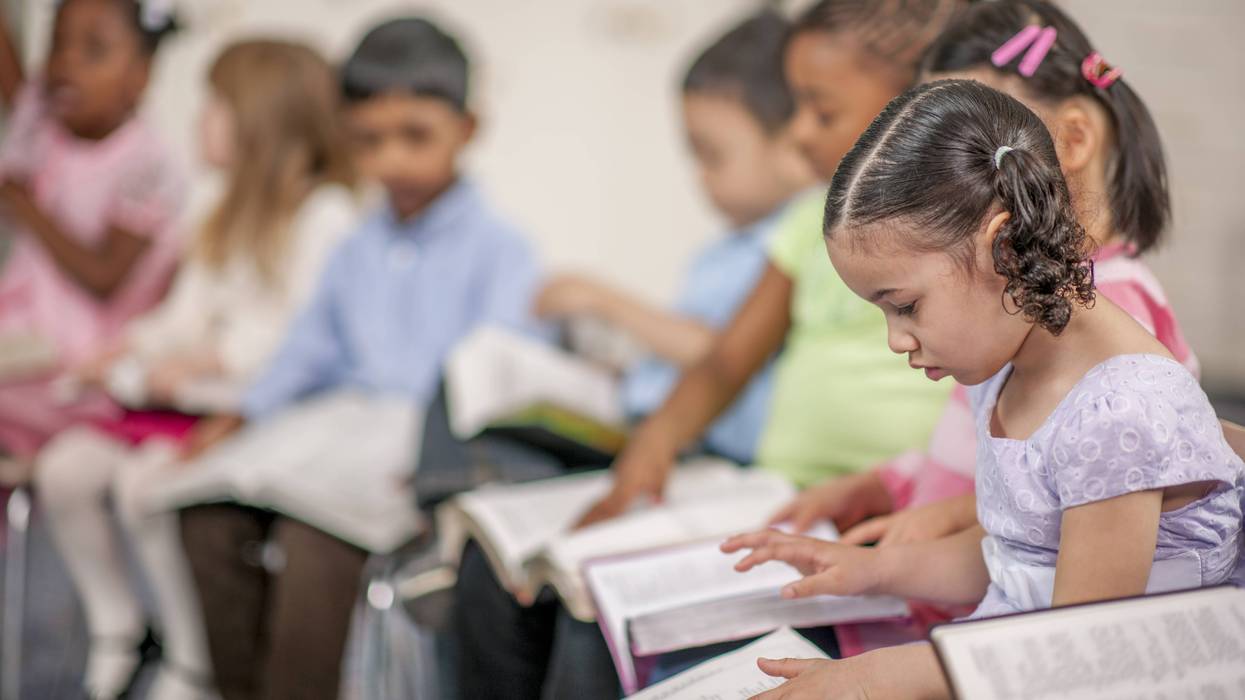
“Religious readings belong in Sunday school, not in public schools," said one parent opposed to the proposal.
Less than six months after a federal judge enjoined a Texas law mandating display of the "allegedly Protestant version of the Ten Commandments" in public schools, Republican lawmakers in the Lone Star State are pushing legislation to force children to read the Bible in classrooms.
Last week, the Texas State Board of Education (SBOE) voted 13-1 to delay voting on a proposed list of mandatory reading for all K-12 public school students until April in order to provide more time for feedback and thousands of corrections to a Bible-infused elementary school curriculum approved two years ago.
"This would bring the Word of God back into schools in a meaningful way for the first time in decades," SBOE member and Christian pastor Brandon Hall said last week in support of the forced Bible reading proposal.
However, as Texas parent Kevin Jackson—who spoke against the proposed list at a public hearing last week—put it, “Religious readings belong in Sunday school, not in public schools."
The Freedom From Religion Foundation (FFRF), a Wisconsin-based advocacy group, said Tuesday on social media that "mandating Bible readings in public schools isn’t 'education,' it’s state-sponsored religious exercise."
"Public schools are for everyone," FFRF added. "Government has no business promoting or imposing religion on students. Church–state separation protects all Texans."
Carisa Lopez, deputy director of the Texas Freedom Network—a civil liberties and religious freedom group—said Friday that the proposal "enforces a one-size-fits-all approach in one of the largest and most diverse states in the nation."
“This kind of state micromanagement tosses aside local control and makes it harder or even impossible for teachers to tailor instruction in ways that are appropriate for their students," Lopez added. "Even worse is that this list represents another step by the state toward turning public schools into Sunday schools that undermine the right of parents to direct the religious education of their own children.”
Rabbi David Segal, policy counsel for the Baptist Joint Committee for Religious Liberty, noted that “the proposed reading list relies heavily on Protestant Christian translations and leaves out other faith traditions."
“Public schools have a duty to prepare students to participate in civic life, not to advance a particular religious viewpoint," Segal stressed. "Teaching about religion has always been appropriate in public education, but what we are seeing here verges on state-sanctioned religious instruction."
The mandatory reading list also contains texts that conservative SBOE members say represent "foundational" literature that all students should know. However, some Democratic board members object to what they say is the list's lack of racial and gender diversity.
“This list does not represent the students of Texas,” Democratic SBOE member Tiffany Clark told Education Week. “For so many years, students of color have had to endure a European-centered philosophy, history, without representation of their own history being recognized. That is exactly what we see continuing to happen with this list.”
The proposed reading list follows the SBOE's 2024 approval of Bluebonnet Learning, a Bible-infused curriculum for elementary public school students that critics say violates the US Constitution's establishment clause.
Last year, Republican Texas Gov. Greg Abbott—a devout Catholic—signed SB 10, which forces display of the Ten Commandments in all public school classrooms. This, despite an earlier ruling from a federal judge, who found that a similar law in Louisiana was an unconstitutional violation of the separation of church and state.
In an extraordinarily pointed ruling last August, US District Judge for the Western District of Texas Fred Biery issued a preliminary injunction blocking parts of SB 10.
"Imagine the consternation and legal firestorm were the following fictional story to become reality," Biery wrote. "Hamtramck, Michigan: Being a majority Muslim community, the Hamtramck City Council and school board have decreed that, beginning September 1, 2025, the following teachings of the Quran, Surah Al-An’am 6:151 and Surah Al-Isra 17:23, shall be posted in all public buildings and public schools."
"While 'We the people' rule by a majority, the Bill of Rights protects the minority Christians in Hamtramck and those 33% of Texans who do not adhere to any of the Christian denominations," he added.
I don’t know who this man is but protect him at all costs!! He finally broke it down. So much she had no come back! See the God yall worshipping is yourself and your opinions!! I love how he use the word, the one she claims to know in his argument! Sadly they still won’t get it.… pic.twitter.com/KHqrVf5SHC
— Leslie Jones 🦋 (@Lesdoggg) January 23, 2024
If the new reading list mandate is approved in April as anticipated, Texas will become the first state in the nation to force every student in the state to read the Bible. Former Oklahoma State Superintendent of Public Instruction Ryan Walters—a Republican and Christian nationalist—mandated that all public school districts incorporate the Bible—and specifically the Ten Commandments—into their curricula for grades 5-12.
It would start with a mandate to read material including "The Golden Rule” in kindergarten, "The Parable of the Prodigal Son” in first grade, and "The Road to Damascus" in third grade.
As Hemant Mehta wrote for his Friendly Atheist blog :
The readings get more specific as students get older. Seventh graders would have to read "The Shepherd's Psalm (Book of Psalms, Chapter 23)” from the Old Testament along with “The Definition of Love” from 1 Corinthians 13. High schoolers would be reading Genesis 11:1-9 about the Tower of Babel, Lamentations 3, and the story of David and Goliath as told in 1 Samuel 17.
"What makes this proposal so damning is that Christianity is the only religious book included in the required readings, and even the more secular stories are infused with more direct religious messages," Mehta wrote on Saturday. "That’s on top of the state-sanctioned curriculum itself, which is already Bible-heavy."
"The Texas Board of Education is shoving explicitly Christian narratives into a mandatory, state-sanctioned reading list and pretending it’s objective when it comes to religion," Mehta added. "They want to privilege one (and only one) religion at the expense of all others, treating biblical stories as if they’re foundational truths and the default moral framework for everyone, regardless of their families’ beliefs."
There is an alternative proposal by Republican SBOE member Will Hickman that would increase the number of more contemporary works like The Hunger Games and Ender's Game and swap biblical texts with Judeo-Christian mythology such as the story of Adam and Eve and Noah's Ark "without any Bible thumping involved," as Mehta put it.
"That might be fine! But that’s clearly not what most Republicans are aiming for," he wrote. "They don’t care if kids are culturally literate regarding the Bible; they just want those kids to accept the Bible as true."
As if on cue, the Wiley Independent School District on Tuesday issued a statement announcing an investigation into what it called the "unauthorized distribution of religious materials" on the campus of Wylie East High School. While the announcement does not specify the religion in question, Marco Hunter-Lopez, who leads the school's Republican student club, said it was Islam.
🚨 Islamic Outreach Booth Sparks Parent Concerns at Wylie East High School 🚨
Wylie, Texas — Parents and community members are raising concerns after an Islamic outreach organization set up an informational booth on the campus of Wylie East High School during the school day this… pic.twitter.com/cNpq1aPfQf
— Texan Report (@TexanReport) February 3, 2026
At the national level, President Donald Trump and his administration have pledged to "protect" prayer in public schools.
“To have a great nation, you have to have religion," the thrice-married adulterer, serial liar, and purveyor of $1,000 branded Bibles said last year. "I will always defend our glorious heritage, and we will protect the Judeo-Christian principles of our founding.”
"As multiple courts have reaffirmed, the First Amendment safeguards the rights of individuals to choose whether and how they engage with religion, and that protection extends to every classroom," said one lawyer.
The battle over Texas' Senate Bill 10 continued on Monday, with families in the state filing a federal lawsuit to block the display of a Protestant Christian version of the Ten Commandments in a "conspicuous place" in every public school classroom.
"This lawsuit, brought on behalf of a new group of Texas families, underscores a critical principle: Public schools across the state must uphold—not undermine—the constitutional protections afforded to every student," said Jon Youngwood, global co-chair of the litigation department at Simpson Thacher & Bartlett LLP, which represents the plaintiffs.
"As multiple courts have reaffirmed, the First Amendment safeguards the rights of individuals to choose whether and how they engage with religion, and that protection extends to every classroom," Youngwood continued.
The new complaint, filed in the Western District of Texas, explains that "last month, this district court ruled that SB 10 is 'plainly unconstitutional' and likely violates the Establishment and Free Exercise Clauses of the First Amendment... And in June, the US Court of Appeals for the 5th Circuit held the same regarding a Louisiana statute similar to SB 10."
"Despite these precedents, the defendant school districts have pressed forward with actually posting SB 10 displays in classrooms, or have confirmed they will do so shortly—even after receiving a letter from plaintiffs' counsel," the filing explains.
"All students—regardless of their race or religious background—should feel accepted and free to be themselves in Texas public schools."
After US District Judge Fred Biery, an appointee of former President Bill Clinton, issued a preliminary injunction against SB 10 last month, Republican Texas Attorney General Ken Paxton, who is running for US Senate, said that only the school districts involved in that case are affected and all others must abide by the law. Paxton also appealed the previous decision to the 5th Circuit.
With the latest filing, the families are seeking a declaratory judgment that SB 10 is unconstitutional. In both Texas cases, the plaintiffs are represented by not only Simpson Thacher but also Americans United for Separation of Church and State, the state and national ACLU, and the Freedom From Religion Foundation.
"This lawsuit is a continuation of our work to defend the First Amendment and ensure that government officials stay out of personal family decisions," said Chloe Kempf, staff attorney at the ACLU of Texas. "All students—regardless of their race or religious background—should feel accepted and free to be themselves in Texas public schools."
The families behind this latest filing have various beliefs. Nichole Manning, for example, called SB 10 "a calculated step to erode the separation of church and state and the right for my family to exercise our nonreligious beliefs."
Another plaintiff, Lenee Bien-Willner, said that "forcing religion, any religion, on others violates my Jewish faith."
"It troubles me greatly to have Christian displays imposed on my children," she said. "Not only is the text not aligned with Judaism, but the commandments should be taught in the context of a person's faith tradition. State-sponsored religion, however, does not belong in the public classroom."
Even some Christians are opposed to the Texas law. Plaintiff Rev. Kristin Klade said that "as a devout Christian and a Lutheran pastor, the spiritual formation of my children is a privilege I take more seriously than anything else in my life."
"The mandated Ten Commandments displays in my children's public school impede my ability to 'train up my child in the way he should go' (Proverbs 22:6)," she said. "I address questions about God and faith with great care, and I emphatically reject the notion that the state would do this for me."
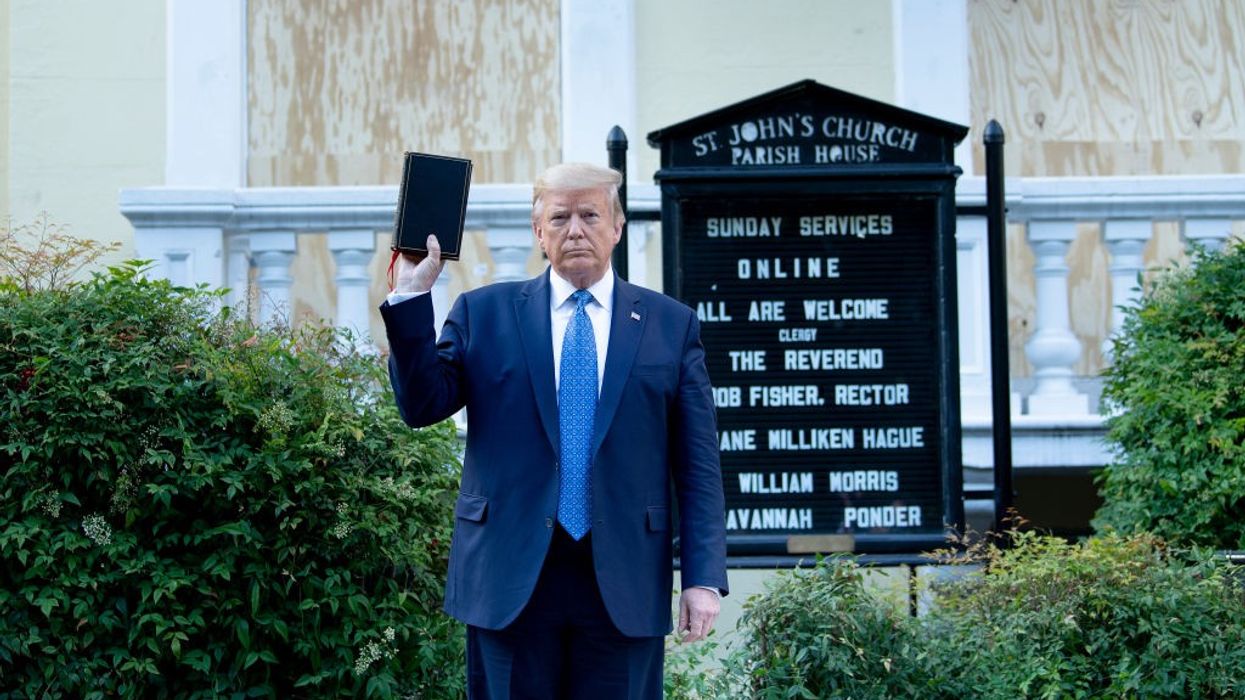
"President Trump is using religion to promote his self-aggrandizement and political agenda, all the while perpetuating the lie that America is a Christian nation and that religion is under attack," said one critic.
Proponents of separating church and state on Monday decried US President Donald Trump's pledge to protect prayer in public schools, warning that the administration is advancing the agenda of far-right Christian nationalists seeking to impose their religious beliefs upon everyone.
Speaking at a meeting of the president's so-called Religious Liberty Commission at the Museum of the Bible in Washington, DC, Trump announced upcoming Department of Education guidance "protecting the right to prayer in our public schools, and it's total protection."
"We're defending our rights and restoring our identity as a nation under God," Trump said. "To have a great nation, you have to have religion. I believe that so strongly. As president, I will always defend our glorious heritage, and we will protect the Judeo-Christian principles of our founding."
The president added that it is "ridiculous" that the nation's public school students are "indoctrinated with anti-religious propaganda, and some are even punished for their religious beliefs."
Trump also launched his "America Prays" initiative, which asks the faithful to "join with at least 10 people to meet each week for one hour to pray" for the country.
In response to the president's speech, the Freedom From Religion Foundation (FFRF) said on social media: "We've never been 'one nation under God.' There's nothing to restore. Our true identity is freedom of conscience—the right to believe in any faith, or none at all."
"A great nation isn't built on religion—it's built on equality, liberty, and justice for all," FFRF added. "Our strength comes from We The People, not belief in a god."
Rachel Laser, president of the group Americans United for Separation of Church and State, said in a statement that Monday's event "once again demonstrated that this commission isn't about religious liberty; it's about rejecting the nation's religious diversity and prioritizing one set of Christian beliefs."
"From the professions of Christian faith to the chorus of 'amens' during Christian prayers to the exclusively Christian speakers this morning, this government hearing was more like a church service," Laser noted. "Once again, President Trump is using religion to promote his self-aggrandizement and political agenda, all the while perpetuating the lie that America is a Christian nation and that religion is under attack."
Laser continued:
The Trump administration is advancing this Christian nationalist agenda with the launch of his 'America Prays' initiative, which calls on Americans to pray for our country. People who care about religious freedom don't need to be told when or how to pray; they need leaders who are committed to separation of church and state.
At a hearing focused on religious freedom and public schools, the commission ignored the most serious threats. From mandates to display the Ten Commandments and teach from the Bible to Christianity-infused curriculum and the installation of school chaplains, Christian nationalists and their political allies are trying to impose their personal religious beliefs on America's public school children.
"Our country's promise of church-state separation means that families—not politicians or public school officials—get to decide how and when children engage with religion," Laser added. "Yet many of the organizations represented at today's meeting and members of the Religious Liberty Commission have tried to undermine this fundamental American principle and turn our public schools into Sunday schools."
Monday's event came as some GOP-led states push forward with plans for more overt displays of religiosity in public schools. Most notably, Texas Attorney General Ken Paxton—a US Senate candidate—is urging schools to display the Ten Commandments in spite of a federal judge's recent injunction on a law requiring the Judeo-Christian religious and ethical directives to be displayed in all classrooms.
Paxton is also urging all schools "to begin the legal process of putting prayer back in the classroom and recommending the Lord's Prayer for students."
Responding to Paxton's push, gun control advocate Fred Guttenberg said last week on social media: "Hey Ken, many have said that you committed adultery. Shouldn't you worry about your own morality before imposing this on others? Looks like you are using religion for personal gain."
Recent polls have shown a significant drop in the number of Americans who identify as Christian in recent decades, an all-time low in belief in "God," and a steady overall decline in religiosity among younger Americans.
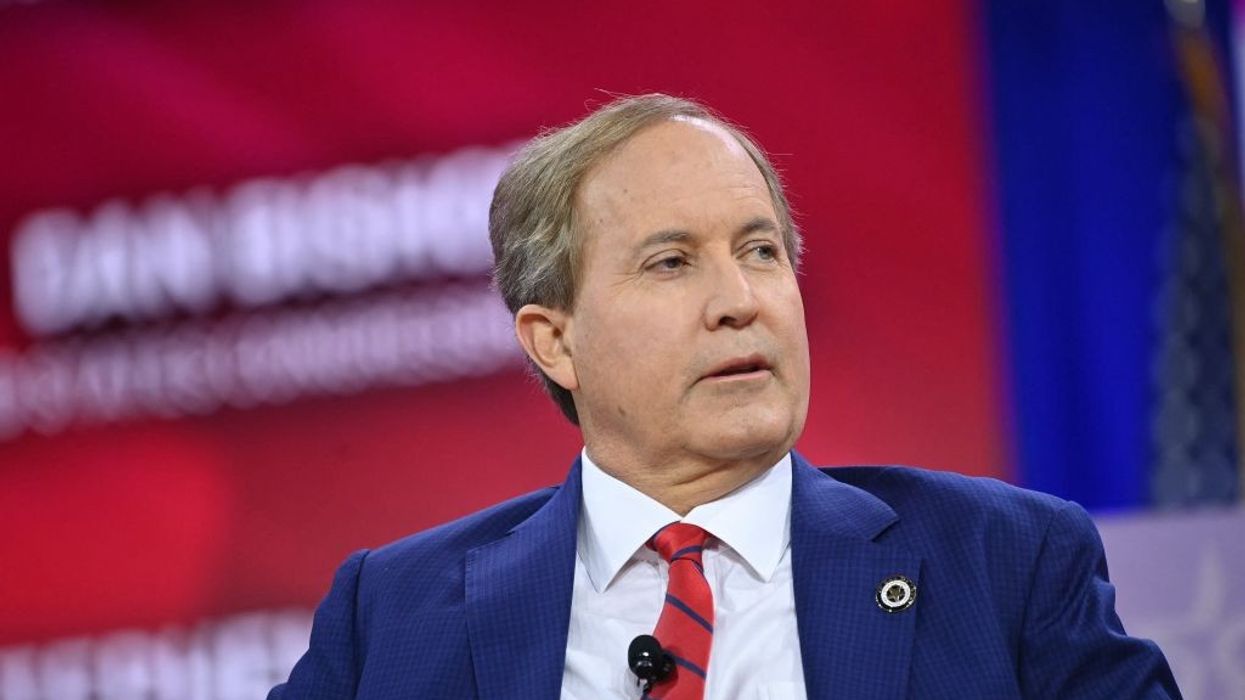
"The Constitution, not the Ten Commandments, built this country," said the Freedom from Religion Foundation in response to Paxton.
Texas Attorney General Ken Paxton on Monday said that the vast majority of schools in the Lone Star State should still plan on displaying the Ten Commandments in classrooms even after a federal judge ruled against it last week.
In a statement, Paxton said that "schools not enjoined by ongoing litigation must abide" by a state law that requires the display of the Ten Commandments in all public and secondary school classrooms.
"The woke radicals seeking to erase our nation's history will be defeated," he said. "I will not back down from defending the virtues and values that built this country."
Paxton asserted that only nine Texas school districts are affected by the injunction and said that all other districts "must abide by the law once it takes effect on September 1, 2025."
The Texas attorney general's defiant stance on the Ten Commandments earned him a quick rebuke from Rep. Joaquin Castro (D-Texas), who accused him of grandstanding instead of doing his job as the state's chief law enforcement official.
"Paxton's job is to uphold the Constitution, which guarantees the separation of church and state—not the Ten Commandments," he wrote on X. "Our public schools should focus on educating Texas students, not stoking culture wars."
The Freedom From Religion Foundation also rebuked Paxton for failing to uphold the Constitution's prohibition of the government establishment of a religion.
"The Constitution, not the Ten Commandments, built this country," the foundation said. "Forcing students to observe one religion’s rules is a blatant violation of the First Amendment regardless of what Ken Paxton claims. Public schools are for education, not religious indoctrination."
Paxton's declaration came less than a week after US District Judge Fred Biery of the United States District Court for the Western District of Texas issued a preliminary injunction against the state law requiring the Ten Commandments to be displayed.
In his ruling, Biery argued that the classroom displays "are likely to pressure the [students] into religious observance, meditation on, veneration, and adoption of the state's favored religious scripture, and into suppressing expression of their own religious or nonreligious background and beliefs while at school."
"Children's religious beliefs should be instilled by parents and faith communities, not politicians and public schools," said a Texas rabbi who sued the state over the law.
A federal judge on Wednesday shot down a Texas law that would have mandated all public school classrooms across the state display the Ten Commandments.
As reported by local news station KSAT, US District Judge Fred Biery of the United States District Court for the Western District of Texas issued a preliminary injunction, ruling that the state's law crossed the line from education to proselytizing on behalf of a specific sect of Christianity.
Noting that "the Ten Commandments set out in Texas's Ten Commandments law differs from the version observed by some Protestant faiths, and most adherents of the Catholic and Jewish faiths," Biery argued that the law violated the First Amendment of the United States Constitution, which states that Congress shall make no law respecting the establishment of a religion.
Biery imagined the uproar that would ensue if the city of Hamtramck, Michigan, which is majority Muslim, passed a law mandating that all public schools post passages from the Quran in all classrooms. He then argued that such a law would be just as unconstitutional as the Texas Ten Commandments law.
"While 'We the people' rule by a majority, the Bill of Rights protects the minority Christians in Hamtramck and those 33% of Texans who do not adhere to any of the Christian denominations," he wrote.
The judge also argued that the classroom displays "are likely to pressure the [students] into religious observance, meditation on, veneration, and adoption of the state's favored religious scripture, and into suppressing expression of their own religious or nonreligious background and beliefs while at school."
Organizations that advocate for the separation of church and state were quick to praise Biery's decision to strike down the law, which had been due to go into effect on September 1.
Tommy Buser-Clancy, senior staff attorney at the ACLU of Texas, said that the ruling affirmed that the state cannot coerce any Texans into adopting a particular religious faith.
“Today's ruling is a major win that protects the constitutional right to religious freedom for Texas families of all backgrounds," he said. "The court affirmed what we have long said: Public schools are for educating, not evangelizing."
Rabbi Mara Nathan, one of the plaintiffs who sued to get the law overturned, welcomed the ruling and stated that "children's religious beliefs should be instilled by parents and faith communities, not politicians and public schools."
Freedom From Religion Foundation co-president Annie Laurie Gaylor similarly said that "religious instruction must be left to parents, not the state, which has no business telling anyone how many gods to have, which gods to have or whether to have any gods at all."
Rachel Laser, president and CEO of Americans United for Separation of Church and State, hailed the ruling and said that it sends a "strong and resounding message across the country that the government respects the religious freedom of every student in our public schools."
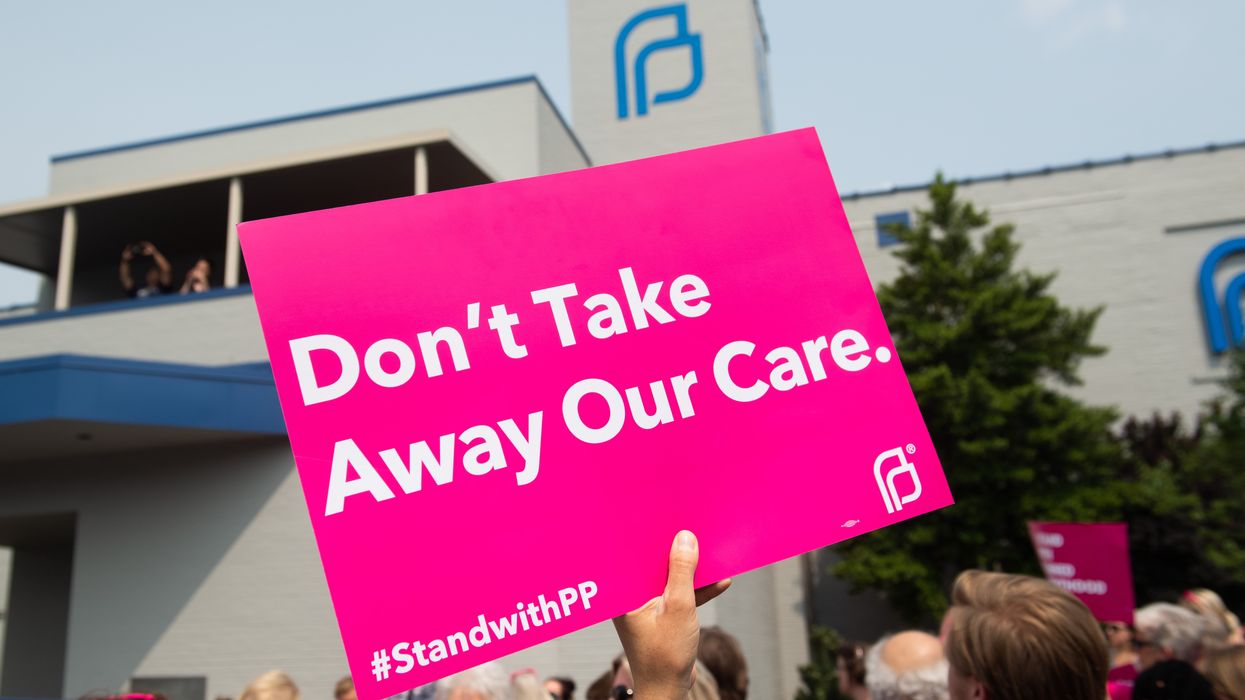
"This is a systematic decimation of access to reproductive healthcare and a signifier of what else is likely to come," warned one critic.
In its latest blow to reproductive healthcare in the United States, the Supreme Court's right-wing supermajority on Thursday blocked Planned Parenthood and one of its patients from suing South Carolina over its defunding of the medical provider because it performs abortions—a decision that critics say will cost lives as more Republican-controlled states follow suit.
At question in Medina v. Planned Parenthood South Atlantic was whether Medicaid beneficiaries can sue in order to secure healthcare services under a law that allows patients to choose any qualified provider. The high court ruled 6-3 that they cannot, with liberal Justices Sonia Sotomayor, Elena Kagan, and Ketanji Brown Jackson dissenting.
"The decision whether to let private plaintiffs enforce a new statutory right poses delicate questions of public policy. New rights for some mean new duties for others," Justice Neil Gorsuch wrote for the majority. "And private enforcement actions, meritorious or not, can force governments to direct money away from public services and spend it instead on litigation."
"The job of resolving how best to weigh those competing costs and benefits belongs to the people's elected representatives, not
unelected judges charged with applying the law as they find it," Gorsuch added.
Concurring with the majority, far-right Justice Clarence Thomas wrote that the ruling invites further scrutiny of Section 1983, the federal law empowering individuals to sue state and local government officials for violating their constitutional rights.
And, predictably, in Medina, Justice Thomas isn't content to axe Planned Parenthood from Medicaid. He would go further ... "to reexamine more broadly this Court’s §1983 jurisprudence . . . ."This is an invitation to undermine a major foundation of civil rights litigation.
[image or embed]
— Melissa Murray (@profmmurray.bsky.social) June 26, 2025 at 7:17 AM
In a furious dissent, Jackson wrote that "the court's decision today is not the first to so weaken the landmark civil rights protections that Congress enacted during the Reconstruction era."
"That means we do have a sense of what comes next: As with those past rulings, today's decision is likely to result in tangible harm to real people," she continued. "At a minimum, it will deprive Medicaid recipients in South Carolina of their only meaningful way of enforcing a right that Congress has expressly granted to them."
"And, more concretely, it will strip those South Carolinians—and countless other Medicaid recipients around the country—of a deeply personal freedom: the 'ability to decide who treats us at our most vulnerable,'" Jackson added. "The court today disregards Congress' express desire to prevent that very outcome."
More than 70 million Americans rely upon Medicaid, the federal government's primary health insurance program for lower-income people. The program is facing the prospect of major cuts under a Republican budget proposal that critics warn could cause millions of people to lose their healthcare coverage in service to a massive tax break backed by President Donald Trump that would disproportionately benefit the rich and corporations.
According to Planned Parenthood Federation of America president and CEO Alexis McGill Johnson, "currently, 20% of South Carolinians—over 1 million—receive healthcare services through the Medicaid program, and approximately 5% of those recipients sought sexual and reproductive health care services at Planned Parenthood South Atlantic (PPSAT) so far this year."
Responding to Thursday's ruling, McGill Johnson said that "the consequences are not theoretical in South Carolina or other states with hostile legislatures."
"Patients need access to birth control, cancer screenings, STI testing and treatment, and more. And right now, lawmakers in Congress are trying to 'defund' Planned Parenthood as part of their long-term goal to shut down Planned Parenthood and ban abortion nationwide," she added. "Make no mistake, the attacks are ongoing and Planned Parenthood will continue to do everything possible to show up in communities across the country and provide care."
Under tremendous Republican-led pressure, Planned Parenthood has closed or announced plans to close at least 20 locations across seven states since the beginning of the year.
"Today's decision is a grave injustice that strikes at the very bedrock of American freedom and promises to send South Carolina deeper into a healthcare crisis," PPSAT president and CEO Paige Johnson said following Thursday's decision. "Twice, justices of this court denied to even hear this case because [South Carolina Gov. Henry] McMaster's intent is clear: weaponize anti-abortion sentiment to deprive communities with low incomes of basic healthcare."
"Planned Parenthood South Atlantic will continue to operate and offer care in South Carolina, including for people enrolled in Medicaid," Johnson added. "To our patients, we will do everything in our power to ensure you can get the care you need at low or no cost to you. Know that we are still here for you, and we will never stop fighting for you to reclaim the rights and dignity you deserve."
Destiny Lopez, co-president and CEO of the Guttmacher Institute, called the ruling "a grave injustice."
Lopez continued:
At a time when healthcare is already costly and difficult to access, stripping patients of their right to high-quality, affordable healthcare at the provider of their choosing is a dangerous violation of bodily autonomy and reproductive freedom.
Specifically targeting Planned Parenthood has long been a strategy of the anti-abortion movement. Planned Parenthood health centers are an irreplaceable part of the U.S. healthcare system; Guttmacher data show that among the 4.7 million contraceptive patients served by publicly supported clinics in 2020, one in three received care from Planned Parenthood.
"In the face of attempts to 'defund' Planned Parenthood and attack Medicaid, Title X, and other pillars of reproductive healthcare, the court's actions cannot be considered in a vacuum," Lopez asserted. "This is a systematic decimation of access to reproductive healthcare and a signifier of what else is likely to come. Everyone deserves choice in their healthcare provider and access to the family planning they need."
Progressive groups and individuals also condemned Thursday's ruling, with the Freedom From Religion Foundation lamenting that "Christian nationalists win, women and low-income patients lose."
"This isn't justice," FFRF added. "It's religious favoritism at the highest level."
Planned Parenthood provides affordable:➡ Cancer screening➡ STD testing and treatment➡ Prenatal supportToday's decision from SCOTUS to allow SC to remove Planned Parenthood from Medicaid means that people will be sicker and people will die.www.theguardian.com/us-news/2025...
[image or embed]
— Congresswoman Pramila Jayapal (@jayapal.house.gov) June 26, 2025 at 7:34 AM
Meagan Hatcher-Mays, senior adviser at United for Democracy, said in a statement that "millions of Medicaid patients across the country rely on Planned Parenthood health centers for their primary and reproductive care, and people who face systemic racism and discrimination—Black, Latino, and Indigenous communities, as well as LGBTQ+ people and women—are more likely to be covered by Medicaid."
"It's ironic that the MAGA justices issued this ruling today, almost three years to the day that they overturned Roe v. Wade and threw abortion access into chaos across the country," Hatcher-Mays added. "Today's ruling is a further attack on healthcare, bodily autonomy, and our freedoms. This ruling clearly harms communities in South Carolina, and it's a matter of time before we see that harm expand further into the country."
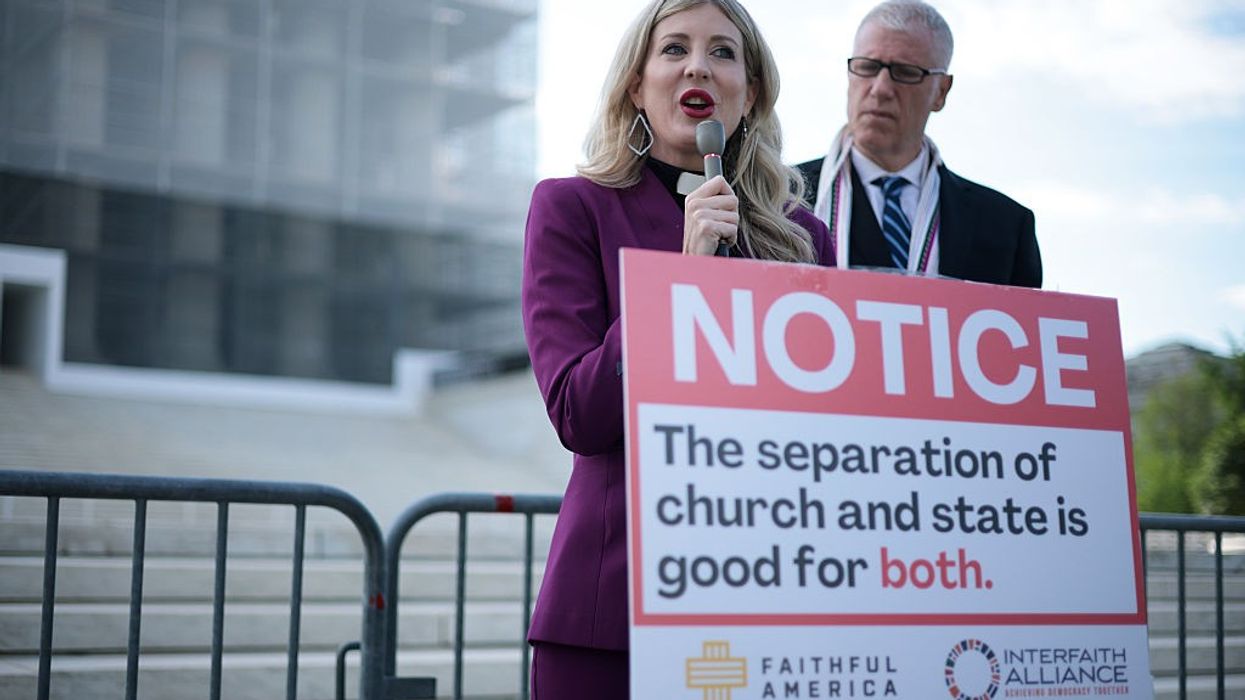
Although another case could soon come before the high court, the ACLU still welcomed that, for now, "public schools must remain secular and welcome all students, regardless of faith."
Public education and First Amendment advocates on Thursday celebrated the U.S. Supreme Court's refusal to allow the nation's first religious public charter school in Oklahoma—even though the outcome of this case doesn't rule out the possibility of another attempt to establish such an institution.
"Requiring states to allow religious public schools would dismantle religious freedom and public education as we know it," Cecillia Wang, national legal director of the ACLU, said in a statement about the 4-4 decison. "Today, a core American constitutional value remains in place: Public schools must remain secular and welcome all students, regardless of faith."
Wang's group and other partners had filed a lawsuit over St. Isidore of Seville Catholic Virtual School on behalf of parents, faith leaders, and public school advocates. Her colleague Daniel Mach, director of the ACLU's Program on Freedom of Religion and Belief, declared Thursday that "the very idea of a religious public school is a constitutional oxymoron."
The new one-page opinion states that "the judgment is affirmed by an equally divided court," which means the Oklahoma Supreme Court's June 2024 ruling against St. Isidore remains in place. There are nine members of the U.S. Supreme Court, but Justice Amy Coney Barrett—who is part of its right-wing supermajority—recused herself from this case.
"While Justice Barrett did not provide an explanation for her recusal, it may be because she is close friends with Nicole Stelle Garnett, a professor at Notre Dame Law School who was an early adviser for St. Isidore," The New York Times noted. "Although justices sometimes provide reasons when they recuse themselves, they are not required to do so."
Law Dork's Chris Geidner warned that "a new challenge not requiring her recusal could easily return to the court in short order—especially now that the court has shown its interest in taking on the issue."
In this case, as Common Dreams reported during oral arguments last month, Chief Justice John Roberts appeared to be the deciding vote. Geidner pointed out Thursday that while it seems most likely that he sided with the three liberals, "even that could have been as much of a vote to put off a decision as a substantive ruling on the matter."
Some groups happy with the outcome in this case also highlighted that the battle is expected to continue.
"This is a crucial, if narrow, win for constitutional principles," Freedom From Religion Foundation (FFRF) co-president Annie Laurie Gaylor said in a statement. "A publicly funded religious charter school would have obliterated the wall of separation between state and church. We're relieved that, at least for now, the First Amendment still means what it says."
"The fight isn't over," Gaylor added. "The forces trying to undermine our public schools and constitutional freedoms are already regrouping. FFRF will continue to defend secular education and the rights of all Americans to be free from government-imposed religion."
Leading teachers unions also weighed in with both an amicus brief submitted to the high court and Thursday statements.
"Educators and parents know that student success depends on more resources in our public schools, not less. Yet for too long, we have seen anti-public education forces attempt to deprive public school students of necessary funding and support," National Education Association president Becky Pringle said Thursday. "We are gratified that the Supreme Court did not take the radical step of upending public education by requiring states to have religious charter schools."
American Federation of Teachers president Randi Weingarten also welcomed that the high court on Thursday let stand the Oklahoma decision, "which correctly upheld the separation of church and state and backed the founders' intention to place religious pluralism over sectarianism."
"We are grateful that it upheld the state's highest court's clear and unambiguous ruling to preserve and nurture the roots of our democracy, not tear up its very foundations," Weingarten said in a statement. "We respect and honor religious education. It should be separate from public schooling."
"Public schools, including public charter schools, are funded by taxpayer dollars because they are dedicated to helping all—not just some—children have a shot at success," she stressed. "They are the bedrock of our democracy, and states have long worked to ensure that they remain secular, open, and accessible to all."
This article has been updated with comment from the National Education Association.