

SUBSCRIBE TO OUR FREE NEWSLETTER
Daily news & progressive opinion—funded by the people, not the corporations—delivered straight to your inbox.
5
#000000
#FFFFFF
To donate by check, phone, or other method, see our More Ways to Give page.
Daily news & progressive opinion—funded by the people, not the corporations—delivered straight to your inbox.
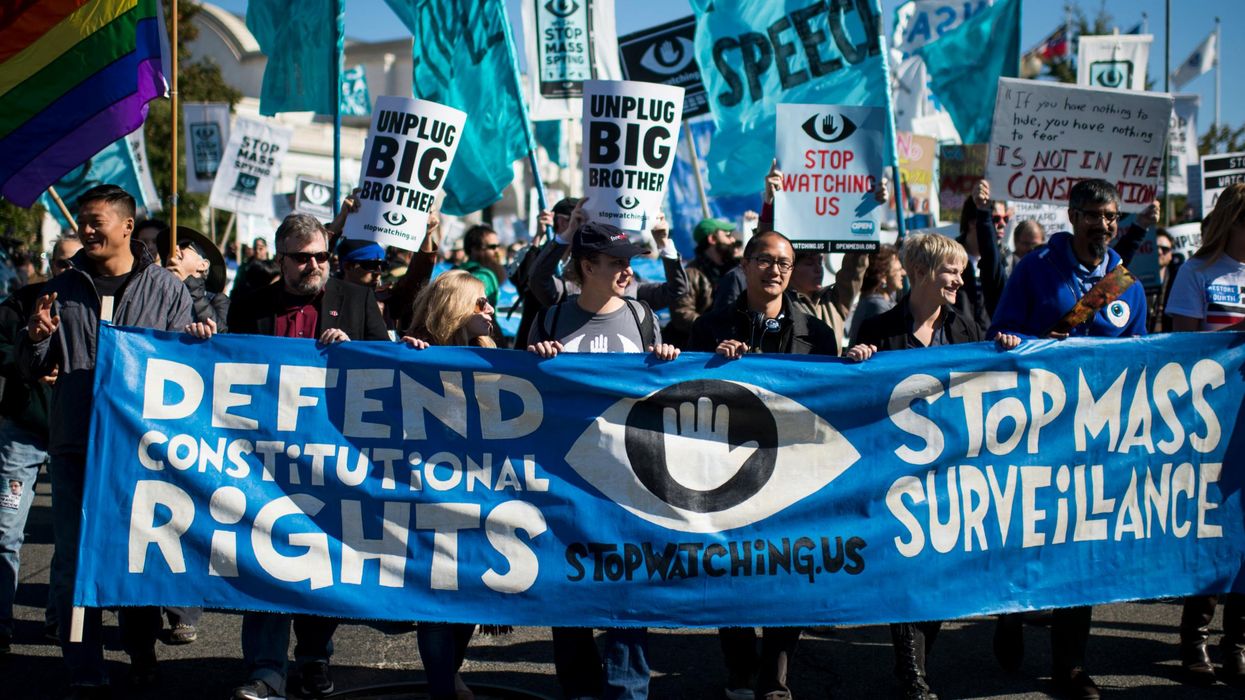
Over two dozen advocacy groups on Monday sent a letter urging members of Congress to back a measure that, if enacted, would close the so-called "backdoor search" loophole that allows warrantless surveillance of U.S. citizens' data by government agencies including the FBI and CIA.
"Right before its August recess, Congress might finally slam the FBI's warrantless backdoor in their faces."
--Fight for the Future
The letter (pdf), led by Demand Progress and signed by 27 groups, calls on House leaders to support an amendment to H.R. 4505--the Commerce, Justice, Science, and Related Agencies Appropriations Act for Fiscal Year 2022--proposed by Reps. Zoe Lofgren (D-Calif.), Pramila Jayapal (D-Wash.), Thomas Massie (R-Ky.), and Warren Davidson (R-Ohio).
If passed, the amendment would prohibit the use of funds for the warrantless search of Americans' communications acquired under Section 702 of the Foreign Intelligence Surveillance Act of 1978 (FISA), which the letter's authors call a "controversial foreign intelligence authority that acquires an untold number of Americans' Fourth Amendment-protected information."
The groups' letter comes a day before the House Rules Committee will decide whether the amendment will proceed to a floor vote.
"Ending this unconstitutional practice is imperative to ensure that foreign intelligence surveillance does not swallow Americans' privacy rights," the letter asserts. "Recently released opinions by the Foreign Intelligence Surveillance Court (FISC) underscore the need for a warrant requirement to protect the privacy of those whose communications are 'incidentally' collected."
"According to one opinion, the FBI, over the course of one year, conducted three million queries of a single database containing Section 702 communications, most of which presumably were U.S. person queries in light of the FBI's primarily domestic mission," the letter says. "Although Congress has required the FBI to obtain a FISC order for a small subset of these queries, the FISC found that the FBI has literally never complied with this statutory requirement and has violated it on at least dozens of occasions."
The letter continues:
Moreover, the FBI's own court-approved procedures place some limits on queries, yet several recent FISC decisions found that FBI agents simply ignore those rules in a shocking number of cases, conducting queries when they have no reason to believe it would return foreign intelligence or evidence of a crime.
Agents queried Section 702 data to find the communications of people who came to the FBI to perform repairs; victims who reported crimes; and business, religious, and community leaders applying to participate in the FBI's Citizens Academy. In a move that has disturbing echoes of the NSA's bulk collection of Americans' phone records, agents have also conducted so-called "batch queries," such as one that swept in the 70,000 people who have authorized access to FBI facilities.
According to the San Francisco-based digital rights group Electronic Frontier Foundation (EFF), one of the letter's signatories, "in this wide-sweeping dragnet approach to intelligence collection, companies allow access to and the government collects a large amount of 'incidental' communications--that is millions of untargeted communications of U.S. persons that are swept up with the intended data."
"The FBI has the ability to then bypass the Fourth Amendment requirement of a warrant and sift through these 'incidental' communications of Americans--effectively using Section 702 as a 'backdoor' around the Constitution," EFF added. "They've been told by the FISA Court this violates Americans' Fourth Amendment rights but--it has not seemed to stop them and the FISA Court has failed to take steps to ensure that they stop."
Sean Vitka, senior policy counsel for Demand Progress, said in a statement that "the right to privacy doesn't know party lines, and it is heartening to see progressives and libertarians come together to once again defend civil liberties in the United States. Given the repeated, systemic abuse of Section 702 to violate Americans' rights, it is clear we must fight together, or we will lose together."
Bob Goodlatte, senior policy advisor for the Project for Privacy and Surveillance Accountability and former chair of the House Judiciary Committee, said that "the FBI shouldn't be able to snoop on our conversations without getting a warrant, especially not after years of breaking the rules set by Congress and the courts. The Lofgren-Massie amendment would put an end to this dangerous and unconstitutional practice."
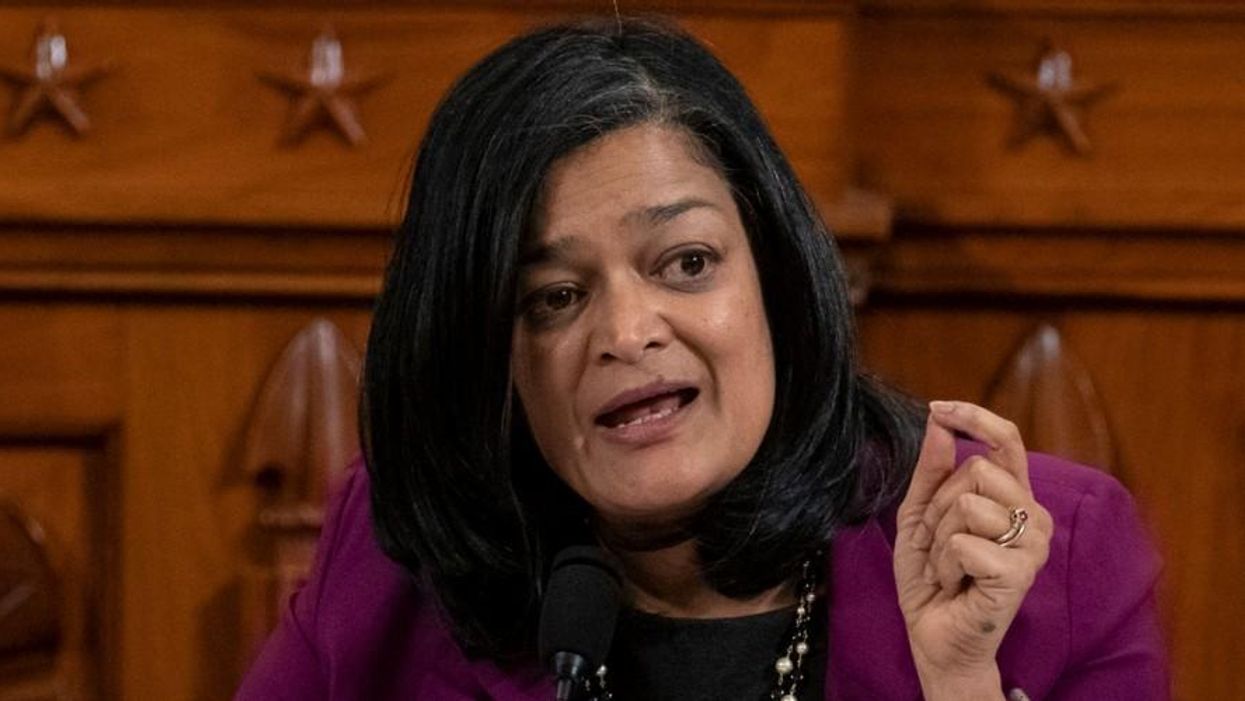
A bipartisan group of House lawmakers on Thursday demanded that the Trump administration answer critical questions about possible unauthorized domestic mass surveillance conducted by the federal government after the expiration of controversial portions of the Foreign Intelligence Surveillance Act, or FISA.
In a letter (pdf) to Attorney General William Barr and Director of National Intelligence Daniel Ratcliffe, the lawmakers--led by Reps. Pramilla Jayapal (D-Wash.) and Warren Davidson (R-Ohio)--note than three FISA provisions expired in March: business records collection (Section 215), roving wiretap, and the so-called "lone wolf" provision added in 2004 to target potential terrorists not affiliated with known terror groups or foreign powers.
Section 215 was orginally used by the FBI to acquire records pertaining to a specific individual investigation. However, in 2013 whistleblower Edward Snowden revealed that the National Security Agency was using the law to justify bulk collection of domestic metadata. The controversial provision expired earlier this year.
In May, the Senate voted to reauthorize the USA FREEDOM Act--a move which effectively restored Section 215 and the other contentious FISA provisions--but failed to pass an amendment banning warrantless surveillance of Americans' internet searches, which Sen. Ron Wyden (D-Ore.) at the time likened to "almost spying on [people's] thoughts." The measure is currently stalled pending reconciliation of the House bill, which passed in March, and the more recent Senate version.
In the letter, the lawmakers state that "with the expiration of Section 215, we are concerned that the executive branch may, once again, be using questionable legal theories of executive authority to justify the illegal surveillance of the American people."
The legislators also express their concern that the Trump administration "believes it has the inherent authority to surveil the American people without any congressional authorization."
The letter notes that Sen. Richard Burr (R-N.C.), the former chairman of the Senate Select Committee on Intelligence, "stated that under Executive Order 12333, the executive branch could continue to engage in mass records surveillance of people in the United States without congressional approval."
E.O. 12333 is a Reagan administration directive cited by U.S. intelligence agencies as the justification for expanding surveillance, especially data collection, without satutory authorization or congressional oversight. The NSA has claimed the order provides all the legal justification it needs to collect unencrypted information that flows through companies like Google and Yahoo.
The lawmakers also cite Stellar Wind, an illegal mass surveillance program begun during the George W. Bush administration, exposed by Wired in 2012, and explained in great detail the following year by Snowden.
"Under Stellar Wind, the executive branch secretly conducted warrantless surveillance of communications content, as well as mass collection of communications metadata" in "direct contradiction to FISA and the Constitution for years," the lawmakers wrote.
The legislators then ask 15 pointed questions meant to "confirm that the administration is not illegally surveilling the American people" and to "ensure that surveillance activities under the expired USA FREEDOM authorities," which was meant to temper the infamous execesses of the USA PATRIOT Act, have ended. These include:
The House lawmakers' letter comes two months after a similar bipartisan query, led by Sens. Patrick Leahy (D-Vt.) and Mike Lee (R-Utah), was sent to the administration, which has yet to reply.
Sean Vitka, senior policy counsel at the advocacy group Demand Progress, said in a statement that "the trail now appears to lead back to rogue legal theories founded upon horrifyingly broad claims of inherent executive authority to conduct mass surveillance domestically."
"This intelligence surveillance would happen in the absence of the law, the courts, and even the suspicion of wrongdoing," said Vitka. "This is how the government secretly started Stellarwind, the most stunningly illegal surveillance program in recent history... If the government is blanketing the United States in warrantless surveillance, this is how they would--and have--done it."
"We look forward to candid answers about how the government has interpreted the law and how far secret claims of inherent executive authority have embedded foreign intelligence surveillance into our daily lives," Vitka continued. "In the absence of those answers, Burr and [House Intelligence Committee Chairman Rep. Adam] Schiff's unwavering obstruction of real surveillance reform will further isolate them."
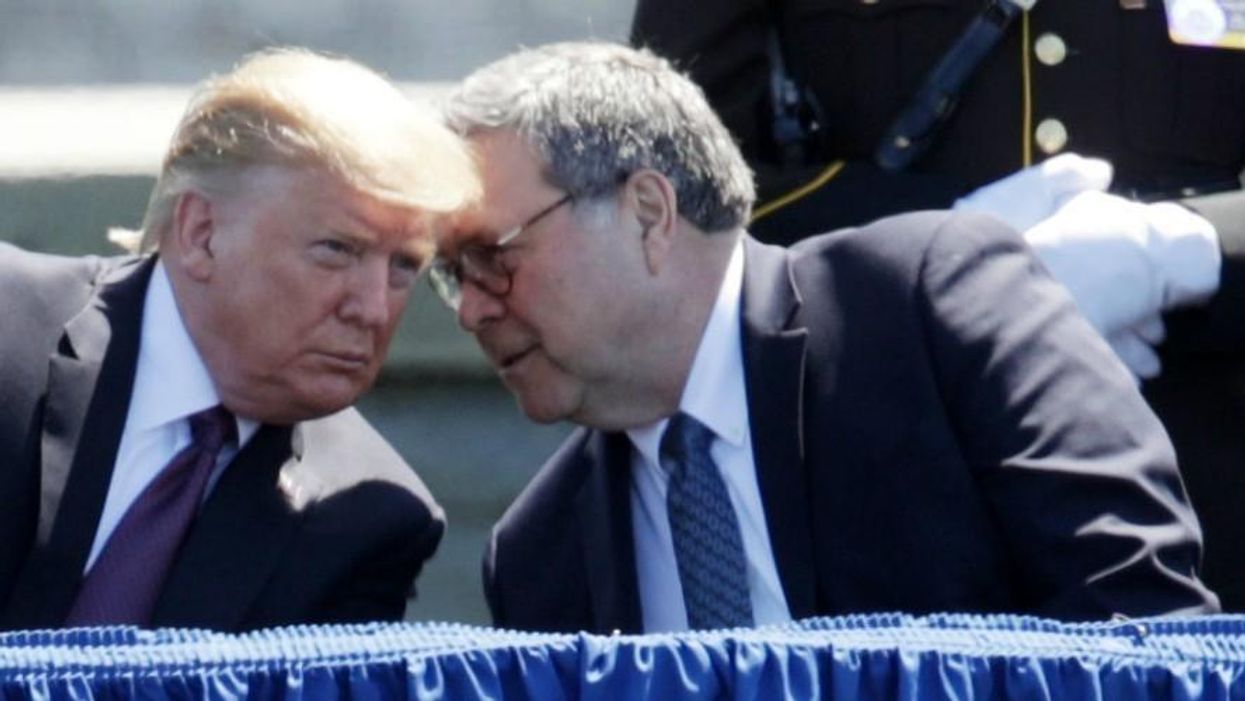
Sen. Ron Wyden was joined by privacy advocates Wednesday in forcefully condemning a new proposed amendment to the PATRIOT Act put forward by Senate Majority Leader Mitch McConnell that would greatly expand the U.S. attorney general's surveillance powers under FISA.
McConnell's amendment, which the Senate began debating Wednesday as lawmakers took up the reauthorization of the 2001 PATRIOT Act, would explicitly permit the FBI to collect records of Americans' internet search and browsing histories without a warrant. It would also mandate that Attorney General William Barr, and his successors, conduct an annual review of the FBI's submissions into the Foreign Intelligence Surveillance Act (FISA) Court.
"It is open season on anybody's most personal information."
--Sen. Ron Wyden (D-Ore.)
Barr would be permitted to review for "accuracy and completeness" evidence presented to the FISA Court by the FBI regarding potential surveillance targets.
"Under the McConnell amendment, Barr gets to look through the web browsing history of any American--including journalists, politicians, and political rivals--without a warrant, just by saying it is relevant to an investigation," Wyden told the Daily Beast this week, before speaking out against the amendment on the Senate floor.
"Typical Americans may think to themselves, 'I've got nothing to worry about, I've done nothing wrong. The government has no reason to suspect me of anything,'" said the senator. "Unfortunately, the question is not whether you did anything, the question is whether a government agent believes they have the right to look at your web searches... It is open season on anybody's most personal information."
"If that doesn't give you chills I don't know what will," Wyden added on social media. "I'm fighting it every step of the way."
Evan Greer, deputy director of the digital privacy group Fight for the Future, was more succinct in her rejection of McConnell's proposal:
An amendment proposed by Wyden and Sen. Steve Daines (R-Mont.), which would have required the Justice Department to show probable cause before collecting data under the PATRIOT Act, was voted down by one vote on Wednesday. Journalist Jeremy Scahill denounced 10 Democratic senators who joined the majority of Republicans in opposing the bill, as well as Sen. Bernie Sanders (I-Vt.), who did not attend the vote.
Critics raised concern that the McConnell amendment would allow the Trump administration to spy on its political opponents, with Barr giving approval of evidence used to argue in favor of beginning surveillance.
Under the proposal, the FISA Court and its amicus--an attorney appointed to challenge the government's submissions for potential surveillance--would be limited in their ability to question the FBI's reasoning.
McConnell would limit the involvement of an amicus only when the FBI submits an application to "targe[t] a campaign for federal office or an application that targets a United States person when the application relies for its criminal predicate on only the provisions of the Foreign Agents Registration Act."
Sens. Patrick Leahy (D-Vt.) and Mike Lee (R-Utah) proposed an amendment which would require an amicus to challenge evidence presented for targeting "a domestic religious or political organization," a "domestic public official or political candidate," or their staff, according to The Daily Beast.
"Adversarial process is a cornerstone of our legal system," wrote Neema Singh Guiliani and Billy Easley of the ACLU this week. "Americans expect that when the government makes a claim in a court of law that they aren't the only voice heard in the courtroom."
Critics said the amendment's provision allowing Barr--or any future attorney general--to review evidence presented to the FISA Court is likely a response to the FBI's reasoning for conducting surveillance on President Donald Trump's campaign aide, Carter Page.
Singh Giuliani told The Daily Beast it was "bizarre" to "create an amicus to participate when targeting political candidates, but we're not going to provide that same oversight in cases involving religious organizations, domestic news media or everyday individuals who are facing new or significant civil rights concerns."
"It's hard to look at that amendment and conclude it's intended to really address not just problems exposed by the Carter Page report but the subsequent IG audit," she added.
The progressive group Demand Justice called McConnell's provisions "two of the most cynical attempts to undermine surveillance reform."
"McConnell is literally trying to take a privacy safeguard designed for the press and religious groups and instead give it only to politicians and people suspected of being foreign agents. He's also trying to sneak warrantless surveillance of internet and search histories into an amendment that claims to prohibit it," Sean Vitka, senior policy council for the group, told The Daily Beast.
On Twitter, Wyden wrote that whistleblowers like Dr. Rick Bright and the anonymous person who disclosed the president's attempt to pressure the Ukrainian government into investigating former Vice President Joe Biden could be targeted for surveillance under Barr's expanded powers.
"These amendments would pretty much guarantee the ability of an incumbent administration to spy on its political opponents without consequence," wrote Charles Pierce at Esquire.
The long-awaited report on the FBI's Russia investigation was released Monday, revealing no political bias on behalf of the bureau but pointing the finger at the Foreign Intelligence Surveillance Act Court's processes as faulty and worthy of review.
"Because the process is not adversarial in any way, the FISC generally assert the reliability of info provided by the FBI, which allows errors or misrepresentations to become justification for surveillance," tweeted The Atlantic's Adam Serwer.
The report was the product of an investigation by the office of the Department of Justice (DOJ) Inspector General (IG), known as Crossfire Hurricane, that addressed allegations of bias and impropriety on behalf of FBI agents investigating connections between the President Donald Trump's 2016 election campaign and Russia. While the report found that the FBI was justified in opening the investigation, it faulted agents and the FISA Court process, calling the process to obtain a warrant to investigate Trump ally Carter Page misleading.
As Politico reported:
Horowitz found that the Crossfire Hurricane team omitted several important details from their applications for a FISA warrant on Page, "including information the FBI had obtained from another U.S. government agency detailing its prior relationship with Page."
That information included the relevant fact that Page, Horowitz wrote, "had been approved as an 'operational contact' for the other agency from 2008 to 2013," and that he had informed that agency about his previous interactions with "certain Russian intelligence officers." An FBI lawyer apparently altered an email from the other government agency by inserting the words "not a source," Horowitz found, leading a supervisory agent to sign off on the third warrant renewal for Page without disclosing his past relationship with the other agency.
"If the FBI was this negligent and/or malicious in a FISA surveillance application that it knew would get the maximum amount of scrutiny, what does it say for the thousands and thousands of others that they will forever keep secret?" wondered Freedom of the Press executive director Trevor Timm.
Politicians on either side of the aisle made clear the report wouldn't change their positions on the issue.
In a statement, Attorney General Bill Barr, a staunch Trump ally, disagreed with the finding that the FBI was justified in opening the investigation.
"The Inspector General's report now makes clear that the FBI launched an intrusive investigation of a U.S. presidential campaign on the thinnest of suspicions that, in my view, were insufficient to justify the steps taken," said Barr.
Reps. Jerry Nadler (D-N.Y.) and Carolyn Maloney (D-N.Y.), the chairs of the House Judiciary and Oversight and Reform Committees, respectively, issued a statement welcoming the findings.
"The report issued today by the Inspector General debunks the conspiracy theories about the Mueller report and the Russia investigation that President Trump and Republicans in Congress have pushed for years," said Nadler and Maloney. "Those discredited conspiracy theories were attempts to deflect from the president's serious and ongoing misconduct, first urging Russia and now extorting Ukraine into interfering with our elections to benefit himself personally and politically."
"The facts are uncontested: the president's pressure campaign to secure politically-motivated investigations to help his 2020 reelection is a serious abuse of power," the duo added. "President Trump is a continuing threat to our elections and the sanctity of our democracy."

Today, we are revealing--for the first time--the Justice Department's rules for targeting journalists with secret FISA court orders. The documents were obtained as part of a Freedom of Information Act lawsuit brought by Freedom of the Press Foundation and Knight First Amendment Institute at Columbia University.
While civil liberties advocates have long suspected secret FISA court orders may be used (and abused) to conduct surveillance on journalists, the government--to our knowledge--has never acknowledged they have ever even contemplated doing so before the release of these documents today.
The FISA court rules below are entirely separate from--and much less stringent--than the rules for obtaining subpoenas, court orders, and warrants against journalists as laid out in the Justice Department's "media guidelines," which former Attorney General Eric Holder strengthened in 2015 after several scandals involving surveillance of journalists during the Obama era.
When using the legal authorities named in the "media guidelines," the Justice Department (DOJ) must go through a fairly stringent multi-part test (e.g. certifying that the information is critical to an investigation, that it can't be obtained by other means, and that the DOJ exhausted all other avenues before doing so) before targeting a journalist with surveillance. They must also get approval from the Attorney General.
With the FISA court rules, there is no multi-part test that we know of. The DOJ only must follow its regular FISA court procedures (which can be less strict than getting a warrant in a criminal case) and get additional approval from the Attorney General or Assistant Attorney General. FISA court orders are also inherently secret, and targets are almost never informed that they exist.
The documents raise several concerning questions:
How many times have FISA court orders been used to target journalists? The memo that accompanies these rules strongly suggests that there have been journalists subject to FISA court orders in the past ("Consistent with this determination, such applications [targeting members of the media] shall be reviewed by the Attorney General or Deputy Attorney General") and that it's entirely possible there are such orders active now. How many journalists have been targeted total, and are any currently under a FISA investigation?
Why did the Justice Department keep these rules secret -- even their very existence -- when the Justice Department updated its "media guidelines" in 2015 with great fanfare? FISA Court orders are exempt from the media guidelines yet apparently these rules existed in secret at least since then.
If these rules can now be released to the public, why are the FBI's very similar rules for targeting journalists with due process-free National Security Letters still considered classified? And is the Justice Department targeting journalists with NSLs and FISA court orders to get around the stricter "media guidelines"?
We initially filed our FOIA lawsuit in part because we knew the DOJ had already kept the use of National Security Letters against members of the media exempt from the "media guidelines." Those separate--and still secret rules--are in a redacted appendix in the FBI's Domestic Investigations and Operations Guide (DOIG). A version was leaked to the Intercept in 2016 and they read very similar to these unredacted FISA court rules.
The fact that these were kept secret during the Obama administration is cause for great concern. Now, President Trump has repeatedly stated his hatred for the media, and his Attorney General Jeff Sessions has already tripled the amount of leak investigations since the Obama era (when they were already at an all time high). Has the Trump administration used FISA court orders to target journalists with surveillance? If so, when?
This is critically important information at a time when press freedom has been under threat from the government, and its role in our democracy has never been more important. We hope the Justice Department will answer these questions immediately.
Special thanks to our co-plaintiffs and legal counsel for this case, the Knight First Amendment Institute at Columbia University. you can read their full analysis of the secret FISA rules here. We hope this is just the first of many documents from this still-running FOIA case about the government's surveillance of journalists we will be able to share with the public in the coming months.
You can read the full rules here.
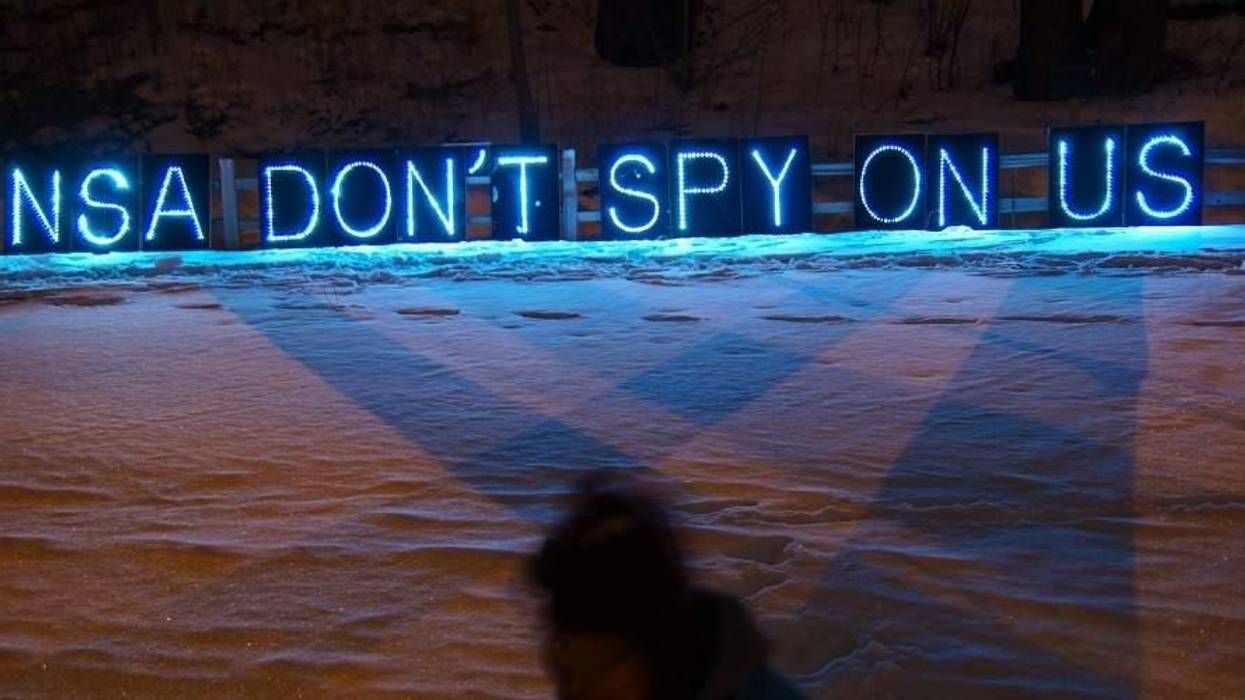
The frenzy over the Nunes memo, likely to be released later today by the Trump administration, contains a profound hypocrisy at its core, one that points to the rot at the core of the American government.
The Republican conspiracy theory promoted by Nunes is that the Federal government over-reached in spying on the Trump campaign.
That's right, the GOP is complaining about government surveillance. But it isn't complaining about the principle of the thing (surprise!). It is complaining that its guy got caught up in these surveillance practices.
On January 18, Republican-dominated the Senate passed a law extending National Security Agency and other agencies' prerogative of warrantless spying on Americans for another six years. The unconstitutional and illegal practices of Federal agencies had been exposed by Ed Snowden, who may as well not have bothered. FISA section 702 lets Federal agents snoop on your Facebook posts even if you marked them as only for friends, and God forbid that you should email a friend in Sweden, since they can read that one too. In fact, since email traffic typically bounces around the world before being delivered, the law lets the government basically read all Americans' correspondence all the time.
There is no evidence that this vast surveillance apparatus has thwarted any significant terrorist plot, since 320 million Americans are not terrorists. The surveillance is being used to advance the careers of government agents by illegally obtaining information about things like drug use, or it is used for economic espionage. The law turns Federal agents into criminals.
Who voted for warrantless surveillance of Americans? Devin Nunes and his whole committee. Almost the whole of the Republican majority in the House of Representatives and the Senate, with the exception of Libertarians like Rand Paul. Not to mention Democratic stalwarts Diane Feinstein, Mark Warner, and Claire McCaskill.
And Donald J. Trump signed it!
So you know what? If the Republican party thinks warrantless surveillance is constitutional and is a great idea, then they just have to STFU about the Nunes memo, which alleges... warrantless surveillance of Americans in contact with foreigners.
This law is unconstitutional on the face of it, but the Federal government cleverly avoids allowing it to come before a Federal judge by not telling the people whose rights are being violated who they are. Secretly, law enforcement is using the surveillance to bust petty marijuana distributors in Colorado and California and then lying to the judges about the evidence trail. The law is subverting the entire justice system. The GOP desperately wants it. But they don't want their guys to get caught up in the surveillance.
So now they are squawking. Too bad.
The tendency of Democrats suddenly to lionize former FBI director James Comey because he was fired by Trump, and Comey's own posturing as a civil libertarian, is part and parcel of the hypocrisy. Comey supports warrantless searches and tried to strong arm Apple into letting every 15 year old hacker in Eastern Europe get at your iPhone just so the FBI could, as well. But at least Comey is consistent.
Securing the Fourth Amendment of the US constitution was one of the reasons for which Americans made their revolution against the British monarchy.
When they defeated the red coats, they put the Fourth Amendment into the Constitution, which says:
"The right of the people to be secure in their persons, houses, papers, and effects, against unreasonable searches and seizures, shall not be violated, and no Warrants shall issue, but upon probable cause, supported by Oath or affirmation, and particularly describing the place to be searched, and the persons or things to be seized.
I wrote a few years ago, after the Snowden revelations,
"The most important 18th-century precedent in English law for our Fourth Amendment is Entick v. Carrington of 1765, in which Lord Halifax, acting for the king, sent agents into the home of John Entick on a fishing expedition for papers and documents that criticized the king. This Revolutionary War site notes:
"During the trial, Entick charged that the entire search and seizure had been unlawfully conducted, and the Court agreed. The Court said that Lord Halifax had no standing to issue the order to search the premises, that probable cause that a crime had been committed had not been demonstrated and that the warrant allowed a general confiscation of anything the officers found, not specifying exactly what they were to look for or could seize. In addition, there were no records kept of what the officers seized."
In the New World, however, colonial authorities ignored this important case and began issuing what were called "writs of assistance," a kind of blanket search warrant that allowed the crown's tax authorities to try to combat smuggling by indiscriminate search and seizure. (We would now call them "National Security Letters.") Attorney James Otis took the case of 50 merchants who sued the British crown over these overly broad warrantless searches, and his powerful speech condemning these practices was heard by John Adams, who considered it the spark that led to the American Revolution.
George Mason's Virginia Declaration of Rights of 1776 forbade these writs of assistance. Thomas Jefferson depended heavily on that document when he authored the Declaration of Independence. When he talks about "Life, liberty and the pursuit of happiness," one of the things he means by liberty is that the government shouldn't be able to snoop at will through your private letters.
The sentiment against warrantless searches and overly broad writs of assistance was put into the constitution by James Madison, with what became the 4th Amendment."
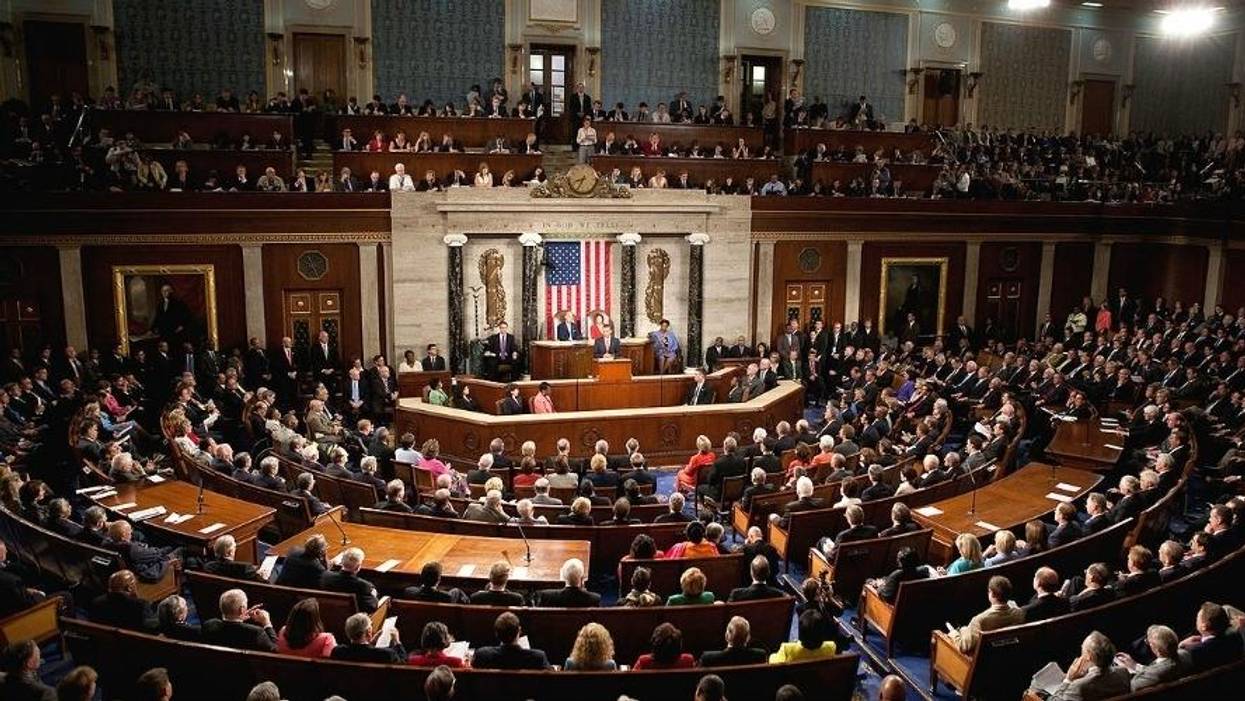
(You can see how your member of Congress voted here and here, so they can be held accountable.)
The vote concerned Section 702 of the Foreign Intelligence Surveillance Act -- a law disclosed by Edward Snowden that revealed the NSA had been spying on Americans in unprecedented ways. As a result of the expiration of this law, Congress needed to decide, for the first time since those revelations, whether to reform, reauthorize, or do away with the law altogether.
For years, the government claimed that Section 702 was primarily used to stop foreign terrorists. In 2013, we learned that was a lie. The government uses the hundreds of millions of communications collected under Section 702 -- which it gets directly from tech companies or by tapping into the physical infrastructure that makes up the internet -- to access the sensitive information of Americans for purposes that have nothing to do with national security.
Intelligence agencies, for example, have long exploited a loophole to conduct warrantless searches of Americans' data collected under Section 702. The NSA conducts over 30,000 of these "backdoor" searches a year and, while the FBI refuses to report their number, we know they perform these searches routinely when investigating a crime, assessing whether they should open an investigation, or even just hunting for information about foreign affairs.
Members of both parties took a stand and joined together to try to close this "backdoor search" loophole and require the government to get a warrant when looking for information about Americans. Sens. Ron Wyden (D-Ore.) and Rand Paul (R-Ky.), along with Reps. Justin Amash (R-Mich.), Zoe Lofgren (D-Calif.), and Ted Poe (R-Texas) pushed until the very last minute for a warrant requirement -- but their efforts were stonewalled by the intelligence agencies, the Trump White House, Republican leadership in the House and Senate, and the Democratic leader in the House.
Instead, the House pushed through a bill that fails to reform -- and in some ways worsens -- current law. Not to be outdone, the Senate today passed the same bill, without allowing even one minute of debate on how this bill could be improved. It now heads to the president, who is expected to sign it into law.
The new law
The bill risks codifying illegal practices that have been used to collect purely domestic communications. It will also allow warrantless backdoor searches of Americans' information to continue largely untouched, imposing a warrant requirement only in cases of an established criminal investigation.
The FBI acknowledges this limitation is unlikely to apply in the vast majority of cases. This is because agents usually perform such searches before opening an active investigation. In addition, the bill has an exception for "foreign intelligence" searches, which could include searches designed simply to find information about foreign affairs.
In other words, Congress has left this loophole wide open for exploitation by an administration openly hostile to critics, immigrants, Muslims, and people of color. The administration can too easily use this as a tool to further their discriminatory and unconstitutional policies.
But there is a glimmer of light.
The last few weeks have demonstrated that bipartisan efforts to reform our surveillance laws continue on an arc of progress. With only two more votes, reformers could have halted this bill from advancing and forced a floor debate over badly needed improvements. And an effort to pass the most comprehensive Section 702 reform bill introduced in Congress garnered the support of over 180 members in the House. With actual debate, real reform provisions likely would have passed. Such support for reform would have been unthinkable seven years ago.
Next steps for surveillance reform
The expiration was a lost opportunity for Section 702 reform. But the debate over the law is far from over.
Next year, Congress will again debate expiring surveillance provisions in the USA Patriot Act, providing a renewed opportunity to again force reexamination of our surveillance laws. But Congress doesn't have to wait for an expiration to act. And reformers can try to force reform through other avenues, as they've done before.
The ACLU is also carrying on the fight against Section 702 in the courts. Our challenge to the NSA's mass searching of internet communications under Section 702 continues to move forward. At the same time, we are representing Xiaoxing Xi, a Chinese-American physics professor who is challenging his baseless prosecution by the government and the unconstitutional spying that led to it. And finally, a federal appeals court is poised to consider the constitutionality of Section 702 surveillance in a criminal case that demonstrates why this warrantless spying violates the Fourth Amendment and Americans' privacy rights. (Our brief in the case is here.) Rulings in any of these cases addressing the constitutionality of Section 702 could require Congress to revisit the law.
The pressure to reform our laws could also come from across the Atlantic. It is likely that the Privacy Shield agreement between the U.S. and the European Union -- which governs transatlantic data transfers and is relied upon by thousands of U.S. businesses to service European customers and perform day-to-day activities -- will be challenged in European courts. Those courts have previously struck down similar agreements over concerns that they did not adequately consider whether U.S. surveillance laws comported with EU standards. If the Privacy Shield is similarly struck down, surveillance reform may quickly become an economic imperative.
In the meantime, Congress can and should exercise its oversight authority. Members can demand that the intelligence agencies deliver on broken promises to provide information about how the law affects Americans. And, they can be vigilant to ensure that additional abuses of the law are brought to light.
No one said surveillance reform was going to be easy. But it's certainly not dead.
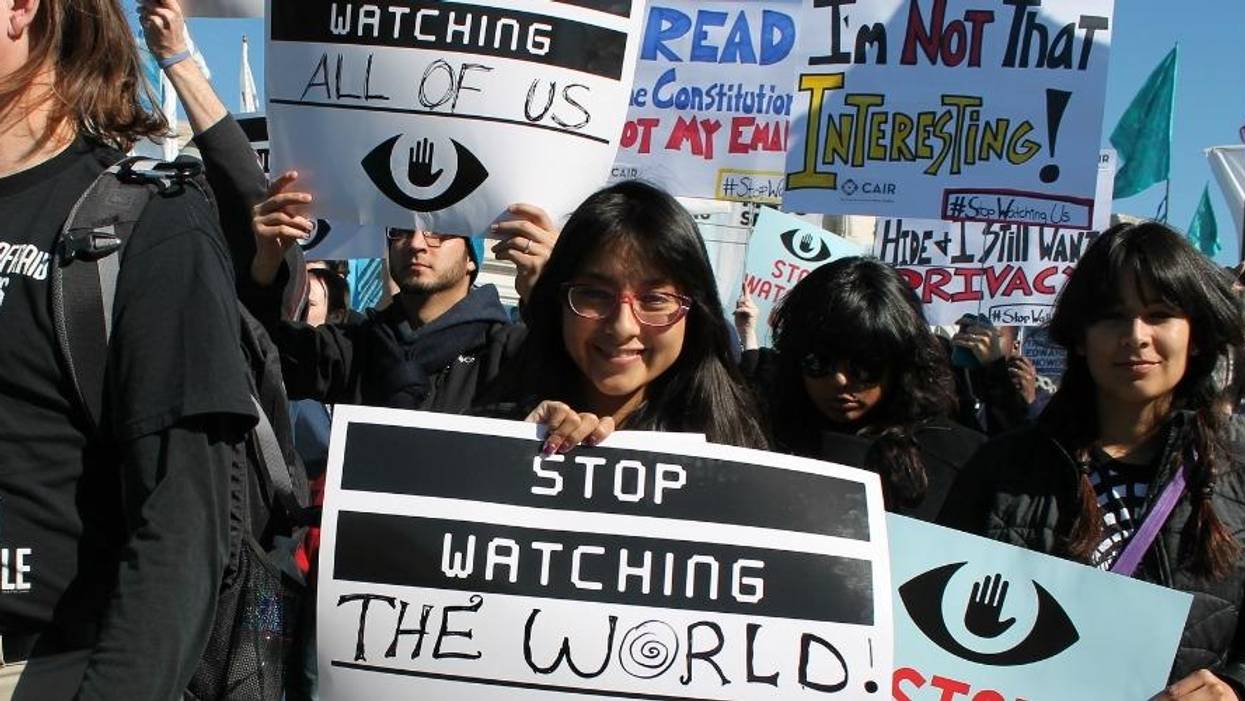
Democrats have been all over the airwaves recently accusing Donald Trump of abusing the Justice Department to go after his political enemies --most notably his former opponent Hillary Clinton and the Clinton Foundation, which the Department of Justice is reportedly currently investigating based on allegation made during the 2016 presidential campaign. So you'd think they would oppose handing Donald Trump any more power with which he could potentially use against all sorts of Americans who attract negative attention from his administration.
Yet, with the help of some Democrats, the House of Representatives voted today -- and the Senate will do so sometime in the next week -- to extend a controversial NSA surveillance power that potentially affects millions of Americans' privacy rights.
The bill is an extension of what's known as Section 702 of the Foreign Intelligence Surveillance Act (FISA), which allows the NSA to warrantlessly target people in other countries who are communicating with Americans -- which means that the collect the personal communications of Americans without their knowledge. Currently, the NSA has over 100,000 foreign nationals under this type of surveillance now, but it also has the communications of the potentially millions of Americans they've talked to, texted with and emailed over the course of the surveillance. The FBI has access to this vast database of information and regularly searches it like Google without a warrant, for crimes that have nothing whatsoever to do with terrorism..
Privacy advocates have long argued this practice is unconstitutional, and any American agency should need a warrant to go back into that vast NSA database of Americans' communications and date in order to mine it for information -- like the Fourth Amendment requires.
But with Section 702 expiring next week, the Trump administration has of course, demanded that Congress pass an extension with supposed "reforms" that do hardly anything to stop the feds from abusing their powers and actually codify the ability for the FBI, in many cases, to search Americans' emails without a warrant.
Paul Ryan and House Republicans needed Democratic votes to ensure that the measure passed because at least some members of House Freedom Caucus, led by GOP Rep. Justin Amash, were staunchly opposed to any extension without robust safeguards to protect Americans' privacy. Along with a large group of Democrats -- including the Democratic National Committee vice chairman, Rep. Keith Ellison, D-Minn -- the group had an amendment to the extension known as the USA RIGHTS Act, which would have replaced the privacy-invasive bill with a privacy-protecting one.
The USA RIGHTS Act would have required the FBI to get a warrant to go back into the NSA's Section 702 database to search for Americans' information. It also would have provided additional safeguards to make sure the bill doesn't turn into a domestic surveillance bill.
Yet up until just hours before the vote, the most powerful member of the Democratic Caucus, House Democratic Leader Nancy Pelosi, was notably silent on the bill. If Pelosi had whipped Democrats to vote against the bill and supported the USA RIGHTS Act instead, there's a good chance that Trump and Ryan would have failed to get their full extension. Yet, just before the floor vote today she said she would not support the USA Rights Act and shamefully voted to hand Trump exactly what he wanted.
Almost worse than Pelosi's willingness to go along with the NSA was Rep. Adam Schiff's, D-Calif., who has seen his star rise over the last year being the Democrat's go-to voice on the Russia investigation. On CNN with Jake Tapper this weekend, Schiff talked at length how he thought Trump was abusing his power and misusing the Justice Department to go after his political enemies.
Nonetheless, Schiff was a leading driver in the House to extend the NSA's surveillance powers, and has been undercutting the more robust reforms proposed by other Democrats, like longtime Senate Intelligence Committee member Sen. Ron Wyden, for months. (The Senate is expected to take up their own vote sometime in the next week if the House passes its bill.)
But for all the supporters' insistence that the NSA and FBI "need" these powers, no one proposed to actually strip the agencies of their ability to conduct surveillance on targets abroad; even the USA RIGHTS Amendment did nothing to restrict them in that regard. It merely would have protected Americans whose communications get swept up in the NSA's vast nets from being abused after the fact.
In 2018, we have the worst-case-scenario president about whom privacy advocates have warned for years while seeking to restrict government surveillance powers. His administration has targeted on Muslims and immigrants for massive new law enforcement measures and even openly mused about conducting surveillance on his political opponents. Democrats should have had the foresight to roll back the Bush-era surveillance laws under President Obama; it's unconscionable to now hand Trump even more leverage to seek retribution and give him a green light to conduct unconstitutional surveillance on Americans.
"In the last several years, we've seen Americans' civil rights and civil liberties rolled back, and religious minorities, immigrants and communities of color targeted most acutely," Rep. Ellison eloquently said on Wednesday. "By codifying a warrantless surveillance program into law, and giving the U.S. government access to millions of Americans' private emails, text messages and phone calls, S. 139 further jeopardizes the privacy rights for those communities, including many within my own district."
Senate Democrats should do the right thing: Oppose Trump by opposing an unconstitutional bill that would violate the constitutional rights of millions of Americans.
Civil liberties advocates are demanding answers for Yahoo's spying operation revealed earlier this month, as news emerges that the government order behind the email scan will likely remain classified.
Obama administration officials told Reuters on Tuesday that the government is hesitant about releasing the order to a wider audience on the grounds that it is a national security matter. The statement came as dozens of advocacy groups sent a letter (pdf) to Director of National Intelligence James Clapper asking for the order to be declassified to determine if it violated both constitutional and international human rights, among other laws.
"We believe such a massive scan of the emails of millions of people, particularly if it involves the scanning of email content, could violate [the Foreign Intelligence Surveillance Act], the Fourth Amendment, and international human rights law," the coalition of more than 30 groups wrote.
The order asked Yahoo to scan its customers' emails for a certain digital "signature" allegedly associated with a foreign power. With the order still classified, the signature currently remains unknown.

The letter continues:
According to reports, the order was issued under Title I of FISA, which requires the government to demonstrate probable cause that its target is a foreign power or an agent of a foreign power (such as a spy or a terrorist), and probable cause that the "facility" at which the surveillance is conducted will carry the target's communications. If reports are true, this authority to conduct a particularized search has apparently been secretly construed to authorize a mass scan.
As Reuters notes, an entire email service such as Yahoo has never publicly been considered a surveillance "facility."
The 33 groups, including the American Civil Liberties Union (ACLU), Amnesty International, Human Rights Watch, the Center for Democracy & Technology (CDT), and the Electronic Frontier Foundation (EFF), also called on Clapper to release information about how the government justified the order.
As EFF writer Kate Tummarello put it: "We need to know whether the Foreign Intelligence Surveillance Court has interpreted FISA...to mean that the government can conscript Yahoo into mass surveillance of all of its users' emails."
Greg Nojeim, CDT senior counsel, told Reuters that it is important for all members of Congress to be briefed on the order--not just those on the intelligence committees--as a vote on FISA approaches.
"The briefing should involve all members, because all members will within about a year have to vote on a significant part of FISA," Nojeim said. "They should know what occurred so that they can decide whether to outlaw it."
The Yahoo scandal has fueled a tense climate around privacy rights, as the government has repeatedly promised more transparency in its surveillance operations only to be confronted with increasing evidence that agencies are using unwarranted spying and relying on private companies in all manner of investigations. Also Tuesday, new reporting by The Daily Beast revealed that AT&T had collected extensive data on its customers for use by law enforcement, and other recent exposes have found federal, state, and local agencies all over the country using unwarranted, unregulated surveillance as a first-resort method to investigate crimes and track activists.
I joked when Yahoo first released its letter to James Clapper the other day, asking that he release details about the 2015 scan first revealed by Reuters. It has the tone of a young woman who is justifiably upset because, after sleeping with her, some jerk is pretending he doesn't even know her.
But as it happens, I'm in Europe, trying to learn more about Privacy Shield and related issues. So I thought I would call attention to the emphasis Yahoo lawyer Ronald Bell (who was the guy who decided not to challenge this) puts on the international impact of Clapper's decision, thus far, to remain silent.
As you know, Yahoo consistently campaigns for government transparency about national security requests and for the right to share the number and nature of the requests we receive from all governments. We apply a principled approach to handling government requests for user data, including in the national security context, articulated in our publicly-available Global Principles for Responding to Government Requests and regular transparency reports. Our company not only embraces its privacy and human rights responsibilities, we do so enthusiastically, passionately, and with a deep sense of global and moral responsibility. But transparency is not merely a Yahoo issue: Transparency underpins the ability of any company in the information and communications technology sector to earn and preserve the trust of its customers. Erosion of that trust online implicates the safety and security of people around the world and diminishes confidence and trust in U.S. businesses at home and beyond our borders.
Recent new stories have provoked broad speculation about Yahoo's approach and about the activities and representations of the U.S. government, including those made by the Government in connection with negotiating Privacy Shield with the European Union. That speculation results in part from lack of transparency and because U.S. law significantly constrain-and severely punish-companies' ability to speak for themselves about national security related orders even in ways that do not compromise U.S. government investigations.
We trust that the U.S. government recognizes the importance of clarifying the record in this case. On behalf of Yahoo and our global community of users, I respectfully request that the Office of the Director of National Intelligence expeditiously clarify this matter. [bold emphasis mine]

Folks here definitely followed the Yahoo story. Their understanding of what happened leads them to believe the scan violates European prohibitions on mass surveillance. Importantly, they're not aware that this was done with an "individual" FISA order rather than under Section 702. As I've written, "individual" orders have been used for bulk scans since 2007, but in this case, an "individual" order would also mean that a judge had reviewed the scan and found it proportional, which would make a big difference here (at least to authorities; a number of other people are raring to challenge such judgements on whether it is an adequate court or not).
So yeah, by disclosing details of this scan, Yahoo may be in much better position vis a vis European authorities, if not consumers.
But there's another reason why Clapper's office -- or rather ODNI General Counsel Bob Litt -- may be so quiet.
Litt is the one who made many of the representations about US spying to authorities here. Someone -- Litt, if he's still around for a hearing that may take place under President Hillary -- may also need to go testify under oath in an Irish court in conjunction with a lawsuit there. Whoever testifies will be asked about the kinds of surveillance implicating European users the government makes US companies do.
In other words, Bob Litt is the one who made certain representations to the European authorities. And now some of those same people are asking questions about how this scan complies with the terms Litt laid out.
Which makes his silence all the more instructive.