

SUBSCRIBE TO OUR FREE NEWSLETTER
Daily news & progressive opinion—funded by the people, not the corporations—delivered straight to your inbox.
5
#000000
#FFFFFF
To donate by check, phone, or other method, see our More Ways to Give page.
Daily news & progressive opinion—funded by the people, not the corporations—delivered straight to your inbox.
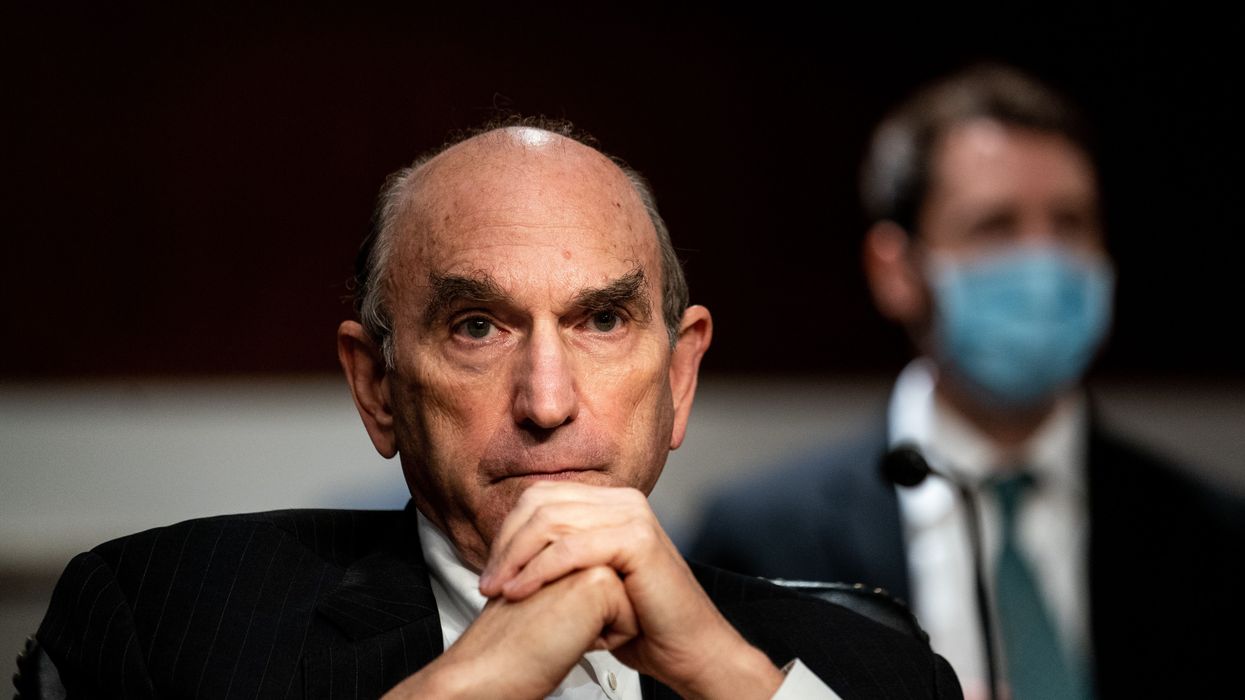
When the infamous neocon warns about “criminal regimes,” I don’t think of Venezuela. I think of the mass graves, the scorched villages, the secret prisons, and the tens of thousands of Latin American lives shattered under the policies he championed.
Elliott Abrams has resurfaced with familiar instructions on how to “fix” Venezuela, a country he neither understands nor respects, yet feels entitled to rearrange like a piece of furniture in Washington’s living room. His new proposal is drenched in the same Cold War fever and colonial mindset that shaped his work in the 1980s, when US foreign policy turned Central America into a graveyard.
My childhood in Venezuela was shaped by stories from our region that the world rarely sees: stories of displacement, of death squads, of villages erased from maps, of governments toppled for daring to act outside Washington’s orbit. And I know exactly who Elliott Abrams is, not from think-tank biographies, but from the grief woven into Central America’s landscape.
Abrams writes with the confidence of someone who has never lived inside the countries his policies have destabilized. His newest argument rests on the most dangerous assumption of all: that the United States has the authority, by virtue of power alone, to decide who governs Venezuela. This is the original sin of US policy in the hemisphere, the one that justifies everything else: the sanctions, the blockades, the covert operations, the warships in the Caribbean. The assumption that the hemisphere is still an extension of US strategic space rather than a region with its own political will.
In this telling, Venezuela becomes a “narco-state,” a convenient villain. But anyone who bothers to study the architecture of the global drug trade knows that the world’s largest illegal market is the United States, not Venezuela. The money laundering happens in New York and London, not in Caracas. The guns that sustain the drug corridors of the continent used to threaten, to extort, to kill, come overwhelmingly from American producers. And the history of the drug war itself, from its intelligence partnerships to its paramilitary enforcement wings, was written in Washington, not in the barrios of Venezuela.
The history of the drug war itself, from its intelligence partnerships to its paramilitary enforcement wings, was written in Washington, not in the barrios of Venezuela.
Even US government data contradicts Abrams’ narrative. DEA and UNODC reports have long shown that the vast majority of cocaine destined for US consumers travels from Colombia through the Pacific, not through Venezuela. Washington knows this. But the fiction of a “Venezuelan narco-route” is politically useful: it turns a geopolitical disagreement into a criminal case file and prepares the public for escalation.
What’s striking is that Abrams never turns to the real front line of the drug trade: US cities, US banks, US gun shows, US demand. The crisis he describes is born in his own country, yet he looks for the solution in foreign intervention. The United States has long armed, financed, and politically protected its own “narco-allies” when it suited larger strategic goals. The Contras in Nicaragua, paramilitary blocs in Colombia, and death squads in Honduras. These were policy tools, and many of them operated with Abrams’ direct diplomatic support.
I grew up with the stories of what that machinery did to our neighbors. You don’t need to visit Central America to understand its scars; you only need to listen. In Guatemala, Maya communities still grieve a genocide that US officials refused to acknowledge, even as villages were erased and survivors fled into the mountains. In El Salvador, families continue lighting candles for the hundreds of children and mothers killed in massacres that Abrams dismissed as “leftist propaganda.” In Nicaragua, the wounds left by the Contras, a paramilitary force armed, financed, and politically blessed by Washington, remain visible in the stories of burned cooperatives and murdered teachers. In Honduras, the word disappeared is not historically remote; it is widely remembered, a reminder of the death squads empowered under the banner of US anti-communism.
So when Abrams warns about “criminal regimes,” I don’t think of Venezuela. I think of the mass graves, the scorched villages, the secret prisons, and the tens of thousands of Latin American lives shattered under the policies he championed. And those graves are not metaphors. They are the cartography of an entire era of US intervention, the era Abrams insists on resurrecting.
Abrams now adds new threats to the old script: warnings about “narco-terrorism,” anxieties about “Iranian operatives,” alarms over “Chinese influence.” These issues are stripped of context, inflated, or selectively highlighted to manufacture a security crisis where none exists. Venezuela is not being targeted because of drugs, Iran, or China. It is being targeted because it has built relationships and development paths that do not answer to Washington. Independent diplomacy, South-South cooperation, and diversified alliances are treated as threats—not because they endanger the hemisphere, but because they weaken US dominance within it.
His fantasy for Venezuela rests on another imperial delusion. The notion that the United States can bomb air bases, sabotage infrastructure, deploy Special Forces into a sovereign country, tighten sanctions until society buckles, and then “install” a compliant government as if Venezuela were an uninhabited outpost is a breathtaking escape from reality. Venezuela is a nation of 28 million people, with a national identity shaped by resisting foreign control, above all, control over oil. Abrams presents a military-assisted overthrow as if it were a routine administrative task, erasing the human cost, the regional fallout, and the absolute certainty of popular resistance. It is the same imperial fantasy that has haunted Latin America for generations: the belief that our countries can be redesigned by force and that our people will obediently accept it.
The notion that the United States can bomb air bases, sabotage infrastructure, deploy Special Forces into a sovereign country, tighten sanctions until society buckles, and then “install” a compliant government as if Venezuela were an uninhabited outpost is a breathtaking escape from reality.
He also assumes that once Washington’s preferred government is installed, the oil will conveniently flow. Nothing could reveal a deeper ignorance about Venezuela. Oil in Venezuela is not merely an export or a source of revenue; it is the ground on which its sovereignty was fought for, betrayed, reclaimed, and fought for again. It was the terrain of foreign concessions, the site of the 2002 sabotage, the backbone of the Bolivarian project. Venezuelan refineries, pipelines, and fields are the archive of a century of struggle to control its own destiny. Believing that foreign troops would be welcomed as managers of their most intimate sovereignty is to be utterly blinded by arrogance.
Then there is the matter of sanctions. In Washington, they are treated as technical measures, policy levers, bargaining chips. In Venezuela, there are shortages in hospitals, lines at pharmacies, collapsed revenue, currency freefall, and families forced into migration. And here Abrams’ fingerprints are impossible to ignore: during Trump’s first administration, he served as “Special Representative for Venezuela,” helping design and defend the very sanctions that strangled the economy he now blames the government for failing to manage. Abrams says sanctions “failed,” as though they were meant to improve Venezuelan life. But sanctions did not fail. They succeeded at destabilizing society, suffocating public services, and manufacturing the humanitarian crisis now used to justify further intervention. It is circular logic: create the conditions of collapse and then point to the collapse as evidence that the government must be removed.
Abrams now frames regime change as a solution to migration, but history tells another story entirely. U.S. interventions do not stop migration; they generate it. The largest waves of displacement in our region came in the wake of U.S.-backed coups, civil wars, counterinsurgency campaigns, and, more recently, the weaponization of economic sanctions. People fled not because their governments were left alone, but because Washington treated their countries as battlefields or, in the case of sanctions, as laboratories for economic collapse. Central Americans ran from bullets and death squads; Venezuelans have been pushed out by a siege designed to break the economy and fracture society. The result is the same: migration engineered by U.S. policy, then used as justification for further intervention.
It is circular logic: create the conditions of collapse and then point to the collapse as evidence that the government must be removed.
Washington’s case against Venezuela now leans on a familiar set of fabricated alarms: claims that the country has become a hub of “narco-terrorism,” that it harbors Iranian operatives, that Chinese investment is a Trojan horse for hostile influence. Venezuela is not being targeted because of drugs, Iran, or China. It is being targeted because it has built relationships and development projects that do not answer to Washington’s dictates. Independent diplomacy, South-South cooperation, and diversified alliances are treated as threats, not because they endanger the hemisphere, but because they weaken U.S. dominance within it.
Until Washington abandons the idea that it owns the hemisphere, Latin America will never be safe. Not from Abrams, not from coups, not from CIA programs, not from blockades, and not from the Monroe Doctrine.
And perhaps the clearest sign of this imperial hypocrisy is watching Trump accuse his domestic opponents of “sedition” for a simple video where lawmakers remind US service members that they are legally bound to refuse unlawful orders. Yet the very same political forces praise the idea of Venezuelan officers breaking their own constitutional order to topple a government Washington dislikes. Latin America has lived long enough under that double standard, and we are done paying the price for it.
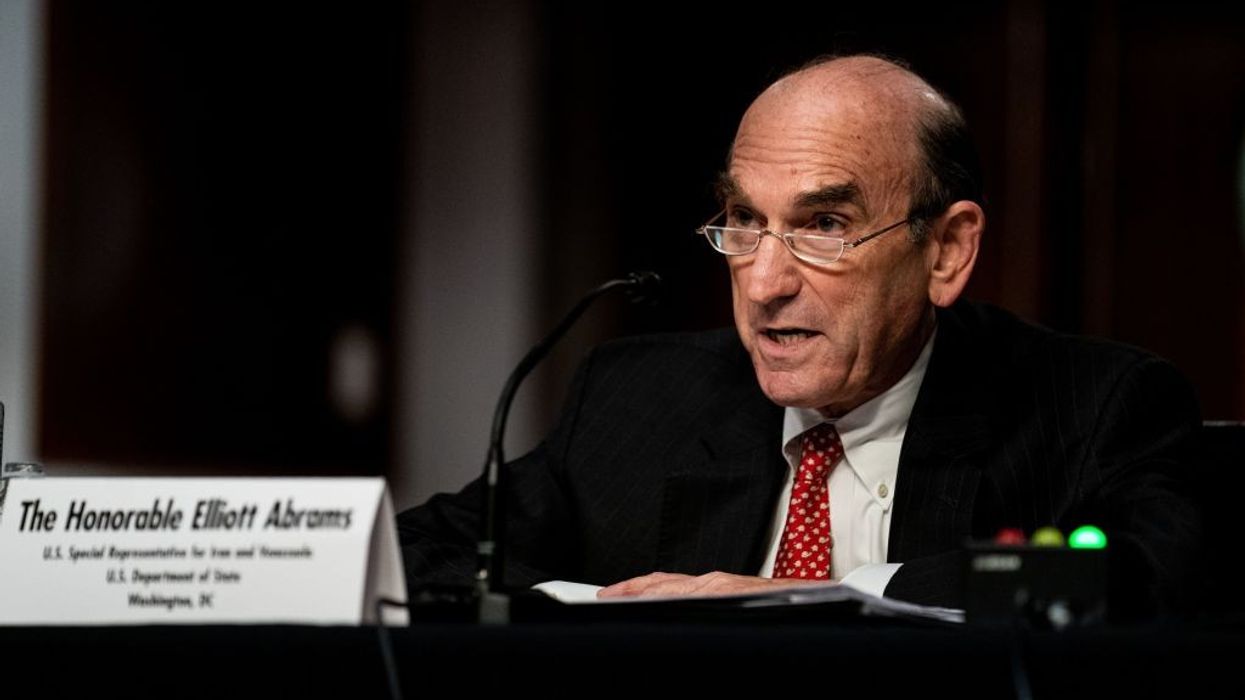
In an echo of Washington's disastrous de-Baathification campaign in occupied Iraq, a new report puts special stress on "deradicalization" efforts in the Gaza Strip.
Several key architects of the U.S. invasion and occupation of Iraq 21 years ago are presenting a plan for rebuilding and “de-radicalizing” the surviving population of Gaza, while ensuring that Israel retains “freedom of action” to continue operations against Hamas and Islamic Jihad.
The plan, which was published as a report Thursday by the hard-line neo-conservative Jewish Institute for National Security Affairs, or JINSA, and the Vandenberg Coalition, is calling for the creation of a private entity, the “International Trust for Gaza Relief and Reconstruction” to be led by “a group of Arab countries such as Saudi Arabia, Egypt, and the United Arab Emirates” and “supported by the United States and other nations.”
With regard to Palestinian participation, the report by the “Gaza Futures Task Force,” envisages an advisory board “composed primarily of non-Hamas Gazans from Gaza, the West Bank, and diaspora.” In addition, the Palestinian Authority, which is based on the West Bank, “should be consulted in, and publicly bless,” the creation of the Trust while itself undergoing a process of “revamping.”
In addition to granting Israel license to intervene against Hamas and Islamic Jihad within Gaza, the plan calls for security to be provided by the Trust’s leaders and “capable forces from non-regional states with close ties to Israel,” as well as “vetted Gazans.” The Trust should also be empowered to “hire private security contractors with good reputations among Western militaries” in “close coordination with Israeli security forces,” according to the report.
The task force that produced the report consists of nine members, four of whom played key roles as Middle East policymakers under former President George W. Bush and in the run-up to and aftermath of the disastrous Iraq invasion in 2003.
The group is chaired by John Hannah, who served as deputy national security advisor to Vice President Dick Cheney from 2001 to 2005 and then as Cheney’s national security advisor (2005-2009), replacing Lewis “Scooter” Libby, who resigned his position after being indicted for perjury. Libby, who was later given a full pardon by former President Donald Trump, is also a member of the Gaza task force.
Another prominent member of the task force is the founder and chairman of the hawkish Vandenberg Coalition, Elliott Abrams, who served as the senior director for Near East and North African Affairs in the National Security Council under Bush from 2002 to 2009 and more recently as the Special Envoy for Venezuela and Iran under Trump. Ironically, Abrams, who also served as the NSC’s Senior Director for Democracy under Bush, played a key role in supporting an attempted armed coup by Hamas’s chief rival, Fatah, in 2007 after Hamas swept the 2006 Palestinian elections. The coup attempt sparked a brief but bloody civil war in Gaza, which eventually resulted in Hamas’ consolidation of power in the Strip.
Amb. Eric Edelman (ret.), a fourth member of the task force, served as Cheney’s principal deputy national security adviser from 2001 to 2003 and then as Under Secretary of Defense for Policy, the number three position at the Pentagon, under Rumsfeld and his successor, Robert Gates, from 2005 to 2009, as U.S. troops struggled to contain the mainly Sunni resistance to the U.S. occupation in Iraq.
In addition to their collaboration during the Bush administration, the four men have long been associated with strongly pro-Israel neoconservative groups, having served on the boards or in advisory positions for such organizations and think tanks as the Hudson Institute, the Foundation for Defense of Democracies, the ultra-hawkish Center for Security Policy, as well as the Vandenberg Coalition and JINSA. Indeed, such groups have promoted policies that have been generally aligned with those of the Likud Party led by Israeli Prime Minister Binyamin Netanyahu.
Thus, the report’s “key findings” prioritize as considerations: [these are quotes]
Its proposed Trust, according to the report, should involve the United States and concerned states that accept Israel’s role in the region” and “should provide the humanitarian assistance and help to restore essential services and rebuild civil society in Gaza as intense combat and over subsequent months. Its activities should be governed by an international board composed of 3 to 7 representatives from the key states supporting the Trust, including Saudi Arabia, the UAE, and others. At least one notable omission from the list is Qatar, which has provided tens of billions of dollars in assistance to Gaza over the last decade.
In an echo of Washington’s disastrous de-Baathification campaign in occupied Iraq, the report puts special stress on “deradicalization” efforts. “The Trust, recognizing that years of radicalization by Hamas has complicated the task of reforming and restoring Gaza, should focus on a long-term program for deradicalizing the media, schools and mosques,” according to the report which adds that “Gazans and the Gazan diaspora should play an active role in developing and implementing these plans, alongside the Trust’s Arab members who have hands-on experience in successful deradicalization efforts in their own societies.” Such efforts in Gaza, it goes on, could “serve as a model to encourage a similar program there that will be essential if a credible two-state solution is to be revived.”
The task force urges the Trust to coordinate with other states’ efforts and with those of NGOs and international organizations, including the United Nations. But, in an echo of a key Likud talking point, “it should recognize that the activities of UNRWA serve to perpetuate and deepen the Palestinian crisis.”
The report said UNRWA’s immediate assistance in providing relief may be necessary, but “plans to replace it with local Palestinian institutions or other international organizations committed to peace should be developed and implemented.”
All of these efforts should be pursued within the more general context of countering “Iran’s aggressive campaign to derail regional peace efforts, including by constraining the threat posed by Hezbollah and resuming progress toward normalizing Israel and Saudi Arabia,” according to the report.
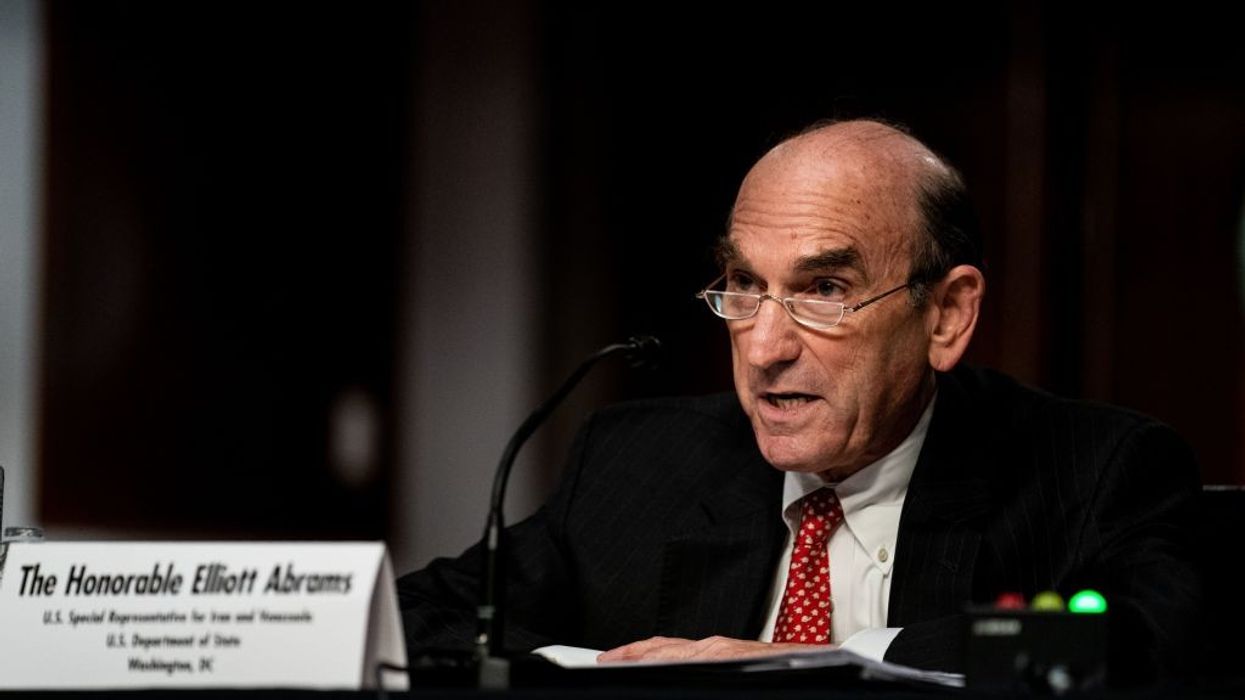
In a 1981 memo, written weeks before his confirmation by the Senate, Abrams stated that “human rights is at the core of our foreign policy.” His record says otherwise.
Guatemala, El Salvador, Nicaragua, or any other country that respects human rights do not have fond memories of Elliott Abrams. The Biden administration’s nomination of Abrams to the Advisory Commission on Public Diplomacy is wrong and, given his track record, is an insult to diplomacy.
Abrams gained prominence when he served as President Ronald Reagan’s Assistant Secretary of State for Human Rights and Humanitarian Affairs. He later became Assistant Secretary for Inter-American Affairs. And yet, Abrams has been accused of covering up atrocities carried out by the military forces of U.S.-backed Central American governments in Guatemala and El Salvador and of supporting the Contra rebels in Nicaragua. With characteristic chutzpah, he accused his critics of being “Un-American” and “unpatriotic.”
In a 1981 memo, written weeks before his confirmation by the Senate, Abrams stated that “human rights is at the core of our foreign policy.” In 1985, The Lawyers Committee, Americas Watch and Helsinki Watch charged Abrams for developing a policy that undermined the purpose of the human rights bureau in the State Department.
Abrams dismissed the gravity of the massacre, stating to a Senate committee that the reported number of deaths at El Mozote was not “credible” and that “it appears to be an incident that is at least being significantly misused, at the very best, by the guerrillas.”
What has Elliott Abrams done to receive such harsh criticism? In 1983, as Assistant Secretary of State, Abrams advocated aid to Guatemala then ruled by dictator General Efraín Ríos Montt. Abrams stated that Ríos Montt’s ruling “brought considerable progress” to human rights in that country.
Ríos Montt came to power in 1982. In 2013, he was found guilty of overseeing a mass campaign of murder and torture of Indigenous people in the country. Ríos Montt’s defense was that he had no operational control of the military forces involved in the massacre.
In El Salvador, on December 10, 1981, the Salvadoran military bombarded El Mozote, a small town in the Morazán district of El Salvador. An estimated one thousand people were massacred, with almost half of the victims being minors. After the massacre, the troops returned to their headquarters to inform their superiors of the operation’s “success.” To this day, the El Mozote Massacre marks the largest massacre to occur in Latin America.
Abrams dismissed the gravity of the massacre, stating to a Senate committee that the reported number of deaths at El Mozote was not “credible” and that “it appears to be an incident that is at least being significantly misused, at the very best, by the guerrillas.” A 1992 Human Rights Watch report criticized Abrams for downplaying the massacre.
The Salvadoran deaths squads—commanded by Major Roberto D'Aubuisson, who proclaimed himself “The Fuhrer of El Salvador”—didn’t even spare religious figures. The most noted victim was Archbishop Oscar Romero. Romero was assassinated while presiding a memorial Mass in the Carmelite Chapel of the Hospital de la Divina Providencia on March 24, 1980.
He had issued an appeal to soldiers carrying out assassinations to disobey their orders. “In the name of God, in the name of this suffering people whose cries rise to Heaven more loudly each day, I implore you, I beg you, I order you in the name of God: Stop the repression!” In 2001, Abrams said that Washington’s policy in El Salvador had been a “fabulous achievement.”
In Nicaragua, Abrams worked closely with Contra rebels who were trying to overthrow the Government. In 1982, Congress shut down funding for the Contras through what was known as the Boland Amendment. Behind the scenes, Abrams worked closely with Colonel Oliver North secretly seeking contributions to assist the Contra rebels.
In 1986, to obtain additional funds for the Contras, Abrams met with Brunei’s defense minister General Ibnu Basit bin Apong in London, to solicit a $10 million contribution from the Sultan of Brunei. Because of a clerical error in Oliver North’s office, the money was sent to the wrong Swiss bank account, and the Contras never received the funds. As an intelligence operation it was a total failure; the blunder, however, made someone extremely happy.
In 1991, Abrams admitted in his Congressional testimony that he knew more about the case than he had acknowledged, and reached a plea agreement in which he pleaded guilty to two misdemeanor counts of withholding information from Congress. Abrams was sentenced to a $50 fine, probation for two years, and 100 hours of community service. He was later pardoned by President George H. W. Bush in December 1992.
Abrams also left traces of his nefarious political involvement in Venezuela. Hugo Chávez, the democratically elected president of Venezuela, carried out a series of reforms that infuriated Washington. The U.K. Observer reported that Abrams had advance knowledge of these reforms and had approved the military coup that removed Chávez from power for 47 hours.
Abrams was also one of the intellectual architects of the 2003 U.S.-led invasion and occupation of Iraq. In 1998, he co-authored a letter to President Bill Clinton urging regime change in Iraq. It is now widely accepted that the invasion of Iraq was a failure. It didn’t produce any substantial economic development, improve the country’s judicial institutions, or create a better standard of living for the Iraqis.
Abrams’ track record on human rights is the antithesis of public diplomacy. Nominating him for a diplomacy post is wrong. It means that a man who has shown a tremendous disregard for human rights, democracy, and the rule of law can still be rewarded and celebrated.
In February 2019, then-freshman congresswoman Ilhan Omar committed a rare offense in U.S. politics: she called out a sitting official, to his face, for his complicity in horrific human rights abuses.
The official in question was Elliott Abrams, who had just been appointed the Trump administration’s “special envoy” for Venezuela. Omar highlighted Abrams’ 1991 guilty plea for lying to Congress about the Iran-Contra affair, saying that this called into question why members of the body should trust what he has to say. She went on to excoriate Abrams for his role in downplaying the horrific massacre of hundreds of civilians by U.S.-armed and trained troops in El Salvador.
The reaction to Omar’s breach of decorum was swift and bipartisan. A number of neoconservative intellectuals lept to defend Abrams as a champion of democracy and human rights, joined by a handful of nominally liberal foreign policy professionals such as Kelly Magsamen, then vice president for National Security and International Policy at the Center for American Progress, and now chief of staff to Secretary of Defense Lloyd Austin.
“I worked for Elliott Abrams as a civil servant,” Magsamen tweeted. “He is a fierce advocate for human rights and democracy. Yes, he made serious professional mistakes and was held accountable. I’m a liberal but I’m also fair. We all have a lot of work to do together in Venezuela. We share goals.”
This strange episode gained renewed relevance on Monday when, in a possible attempt to bury the news on the eve of the Fourth of July, the Biden administration announced its intent to nominate Abrams to the bipartisan “United States Advisory Commission on Public Diplomacy.”
Abram’s appointment may be largely symbolic and grant him little power or influence over policy. But his selection, rather than any of the many available Republican former officials with less blood-stained careers, speaks volumes.
The commission is charged with assessing U.S. efforts to “understand, inform, and influence foreign publics” and issuing reports to Congress and the executive on these topics. It is statutorily bipartisan; no more than four of its seven members can come from any one political party.
Abram’s appointment may be largely symbolic and grant him little power or influence over policy. But his selection, rather than any of the many available Republican former officials with less blood-stained careers, speaks volumes.
Abrams may not be as infamous as Henry Kissinger, but his record of “public service” is similarly ignominious, littered with the policy failures and complicity in crimes against humanity that have unfortunately characterized U.S. foreign policy in the Cold War era and beyond.
In 1981, a day before Abrams assumed the post of Assistant Secretary of State for Inter-American Affairs, the Atlacatl Battalion, a U.S.-trained unit of the Salvadoran military, massacred nearly 1,000 civilians, committing mass rapes against women and children in the process. Abrams insisted to Congress that rumors of the massacre were essentially propaganda by leftist guerillas, and continued to do so despite investigations by U.S. embassy officials, the New York Times, and the Washington Post confirming the massacre and placing blame squarely at the feet of the Salvadoran military.
Throughout the Reagan administration’s brutal counterinsurgency campaigns in Central America, Abrams continually testified that U.S.-backed forces were making serious improvements in their human rights practices so that they could continue receiving arms and training. In fact these forces in Guatemala and El Salvador were waging genocidal war against their countries’ peasantry and indigenous populations. A U.N.-backed truth commission eventually found that 85 percent of the violence was carried out by the military and its associated death squads.
Abrams reserved particular praise for Guatemalan dictator Efrain Rios Montt, lauding the dictator for “considerable progress” on human rights and attitudes toward the indigenous population. Rios Montt was later convicted of genocide against Guatemala’s Ixil Maya.
Abrams is best known for his central role in the Iran-Contra Affair, working to secure funding for the brutal counterrevolutionaries and to direct their operations. The Contras, a group consisting mostly of former officials and soldiers from the deposed dictatorship of Anastasio Somoza, failed in their task of overthrowing the Sandinista government in Nicaragua. But the militants, who were almost completely reliant on U.S. support, became notorious for their brutal killings of civilians.
It was for this affair that Abrams would earn his criminal conviction — not for abetting and concealing mass atrocities, but for misrepresenting U.S. support for the Contras to Congress. In 1991, Abrams pleaded guilty for lying to Congress about the extensive U.S. role in supplying and funding the Contras, for which he received two years of probation and 100 hours of community service — a punishment he never actually served after an 11th hour pardon from George H.W. Bush.
The contention that Abrams merely “made mistakes” and was held accountable — more popular with his liberal defenders — is belied by this pardon and by Abrams’ book Undue Process, his angry and self-pitying account of his prosecution in which he labels Iran-Contra investigators “miserable, filthy bastards” and “bloodsuckers” (and which this author has had the misfortune of reading in full).
Abrams’ record of abuse and failure continued into the 21st century. He served in the George W. Bush administration and was alleged to have approved the failed coup plot against Hugo Chavez in 2002. Later, he was named as a central figure in the administration’s backing of a failed Fatah coup against Hamas after the latter party won Palestinian elections — ultimately leading to Hamas’s uncontested control of the Gaza strip.
In his aforementioned time as Trump’s “special envoy” for Venezuela, U.S. policy fared no better, with attempts to overthrow the government of Nicolas Maduro ending only in Juan Guaido’s spectacularly unsuccessful 2019 putsch attempt and an even more quixotic effort by a group of U.S. mercenaries and former Venezuelan soldiers to kidnap Maduro. The Trump administration denied any involvement in the latter affair, which historian Greg Grandin has described as a “burlesque Iran-Contra.”
In response to a query from Mother Jones, a White House spokesperson implied that Abrams’ nomination to this latest appointment was put forward by Republican leadership and merely accepted by the administration. But given the White House’s vague explanation of the willingness of members of the administration to publicly embrace Abrams and others like them, it would be granting Team Biden far too much benefit of the doubt to simply believe that Republicans forced their hand.
The United States embraces repressive and murderous (but useful) governments while in the same breath condemning the human rights abuses of its adversaries
Biden entered office pledging that “human rights will be the center of our foreign policy.” Since then he has comprehensively broken this promise, as recounted last month by former Bernie Sanders advisor Matt Duss (who also sharply criticized Abram’s nomination). In embracing great power competition — particularly confrontation with China — at all costs, the Biden administration has made some degree of human rights hypocrisy inevitable. The United States embraces repressive and murderous (but useful) governments while in the same breath condemning the human rights abuses of its adversaries and calling on the world to rally behind liberal principles.
This contradiction is readily apparent in the administration’s campaign against Russia’s invasion of Ukraine. In March, Antony Blinken gave a speech highlighting Russia’s massacres of civilians in Bucha, appealing to the world to rally for justice and against Russia’s war. Just two months later, Blinken joined other foreign policy luminaries for the 100th birthday party of Henry Kissinger, who is directly responsible for the massacre of countless civilians in Cambodia and beyond.
That Biden officials do not see how hypocritical — and counterproductive — it is to embrace figures like Abrams and Kissinger while trying to rally the globe against their adversaries human rights abuses is almost unfathomable. But the exceptionalist convictions held by most U.S. foreign policy elites — that American power is synonymous with liberal order, and that U.S. global primacy is, in the words of analyst Van Jackson, a “global public good” — are powerful and enduring.
The problem for America’s foreign policy establishment is that it is increasingly impossible for anyone outside of Western elites to believe this too. Over the coming years the United States will be faced with a choice to either adopt a more humble foreign policy that accepts the same restraints it demands of others, or to drop the pretenses altogether.

"Elliott Abrams, enemy of human rights, apologist for mass murder, should have no place within spitting distance of any Democratic administration in any capacity."
President Joe Biden on Monday quietly nominated Elliott Abrams to serve on a bipartisan diplomacy commission, a move that human rights advocates condemned as outrageous given the longtime Republican official's past as a defender of Latin American death squads and cheerleader for murderous U.S. foreign policy interventions.
"A totally indefensible decision from Biden,"
MSNBC's Mehdi Hasan wrote on Twitter, pointing to Abrams' guilty plea stemming from the Reagan-era Iran-Contra scandal and his broader record in Latin America.
Most recently, Abrams served as the Trump administration's special envoy to Iran and Venezuela. During a 2019 House Foreign Affairs Committee hearing, Rep. Ilhan Omar (D-Minn.) grilled Abrams on his role in the Reagan administration's policy in El Salvador, whose U.S.-backed military carried out the largest massacre in modern Latin American history in 1981 in and around the village of El Mozote.
Omar noted during the 2019 hearing that Abrams "later said that the U.S. policy in El Salvador was a 'fabulous achievement.'"
After recounting the appalling details of the El Mozote killings—in which around 140 children were murdered—Omar asked Abrams, "Do you think that massacre was a 'fabulous achievement' that happened under our watch?"
"That is a ridiculous question, and I will not respond to it," Abrams fumed in response. "I am not going to respond to that kind of personal attack, which is not a question.”
Abrams attempted to downplay the El Mozote massacre shortly after it occurred, telling the U.S. Senate that news reports of the gruesome killings were "not credible" and were being misused by anti-government forces.
In response to news of the Biden administration's decision to nominate Abrams to the State Department's Advisory Commission on Public Diplomacy, former longtime Human Rights Watch executive director Kenneth Roth wrote that Abrams' "most notorious public diplomacy is downplaying the 1981 El Mozote massacre of 1,000 people by U.S.-trained-and-equipped Salvadoran military units."
Raymond Bonner, a former New York Times correspondent in El Salvador, wrote for The Atlantic in 2019 that "the Reagan administration, with Abrams as point man, routinely defended the Salvadoran government in the face of evidence that its regular army, and allied right-wing death squads, were operating with impunity, killing peasants, students, union leaders, and anyone considered anti-government or pro-guerrilla."
"Abrams went so far as to defend one of the death squads' most notorious leaders, Roberto D'Aubuisson, who was responsible for the murder of Archbishop Óscar Romero while he was saying Mass, in March 1980," Bonner added.
The Biden White House predictably failed to mention the sordid details of Abrams' record in its nomination announcement, offering a sterilized biography that lists off the notorious figure's previous government roles: Assistant Secretary of State for International Organization Affairs, Human Rights, and Latin America under Ronald Reagan, a senior director of the National Security Council under George W. Bush, and special representative for Iran and special representative for Venezuela under Donald Trump, among others.
According to its website, the Advisory Commission on Public Diplomacy is tasked with "appraising U.S. government activities intended to understand, inform, and influence foreign publics and to increase the understanding of, and support for, these same activities."
Abrams must be confirmed by the U.S. Senate to serve on the commission.
Slate journalist Alex Sammon denounced Biden's nomination of Abrams for the position as "obscene" and "unconscionable."
"Elliott Abrams, enemy of human rights, apologist for mass murder, should have no place within spitting distance of any Democratic administration in any capacity," Sammon argued.
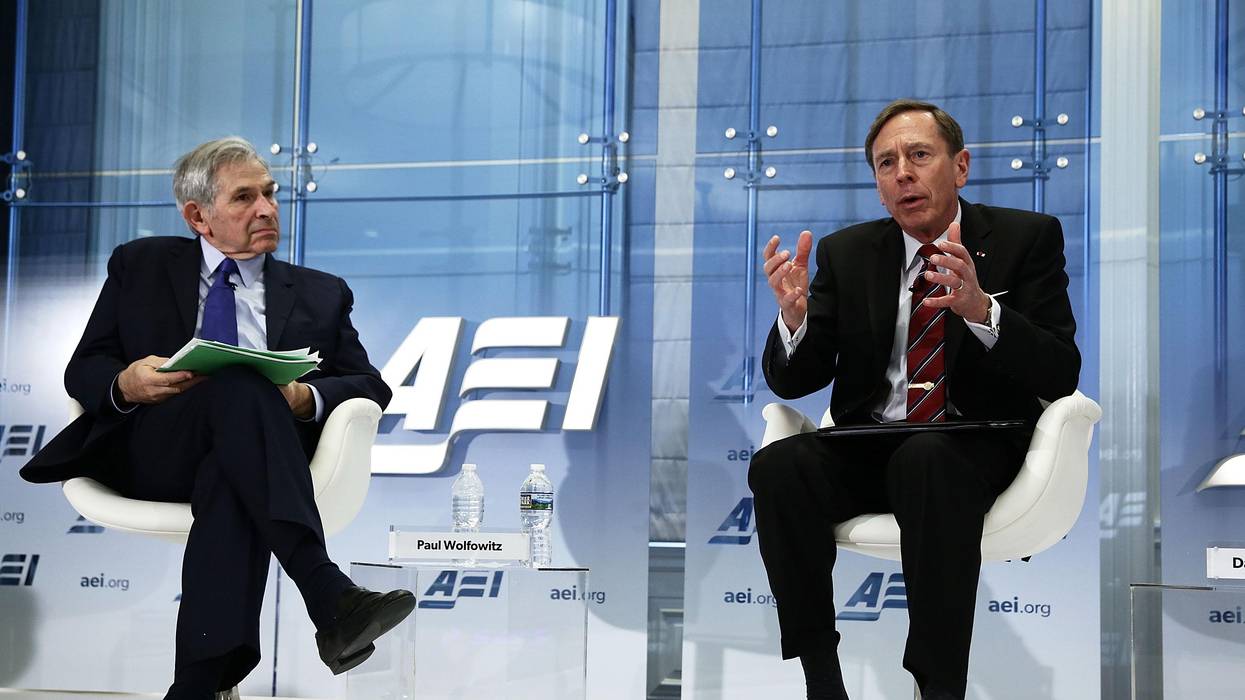
The war in Ukraine is the culmination of a 30-year project of the American neoconservative movement. The Biden Administration is packed with the same neocons who championed the US wars of choice in Serbia (1999), Afghanistan (2001), Iraq (2003), Syria (2011), Libya (2011), and who did so much to provoke Russia's invasion of Ukraine. The neocon track record is one of unmitigated disaster, yet Biden has staffed his team with neocons. As a result, Biden is steering Ukraine, the US, and the European Union towards yet another geopolitical debacle. If Europe has any insight, it will separate itself from these US foreign policy debacles.
The neocon outlook is based on an overriding false premise: that the US military, financial, technological, and economic superiority enables it to dictate terms in all regions of the world.
The neocon movement emerged in the 1970s around a group of public intellectuals, several of whom were influenced by University of Chicago political scientist Leo Strauss and Yale University classicist Donald Kagan. Neocon leaders included Norman Podhoretz, Irving Kristol, Paul Wolfowitz, Robert Kagan (son of Donald), Frederick Kagan (son of Donald), Victoria Nuland (wife of Robert), Elliott Cohen, Elliott Abrams, and Kimberley Allen Kagan (wife of Frederick).
The main message of the neocons is that the US must predominate in military power in every region of the world, and must confront rising regional powers that could someday challenge US global or regional dominance, most important Russia and China. For this purpose, US military force should be pre-positioned in hundreds of military bases around the world and the US should be prepared to lead wars of choice as necessary. The United Nations is to be used by the US only when useful for US purposes.
This approach was spelled out first by Paul Wolfowitz in his draft Defense Policy Guidance (DPG) written for the Department of Defense in 2002. The draft called for extending the US-led security network to the Central and Eastern Europe despite the explicit promise by German Foreign Minister Hans-Dietrich Genscher in 1990 that German unification would not be followed by NATO's eastward enlargement. Wolfowitz also made the case for American wars of choice, defending America's right to act independently, even alone, in response to crises of concern to the US. According to General Wesley Clark, Wolfowitz already made clear to Clark in May 1991 that the US would lead regime-change operations in Iraq, Syria, and other former Soviet allies.
The neocons championed NATO enlargement to Ukraine even before that became official US policy under George W. Bush, Jr. in 2008. They viewed Ukraine's NATO membership as key to US regional and global dominance. Robert Kagan spelled out the neocon case for NATO enlargement in April 2006:
[T]he Russians and Chinese see nothing natural in [the "color revolutions" of the former Soviet Union], only Western-backed coups designed to advance Western influence in strategically vital parts of the world. Are they so wrong? Might not the successful liberalization of Ukraine, urged and supported by the Western democracies, be but the prelude to the incorporation of that nation into NATO and the European Union--in short, the expansion of Western liberalhegemony?
Kagan acknowledged the dire implication of NATO enlargement. He quotes one expert as saying, "the Kremlin is getting ready for the 'battle for Ukraine' in all seriousness." The neocons sought this battle. After the fall of the Soviet Union, both the US and Russia should have sought a neutral Ukraine, as a prudent buffer and safety valve. Instead, the neocons wanted US "hegemony" while the Russians took up the battle partly in defense and partly out of their own imperial pretentions as well. Shades of the Crimean War (1853-6), when Britain and France sought to weaken Russia in the Black Sea following Russian pressures on the Ottoman empire.
Kagan penned the article as a private citizen while his wife Victoria Nuland was the US Ambassador to NATO under George W. Bush, Jr. Nuland has been the neocon operative par excellence. In addition to serving as Bush's Ambassador to NATO, Nuland was Barack Obama's Assistant Secretary of State for European and Eurasian Affairs during 2013-17, where she participated in the overthrow of Ukraine's pro-Russian president Viktor Yanukovych, and now serves as Biden's Undersecretary of State guiding US policy vis-a-vis the war in Ukraine.
In the "battle for Ukraine," the neocons were ready to provoke a military confrontation with Russia by expanding NATO over Russia's vehement objections because they fervently believe that Russia will be defeated by US financial sanctions and NATO weaponry.
The neocon outlook is based on an overriding false premise: that the US military, financial, technological, and economic superiority enables it to dictate terms in all regions of the world. It is a position of both remarkable hubris and remarkable disdain of evidence. Since the 1950s, the US has been stymied or defeated in nearly every regional conflict in which it has participated. Yet in the "battle for Ukraine," the neocons were ready to provoke a military confrontation with Russia by expanding NATO over Russia's vehement objections because they fervently believe that Russia will be defeated by US financial sanctions and NATO weaponry.
The Institute for the Study of War (ISW), a neocon think-tank led by Kimberley Allen Kagan (and backed by a who's who of defense contractors such as General Dynamics and Raytheon), continues to promise a Ukrainian victory. Regarding Russia's advances, the ISW offered a typical comment: "[R]egardless of which side holds the city [of Sievierodonetsk], the Russian offensive at the operational and strategic levels will probably have culminated, giving Ukraine the chance to restart its operational-level counteroffensives to push Russian forces back."
The facts on the ground, however, suggest otherwise. The West's economic sanctions have had little adverse impact on Russia, while their "boomerang" effect on the rest of the world has been large. Moreover, the US capacity to resupply Ukraine with ammunition and weaponry is seriously hamstrung by America's limited production capacity and broken supply chains. Russia's industrial capacity of course dwarfs that of Ukraine's. Russia's GDP was roughly 10X that of Ukraine before war, and Ukraine has now lost much of its industrial capacity in the war.
The most likely outcome of the current fighting is that Russia will conquer a large swath of Ukraine, perhaps leaving Ukraine landlocked or nearly so. Frustration will rise in Europe and the US with the military losses and the stagflationary consequences of war and sanctions. The knock-on effects could be devastating, if a right-wing demagogue in the US rises to power (or in the case of Trump, returns to power) promising to restore America's faded military glory through dangerous escalation.
Instead of risking this disaster, the real solution is to end the neocon fantasies of the past 30 years and for Ukraine and Russia to return to the negotiating table, with NATO committing to end its commitment to the eastward enlargement to Ukraine and Georgia in return for a viable peace that respects and protects Ukraine's sovereignty and territorial integrity.
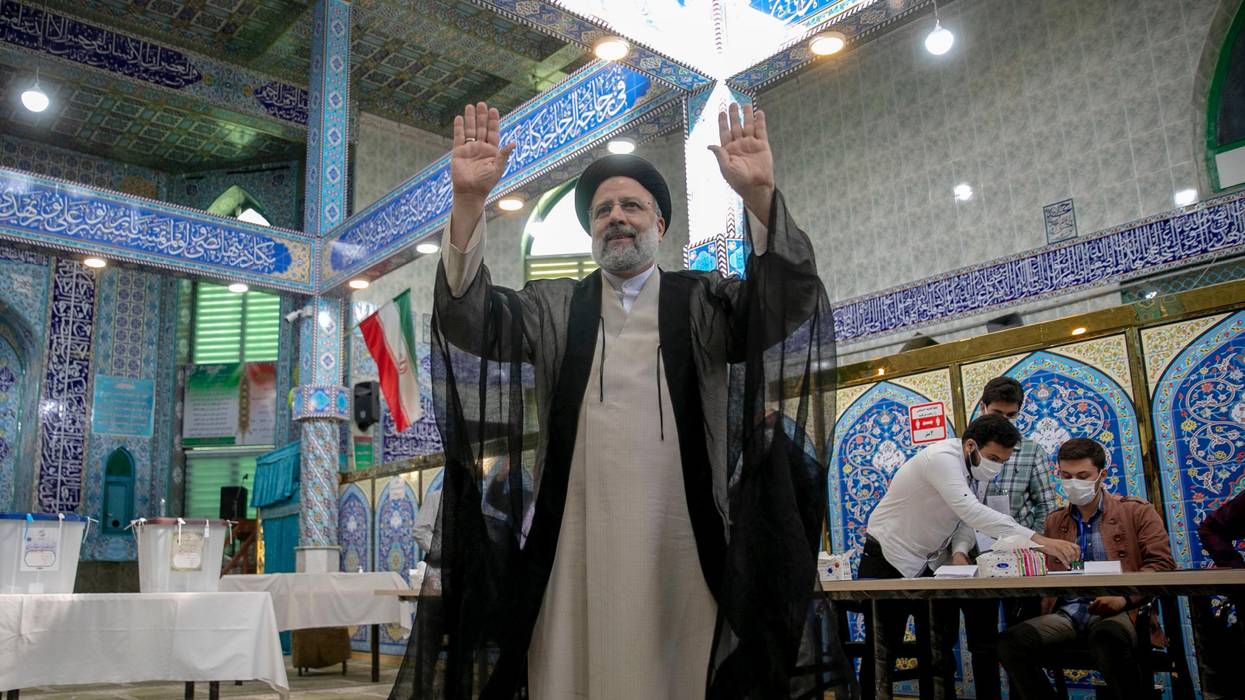
Progressive Iran-watchers on Saturday reacted to the election of Ebrahim Raisi, the country's conservative judiciary chief, with concern and appeals to the Biden administration to choose conciliation over confrontation with the Islamic Republic, beginning with a U.S. return to the Iran nuclear deal and the easing of crippling economic sanctions.
"The ascension of Raisi to the presidency will be widely viewed as a victory for hardliners in Iran and the U.S. who seek confrontation over conciliation between the U.S. and Iran."
--NIAC
Al Jazeera reports Raisi won just under 62% of Friday's presidential election amid a lower-than-usual turnout of 48.8%. While outgoing Iranian President Hassan Rouhani--who was constitutionally barred for running for a third term--congratulated voters "on their choice," millions of Iranians refrained from casting their ballots after Raisi's strongest competitors were disqualified from the race.
Raisi--who is sanctioned by the United States for his role in the mass execution of thousands of political prisoners in the 1980s--will take office in August as Iran reels from an ongoing coronavirus pandemic that has claimed over 82,000 lives and the related effects of decades of U.S.-led sanctions that have devastated the country's economy.
The Raisi administration will also have to contend with a new hardline Israeli government whose leader, Prime Minister Naftali Bennett, is expected to pressure U.S. President Joe Biden to eschew a return to the scuppered Joint Comprehensive Plan of Action (JCPOA), known commonly as the Iran nuclear deal, which former President Donald Trump unilaterally abrogated in 2018.
Biden, who campaigned for president on a promise to rejoin the JCPOA, earlier this month lifted some sanctions on a handful of former Iranian officials in a bid to jump-start stalled nuclear talks in Vienna, Austria. On Thursday, the U.S. Treasury Department issued guidance allowing pandemic-related items including face masks, ventilators, and Covid-19 vaccines to be sent to sanctioned nations including Iran, Syria, and Venezuela.
Human rights defenders expressed alarm over Raisi's election.
"That Ebrahim Raisi has risen to the presidency instead of being investigated for the crimes against humanity of murder, enforced disappearance, and torture is a grim reminder that impunity reigns supreme in Iran," Amnesty International secretary-general Agnes Callamard said in a statement.
Michael Page, deputy Middle East director at Human Rights Watch, said that "Iranian authorities paved the way for Ebrahim Raisi to become president through repression and an unfair election."
However, Juan Cole, professor of Middle Eastern and South Asian history at the University of Michigan and publisher of Informed Comment, argued that Donald Trump is also partly to blame for Raisi's victory, as the former U.S. president's withdrawal from the JCPOA "put the previously unpopular hardliners in the catbird seat."
Cole wrote:
In 2018, Trump breached the agreement and put Iran under a financial and economic blockade of unprecedented severity. As he intended, these moves crashed the Iranian economy and created public unrest. The U.S. strangulation of the Iranian economy did not accomplish what Trump was aiming for. It did not cause the government to collapse. It did not make [Supreme Leader] Ayatollah Ali Khamenei come begging to Trump for a photo op and a new treaty. It did make people in Iran angry... [and] produced a hatred and suspicion of the United States, which after all broke its word. It bolstered the hard line forces inside Iran who would stand up to the U.S. And it robbed centrists and pragmatists of hope.
Cole also said that "a Raisi government will likely also spell more trouble for President Biden in Iraq, where Iran-backed Shiite militias mortar bases hosting the some 2,000 U.S. troops on a daily basis."
In a statement, the nonprofit advocacy group National Iranian American Council (NIAC) said that "the ascension of Raisi to the presidency will be widely viewed as a victory for hardliners in Iran and the U.S. who seek confrontation over conciliation between the U.S. and Iran."
"Biden... can continue his predecessor's pressure-only approach that decimated moderates, empowered Raisi and his fellow hardliners, and closed the door on broader diplomacy. Or he can restore the agreement Trump worked so hard to kill [and] ease the pressure on the people of Iran."
--Ryan Costello, NIAC
"The authorities of the Islamic Republic will have to grapple with the fact that so few Iranians felt compelled to vote due to anti-democratic machinations and to the efforts to silence and delegitimize voices that fall outside of the exceedingly narrow spectrum of what is deemed acceptable political debate," the group said.
While NIAC attributes "ultimate accountability for the suffering of ordinary Iranians" to the country's rulers, "starting with Supreme Leader Ayatollah Ali Khamenei," the group argued that Americans "must also hold our own government to account for any role it has played in helping to undermine the aspirations of the Iranian people."
"The lesson from the past four years--where an ascendant Iranian movement for moderation and engagement marked by record-breaking voter turnout in successive elections and a landmark diplomatic agreement with the U.S. was snuffed out and replaced with what we have today--is that U.S. coercion and interventions with Iran benefit the most authoritarian elements of the Islamic Republic," NIAC said.
NIAC policy director Ryan Costello, writing for Responsible Statecraft, said that U.S. proponents of Iran regime change will likely cheer Raisi's victory. Costello noted that Elliott Abrams, the Reagan-era "death squad diplomat" who most recently served as Trump's special representative for Iran, published a 2017 essay entitled, Why I'm Rooting for the Hardliner in Iran's Elections: Two cheers for Ibrahim Raisi!
The gist is that, to regime change proponents, the election of a hardliner like Raisi--who Iran hawks believe would bring the Islamic Republic closer to the brink of collapse--should be welcomed, despite his horrific human rights record.
However, NIAC said that "the best and only effective response" to Raisi's election is for Biden and his administration "to remain vigilant in pursuing the full restoration of the Iran nuclear deal as a first step towards direct diplomacy that can improve lives, prevent war, and create circumstances far more conducive for Iranians to secure their aspirations."
NIAC wrote:
The election of Raisi will be met with the same calls from those who oppose diplomacy as an excuse to revert to the dangerous status quo that helped bring us to this point. Instead, the Biden administration must remain resolute and seek a break from the disastrous conditions that helped contribute to this result. Only diplomacy can resolve the serious challenges we face with Iran regarding non-proliferation, regional security, and supporting the human rights of Iranians.
In addition to direct talks, the Biden administration should be considering any and all steps necessary to reduce the burden of sanctions on the Iranian people and on Iranian civil society that has so vastly increased these past four years, and ensure that any such measures are squarely targeted at bad actors rather than the broad Iranian populace.
Costello concluded that Biden "can continue his predecessor's pressure-only approach that decimated moderates, empowered Raisi and his fellow hardliners, and closed the door on broader diplomacy. Or he can restore the agreement Trump worked so hard to kill, ease the pressure on the people of Iran, and restore some semblance of faith that diplomacy can deliver for each country."
"Only the latter has delivered any success," he added, "for both the United States and the people of Iran."
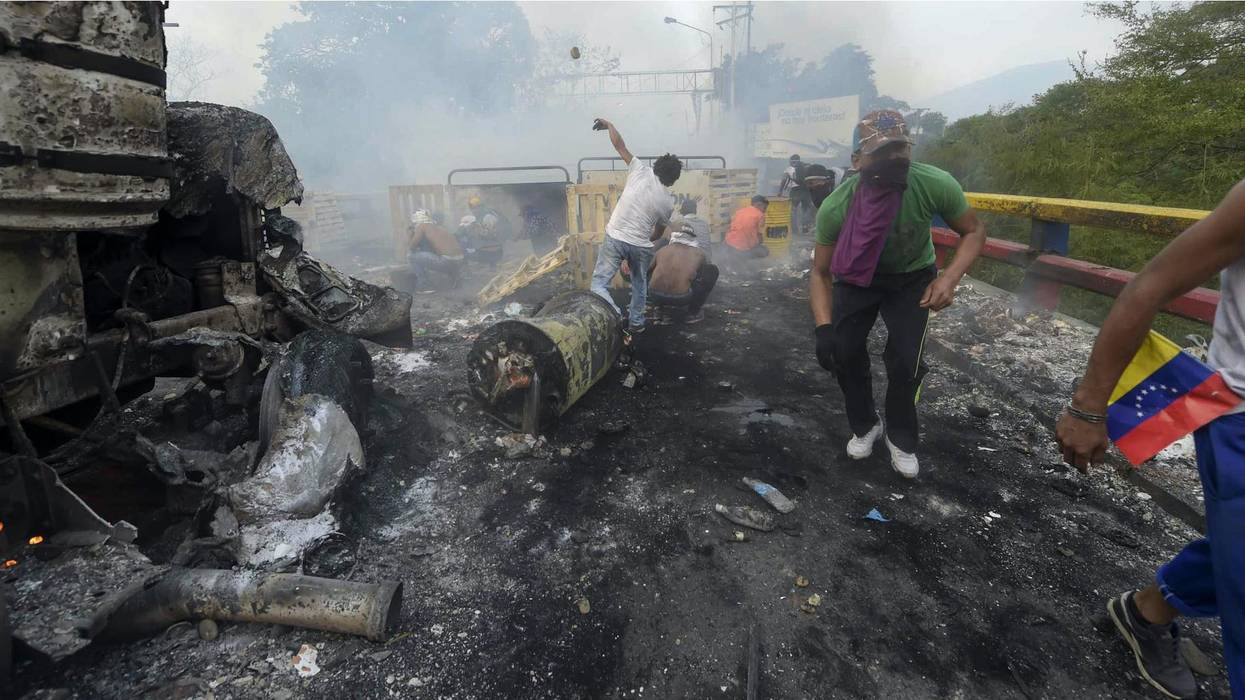
Progressive observers of United States foreign policy in Latin America were unsurprised yet still expressed alarm Thursday over details in a new report from the U.S. Agency for International Development that shows the Trump administration's humanitarian aid to Venezuela was at least partially motivated by a desire for regime change in Caracas.
"You didn't need to be a genius to see the U.S. was trying to force a dramatic confrontation, rather than trying to efficiently help needy Venezuelans."
--Vincent Bevins, journalist
The report (pdf) published earlier this month by the USAID inspector general's office states that "the U.S. government's key foreign policy goals" in Venezuela following President Nicolas Maduro's 2018 reelection were to "increase pressure on Maduro to step down" and "support Guaido's legitimacy as the interim president," a reference to the unelected opposition leader Juan Guaido, who has also received a show of support from President Joe Biden.
"Accordingly, USAID prioritized aid to the Venezuelan people in coordination with the interim president, including issuing in-kind grants to distribute humanitarian commodities inside Venezuela," the report says. This included supporting an unnamed Venezuelan NGO perceived as aligned with U.S. foreign policy objectives despite not knowing "whether the organization had the capacity to comply with USAID's legal and financial requirements."
The IG investigation found that out of 368 metric tons of humanitarian aid designated for delivery to Venezuela by the agency, only eight metric tons arrived in the country, with the rest going to Colombia and Somalia. Aid that was sent to Venezuela arrived in military transport planes, a move the report says "was not justified by operational needs as commercial transportation was available and less expensive."
The report also acknowledges that the failed February 2019 aid convoy organized by U.S. special representative Elliott Abrams--whose history in the region includes using humanitarian aid flights to arm Contra terrorists in Nicaragua and covering up massacres committed by U.S.-backed death squads in Guatemala and El Salvador--"contributed to a tense environment for humanitarian assistance funded by or associated with the U.S. government, as the Maduro regime publicly rejected pre-positioned commodities and initiated security crackdowns in Venezuela."
Additionally, it states that USAID's own officials determined that food aid purportedly sent to alleviate child hunger "was unnecessary because the nutritional status of Venezuelan children did not warrant its use at the time."
USAID, "concerned that the United Nations supported the Maduro regime," also minimized funding for U.N. agencies even though some of them "had infrastructure in Venezuela to deliver humanitarian commodities."
This, at a time when a combination of increasing U.S. economic sanctions, corruption and mismanagement, low oil prices, and natural disasters reversed some of the tremendous progress made by the Bolivarian Revolution--which began with former President Hugo Chavez and continued under Maduro--in improving the lives of poor Venezuelans.
The new report surprised few seasoned observers of the more than 100-year history of U.S. meddling in Venezuelan affairs, a timeline that includes hundreds of millions of dollars in USAID funding--including nine-figure spending on groups opposing the Bolivarian Revolution. Still, the USAID IG report raised eyebrows.
"This was incredibly obvious at the time, but it's shocking to see the details," said U.S. journalist and author Vincent Bevins of the report's contents.
USAID itself has a long history of foreign interference and subversion around the world. The agency funded death squads in El Salvador and Guatemala's genocidal army during the 1980s, the forced sterilization of Indigenous Peruvian women in the 1990s, Laotian heroin traffickers during the Vietnam War--to name but a handful of examples. USAID operatives also taught torture and democracy suppression to security forces in Latin American dictatorships including Brazil, the Dominican Republic, and Uruguay in the 1960s and 1970s.
More recently, USAID in 2010 launched a social media campaign with the goal of sparking civil unrest against the Fidel Castro-led government in Cuba. Around the same time, the agency infiltrated Cuba's burgeoning hip-hop scene in a bid to foment a youth uprising.

In a perpetuation of Trump administration policy and nearly two centuries of U.S. imperialism in Latin America, Antony Blinken, President Joe Biden's nominee for secretary of state, told senators Tuesday that the United States will continue to recognize the coup leader Juan Guaido as legitimate president of Venezuela.
Reuters reports Blinken told senators during his confirmation hearing that Venezuela needs "an effective policy that can restore... democracy" to the nation of 28 million people.
Although Venezuelan President Nicolas Maduro has alienated allies and adversaries alike with his government's numerous and serious human rights violations, he was democratically elected in 2013, and reelected in 2018.
Blinken also told the senators that the Biden administration would seek to "more effectively target" Venezuela with economic sanctions, which have been described as a form of "economic terrorism."
The sanctions are largely responsible for the crippling of Venezuela's once-thriving economy and have caused tremendous suffering for the poor and working-class people whose dramatic uplift was once hailed as the great success of the Bolivarian Revolution launched under the late President Hugo Chavez.
According to a 2019 report from the Center for Economic and Policy Research, a progressive think tank based in Washington, D.C., as many as 40,000 Venezuelans have died due to sanctions, which have made it much more difficult for everyday people to obtain food, medicine, and other necessities.
Common Dreams reported Wednesday that the global left-wing activist group Progressive International called on the Biden administration to end sanctions on countries including Cuba, Iran, and Venezuela, which the group said are targeted because "they don't fall in line" with Washington's "global political and economic agenda."
Blinken's remarks to the senators were one of a series of recent signs that the United States--which has been supporting coups and dictators in Venezuela for over a century--would stay the imperialist course under Biden.
During the contentious and sometimes calamitous transition between administrations, Republicans and Democrats alike took comfort in a policy meeting between Elliott Abrams, former President Donald Trump's special representative for Venezuelan affairs, and members of the Biden transition team.
Abrams, whose history in the region includes involvement in the Iran-Contra scandal and covering up massacres committed by U.S.-backed death squads in Central America, called the meeting "pleasant" and left assured that he did not foresee any "major changes" in American policy toward Venezuela under Biden.
The inter-administration continuity was also on display in the person of Carlos Vecchio, Guaido's ambassador to the United States, who was feted by Trump and who was Biden's inaugural guest on Wednesday.
In 2014, Vecchio--one of the masterminds of the Guaido coup--was charged in Caracas with public incitement, property damage, arson, and conspiracy for an attack on the Venezuelan attorney general's office. His appearance at the U.S. Capitol two weeks after Biden condemned the deadly Trump-inspired mob attack on the building did not go unnoticed.
"Vecchio's presence at the presidential swearing-in ceremony was filled with irony," wrote journalist Anya Parampil. "In the days following the Capitol riot, Biden and his allies have denounced the violent takeover of Congress as an assault on democracy, with the incoming president himself declaring the rioters to be domestic terrorists.'"
"Yet," she added, "Carlos Vecchio, the Guaido ally with a fresh ticket to Biden's inauguration, is responsible for leading his own assault on his home country's democracy."

Bloomberg reports that a flotilla of ten Iranian vessels is heading for Venezuela. They have turned off their shipboard Automatic Identification System, or AIS, so that US signals intelligence cannot find them easily. The ships typically go around the Cape of Good Hope and then head northwest to Caracas.
Will the militant Trump administration attempt to board these vessels and steal their oil, to provoke Iran again and interfere with the Biden team's plan to restore the 2015 nuclear deal?
The Trump administration seized four Iranian oil tankers in the Caribbean in August and sold off the oil, despite these actions being illegal in the international law of the sea. Bill Barr's Department of Justice got $40 million for their act of piracy. The tankers' owners, based in Oman, the UK and the UAE, have sued over the seizure. Barr responded by sanctioning two of them.
Although the Bloomberg reporters blame Venezuela's need for these imports solely on the administration of Nicolas Maduro, this is somewhat unfair. No doubt Maduro is authoritarian and a poor administrator of affairs, and bears some of the blame.
The fact is, however, that crude petroleum is fairly useless. It has to be refined into gasoline or diesel in order to be useful in burning for fuel in vehicles (the most common way it is consumed). Moreover, heavy or "sour" crude with high amounts of sulfur needs special refineries and requires the use of natural gas concentrates as diluents. Venezuela used to ship sour crude to the US for refining, but can no longer do so because of Trump sanctions. The South American oil giant has its own refineries, as well, but Venezuela does not have its own natural gas, and it used to import the natgas concentrates from -- guess who? -- the United States. No more.
Guess who has massive fields of natural gas and who can thus easily make natural gas concentrates for the Venezuelan refineries? You guessed it: Iran. Plus Iran can just export gasoline that it has already refined to Venezuela, given that the country will need time to build more local refineries before it can ramp back up its gasoline production in light of the US embargo.
Iran is also apparently offering to transport Venezuelan crude in its ships to be refined abroad (possibly China).
Since August Iranian ships have managed to make it to Venezuela without being pirated by the Trump administration, by keeping their transponders off. But each of these export journeys is now an adventure, since Trump seems to have seen that Tom Hanks movie about the Somali pirates and decided he wants the US to play Somali pirate in the Caribbean.
The odious Elliott Abrams, warmonger-in-chief and old-time supporter of nun-killing right wing death squads in Central America, is now in charge of Iran and Venezuela for Trump and is warning propagandistically against Iran sending missiles to Venezuela (for which there is no evidence at all). Abrams is a known liar who was convicted of lying to Congress. Having these people in power for another month and a half is like walking on grenades.